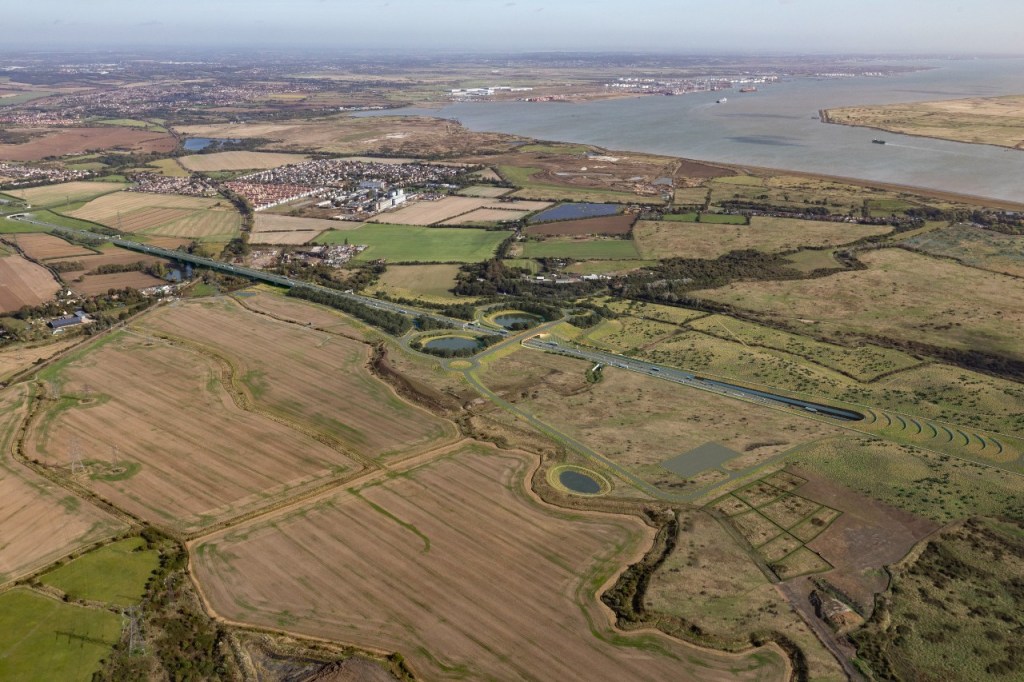
The question of why ministers are putting billions of pounds of our money into the “privately-funded” Lower Thames Crossing two years before a full business case has become even curiouser with the Department for Transport (DfT) insisting that the scheme does not even have a completed outline business case (OBC).
this information is draft and the outline business case has not been finalised
This is quite a surprise, given that Lush quoted the National Audit Office (NAO) as telling TAN
At outline business case stage, the decision to commit further public funding to the project and to proceed with government’s preferred financial model for the project was subject to departmental and ministerial approvals by DfT and HM Treasury.
Interestingly, the DfT’s refusal letter acknowledges that:
I’m not saying the government’s latest consultation on Heathrow is a stitch-up but ministers are very clearly signalling where it is going.
third runway at Heathrow moves a step closer as government launches public consultation on the framework for future planning decisions
Alongside bullshit claims about “over £40 billion of benefits to the UK” – over what period? – there are clear signals that the facts will be made to fit the policy:
This marks another key milestone in delivering a final planning decision in 2029, making sure it meets key tests on noise, air quality, climate and economic growth.
It’s not exactly subtle: those key tests will be met. So are they really tests?
And there is a hint of menace for the meddling Climate Change Committee:
The independent Climate Change Committee is being formally consulted to advise on how expansion can be consistent with the net zero framework.
The answer is that expansion can be consistent with the net zero framework. The answer that the committee has to give is how.
But these are definitely tests, right? With the possibility that they might not be met and the new runway won’t be built?
It remains possible of course that ministers are being disingenuous in another way and are just going along with it all in the expectation that it will never happen – they just don’t want to be seen to be pulling the plug.
There are of course the usual platitudes and the usual spin in the Department for Transport’s (DfT) announcement of a new consultation of self-driving vehicles, but one aspect of the safety case deserves a bit of unpicking.
the future rollout of self-driving vehicles across the UK moves a step closer
consultation will ensure the technology is rolled out safely and responsibly, giving people confidence in self-driving vehicles while keeping road safety at the heart of their introduction
And of course there is the usual bullshit claim about the economic case:
the self-driving sector could create thousands of skilled jobs and help unlock billions of pounds for the economy by 2035, supporting economic growth across the UK, according to 2020 estimates
These estimates were about the value to the economy of the self-driving sector, not the GDP uplift that it is expected to produce. Most of this value represents the displacement or restructuring of existing transport, logistics, and automotive spending.
But how safe are AVs going to be? I came across an opinion piece in Traffic Technology Today by Professor Nick Reed of Reed Mobility, first published in the February/March edition of TTi magazine:
When weather changes how pedestrians and cyclists behave, human drivers adapt instinctively. Professor Nick Reed asks whether automated vehicles can do the same — a question that takes on fresh relevance after Waymo this week recalled nearly 3,800 robotaxis over a software fault that allowed vehicles to drive into standing water on higher-speed roads.
The government has continued to signal its determination to expand aviation in a climate emergency, even as another analysis casts doubt on plans to expand Heathrow airport.
Heathrow’s plan for a third runway is impossible to deliver on time, and the project is likely to run into complications including the relocation of several angling lakes, ministers have been told.
A report by the American construction firm Bechtel…
… concluded that Heathrow’s third runway would be possible at the earliest by 2040 — five years after the intended delivery date.
The problem is the scale of works to be done even before construction can begin:
I have now launched an online questionnaire as part of the research project Assessing the future of high-quality transport information and journalism that I am carrying out under a fellowship funded by the Foundation for Integrated Transport.
The overall project comprises a conceptual and mapping exercise to understand what ongoing technological and behavioural changes could mean for the provision of high-quality independent transport information and journalism.
To do this, it seeks to understand the changing landscape for journalism and publicly accessible information on transport issues, providing insight into what a high-quality next generation specialist independent information architecture might look like.
That’s where you come in. The questionnaire is aimed at finding out how people who take an interest in transport, whether in the transport sector or outside it, currently consume and/or would like to consume information and journalism on the subject.
It is anonymous and all questions are optional.
Please fill it in. It only takes a few minutes and should provide valuable insights to inform the project and – hopefully – contribute to a sustainable future for information and journalism on transport.
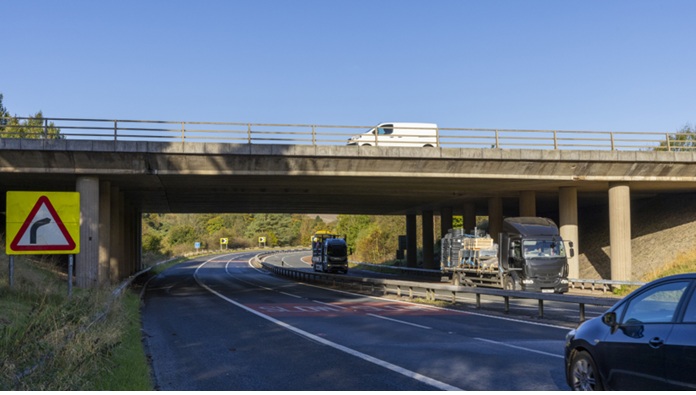
I have a small story in the latest issue of Local Transport Today (LTT) about renewals work by National Highways and Network Rail, which has a particular salience given the amount that the roads operator is due to spend on renewals in the next five years.
You can read the whole piece for free on LTT’s sister website, TransportXtra, but here is the gist of it:
Both National Highways and Network Rail are falling short of optimal performance in their management of large infrastructure renewals, according to a review carried for the Office of Rail and Road (ORR).
It comes as the national roads operator begins work on its third five-year Road Investment Strategy (RIS 3), with a record spend of £8.4bn on renewals, outstripping spending on enhancements for the first time.
If you are interested in maturity models and the difference between “managing” and “optimal”, the story has more detail. I hope I have explained it coherently.
Yesterday I asked Co-pilot to predict what accounting tricks the government might pull to get to a spend of £4.5bn on active travel over five years and today I asked it to look at the newly published third cycling and walking investment strategy (CWIS3) to see what they have actually done.
The CWIS3 document sets out a projected sum but then transport secretary Heidi Alexander treats that in her foreword as if it will actually happen:
backed by £4.5 billion of investment, we will empower local authorities across England to embed active travel into their local transport systems, so the benefits can be felt by everyone
But is this sum just wishful thinking? According to Co-pilot:
The funding projections in CWIS3 are structurally optimistic and in several places internally inconsistent with the scale of outcomes the strategy claims to deliver. They are not outright fictitious, but they rely on assumptions that are significantly more ambitious than the underlying funding mechanisms, historic delivery rates, or local authority capacity would justify.
And the more detailed answer is that only £1.107bn is direct Active Travel England (ATE) funding. The remainder is:
Estimated proportions of wider transport funds Non-ringfenced local transport budgets Contributions from planning, health, and regeneration programmes Assumed local match funding
This means the headline figure is not a guaranteed pot, but a composite of:
It looks like there may be a row over the transport secretary’s plan to publish the third Cycling and Walking Investment Strategy tomorrow, when Parliament is not sitting, but ministers have already been briefing the contents to the friendly media.
Responding to an MP at transport questions this morning, Heidi Alexander advised him to look out for the strategy. The Speaker could clearly be heard to say:
Surely it will be coming to the House first.
His point was that this is a statutory document and needs to be put before Parliament before being published. It’s not clear what Alexander thinks she is playing at.
Ministers are to launch a major push to get more children walking and cycling to school as part of a wider boost for “active travel” by the transport secretary Heidi Alexander.
In the first significant change to active travel policy since the Boris Johnson era, thousands of new safe routes and crossings will be built around schools in England, with a target of having at least 60% of all children walk, cycle or wheel to school by 2035.
Another pointless target that the government will make no attempt to meet and in any case Labour probably won’t be in office.
But I’m asking, it’s an investment strategy; what will the funding be? The Guardian refers to:
a promised total active travel spend of £4.5bn over five years
This looks like quite a lot of money, but leaves me asking, what will the funding actually be? Or rather what accounting tricks will ministers pull to make this look like it happens.
Just for an experiment, I asked Co-pilot. The short answer is:
They will almost certainly inflate the definition of “active travel” by counting every possible pot of money that can be loosely connected to walking or cycling, even if it is not actually spent on active travel infrastructure or behaviour‑change programmes.
This is a classic Treasury/DfT tactic, and it is exactly how previous governments have inflated the numbers.
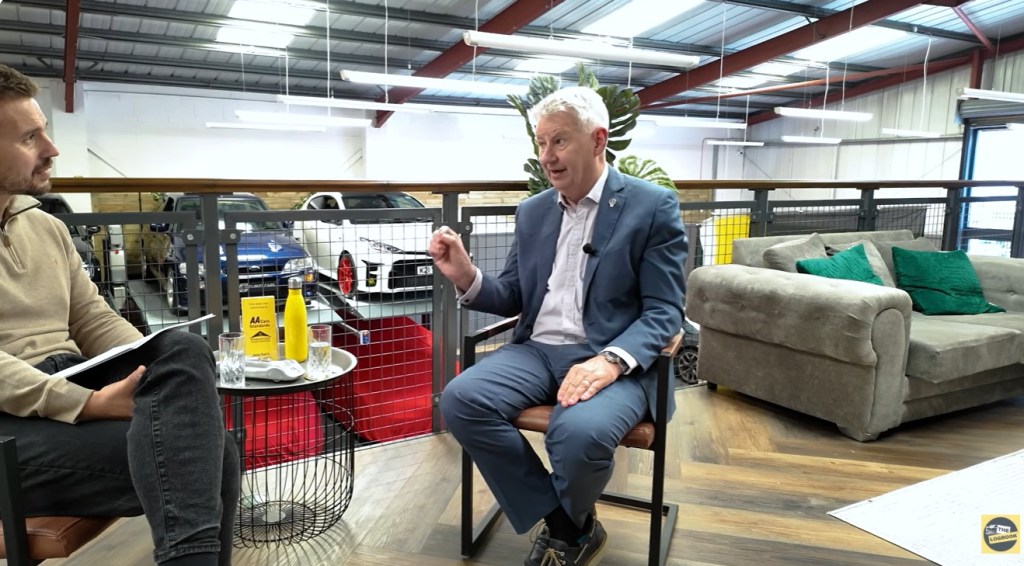
AA president Edmund King has made clear that he is not going to stop banging on about “the massive scandal of smart motorways”, and in particular the continuing failure to close the gaps between emergency areas.
King was interviewed by Rob Cubitt, managing director of Cubitt Cars on The Logbook, the YouTube channel sponsored by AA Cars.
According to the AA press release:
The conversation covered the state of Britain’s roads, potholes, smart motorways, roadworks, driver taxes and the impact on motorists and dealers.
King cited the recent case of van driver Barry O’Sullivan, who was convicted of causing the death of Pulvinder Dhillon on the M4, in a case where the “smart” technology had failed.
But he singled out the distance between emergency refuge areas as an issue that exacerbated technology failings:
If ministers are capable of experiencing cognitive dissonance, you would hope that their heads are hurting with the continued contradictory messaging over “fixing potholes”.
Contrary to common usage, true cognitive dissonance only occurs when a person feels discomfort at holding two mutually contradictory positions.
The second bit is certainly going on with the Department for Transport (DfT), for example the latest DfT release:
How well does your council fix potholes? Tough new guidance for councils will end ‘patch up’ fixes and lead to smoother, safer journeys
New rules to require councils to prove they are doing more to fix potholes and future-proof roads
new government rules will require councils to reveal exactly how well they repair their roads – letting public hold them to account
long-term preventative repairs to be prioritised over costly ‘patch up’ fixes, saving motorists hundreds of pounds a year on pothole related repairs
councils that fail to publish their reports will have nearly a third of this year’s highways maintenance funding withheld
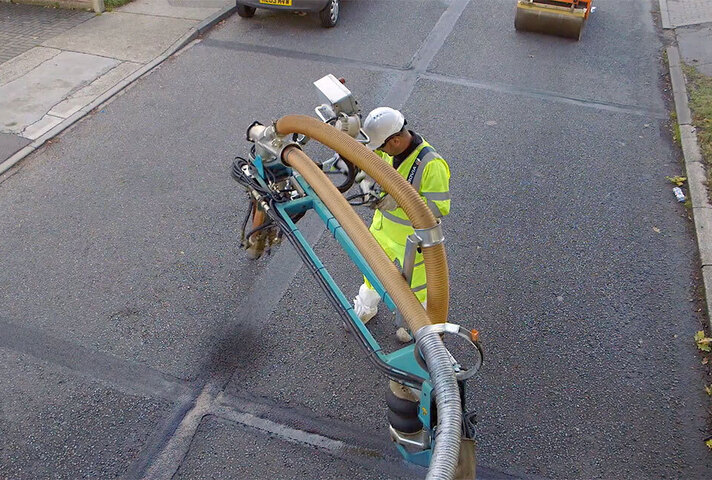
To make the point about prioritising long-term preventative repairs over costly ‘patch up’ fixes, the DfT has illustrated the press release with a picture of what appears to be a a joint‑sealing treatment, which is a form of reactive or routine maintenance.
You can understand the desire to use a colloquial, voter-friendly phrase like “fix potholes”, but it should be obvious that repairs are only one part of maintenance, with preventative measures another part, and that “long term preventative repairs” do not exist.







 Transport Insights
Leave a comment