
There are of course the usual platitudes and the usual spin in the Department for Transport’s (DfT) announcement of a new consultation of self-driving vehicles, but one aspect of the safety case deserves a bit of unpicking.
Launching a consultation on a draft statement of safety principles for automated vehicles (AV)s, the DfT makes clear that the destination is clear and it’s about how we get there:
the future rollout of self-driving vehicles across the UK moves a step closer
consultation will ensure the technology is rolled out safely and responsibly, giving people confidence in self-driving vehicles while keeping road safety at the heart of their introduction
And of course there is the usual bullshit claim about the economic case:
the self-driving sector could create thousands of skilled jobs and help unlock billions of pounds for the economy by 2035, supporting economic growth across the UK, according to 2020 estimates
These estimates were about the value to the economy of the self-driving sector, not the GDP uplift that it is expected to produce. Most of this value represents the displacement or restructuring of existing transport, logistics, and automotive spending.
But how safe are AVs going to be? I came across an opinion piece in Traffic Technology Today by Professor Nick Reed of Reed Mobility, first published in the February/March edition of TTi magazine:
When weather changes how pedestrians and cyclists behave, human drivers adapt instinctively. Professor Nick Reed asks whether automated vehicles can do the same — a question that takes on fresh relevance after Waymo this week recalled nearly 3,800 robotaxis over a software fault that allowed vehicles to drive into standing water on higher-speed roads.
Reed talks about human drivers’ sophisticated ability to understand the intent of others in response to the environment, e.g. rain, as rarely something that is explicitly taught by driving instructors or coded in formal driving rules, but which arises from the shared human experience of being cold, wet, rushed and operating with impaired vision.
This he says is a skill that AVs may need to operate effectively in mixed weathers.
The training data for an automated driving system may be sufficiently comprehensive to enable it to correctly classify a pedestrian holding an open umbrella. However, I’m not sure that AI-based systems can interpret how the environmental conditions may influence that pedestrian’s behaviour. If AVs are trained primarily in benign weathers, rain may expose the gap between perception and interpretation. Human drivers understand behaviours in context and with empathy gained through lived experience. To navigate confidently through poor weather, automated systems may need to develop this instinct.
It’s a good point, albeit a version of the “Can they do it on a cold, wet night in Stoke?” question about foreign footballers – also known as an environmental edge case narrative.
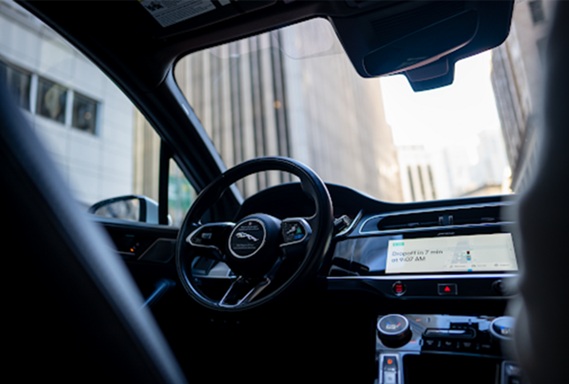
Interestingly, the DfT illustrated its press release with the image above of the interior of a…Waymo.


Leave a comment