Transport Insights

The transport stories you won't see in the industry-friendly media

Author

Chris Ames

Tag: road safety

  • Gaslighting the public about a target that doesn’t exist

    The Department for Transport has released a written version of what it called Debrief Drop In Sessions that took place just after the Road Investment Strategy was released last month, including a sort of explanation as to why National Highways will be expected to do so little to improve safety.

    It follows comments by a senior National Highways official last month, in which he admitted that the company had not bothered with its target for the last (2020-25) RIS, because it depended on matters outside its control.

    As I have pointed out, what is described in the RIS as a “KPI Target” is not a target at all, but a requirement that it at least try to meet a level of casualty reduction:

    National Highways must demonstrate it has done all it reasonably can to achieve a 7.5% reduction in the number of people killed or seriously injured (KSI) on the SRN by the end of 2031, based on the 2022-24 baseline.

    It’s worth pointing out that transport secretary Heidi Alexander misrepresented this in her introduction to RIS 3, where she referred to:

    setting National Highways a target to achieve a 7.5% reduction

    One stakeholder at a Debrief Drop-in asked:

    Why is the safety target so unambitious, given previously the target was for zero harm by 2040?

    The answer goes back to the idea that National Highways can only control what it can control:

    (more…)
  • Lightwood happy with inadequate smart motorway safety provision

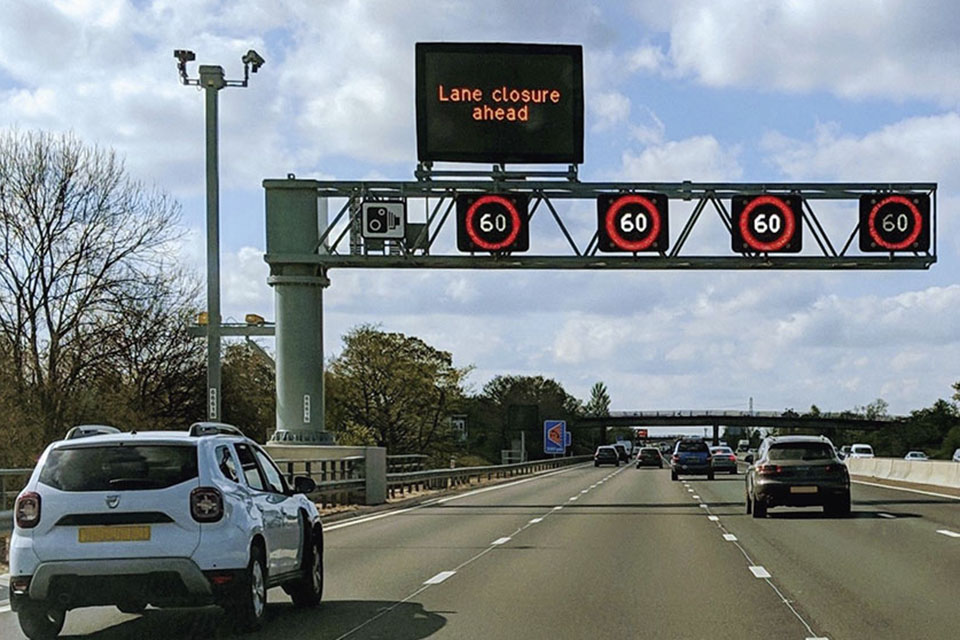
    The roads minister has again resisted scrutiny over the provision of emergency areas on smart motorways, implicitly admitting that they do not meet the spacing standard to which the previous government said it agreed in principle.

    As I have reported, the government has broken a pledge to consider adding further emergency areas under the new road investment strategy.

    But, faced with parliamentary questions over current spacing levels, Simon Lightwood has continued to obfuscate, relying on a definition of “places to stop in an emergency” that includes locations other than designated emergency areas.

    Having deployed this definition once to sidestep a question from Rotherham MP Sarah Champion about the average distance between emergency areas, Lightwood simply refused to answer a follow-up from her that explicitly excluded other places to stop:

    what is the current average distance between dedicated emergency refuge areas, excluding slip roads and junctions, on All Lane Running Smart Motorways.

    Lightwood replied:

    My previous answer on 27 April 2026 set out that the average distance between places to stop in an emergency is now less than a mile (around 0.9 miles). Design standard GD301 sets out the new spacing standard (around 3/4 mile where feasible and 1 mile maximum) and defines what a place of relative safety is. The document can be found at: GD 301 – Smart motorways.

    This obstructive and disingenuous answer not only evades the point about dedicated emergency areas but includes a crass non sequitur switch between the definitions of “places to stop in an emergency” and “a place of relative safety”.

    The point remains that neither definition is what the last government signed up to in principle in 2022 following a recommendation from the Transport Committee:

    The Department and National Highways should retrofit emergency refuge areas to existing all-lane running motorways to make them a maximum of 1,500 metres apart, decreasing to every 1,000 metres (0.75 miles) where physically possible.

    (more…)

  • Not NEAR enough

    Roads minister Simon Lightwood is clearly determined never to give a straight answer to a straight question, particularly when it comes to the lack of safety of smart motorways, and his latest evasion is to sidestep an MP’s question on emergency refuge areas.

    As I have written, with Department for Transport (DfT) going back on a pledge to consider improving the spacing of emergency areas, Sarah Champion MP has been asking parliamentary questions about where this leaves smart motorway safety.

    With the DfT signalling that it has allowed National Highways to kick the issue into the long grass, Champion’s latest question was:

    To ask the Secretary of State for Transport, what is the current average distance between emergency refuge areas on All Lane Running Smart Motorways.

    Lightwood being Lightwood, he answered a different question:

    (more…)
  • Why did council greenlight transatlantic traffic lights?

    TransportXtra has a fascinating story about a Scottish road authority being very untransparent over the installation of what appear to be wholly unnecessary traffic lights on a historic bridge, “including whether the ostensibly operational decision was, in fact, a political one”.

    Carlton Reid, an award-winning reporter on transport, particularly the sustainable kind, writes:

    Preliminary work has started on the installation of traffic lights beside the scenic Clachan Bridge on Scotland’s Argyll coast. Known since the early 1800s as the “Bridge over the Atlantic”, the 234-year-old crossing to the Isle of Seil attracts visitors eager to boast of their trans-oceanic journey. However, there are fears that motorists given the green light will soon act aggressively towards pedestrians on what is a much-photographed landmark.

    The installation of traffic lights at such a sensitive heritage site makes little sense to locals and has been described as a “1980s-style intervention” by an experienced former town planner. This place-making expert adds that the council has also ignored current guidelines on transport hierarchies.

    “Somebody in a car or a bus or a lorry, [will think], ‘I’ve now got the green light, there’s nobody stopping me’,” said Grant Baxter of Fife, who has spent 30 years as a chartered planner in Scottish local government.

    It is indeed a much-photographed landmark and I was there with my family in 2021, while staying in Oban.

    Reid adds:

    (more…)
  • Planning to fail

    A senior National Highways official has told MPs that the company did not create a plan to meet its 2025 casualty reduction target – which it almost certainly missed by a long way – because achieving the target was dependent on factors outside its control.

    The admission finally provides an answer to questions raised, but apparently not followed up, by the company’s regulator about why it did so little early in the 2020-25 roads period (RP2) to achieve its target to reduce killed and seriously injured (KSI) casualties by 50% against a 2005-09 baseline.

    Appearing before the Transport Committee on Wednesday, National Highways bosses were challenged by Labour MP Scott Arthur about the company’s expected failure to meet its target.

    Elliot Shaw, chief customer and strategy officer, said: “We did not have a kind of clearly defined plan because it was reliant on broader factors.”

    This “broader factors” argument is consistent with National Highways’ excuses for missing safety targets over many years and was part of its attempt not to have a casualty reduction target in the new road investment strategy, but I think this is the first time it has been given as a reason for not having a plan to meet the 2025 target.

    It is also consistent with comments from regulator the Office of Rail and Road (ORR), which was highly critical of the company in its Annual Assessment of National Highways’ performance: April 2023 to March 2024:

    While we recognise that not all the actions to reduce KSIs on the SRN are fully within the company’s control we believe that if National Highways had been more proactive in recognising the risks earlier in the road period and developed more robust safety plans sooner this would have increased the likelihood of meeting the target.

    (more…)
  • National Highways kicks smart motorway safety upgrade into the long grass

    Transport minister Simon Lightwood has published a response to a fellow Labour MP’s written parliamentary question about emergency (refuge) areas on smart motorways but, as part of an ongoing and determined effort to avoid scrutiny, has made no attempt to answer the question.

    As I noted on Monday, a question put down by Sarah Champion MP followed up on my revelation that the new Road Investment Strategy said nothing about adding new emergency areas to meet the spacing standard to which the government agreed in 2022:

    To ask the Secretary of State for Transport, with reference to the Third Report of the Transport Committee of Session 2021–22, Rollout and safety of smart motorways, HC26, what steps her Department is taking to ensure that emergency refuges on All Lane Running Smart Motorways are spaced no more than 1,500m apart, and no more than 1,000m apart where possible.

    Predictably, Lightwood referenced the delivery of what the (Tory) government said it would do at the time, but made no mention of ensuring that the space standard would be met:

    (more…)
  • Awaiting answers on smart motorway safety

    Following my stories pointing out that ministers had quietly dropped a pledge to consider adding more emergency refuge areas on smart motorways to comply with a 2021 recommendation from MPs, one MP has put down a written parliamentary question on the issue.

    Sarah Champion, who is Labour MP for Rotherham and therefore smart motorway campaigner Claire Mercer’s MP, asked transport secretary and fellow Labour MP Heidi Alexander:

    with reference to the Third Report of the Transport Committee of Session 2021–22, Rollout and safety of smart motorways, HC26, what steps her Department is taking to ensure that emergency refuges on All Lane Running Smart Motorways are spaced no more than 1,500m apart, and no more than 1,000m apart where possible.

    As I wrote here, this was a recommendation from the Transport Committee (albeit that it referred to “emergency refuge areas”) and the Department for Transport said in its response:

    The Government agrees in principle with this recommendation as we recognise that the installation of EAs at closer spacing is valued by drivers and road safety organisations.

    It announced the £390m over the rest of the second Road Investment Strategy to for a retrofit programme that would see over 150 additional EAs being added to all lane running smart motorways by 2025.

    In recognition of the fact that this would not achieve the recommended standard, it added:

    A decision on whether to retrofit across the remainder of ALR smart motorways will be considered as part of the formulation of the third Road Investment Strategy, based on evidence of safety benefits.

    This last bit (considering the issue) does not appear to have happened. It certainly isn’t being done.

    Champion’s “named day” question should in theory have been answered last week but is still awaiting a response.

    One response to “Awaiting answers on smart motorway safety”

    1. clearlyteenage2e6308de03 avatar
      clearlyteenage2e6308de03

      Did the country really need most of the (un)Smart motorways at all? Do they contribute to carbon reduction? Might they encourage more peak hour car use especially near our big cities where we are trying to encourage sustainable transport use? Do they make it harder for emergency vehicles to reach incidences or accidents?

      If somebody (who – I ask?) thinks they might help reduce traffic congestion at certain times (on past evidence – possibly for a couple of years only) we must surely go back to opening the hard shoulder only on limited occasions to reduce congestion. At such times average and peak driving speeds need rigorous enforcement to say 40mph. That should save the really serious accidents and probably be an optimum speed for capacity anyway.

      There is no real case for higher speeds except for the truly daft economic appraisal system used by DfT and abused by National Highways in the promotion of their expensive schemes.

      Like

    Leave a comment

  • Lightwood plums new depths of churlish opacity

    Roads minister Simon Lightwood, who was complicit in hiding the smart motorway evaluation reports and seems to have gone into politics to hide things from the public, has blanked a question from an MP about safety spending under the new road investment strategy (RIS).

    Asked by Helen Morgan how much money is committed to the Safety National Programme and Small Schemes National Programme elements of the RIS, Lightwood said:

    RIS3 included for the first time a set of four National Programmes, which are a new way for National Highways to deliver defined outputs that support RIS3 objectives, where these are not funded in other programmes. Details of the funding for each National Programme will be confirmed in National Highways’ Delivery Plan for 2026-31, which is expected to be published in the summer.

    It’s worth unpicking this to see how evasive Lightwood is being. The RIS, written by his department, is literally a strategy for spending on the strategic road network. Its purpose is to give National Highways a budget and tell it, Parliament and the public how it should be spent.

    Lightwood knows how much is in the budget for the Safety and Small Schemes National Programmes but is simply choosing to hide this.

    (more…)
  • What the RIS doesn’t say

    Two articles from me in the latest edition of Local Transport Today pick up on pledges that the Department for Transport (DfT) has failed to honour in the new Road Investment Strategy (RIS) – on both smart motorway safety and toxic  road runoff.

    One piece says:

    Campaigners have slammed the DfT after it quietly dropped a commitment to consider adding more emergency areas (EAs) on smart motorways under the new RIS, leaving the network short of the spacing standard recommended by MPs in a landmark report.

    The story notes that in its November 2021 report on smart motorways, the Commons Transport Committee recommended that the DfT and National Highways should retrofit EAs to existing all lane running (ALR) motorways to make them a maximum of 1,500 metres apart, decreasing to every 1,000 metres (0.75 miles) where physically possible.

    In its response, the DfT said it “agrees in principle with this recommendation” and committed £390m over RIS 2 to retrofit over 150 additional EAs to ALRs by 2025.

    And, in an implicit recognition that the extra 150 EAs would not bring the whole network into compliance with the standard recommended by MPs, the DfT also said: “A decision on whether to retrofit across the remainder of ALR smart motorways will be considered as part of the formulation of the third Road Investment Strategy, based on evidence of safety benefits.”

    The story notes that I had approached the DfT and National Highways for comment, but had not received a response at the time of publication. I still haven’t.

    Similarly, neither replied in relation to this story on toxic road runoff:

    National Highways’ longstanding pledge to mitigate “high priority” water outfalls on its network by 2030 is mired in confusion after its regulator questioned whether it could be achieved following a doubling of costs and the new RIS appeared to backtrack on the pledge.

    The story notes that company’s 2030 Water Quality Plan set that year as the target to first confirm and then mitigate sites on the strategic road network where there was a high risk of toxic runoff polluting watercourses and the wider environment.

    While this was subject to funding during RIS 3, last September National Highways’ then chief executive Nick Harris told MPs that it that it expected to be “funded to do all 250” of the “high-risk” outflows that were expected to be confirmed and that in October, the company published a document setting out 182 confirmed high-risk locations in tranches representing “when we expect to deliver improvements work at each location, subject to funding and delivery constraints, with all to be delivered “before 2030”.

    A month later the Office of Rail and Road’s (ORR) advice on National Highways’ draft strategic business plan noted that estimated costs had more than doubled to between £900,000 and £1.2m per asset, meaning that National Highways expected to deliver 110 and 130 mitigations from the allocated budget, leaving between 75 and 95 assets carried over under RIS 4. The regulator noted that National Highways had “previously proposed and committed” to mitigating 250 assets and said it should work with the DfT “to manage expectations where it has previously committed publicly to deliver a bigger programme and the reasons this is no longer feasible”.

    The new RIS includes a commitment to mitigate a total of 190 – 250 high risk water outfalls / soakaways, implicitly by 2031, “reviewing a deliverability plan by the end of 2027/28”. It adds: “This range includes those outfalls and soakaways mitigated during Road Period 2 and 2025/26”.

    So it’s entirely unclear whether there is more money or whether the DfT and National Highways are simply misleading the public about what can be done. Either way, the 2030 deadline has slipped by at least a year.

  • National Highways secures little safety funding but a soft safety target

    Documents published by National Highways’ regulator show how the company tried to avoid being held to account during the new Road Investment Strategy (RIS 3) for its continued failure to meet casualty reduction targets and how little it is likely to do by way of dedicated safety work.

    The Office of Rail and Road (ORR) efficiency review, or advice on National Highways’ draft strategic business plan, discloses what the company was proposing at the end of last year to do under the RIS that runs for five years from tomorrow.

    If the proposed spending levels in the draft strategic business plan (SBP) have been carried through to the RIS itself, dedicated spending on safety over five years will be (significantly) less than the cost of one major enhancement scheme, such as the £600m A38 Derby Junctions scheme.

    The ORR reported that National Highways’ draft SBP proposed a spend of £342m in its safety National Programme and £122m in its safety Designated Fund, totalling £464m.

    The regulator has also published a document that informed its own review, Safety Advice to inform the RIS3 Efficiency Review by Thomas Fleming Transport Consulting.

    This describes in quite scathing terms what the £464m looks like out of a budget totalling £25bn:

    The commitment of less than 2% of the RIS3 Statement of Funds Available to specific safety activities is difficult to reconcile with safety being the number one priority for the organisation.

    Comparison between the ORR’s account of the SBP and the RIS itself reveals that a proposal for the National Programme to deliver safety interventions on 18 priority corridors with current poor safety performance and a low International Road Assessment Programme (iRAP) star rating has been carried forward – suggesting that the funding levels will be very close to what was proposed.

    In terms for casualty reduction, the Thomas Fleming analysis reveals that the National Programmes and Designated Funds combined were forecast to achieve a reduction of just 85 killed and seriously injured (KSI) casualties per year by the end of the RIS. It calculated that this would represent a cut of just 2.7% relative to the 2005-2009 baseline against which previous RIS targets were calculated.

    It highlighted “significant disparities” between the scale of this reduction and the long-term trajectory required to achieve zero deaths and serious injuries on the strategic network by 2050 – a target date that National Highways has already put back by 10 years.

    (more…)