Transport Insights

The transport stories you won't see in the industry-friendly media

Author

Chris Ames
  • Should mayors be trusted to build mass transit schemes? Can they?

    Pro-building lobby group Britain Remade is making headlines with its “Give mayors the power to build” campaign, citing Leeds in particular as an example of where a lack of mayoral power is causing British cities to fall behind.

    With West Yorkshire’s mass transit plans firmly in the news, Britain Remade is also running a Leeds Needs Trams campaign, but its latest pitch covers other cities, such as Bristol and Birmingham.

    New analysis by Britain Remade has exposed the scale of the gap between England’s major cities and their European twins. As a result, the campaign group is calling on the Government to give England’s 14 directly elected mayors the powers they need to change this.

    The data, drawn from tram, metro, and light rail systems across Europe, paints a damning picture: English city-regions twinned with well-connected European cities are being systematically left behind. Not because of a lack of ambition from local leaders, but because those leaders are forced to go cap in hand to Westminster for every penny and every planning permission for major infrastructure projects.

    The lobby group doesn’t appear to have published the “new analysis”, other that what is in its (two) press releases, but it highlights clear disparities in the scale of mass transit systems in England and France and Germany.

    (more…)

  • BBC only tells half the story on Silvertown

    The BBC has an astonishingly poor story about the Silvertown Tunnel a year on, with Transport for London (TfL) claiming that it is reducing congestion elsewhere, based on some very selective data, and with a huge piece of misinformation from the broadcaster,.

    I have obtained (via TfL) the statement on which the BBC report was based and it is a pretty accurate version, with one exception.

    The broadcaster reports:

    One year after the Silvertown Tunnel opened, Transport for London (TfL) said the project had reduced “chronic congestion” and improved journey times.

    New data suggested that drivers who used the neighbouring Victorian-era Blackwall Tunnel saw journey times reduced by more than 10% during weekday peak periods, TfL said.

    So, we only have weekday peak data with a reduction in journey times that doesn’t seem to justify a £2.2bn scheme that will see drivers charged tolls for years to come.

    And that is only one river crossing. Has congestion increased near the new tunnel? David Rowe, director of investment planning at TfL, said:

    We are continuing to monitor the impact of the Silvertown Tunnel both on congestion and the surrounding areas and environment as we pass this important milestone.

    I think that’s a yes.

    Rowe also said:

    (more…)
  • Brabin’s “spades in the ground” scam exposed

    The secret report on West Yorkshire Combined Authority’s plans for a mass transit system has inevitably been leaked and is said to show both that the authority was working to “unrealistic milestones” and that the benefits:cost ratio for a bus system is “significantly better” than for the trams that it wants.

    The House magazine has obtained the “peer review” by the National Infrastructure and Service Transformation Authority, which put back the project’s timelines from the early to the late 2030s. PoliticsHome reports:

    Tracy Brabin’s attempts to start construction on a Leeds tram network before her next re-election campaign were blocked after a confidential Whitehall review concluded this deadline carried a high risk of wasted taxpayers’ cash.

    The Labour mayor of West Yorkshire has repeatedly promised to get “spades in the ground” by 2028.

    The report is also said to have warned that the was being driven by a “political agenda rather than a recognised programmatic approach”.

    It added that “options appraisal for investment, robust project planning and risk management are critical ingredients for successful delivery and should not be compromised for unrealistic milestones”.

    There was a risk of “political embarrassment”, it cautioned, “if there was a large disconnect between a lauded ‘spades in the ground’ date and the start of actual work,” and it said that money could be wasted: “The risk of nugatory spend is high.”

    Unsurprisingly, the review also found that not enough work had been done to prove why the scheme needed trams rather than buses, something that I have written about extensively.

    The paper’s authors were “concerned” about the West Yorkshire Mayoral Combined Authority’s (WYCA) “lack of unbiased thinking” on this question, adding: “There is a need to build the case for trams which has not been completed. 

    “This is particularly important because the likely cost of a Bus Rapid Transit (BRT) mode is significantly less than for trams and the BRT benefits:cost ratio is significantly better.”

    The WYCA has responded to the revelation by again trying to gaslight the public as to the reality of when genuine, rather than performative, construction work will take place and when the scheme will actually be delivered. A spokesperson said:

    Beginning preparatory construction works by 2028 has been an ambition for the combined authority for some time because the people of West Yorkshire have waited long enough for this investment…

    Leave a comment

  • What the RIS doesn’t say

    Two articles from me in the latest edition of Local Transport Today pick up on pledges that the Department for Transport (DfT) has failed to honour in the new Road Investment Strategy (RIS) – on both smart motorway safety and toxic  road runoff.

    One piece says:

    Campaigners have slammed the DfT after it quietly dropped a commitment to consider adding more emergency areas (EAs) on smart motorways under the new RIS, leaving the network short of the spacing standard recommended by MPs in a landmark report.

    The story notes that in its November 2021 report on smart motorways, the Commons Transport Committee recommended that the DfT and National Highways should retrofit EAs to existing all lane running (ALR) motorways to make them a maximum of 1,500 metres apart, decreasing to every 1,000 metres (0.75 miles) where physically possible.

    In its response, the DfT said it “agrees in principle with this recommendation” and committed £390m over RIS 2 to retrofit over 150 additional EAs to ALRs by 2025.

    And, in an implicit recognition that the extra 150 EAs would not bring the whole network into compliance with the standard recommended by MPs, the DfT also said: “A decision on whether to retrofit across the remainder of ALR smart motorways will be considered as part of the formulation of the third Road Investment Strategy, based on evidence of safety benefits.”

    The story notes that I had approached the DfT and National Highways for comment, but had not received a response at the time of publication. I still haven’t.

    Similarly, neither replied in relation to this story on toxic road runoff:

    National Highways’ longstanding pledge to mitigate “high priority” water outfalls on its network by 2030 is mired in confusion after its regulator questioned whether it could be achieved following a doubling of costs and the new RIS appeared to backtrack on the pledge.

    The story notes that company’s 2030 Water Quality Plan set that year as the target to first confirm and then mitigate sites on the strategic road network where there was a high risk of toxic runoff polluting watercourses and the wider environment.

    While this was subject to funding during RIS 3, last September National Highways’ then chief executive Nick Harris told MPs that it that it expected to be “funded to do all 250” of the “high-risk” outflows that were expected to be confirmed and that in October, the company published a document setting out 182 confirmed high-risk locations in tranches representing “when we expect to deliver improvements work at each location, subject to funding and delivery constraints, with all to be delivered “before 2030”.

    A month later the Office of Rail and Road’s (ORR) advice on National Highways’ draft strategic business plan noted that estimated costs had more than doubled to between £900,000 and £1.2m per asset, meaning that National Highways expected to deliver 110 and 130 mitigations from the allocated budget, leaving between 75 and 95 assets carried over under RIS 4. The regulator noted that National Highways had “previously proposed and committed” to mitigating 250 assets and said it should work with the DfT “to manage expectations where it has previously committed publicly to deliver a bigger programme and the reasons this is no longer feasible”.

    The new RIS includes a commitment to mitigate a total of 190 – 250 high risk water outfalls / soakaways, implicitly by 2031, “reviewing a deliverability plan by the end of 2027/28”. It adds: “This range includes those outfalls and soakaways mitigated during Road Period 2 and 2025/26”.

    So it’s entirely unclear whether there is more money or whether the DfT and National Highways are simply misleading the public about what can be done. Either way, the 2030 deadline has slipped by at least a year.

  • Does the DfT know what the word “strategy” means?

    The Department for Transport (DfT) has published its Strategy for Integrated Transport, called Better Connected, and to say it is a disappointment would be an understatement.

    It’s little more than a collection of existing policies, wishful thinking and platitudes, with a few new policies thrown in but no indication of any integration or strategy.

    And gimmicks – there are a few gimmicks that attempt to grab headlines, although that doesn’t seem to have happened so far as the gimmicks are nowhere near headline-grabbing enough to achieve that.

    It’s hard to believe the DfT spend nearly a year and a half coming up with this tosh:

    Better Connected is this government’s vision for domestic transport in England. That vision is simple – for transport to work well for people, for it to be safe, reliable, affordable and accessible so they can get on in life and make the journeys they need to easily.

    To call a list of four basic asks a “vision” takes some nerve and really sets the tone for the document.

    (more…)

  • A66 scheme breaches the £2bn barrier

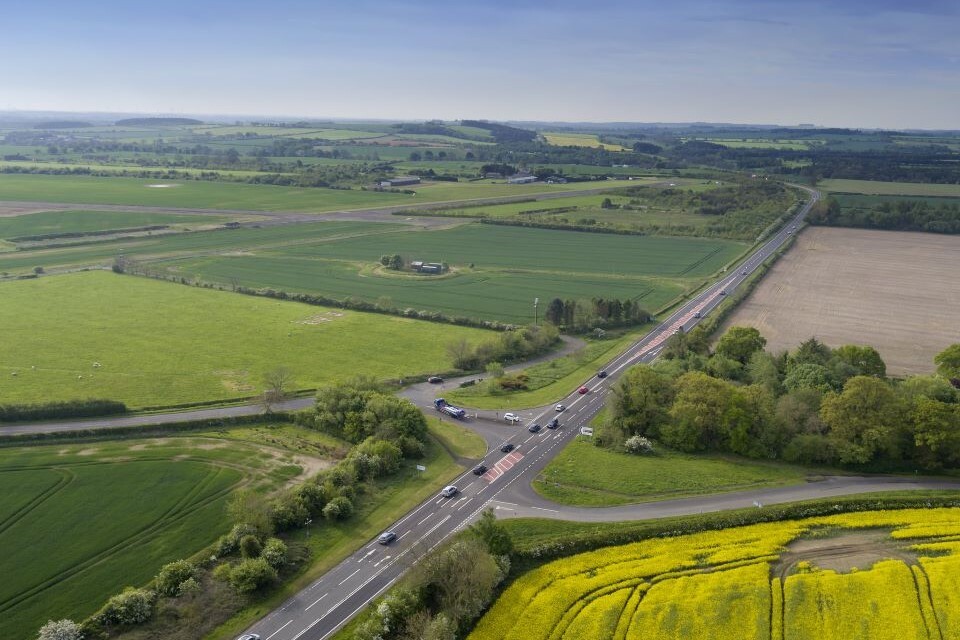
    Returning to the theme of the schemes in the third Road Investment Strategy (RIS 3) that will carry both construction activity and costs into the next RIS, getting more expensive the longer they are delayed, the A66 Northern Trans-Pennine is now set to cost over £2bn.

    What makes this example even more farcical is that the scheme was part of Boris Johnson’s 2020 Project Speed to, well, speed up infrastructure schemes, and was given special funding for this purpose.

    I was the first person to report that the costs of the scheme had hit £1.5bn.

    Now, the Office of Rail and Road’s (ORR) advice on National Highways’ draft strategic business plan reveals that the total costs of the 16 enhancement schemes in the draft strategic business plan (SBP) are around £600m higher than previous estimate.  

    This difference is predominantly from the A66 Northern Trans-Pennine scheme, where the outturn cost in the draft SBP compared was £540m above the most recent forecast.

    Assuming that the most recent forecast was £1.5bn, that puts the scheme at well over £2bn. I don’t really like saying that something has breached an imaginary barrier but in this case I use the word ironically, to point out that the costs of these schemes just seem to escalate without any constraints.

    (more…)

  • Is National Highways forever chasing its tail?

    In the absence of detail on enhancement schemes in the new Road Investment Strategy (RIS), the Office of Rail and Road’s (ORR) advice on National Highways’ draft strategic business plan gives a good indication of what is likely to happen.

    We know from the RIS that there is £3.8bn for enhancement schemes, not counting the cash for the Lower Thames Crossing, but what emerges from the ORR report is just how much of this will go on schemes that are already in construction and how much of the new schemes will fall into the post-2031 RIS 4.

    The report reveals that:

    National Highways’ proposed portfolio of existing enhancements in its draft SBP is made up of 16 schemes, 11 of which are currently in construction.

    In addition, only two of the new schemes are due to be completed during the RIS 3 period, also known as Roads Period 3, or RP3.

    And two of the schemes are not due to start until the last two years of the five-year period, with the A38 Derby Junctions starting in 2029-30 and the A46 Newark Bypass in 2030-31.

    As the ORR notes, National Highways enhancements frequently fall into a vicious circle of delays and cost increases, followed by delays because the costs have to be spread out:

    Depending on decisions elsewhere in the plan, it might be necessary to defer the start of these projects to improve affordability. However, such deferrals would further increase total outturn costs as seen during RP2.

    At least the ORR recognises how stupid this is:

    (more…)
  • Thankfully, lane closures will be in place

    Returning to the mysterious “drainage defect” that undermined the stability of the new concrete central barriers on a stretch of the M1 in Bedfordshire, the BBC reported in quick succession that the defect was “still not fixed” and then that work “is due to begin”.

    National Highways said the drainage defect, which had emerged in mid January between junctions 12 and 13 but which they were trying to get to the bottom of, had weakened the supports for what are obviously very heavy barriers.

    Tony Fisher/BBC

    Initially there were lane closures but then, as the BBC reported last week:

    they had been able to remove the lane closures early last week “due to the improving weather” but did not say when the “drainage defect” would be repaired.

    That article quotes me as saying that it looked like National Highways was taking advantage of the drier period:

    [But] it seems unlikely that it would be able to carry out significant work to repair any damaged drainage without reinstating lane closures to create a sufficiently wide and safe working environment.

    A day later, the BBC reported:

    Work to fix a damaged drainage pipe on the M1 in Bedfordshire is due to begin eight weeks after the problem first occurred.

    And, crucially (for me):

    Lane closures will be in place as well as several overnight closures.

  • National Highways secures little safety funding but a soft safety target

    Documents published by National Highways’ regulator show how the company tried to avoid being held to account during the new Road Investment Strategy (RIS 3) for its continued failure to meet casualty reduction targets and how little it is likely to do by way of dedicated safety work.

    The Office of Rail and Road (ORR) efficiency review, or advice on National Highways’ draft strategic business plan, discloses what the company was proposing at the end of last year to do under the RIS that runs for five years from tomorrow.

    If the proposed spending levels in the draft strategic business plan (SBP) have been carried through to the RIS itself, dedicated spending on safety over five years will be (significantly) less than the cost of one major enhancement scheme, such as the £600m A38 Derby Junctions scheme.

    The ORR reported that National Highways’ draft SBP proposed a spend of £342m in its safety National Programme and £122m in its safety Designated Fund, totalling £464m.

    The regulator has also published a document that informed its own review, Safety Advice to inform the RIS3 Efficiency Review by Thomas Fleming Transport Consulting.

    This describes in quite scathing terms what the £464m looks like out of a budget totalling £25bn:

    The commitment of less than 2% of the RIS3 Statement of Funds Available to specific safety activities is difficult to reconcile with safety being the number one priority for the organisation.

    Comparison between the ORR’s account of the SBP and the RIS itself reveals that a proposal for the National Programme to deliver safety interventions on 18 priority corridors with current poor safety performance and a low International Road Assessment Programme (iRAP) star rating has been carried forward – suggesting that the funding levels will be very close to what was proposed.

    In terms for casualty reduction, the Thomas Fleming analysis reveals that the National Programmes and Designated Funds combined were forecast to achieve a reduction of just 85 killed and seriously injured (KSI) casualties per year by the end of the RIS. It calculated that this would represent a cut of just 2.7% relative to the 2005-2009 baseline against which previous RIS targets were calculated.

    It highlighted “significant disparities” between the scale of this reduction and the long-term trajectory required to achieve zero deaths and serious injuries on the strategic network by 2050 – a target date that National Highways has already put back by 10 years.

    (more…)
  • Rebranded transport strategy due on Thursday

    Ministers are due to publish the long-awaited Integrated National Transport Strategy, now to be called a “Better Connected transport plan” on Thursday, it has emerged.

    In a news story about ministers urging councils to sign up for the National Parking Platform (NPP) app, now run by the British Parking Association, the BBC reports:

    On Thursday, the government will unveil its Better Connected transport plan, which aims to improve travel across the country.

    This was confirmed by Danny Williams, who is both director for Integrated National Transport Strategy at the Department for Transport (DfT) and CEO at Active Travel England.

    In a in a LinkedIn post referencing the story, he wrote:

    On Thursday, the government will unveil its Better Connected transport plan [formerly known at Integrated National Transport Strategy], which aims to improve travel across the country.

    Work on the strategy was launched in November 2024 by the then transport secretary, Louise Haigh, who was subsequently and perhaps consequently defenestrated by No 10 and replaced by the more car-friendly Heidi Alexander.

    The BBC article appears to serve as an appetiser for the new plan and quotes Alexander as saying that the results of a trial of the NPP app prove “how much people value a simpler, more straightforward way to pay”.

    Williams describes his work on the now downgraded strategy, as:

    Developed and soon to publish disruptive national strategy that will make a tangible difference to people’s experience of transport, with an emphasis on empowering local decision-making, driving outcomes including a national public transport ticketing system, a new national approach to roads, alignment of transport and new housing, and opportunities including for EVs and Avs

    Which is funny, because the BBC reports:

    Ministers are now set to impose statutory guidance to accelerate take-up, with the aim of doubling the number of participating councils.

    As the farce over the West Yorkshire Mass Transit shows, ministers only believe in empowering local decision-making when it provides the outcomes they want.

    Leave a comment

Subscribe

Subscribe to get our the latest stories in your inbox.