Transport Insights

The transport stories you won't see in the industry-friendly media

Author

Chris Ames
  • 26 local road upgrades put out of their misery

    Ministers have announced a further 16 local authority road schemes that survived the review initiated last year, but the schemes join a long queue with no funding any time soon.

    Last year the Department for Transport (DfT) claimed to have green-lit 28 major road network (MRN) or large local major (LLM) schemes, albeit that many were already in construction and others only working on their business cases.

    It announced that a further list of (42) schemes were “under consideration”, with transport secretary Heidi Alexander telling MPs that these schemes “now need to be reviewed”.
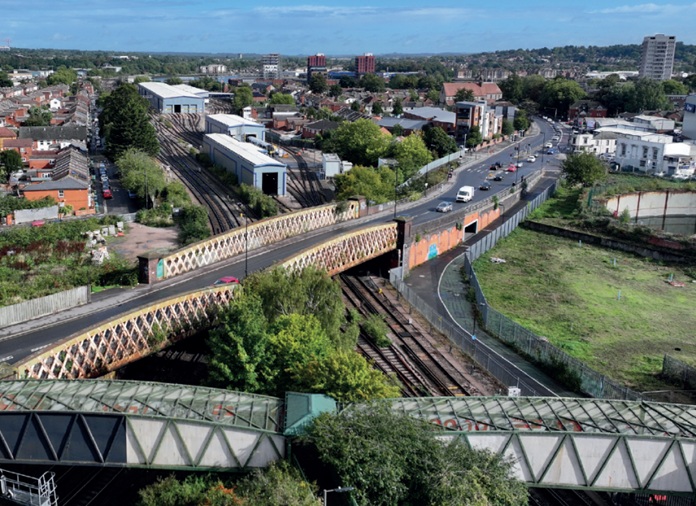
    Today, Alexander revealed that only 16 of these schemes had survived the review process: She said in a statement:

    The previous government left us with an unrealistic and unaffordable programme of schemes which we have had to review in the best interests of local and national taxpayers.

    She stressed that:

    this represents a government funding commitment of around £1 billion, subject to each scheme securing the necessary business case and other approvals in due course.

    She added:

    (more…)
  • Designated funds have no funding

    The new Road Investment Strategy (RIS) has set a new low for opacity by announcing four “designated funds” without any actual funding committed.

    The RIS document, published this morning by the Department for Transport, rehearses the use of designated funds to “go beyond the requirements of National Highways as a network operator” and states:

    RIS3 will continue to provide funding for four Designated Funds: Safety; Customer and Communities; Innovation and Research; and Environment. These four funds have been refined from RIS2 to reflect the priorities of RIS3 and its increased focus on safety and environmental objectives.

    Each Designated Fund is operated directly by National Highways. National Highways will report to Government about where the money has been spent, and how it has delivered value for money, but the operational decisions about how to invest these funds is delegated to National Highways.

    But, despite a reference to “the money” and to “these funds”, nowhere does the document state how much money will be in each of these funds, meaning that each so-called funds currently has neither designated funding nor any actual objectives.

    It appears that any actual funding will be announced further down the line.

    In fact, National Highways’ own webpage states:

    (more…)

  • Mather: I haven’t a clue

    The shambles that is East West Rail continues, with very junior minister Keir Mather unable to say when actual passenger services might start.

    He was asked by South Devon MP (but Transport Committee member) Rebecca Smith:

    in which month will the first East West Rail services operate from Winslow to Bletchley.

    And replied:

    The Department continues to work closely with Chiltern Railways and other partners to confirm a start date for the first EWR services between Oxford and Milton Keynes Central via Winslow. For passenger services to commence, trains will need to have been modified and fully tested, and driver training will need to have been completed. Winslow station also needs to be fully handed over, and future staffing arrangements also remain to be agreed.

    We knew all of this already so the only thing that Mather’s non-answer reveals is that he hasn’t a clue.

    Leave a comment

  • A pointless distraction?

    Unsurprisingly, Heidi Alexander’s announcement that she has “tasked HS2 Ltd to explore options to remove complexity that could cut billions in costs and reduce delays” has fallen flat with people who know what they are talking about.

    The DfT said:

    HS2 was originally commissioned to run at 360km/h, which would have made them the fastest conventional high-speed trains anywhere in the world. However, no railway in the UK, or globally, is currently engineered for 360km/h.

    This means that HS2 would have to wait for HS2 tracks to be built before testing any trains – an approach which could increase costs and delay the completion of the project.

    There’s an interesting use of language of possibility here, with “would have” suggesting that trains at this speed are not going to happen and “could” admitting that the increase in costs and delay might come to nothing.

    RAIL magazine reports:

    Plans to change the specification of HS2 to reduce the top speed are unlikely to save money, according to engineers.

    Railway engineer and writer Gareth Dennis said:

    (more…)

  • RIS 3 to include £4.4bn for the North

    With the third Road Investment Strategy (RIS 3) expected tomorrow, there are hints about what might be in it, but they are a bit contradictory and hard to make sense of.

    The actual news is that the Treasury’s Northern Growth Strategy: Next Steps document refers to

    £4.4 billion through the Road Investment Strategy, which will support…Major upgrades to key strategic roads such as the A66, M60 and A57.

    Because these documents have a habit of recycling old spending, I asked the Treasury, who helpfully confirmed that this is a reference to RIS 3.

    What it actually means in terms of spending on enhancement schemes (like the ones mentioned) or operations, maintenance, renewal, safety or environment spending remains to be seen.

    Obviously, being a growth strategy, the document will focus on “major upgrades to key strategic roads”.

    The draft RIS 3, published in August, promised “a greater focus than ever before on the maintenance and renewal of the network” but this was not quantified so could be more warm words.

    In October, National Highways chief executive Nick Harris told Highways magazine that, having failed to meet its RIS 2 safety target,

    (more…)
  • Isn’t “concerted ambition” just more warm words?

    The latest government document to reference plans for a West Yorkshire mass transit system shows ministers’ ability to offer little more than warm words – and hype – including an empty promise to deliver more than “warm words”.

    In fact, like Lord Peter Hendy’s “long overdue” PAYG upgrade, this statement in the Treasury’s Northern Growth Strategy: Next Steps document could be seen as a stinging critique of the government’s approach:

    The north of England has waited far too long for a government that matches warm words with concerted ambition…

    It continues:

    but by working in lockstep with northern Mayors, businesses, and communities , we can see the North define its own future.

    The problem is that central government has recently waded into the West Yorkshire Combined Authority’s plans for mass transit in an utterly Stalinist way that includes putting the scheme back by years and telling the authority that it has to prove that it cannot just be a few better buses.

    “Working in lockstep” with northern mayors to allow the North to define its own future is a bit like the Soviet Union invading Czechoslovakia to help it define its own future.

    (more…)
  • RIS 3 to feature “Safety National Programme”

    Back on the subject of what National Highways might actually deliver by way of safety improvements during the new Road Investment Strategy (RIS), a minister has confirmed that there will at least be one of the new-style National Programmes with “safety” as a title.

    With the 2026-31 strategy (RIS 3) is set to be published this week, probably Thursday, here’s what last summer’s draft RIS said:

    We are considering introducing new National Programmes to deliver defined outputs that support RIS objectives or commitments which are not within other programmes (for example, supporting specific programmes of activity around safety and environmental mitigation). These types of projects would have been funded via the Designated Funds in RIS1 and RIS2 but by making them distinct programmes we can more effectively monitor their delivery and outcomes. If these National Programmes were to feature in RIS3, their core purposes would remain the same as the Designated Funds, but they will provide a different delivery and funding model to complement the more flexible Designated Funds. If approved, the scope and size of Designated Funds will need to be reviewed as we define exactly what should be considered under each programme.

    In response to a written parliamentary question from Helen Morgan, Liberal Democrat MP for North Shropshire, roads minister Lilian Greenwood said:

    National Highways has assessed the safety performance of the 6-mile section of the A483 between Oswestry and the Welsh Border, which includes the Llynclys Crossroads. Improvements to the route are being considered for delivery as part of the Safety National Programme within RIS3, which is due to be published later in March.

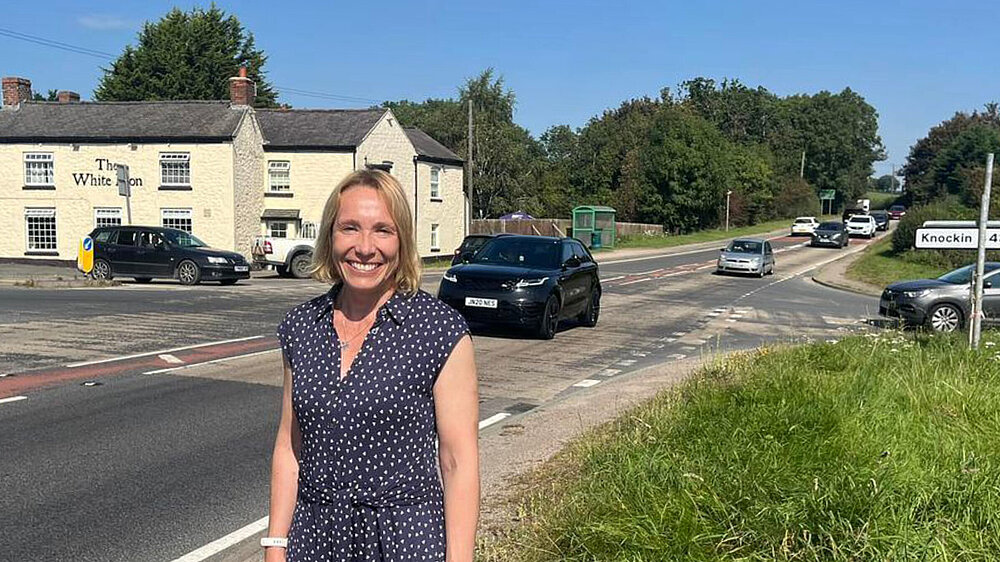
    The background to this is that two years ago Morgan (pictured) welcomed plans to cut the speed limit and install speed cameras at Llynclys Crossroads but this was subject to funding that never materialised. Now National Highways is believed to be looking at a roundabout, which would be a lot more expensive.

    It remains to be seen what the budget for the National Programme will be and indeed whether the A483 will be part of it, but a dedicated fund for safety is an improvement on the “Safety and Congestion” designated fund in the last RIS.

    Leave a comment

  • Confused? You’re meant to be

    The Department for Transport (DfT) has issued one of the most baffling press releases I have ever seen, whose role seem to be to make it look as if the creation of Grant Shapps’ Great British Railways (GBR) is “on track”, when it really isn’t.

    Apparently:

    • Shadow GBR moves to a new phase in March 2026 as Laura Shoaf joins the DFTO board, creating a solid foundation for the next stage of rail reform
    • DFTO board also welcomes Tony Poulter, former GBR Transition Team Non-Executive Director
    • developments bring experts together to continue to pave the way for the creation of GBR in 2027

    The 2027 date is because the actual GBR cannot come into existence until around 12 months after the Railways Bill receives Royal Assent and it’s not exactly steaming through Parliamentary processes.

    So the DfT wants to show that things are happening in the meantime and is limited to board level changes.

    But what does this mean?

    The appointments mark the official transition towards GBR from Shadow Great British Railways (SGBR), chaired by Laura Shoaf.

    It looks as if shadow GBR is being wound down and folded into the Department for Transport Operator (DFTO) but somehow the DfT won’t or can’t say this directly.

    (more…)

  • It’s the council who have to make the effort

    A man who successfully used section 56 of the 1980 Highways Act to force a highway authority to repair its roads has urged others to do the same, rather than just moaning about potholes on social media.

    The BBC reports:

    A judge has ordered a council to fill potholes in three roads after a driver took legal action.

    Derek Bennett said the roads in Berkhamsted and Hemel Hempstead were in “dire condition” and he has used highways legislation in a bid to force Hertfordshire County Council to fix them.

    Judge Andrew Johnson made the order at St Albans Crown Court, after Bennett, a retired construction project manager, took action using section 56 of the 1980 Highways Act.

    Council bosses have agreed to the order to mend the roads within 20 working days.

    As far as I can see, successfully using this legislation is pretty rare and the council was said by the judge not to have responded to Bennett’s application in the “proper manner”.  

    Bennett told the BBC he hoped others would follow his example:

    “The pothole situation in Britain has been described as a national disgrace,” he said.

    “And rather than complaining on social media, or generally making a noise about it, we would be much better advised to simply submit the application under section 56, which is open and free of charge for anyone to do.”

    He said applications could be dealt with by magistrates or crown court judges – depending on the progress of cases.

    It can be done without a great deal of effort.

    It’s the local authority, the county council, who have to make the effort in responding and repairing the roads.

  • Third time lucky on National Highways’ most dangerous roads?

    With the third Road Investment Strategy (RIS 3) due imminently, does the latest safety report from National Highways’ regulator give any reliable hints about what the government-owned company will be expected to do to improve the inherent safety of its roads?

    While the Office of Rail and Road (ORR) seems to be on a mission to give National Highways a free pass as it fails badly to meet its safety targets, its recent annual assessment of safety performance on the strategic road network suggests that National Highways is planning to make at least some improvements.

    iRAP star rating provides an objective measure of the level of ‘built-in’ safety for vehicle occupants, motorcyclists, cyclists and pedestrians. It uses star ratings on a five-point scale, where a 1-star rating reflects a high-risk road with little safety infrastructure, while 5-star indicates a road with minimal risk, designed for safety.

    As part of our work to assess National Highways’ approach to improving safety we asked the company to demonstrate how it uses iRAP assessments to inform the development of safety interventions on the SRN. We have reviewed case studies and evidence the company has used to develop schemes currently in feasibility and design stages, for potential delivery in road period 3 (RP3).

    The report concludes:

    The evidence provided shows that National Highways is applying iRAP analysis to existing 1- and 2-star routes to identify the interventions most likely to improve safety outcomes. These include measures such as improved lane delineation, enhanced signing, pedestrian and cyclist safety improvements, speed management and access control (where road users join the SRN from local or other major roads). The aim of these interventions is to raise the star rating of the route and reduce the predicted number of KSI casualties over time.

    A cynic like me might think identifying potential interventions is pretty meaningless unless there is a chance of delivering them.

    But the flipside of this is that both the company and its regulator must have some expectation that resources will be provided in RIS 3 for this purpose.

    The problem is that the draft RIS 3, published in the summer, is so vague.

    Let’s start with what National Highways said in its 2023 Initial Report for the RIS that was due to start in 2025 until the new government put it back a year:

    (more…)

Subscribe

Subscribe to get our the latest stories in your inbox.