
If ministers are capable of experiencing cognitive dissonance, you would hope that their heads are hurting with the continued contradictory messaging over “fixing potholes”.
Contrary to common usage, true cognitive dissonance only occurs when a person feels discomfort at holding two mutually contradictory positions.
The second bit is certainly going on with the Department for Transport (DfT), for example the latest DfT release:
How well does your council fix potholes? Tough new guidance for councils will end ‘patch up’ fixes and lead to smoother, safer journeys
New rules to require councils to prove they are doing more to fix potholes and future-proof roads
new government rules will require councils to reveal exactly how well they repair their roads – letting public hold them to account
long-term preventative repairs to be prioritised over costly ‘patch up’ fixes, saving motorists hundreds of pounds a year on pothole related repairs
councils that fail to publish their reports will have nearly a third of this year’s highways maintenance funding withheld
To make the point about prioritising long-term preventative repairs over costly ‘patch up’ fixes, the DfT has illustrated the press release with a picture of what appears to be a a joint‑sealing treatment, which is a form of reactive or routine maintenance.
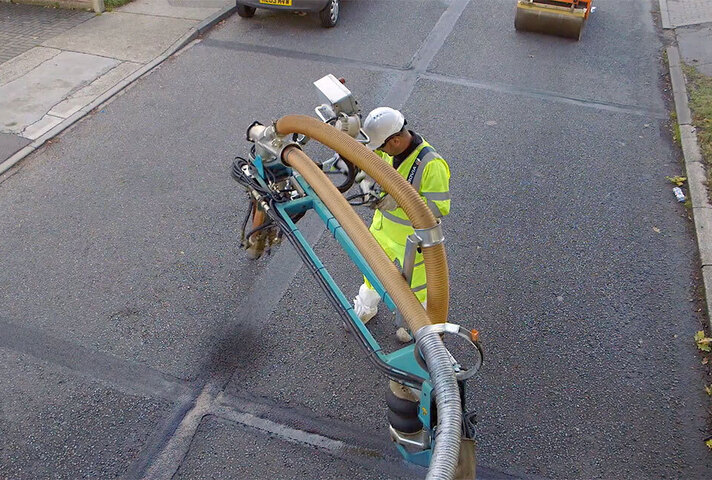
You can understand the desire to use a colloquial, voter-friendly phrase like “fix potholes”, but it should be obvious that repairs are only one part of maintenance, with preventative measures another part, and that “long term preventative repairs” do not exist.
The point about prevention is that you do it before repairs are necessary and indeed to prevent them.
The DfT also says:
For the first time councils will need to demonstrate publicly how well they repair their roads and what they are doing to avoid repeat visits to the same stretch of asphalt – encouraging full road resurfacing, preventing potholes and an end to short-term patch fixes.
In fact, the “best practice” that the methodology used to calculate ratings rewards is:
How much of a local highway authority’s maintenance spend was spent on preventative maintenance, rather than reactive maintenance, as a percentage
The percentage of red-rated roads [i.e. in poor structural condition] that a local highway authority plans to resurface in the financial year
The percentage of green and amber-rated roads that a local highway authority plans to apply preventative treatment to in the financial year
So, while this does indeed require councils to demonstrate publicly how well they repair their roads and what they are doing to avoid repeat visits to the same stretch of asphalt – encouraging full road resurfacing, preventing potholes and an end to short-term patch fixes, none of it is about
How well does your council fix potholes?


Leave a Reply