Transport Insights

The transport stories you won't see in the industry-friendly media

Author

Chris Ames
  • National Highways manages expectations upwards on road runoff

    National Highways has reiterated its commitment to improving around 250 sites where road runoff provides a high risk of polluting the environment, despite a lower target in the Road Investment Strategy (RIS 3) and advice from its regulator that it should come clean about what can really be afforded.

    As I wrote here, although the company’s 2030 Water Quality Plan sets that date to mitigate all confirmed high-risk outfalls and soakaways, the commitment in the new RIS is to mitigate 190–250 high risk sites, implicitly by 2031.

    This is subject to “reviewing a deliverability plan by the end of 2027/28” and “includes those outfalls and soakaways mitigated during Road Period 2 and 2025/26”.

    As defined by the bottom of the range, the RIS pledge is significantly less ambitious than the 2030 plan but higher than what the company said it could afford, as quoted in its regulator’s November 2025 advice on its draft business plan:

    National Highways estimates that between 110 and 130 mitigated assets will be delivered from the allocated budget as part of this programme in RP3.

    However, appearing before the Transport Committee on Wednesday, chief operating officer Duncan Smith said:

    We’re very pleased to say that we’ve been given funding in RIS 3 to mitigate those locations where they have the highest potential risk to the environment. So it’s not saying they are polluting, but based on the receiving watercourse and some of the topography and dynamics of the road that they are supporting, those are ones that are the highest priority for us to invest in. And we think that by 2030, we will have improved around 250 of those locations to ensure that the receiving waterourses are protected.

    I asked National Highways whether this meant that it was sticking to the 2030 plan. A spokesperson referenced the plan and said the company estimated that by the end of 2030 it will have mitigated around 250 sites, adding:

    (more…)

  • Planning to fail

    A senior National Highways official has told MPs that the company did not create a plan to meet its 2025 casualty reduction target – which it almost certainly missed by a long way – because achieving the target was dependent on factors outside its control.

    The admission finally provides an answer to questions raised, but apparently not followed up, by the company’s regulator about why it did so little early in the 2020-25 roads period (RP2) to achieve its target to reduce killed and seriously injured (KSI) casualties by 50% against a 2005-09 baseline.

    Appearing before the Transport Committee on Wednesday, National Highways bosses were challenged by Labour MP Scott Arthur about the company’s expected failure to meet its target.

    Elliot Shaw, chief customer and strategy officer, said: “We did not have a kind of clearly defined plan because it was reliant on broader factors.”

    This “broader factors” argument is consistent with National Highways’ excuses for missing safety targets over many years and was part of its attempt not to have a casualty reduction target in the new road investment strategy, but I think this is the first time it has been given as a reason for not having a plan to meet the 2025 target.

    It is also consistent with comments from regulator the Office of Rail and Road (ORR), which was highly critical of the company in its Annual Assessment of National Highways’ performance: April 2023 to March 2024:

    While we recognise that not all the actions to reduce KSIs on the SRN are fully within the company’s control we believe that if National Highways had been more proactive in recognising the risks earlier in the road period and developed more robust safety plans sooner this would have increased the likelihood of meeting the target.

    (more…)
  • “No-one told me we weren’t being transparent”

    National Highways obsessive secrecy is so extreme that no-one told its chair that it did not publish minutes of its board meetings,

    Appearing before the Transport Committee on Wednesday, Gareth Rhys Williams was told by Laurence Turner that similar government agencies and government-owned bodies all publish minutes and was asked:

    Why doesn’t National Highways do the same?

    Rhys Williams appeared totally surprised by the question. He replied:

    Um, when it’s somewhere we haven’t um, consider, um, I inherited that and that hasn’t been top of the list of things to think about, but, um… That’s a good question. Let me run back to you with when we thought about it. Hasn’t, hasn’t come up as something for us to think about before.

    Turner pointed out that the Information Commissioner’s definition document for public, wholly owned public companies, “does suggest that those documents should be published, and some of those other transport bodies have done so for 20 years”.

    He added:

    Now, I appreciate that you’ve not been in post for that time, but if it could be discussed at the board and that this committee updated on the outcome, that would be much appreciated.

    Of course, if the board does discuss it, we may never know.

    Leave a comment

  • National Highways kicks smart motorway safety upgrade into the long grass

    Transport minister Simon Lightwood has published a response to a fellow Labour MP’s written parliamentary question about emergency (refuge) areas on smart motorways but, as part of an ongoing and determined effort to avoid scrutiny, has made no attempt to answer the question.

    As I noted on Monday, a question put down by Sarah Champion MP followed up on my revelation that the new Road Investment Strategy said nothing about adding new emergency areas to meet the spacing standard to which the government agreed in 2022:

    To ask the Secretary of State for Transport, with reference to the Third Report of the Transport Committee of Session 2021–22, Rollout and safety of smart motorways, HC26, what steps her Department is taking to ensure that emergency refuges on All Lane Running Smart Motorways are spaced no more than 1,500m apart, and no more than 1,000m apart where possible.

    Predictably, Lightwood referenced the delivery of what the (Tory) government said it would do at the time, but made no mention of ensuring that the space standard would be met:

    (more…)
  • How Labour factionalism got us to Better Connected

    In a piece that is mainly about the Mandelson scandal, Tom Clark of Prospect addresses the factionalism at the top of government that led to the resignation of the previous transport secretary, Louise Haigh.

    You will remember that No 10 put the knife into Haigh by leaking the news of a trivial conviction relating to a mobile phone to a friendly (Tory) Newspaper.

    It was obvious that Haigh was far too radical on transport policy for the right wingers in No 10 under the then chief of staff, Morgan McSweeney, and that her defenestration was intended to allow someone like the more driver-friendly Heidi Alexander to take over.

    In a piece titled The Mandelson saga is really about Labour factionalism, Clark argues that Starmer’s appointment of Mandelson “shows how rule-by-clique dominates his party”.

    He notes that fired Foreign Office mandarin Olly Robbins revealed that Number 10 had enquired about an ambassadorship for former press chief Matthew Doyle, “another veteran partisan of the right in Labour’s internecine wars”.

    Regarding Haigh in particular, he adds:

    To grasp the zealotry of Labour’s ruling clique, compare the cavalier disregard for convention in advancing Mandelson and, potentially, Doyle, with the stance applied to Starmer’s first transport secretary, Louise Haigh. Haigh was widely seen as a success in her job, but never regarded as “one of us”. Before becoming a frontbencher, Haigh had judged she had better fill Starmer in on an embarrassing old conviction – albeit one so minor the court had left her unpunished – regarding a company mobile phone. Someone or other dug this detail out of a desk draw and handed it to the Times, before it was decided the story had become such a distraction that Haigh would have to go.

    Haigh was resigned just after launching a call for ideas on an integrated national transport strategy.

    She said of the strategy:

    (more…)
  • DfT stretches £1bn for local roads into “record” funding

    The Department for Transport (DfT) has doubled down on its refusal to reveal how much money is in its so-called “Structures Fund” for “fixing” bridges, flyovers and tunnels on English local authority roads.

    By way of a recap, all it is saying is that the fund shares £1bn (implicitly up to 2029-30) with local authority road upgrades, another funding stream that is likely to be very heavily oversubscribed.

    As I have pointed out, not only does the absence of dedicated funding call into question whether it should be called a fund at all, but the fact that some structures on the local authority network already get upgrade funding when they need “fixing” calls into question whether a discrete fund – as opposed to a statement of priorities – is even necessary.

    What we do know is that, unlike other local road upgrades, funding for structures is currently a one-off under the 2025 Spending Review and councils have a limited window this spring to put in bids.

    Funding decisions will be announced in Autumn 2026, with all successful schemes required to complete works by March 2030.

    The DfT has suggested to me that it may be able to say how much is in the fund when funding decisions are announced, which is in some ways a statement of the obvious, as we could tot up all the individual allocations.

    The department has also said that:

    A local contribution must be included in the submission. No minimum local contribution to costs has been set, however proposals with a higher contribution will be assessed positively.

    This means that the DfT could fit its contribution within a set budget, if it exists, by adjusting local authority contributions.

    It has been suggested to me by someone who knows about this sort of thing that the DfT may be keeping the size of the pot under wraps so as neither to give the impression that it is not worth applying or to suggest that it will fund any old scheme.

    The DfT has said it expects the “fund” to be oversubscribed, which would of course suit it because:

    Details of schemes that do not receive a funding award will be retained by the department in support of building the evidence base for investing in local highways structures in the future.

    This implicitly means post-2030 under a future spending review.

    With the DfT pointing out that…

    (more…)
  • Testing times for East West Rail

    There may be some movement on the opening of passenger services on the first phase of East West Rail, with the delivery of trains said to be “imminent”, albeit that they still have to be tested – and who knows how long that might take?

    Certainly not ministers at the Department for Transport.

    The last we heard, final modifications to trains – one of a number of issues to be resolved – were “expected to be delivered and tested in the coming months”.

    But in response to another question on the issue, from Tory MP Shivani Raja:

    To ask the Secretary of State for Transport, pursuant to the Answer of 25 March 2026 to Question 122594, when she expects trains for the first EWR services between Oxford and Milton Keynes to have been sufficiently fully tested for passenger services to commence.

    Very junior transport minister Keir Mather said:

    Chiltern subleases the trains that will be used on East West Rail from West Midlands Trains. The operator continues to work jointly with the train owner and the industry supply chain on the schedule for the final modifications which are expected to be delivered and tested imminently.

    It’s progress of sorts, but note that the question was when the trains might be “sufficiently fully tested for passenger services to commence” but the answer appeared to relate to the delivery, with (perhaps understandably) no timetable for the testing to be completed.

    I have said that the bit that is currently built is one of three “connection stages” but East West Rail Co is planning to replace these with ‘delivery phases’, with new stations and sections of the railway “opening as soon as they are ready rather than waiting for the whole route to be completed”.

    Good luck with that!

    Leave a comment

  • Awaiting answers on smart motorway safety

    Following my stories pointing out that ministers had quietly dropped a pledge to consider adding more emergency refuge areas on smart motorways to comply with a 2021 recommendation from MPs, one MP has put down a written parliamentary question on the issue.

    Sarah Champion, who is Labour MP for Rotherham and therefore smart motorway campaigner Claire Mercer’s MP, asked transport secretary and fellow Labour MP Heidi Alexander:

    with reference to the Third Report of the Transport Committee of Session 2021–22, Rollout and safety of smart motorways, HC26, what steps her Department is taking to ensure that emergency refuges on All Lane Running Smart Motorways are spaced no more than 1,500m apart, and no more than 1,000m apart where possible.

    As I wrote here, this was a recommendation from the Transport Committee (albeit that it referred to “emergency refuge areas”) and the Department for Transport said in its response:

    The Government agrees in principle with this recommendation as we recognise that the installation of EAs at closer spacing is valued by drivers and road safety organisations.

    It announced the £390m over the rest of the second Road Investment Strategy to for a retrofit programme that would see over 150 additional EAs being added to all lane running smart motorways by 2025.

    In recognition of the fact that this would not achieve the recommended standard, it added:

    A decision on whether to retrofit across the remainder of ALR smart motorways will be considered as part of the formulation of the third Road Investment Strategy, based on evidence of safety benefits.

    This last bit (considering the issue) does not appear to have happened. It certainly isn’t being done.

    Champion’s “named day” question should in theory have been answered last week but is still awaiting a response.

    One response to “Awaiting answers on smart motorway safety”

    1. clearlyteenage2e6308de03 avatar
      clearlyteenage2e6308de03

      Did the country really need most of the (un)Smart motorways at all? Do they contribute to carbon reduction? Might they encourage more peak hour car use especially near our big cities where we are trying to encourage sustainable transport use? Do they make it harder for emergency vehicles to reach incidences or accidents?

      If somebody (who – I ask?) thinks they might help reduce traffic congestion at certain times (on past evidence – possibly for a couple of years only) we must surely go back to opening the hard shoulder only on limited occasions to reduce congestion. At such times average and peak driving speeds need rigorous enforcement to say 40mph. That should save the really serious accidents and probably be an optimum speed for capacity anyway.

      There is no real case for higher speeds except for the truly daft economic appraisal system used by DfT and abused by National Highways in the promotion of their expensive schemes.

      Like

    Leave a comment

  • Happy World Public Transport Day!

    A brand new initiative launching today, World Public Transport Day is described by its promoter, the International Association of Public Transport (UIPT), as “a global celebration of the critical role public transport plays in our everyday lives, the success of our towns and cities, our economic prosperity and sustainable development”.

    You can read more about it here.

    The Foundation for Integrated Transport (FIT) is marking the day with its own launch – of a Prospectus “celebrating 10 years of supporting radical change for sustainable transport” and telling its story, starting with its founder, the late Dr Simon Norton, who believed that “people without access to private motor vehicles have just as much right as anyone else to get around”.

    FIT says the prospectus explores some the of hundreds of projects it has funded through the lens of six key impact areas:

    (more…)
  • Has Brabin dug herself into a hole with “spades in the ground”?

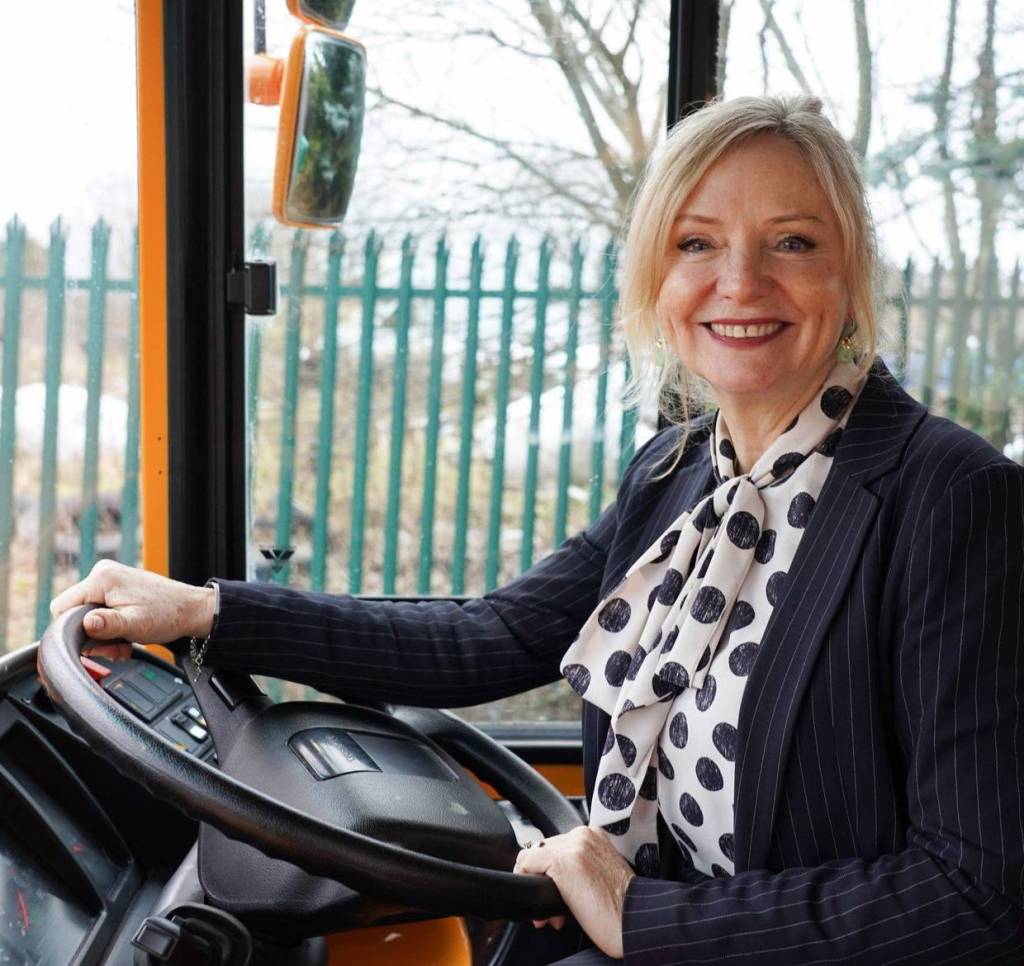
    Politics Home has published the full article by sister publication The House about the secret report on the West Yorkshire mass transit farce, setting out more clearly how mayor Tracy Brabin’s combined authority was working to a politicised agenda over the scheme’s timing and, in consequence, the scheme itself.

    The House has obtained a copy of the 45-page “peer review” by the National Infrastructure and Service Transformation Authority (Nista), which it says sets out 19 separate risks relating to the project’s governance, assurance and planning,

    It says a “key recurring theme” in the review is the extent to which Brabin’s West Yorkshire Combined Authority (WYCA) allowed the scheme to be shaped “around a political agenda rather than a recognised programmatic approach” and that it specifically refers to her manifesto pledge to get “spades in the ground by 2028”, which is the year that she intends to stand for a third term in office.

    According to The House, the report says of the 2028 pledge:

    This date has been driving the planning for WYMT [West Yorkshire Mass Transit] and while it is vitally important to drive pace into delivery and also challenge current ways of thinking, there are elements of Managing Public Money, that government needs to adhere to.

    The article quotes a “source who has been following the project closely”:

    (more…)

Subscribe

Subscribe to get our the latest stories in your inbox.