
The Government has finally confirmed that two major enhancement schemes on the strategic road network will be scrapped to pay for drones, but has not yet published a revised Road Investment Strategy (RIS) explaining what “a £113 million reduction in ‘other capital’ funding” means in practice.
The Department for Transport has published a very simple webpage headed “Variation to Road Investment Strategy 3 (RIS3): 2026 to 2031”, which puts a positive, if dishonest spin on the background:
the Secretary of State has decided to vary RIS3 to prioritise crucial investment to our national defence, now and for the future.
The webpage confirms that two schemes that were earmarked for cancellation have been scrapped, but gives no other detail.
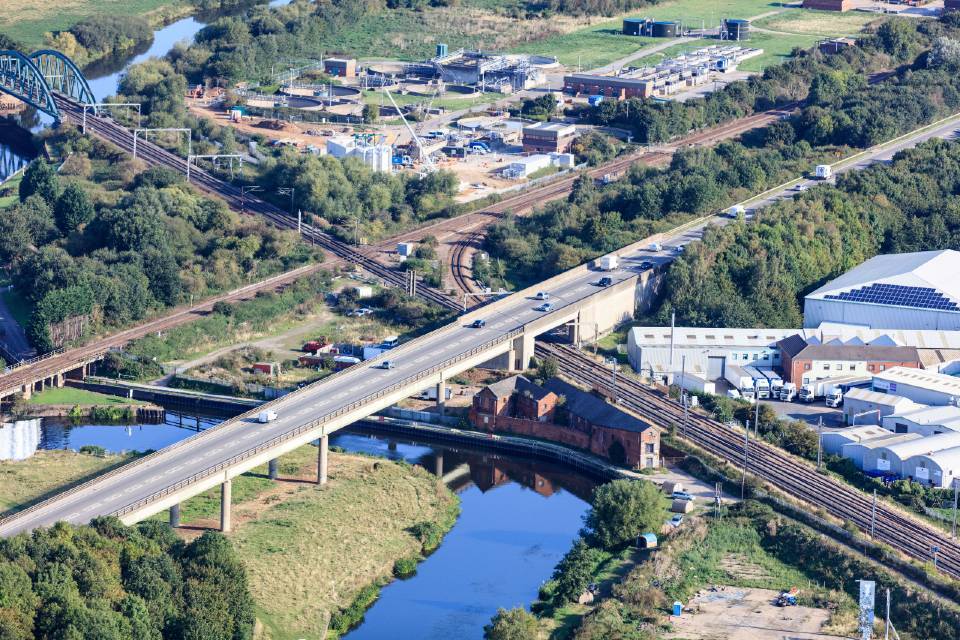
The variation will reduce capital funding by £428 million over the first 4 years of the RIS3 period, from 2026-27 to 2029-30. This includes a £315 million reduction in ‘enhancements’ funding associated with the cancellation of the A46 Newark Bypass and A38 Derby Junctions schemes, and a £113 million reduction in ‘other capital’ funding.
The variation is focused in scope. It does not constitute a wider reconsideration of RIS3. The rest of RIS3, including the objectives and performance specification, remain unchanged.
It adds:
This RIS3 variation will be published shortly and will update the RIS3 published on 26 March 2026.
This is pretty poor. RIS3 is a statutory document under the Infrastructure Act 2015 and the public should be able to see exactly what has changed: which paragraphs are amended, which commitments are removed, any revised funding tables, and any changes to National Highways’ obligations.
Have they cut safety spending, for example?
The BBC has reported the cancellation of the Newark Bypass with its usual lack of balance, focusing entirely on people who are annoyed at the news.
But the West Bridgford Wire has comment from Clare Wood of the Stop the A38 Expansion campaign, albeit earlier this year:
The harms of this scheme – the felling of nearly 12 hectares of mature trees, increased air pollution, increased carbon emissions and over four years of construction disruption and worsening congestion on local roads – were justified by the authorities because of the claimed economic benefits.
One response to “Two schemes scrapped but DfT fails to clarify RIS variations”
-
If money is needed for Defence cancel any more work on the Lower Thames Crossing – that will save even more preparatory millions or billions of our money and keep the revenue stream from the Dartford Crossing to continue to help pay defence bills in future.
LikeLike


Leave a Reply