Transport Insights

The transport stories you won't see in the industry-friendly media

Author

Chris Ames

Tag: funding

  • Alexander: We’ll cross that bridge when… oh, wait

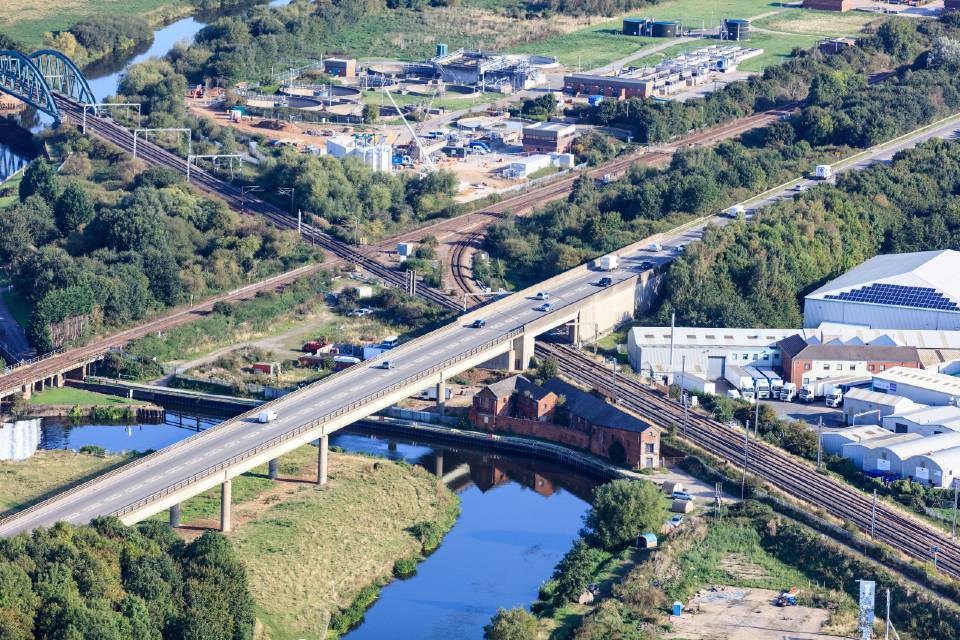
    Transport for London (TfL) is to introduce a “safety-critical” 18 tonne weight restriction on Vauxhall Bridge from July, after it failed to find the cash to do “top priority” renewal works that Heidi Alexander deferred in 2018.

    It said the restriction follows a recent assessment that showed that elements of the structure had “recently” deteriorated and that it has “a lower weight-bearing capacity than previously assessed”.

    While emergency vehicles and buses will be exempt from the restriction, the 0.5% of current traffic that is above 18 tonnes will be required to use a signed diversion.

    The weight restriction will remain in place while TfL works to resolve the problems as quickly as possible and continues to develop a long-term plan for the bridge

    The issue with these structures, as with the original Severn Bridge, is not individual (ordinarily) heavy vehicles, but the risk that too many will be on the bridge at the same time.

    The imposition of such restrictions has been on the cards since TfL postponed planned renewals work on the bridge in 2018, estimated at the time to cost £40-70m.

    This was part of a “two-year pro-active renewals freeze”, which included the deferral of major proactive renewals on London’s roads, as described in this paper to TfL’s Programmes and Investment Committee.

    Attending the meeting as deputy mayor for transport was Heidi Alexander, now transport secretary.

    The paper noted:

    (more…)
  • DfT sets new record for hype

    The statistics regulator is to have a very quiet word with the people at the Department for Transport (DfT) who have a habit of making up claims of “record” funding but, as usual with regulators, the touch is so light as to be almost intangible.

    I grassed the DfT up to the Office for Statistics Regulation over this claim in a press release about £3m funding to help councils with bus franchising:

    local authorities are already using record government funding to introduce schemes such as discounted and free fares, as well as new services to previously unserved rural areas

    which was repeated by minister Simon Lightwood.

    And this one in a press release about the mythical structures fund:

    a record £1 billion total package to enhance England’s roads

    Bizarrely, the DfT told me that

    the minister’s quote refers to the fact that this is the first time ever that multi-year bus settlement have been provided to all local transport authorities

    (more…)

  • All change on local transport funding

    A parliamentary answer from a transport minister sets out the distribution of local transport funding through mayoral and other transport authorities over the next few years – and proves to be a portal into a previously unannounced new framework for local transport funding.

    Labour MP Julia Buckley asked:

    of the £21 billion of new local transport funding announced across the Comprehensive Spending Review period, how much funding is allocated to (a) Established Mayoral Strategic Authorities, (b) Mayoral Strategic Authorities, and (c) local councils not within a combined authority.

    I think the answer from Lilian Greenwood is best broken down:

    Established Mayoral Strategic Authorities will receive c£7.7bn of transport funding through their integrated settlement over the Spending Review period from 2026/27 to 2029/30 (to 2028/29 for Resource Funding).

    Mayoral Strategic Authorities with a mayor in place will receive c£4bn of transport funding through the Mayoral Transport Fund over the same period.

    So far so good. Nearly £12bn of the £21bn is to go to the two top levels of existing mayoral authorities. Then:

    All other local transport authorities will receive c£9.6bn of local transport funding over the Spending Review period, via the Integrated Transport Fund and Bus Services Fund.

    This includes c£1.2bn for Foundation Strategic Authorities (combined authorities without an elected mayor) and c£2.9bn for local authorities that are part of the Devolution Priority Programme and are due to be established as Mayoral Transport Authorities.

    The first confusing bit is that while we know which authorities are part of the Devolution Priority Programme, no-one knows how many foundation strategic authorities there will be.

    The other really confusing thing is that the Department for Transport (DfT) has not announced publicly that it has created an Integrated Transport Fund, but only said this to local transport authorities.

    As it says in this memorandum of understanding between the DfT and Bournemouth, Christchurch and Poole Unitary Authority:

    (more…)
  • DfT stretches £1bn for local roads into “record” funding

    The Department for Transport (DfT) has doubled down on its refusal to reveal how much money is in its so-called “Structures Fund” for “fixing” bridges, flyovers and tunnels on English local authority roads.

    By way of a recap, all it is saying is that the fund shares £1bn (implicitly up to 2029-30) with local authority road upgrades, another funding stream that is likely to be very heavily oversubscribed.

    As I have pointed out, not only does the absence of dedicated funding call into question whether it should be called a fund at all, but the fact that some structures on the local authority network already get upgrade funding when they need “fixing” calls into question whether a discrete fund – as opposed to a statement of priorities – is even necessary.

    What we do know is that, unlike other local road upgrades, funding for structures is currently a one-off under the 2025 Spending Review and councils have a limited window this spring to put in bids.

    Funding decisions will be announced in Autumn 2026, with all successful schemes required to complete works by March 2030.

    The DfT has suggested to me that it may be able to say how much is in the fund when funding decisions are announced, which is in some ways a statement of the obvious, as we could tot up all the individual allocations.

    The department has also said that:

    A local contribution must be included in the submission. No minimum local contribution to costs has been set, however proposals with a higher contribution will be assessed positively.

    This means that the DfT could fit its contribution within a set budget, if it exists, by adjusting local authority contributions.

    It has been suggested to me by someone who knows about this sort of thing that the DfT may be keeping the size of the pot under wraps so as neither to give the impression that it is not worth applying or to suggest that it will fund any old scheme.

    The DfT has said it expects the “fund” to be oversubscribed, which would of course suit it because:

    Details of schemes that do not receive a funding award will be retained by the department in support of building the evidence base for investing in local highways structures in the future.

    This implicitly means post-2030 under a future spending review.

    With the DfT pointing out that…

    (more…)
  • All structure and no funding?

    The launch of the Structures Fund today comes with the usual mix of hype and a lack of detail, with the continued failure to confirm that the fund has dedicated funding again strengthening doubts that it actually exists.

    From the fanfare that the Department for Transport has given the fund in a press release headed “fixing the foundations”, you would think it has solved the problem:

    Government is backing councils across England to fix crumbling bridges, failing flyovers and deteriorating tunnels as the new Structures Fund opens today in the latest move to back drivers.

    Decades of neglected infrastructure have led to weight-restricted crossings adding miles to everyday journeys and deteriorating flyovers, leaving communities unsure when the next closure will come. The new fund will put money directly into the hands of councils to tackle the most pressing cases they cannot afford to fix alone.

    The fund is now open for bids and will inject cash into repairing critical structures across England, ensuring transport infrastructure is more resilient to extreme weather, while making everyday journeys safer, smoother and more dependable.

    The phrase “across England” – used twice – is typical PR language to make it look as if the funding will be universal, where as we are very much back to the bad old days of competitive bidding, with the reality being that money will be put into the hands of *some* councils and some journeys will improve.

    Always happy to go along with the hype, transport secretary Heidi Alexander is reported to have said:

    (more…)

  • Lightwood plums new depths of churlish opacity

    Roads minister Simon Lightwood, who was complicit in hiding the smart motorway evaluation reports and seems to have gone into politics to hide things from the public, has blanked a question from an MP about safety spending under the new road investment strategy (RIS).

    Asked by Helen Morgan how much money is committed to the Safety National Programme and Small Schemes National Programme elements of the RIS, Lightwood said:

    RIS3 included for the first time a set of four National Programmes, which are a new way for National Highways to deliver defined outputs that support RIS3 objectives, where these are not funded in other programmes. Details of the funding for each National Programme will be confirmed in National Highways’ Delivery Plan for 2026-31, which is expected to be published in the summer.

    It’s worth unpicking this to see how evasive Lightwood is being. The RIS, written by his department, is literally a strategy for spending on the strategic road network. Its purpose is to give National Highways a budget and tell it, Parliament and the public how it should be spent.

    Lightwood knows how much is in the budget for the Safety and Small Schemes National Programmes but is simply choosing to hide this.

    (more…)
  • Is Labour doing a John Terry?

    The Department for Transport (DfT) has – perhaps justifiably – praised councils for doing good things with the bus funding it is giving them, but once again spoiled a good news story with hype.

    On the back of announcing just £3m for six mayoral authorities to progress bus franchising, the DfT has proclaimed:

    Millions of bus passengers across England are benefitting from cheaper fares, new routes and better services as local authorities are putting government funding to work in their communities.

    With the cost-of-living crisis continuing to play a part in people’s everyday lives, local authorities are stepping up to make buses work better for everyone, reducing the burden on households.

    That’s very positive, as is:

    These schemes are all backed by the government, with more than £3 billion invested through the Local Authority Bus Grant between 2026 and 2029 – money that local leaders can spend on the things passengers actually need.

    (Apart from the baffling but seemingly obligatory reference to subsidies being an investment.)

    But is the £3bn really “record” funding, as both the DfT and minister Simon Lightwood claim? There is no evidence in the press release to back this up and I have asked the DfT to justify it.

    The six authorities that are getting half a million quid each are:

    (more…)

  • National Highways secures little safety funding but a soft safety target

    Documents published by National Highways’ regulator show how the company tried to avoid being held to account during the new Road Investment Strategy (RIS 3) for its continued failure to meet casualty reduction targets and how little it is likely to do by way of dedicated safety work.

    The Office of Rail and Road (ORR) efficiency review, or advice on National Highways’ draft strategic business plan, discloses what the company was proposing at the end of last year to do under the RIS that runs for five years from tomorrow.

    If the proposed spending levels in the draft strategic business plan (SBP) have been carried through to the RIS itself, dedicated spending on safety over five years will be (significantly) less than the cost of one major enhancement scheme, such as the £600m A38 Derby Junctions scheme.

    The ORR reported that National Highways’ draft SBP proposed a spend of £342m in its safety National Programme and £122m in its safety Designated Fund, totalling £464m.

    The regulator has also published a document that informed its own review, Safety Advice to inform the RIS3 Efficiency Review by Thomas Fleming Transport Consulting.

    This describes in quite scathing terms what the £464m looks like out of a budget totalling £25bn:

    The commitment of less than 2% of the RIS3 Statement of Funds Available to specific safety activities is difficult to reconcile with safety being the number one priority for the organisation.

    Comparison between the ORR’s account of the SBP and the RIS itself reveals that a proposal for the National Programme to deliver safety interventions on 18 priority corridors with current poor safety performance and a low International Road Assessment Programme (iRAP) star rating has been carried forward – suggesting that the funding levels will be very close to what was proposed.

    In terms for casualty reduction, the Thomas Fleming analysis reveals that the National Programmes and Designated Funds combined were forecast to achieve a reduction of just 85 killed and seriously injured (KSI) casualties per year by the end of the RIS. It calculated that this would represent a cut of just 2.7% relative to the 2005-2009 baseline against which previous RIS targets were calculated.

    It highlighted “significant disparities” between the scale of this reduction and the long-term trajectory required to achieve zero deaths and serious injuries on the strategic network by 2050 – a target date that National Highways has already put back by 10 years.

    (more…)
  • 26 local road upgrades put out of their misery

    Ministers have announced a further 16 local authority road schemes that survived the review initiated last year, but the schemes join a long queue with no funding any time soon.

    Last year the Department for Transport (DfT) claimed to have green-lit 28 major road network (MRN) or large local major (LLM) schemes, albeit that many were already in construction and others only working on their business cases.

    It announced that a further list of (42) schemes were “under consideration”, with transport secretary Heidi Alexander telling MPs that these schemes “now need to be reviewed”.

    Today, Alexander revealed that only 16 of these schemes had survived the review process: She said in a statement:

    The previous government left us with an unrealistic and unaffordable programme of schemes which we have had to review in the best interests of local and national taxpayers.

    She stressed that:

    this represents a government funding commitment of around £1 billion, subject to each scheme securing the necessary business case and other approvals in due course.

    She added:

    (more…)
  • RIS 3 to include £4.4bn for the North

    With the third Road Investment Strategy (RIS 3) expected tomorrow, there are hints about what might be in it, but they are a bit contradictory and hard to make sense of.

    The actual news is that the Treasury’s Northern Growth Strategy: Next Steps document refers to

    £4.4 billion through the Road Investment Strategy, which will support…Major upgrades to key strategic roads such as the A66, M60 and A57.

    Because these documents have a habit of recycling old spending, I asked the Treasury, who helpfully confirmed that this is a reference to RIS 3.

    What it actually means in terms of spending on enhancement schemes (like the ones mentioned) or operations, maintenance, renewal, safety or environment spending remains to be seen.

    Obviously, being a growth strategy, the document will focus on “major upgrades to key strategic roads”.

    The draft RIS 3, published in August, promised “a greater focus than ever before on the maintenance and renewal of the network” but this was not quantified so could be more warm words.

    In October, National Highways chief executive Nick Harris told Highways magazine that, having failed to meet its RIS 2 safety target,

    (more…)