
Transport for London (TfL) is to introduce a “safety-critical” 18 tonne weight restriction on Vauxhall Bridge from July, after it failed to find the cash to do “top priority” renewal works that Heidi Alexander deferred in 2018.
It said the restriction follows a recent assessment that showed that elements of the structure had “recently” deteriorated and that it has “a lower weight-bearing capacity than previously assessed”.
While emergency vehicles and buses will be exempt from the restriction, the 0.5% of current traffic that is above 18 tonnes will be required to use a signed diversion.
The weight restriction will remain in place while TfL works to resolve the problems as quickly as possible and continues to develop a long-term plan for the bridge
The issue with these structures, as with the original Severn Bridge, is not individual (ordinarily) heavy vehicles, but the risk that too many will be on the bridge at the same time.
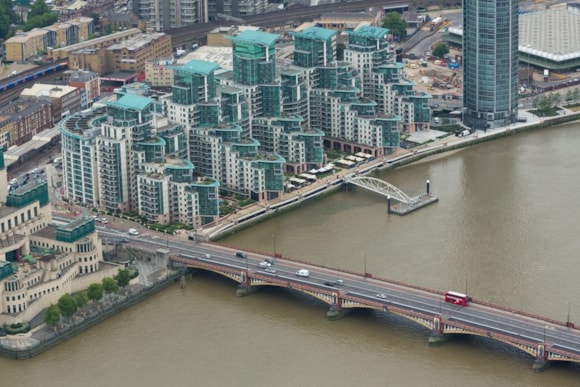
The imposition of such restrictions has been on the cards since TfL postponed planned renewals work on the bridge in 2018, estimated at the time to cost £40-70m.
This was part of a “two-year pro-active renewals freeze”, which included the deferral of major proactive renewals on London’s roads, as described in this paper to TfL’s Programmes and Investment Committee.
Attending the meeting as deputy mayor for transport was Heidi Alexander, now transport secretary.
The paper noted:
Restrictions may be necessary on some major assets within the next five years due to the deferral of works; these include Vauxhall Bridge, the Westway and Rotherhithe Tunnel (over 20 bridges have special inspections and monitoring in place to ensure appropriate steps are taken, including possible restrictions, if changes occur). Continuation of the reduction beyond 2019/20 is very likely to result in greater impacts and maintaining network safety will require asset restrictions and closures, resulting in significant network disruption.
As I wrote here, in 2020 TfL closed the bridge for a few months, to carry out “vital maintenance” of the Edwardian structure, including bridge deck waterproofing, resurfacing the footway and carriageway, drainage improvements, kerb works and replacing the bridge’s expansion joints.
TfL said his would protect the bridge “for decades to come”, but that it would continue to monitor the bridge to determine the timing of future repairs to the underside, i.e. the deferred major renewals work.
It appears that TfL never found the money to do this and in 2023 it quietly closed the bridge to abnormal loads, i.e. any vehicle exceeding 44 tonnes gross weight or 11.5 tonnes per axle.
It did however recently find some money to do some, but not all, of the required works to the Westway and the “long-term plan” for Vauxhall Bridge is not so much working out what needs to be done but working out what can be afforded when.
A Standard article on the Vauxhall Bridge news quotes Steve Gooding of the RAC Foundation:
Commuters relying on the many bus services that cross Vauxhall Bridge each day might be sighing with relief that their journeys won’t be affected by these restrictions.
But at Department for Transport (DfT) headquarters, barely half-a-mile away, the question must be whether the new Structures Fund will be anywhere near large enough to address this growing challenge seen not just in London but country-wide.
Ironically, it was central government that imposed the cuts – the removal of TfL’s revenue grant – that caused its current secretary of state to cut back its renewals programme.
 Transport Insights
Leave a comment