Transport Insights

The transport stories you won't see in the industry-friendly media

Author

Chris Ames

Tag: a38

  • Tunnel spared from deadly cuts

    With the fallout from the shelving of two National Highways road schemes continuing, the BBC’s reporting has reflected to some extent the fact that not everyone thinks new roads are a good idea, although thankfully the Lower Thames Crossing has been spared!

    In the midlands, the BBC asks a question that presumes that new roads are a good idea:

    Is the East Midlands being neglected again with scrapped road schemes?

    The article focuses on regional mayor Claire Ward, who is still cross:

    Ward felt she’d been making progress on behalf of Nottinghamshire and Derbyshire, securing, for example, £2bn of funding for local transport projects in last year’s Spending Review.

    So what has gone wrong?

    So far we have “neglected” and “wrong” but if you can read past what fascist reform thinks there are at least alternative voices:

    The road schemes are not universally popular, either, and local campaign groups have long argued against them on environmental grounds.

    Paul Smith, who chairs the parish council in the village of Winthorpe, near the A46 Newark bypass, says “a lot of people are relieved”.

    And the article links to an earlier article with Derby City Council leader Nadine Peatfield questioning the case for if the “recently shelved A38 scheme” in the city, and comment from Adrian Howlett, from the Stop the A38 expansion group:

    Howlett said the group was “disappointed” that there had been no announcement that other options would be explored, and described the current scheme as “completely outdated”.

    He added: “Let’s actually get some investment into Derby that isn’t just a massive roads-dependent scheme and actually looks at all the options.”

    Which is a reminder that the shelving of the two schemes is not the government seeing sense, just cutting transport investment.

    (more…)
  • Is “uncommitted” road safety funding under threat?

    We’ve now worked backwards to the point where the government is still not being straight about shelving road schemes in the road investment strategy (RIS 3) and is looking to cut other “uncommitted” roads funding – on safety perhaps?

    Early yesterday people were working backwards from news that National Highways had cancelled its £300m contract with Skanska to build the A46 Newark Bypass.

    As I reported, the Department for Transport, which knew very well what was going on, was referring enquiries to National Highways, on the grounds that it was a supply chain issue.

    It then emerged that the decision had come from the other end as National Highways referred me to “The Defence Investment Plan Funding explainer”, which said:

    DfT will provide savings of up to £700m from its roads funding. The Department will consult on reductions to the third Road Investment Strategy (RIS3) – including the potential cancellation of the A38 Derby Junctions and A46 Newark Bypass schemes, both of which are yet to enter contract and not as far along as other road schemes. There will be stakeholder consultations before any final decision is taken.

    Utterly gutless and inept. The Treasury doesn’t seem to realise that the A46 scheme is not “yet to enter contract”. There may not have been notice to proceed with the works but the contract was there and had to be cancelled. Maybe someone conflated “contract” with “construction”, or were they just spinning?

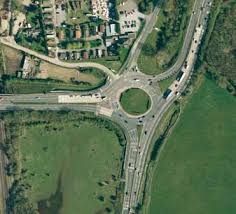
    The news that both the A38 (pictured) and A46 schemes have been shelved was welcomed by many campaigners, but went down very badly with Claire Ward, mayor of the East Midlands.

    In a statement, she described it as “totally unacceptable to me”, adding:

    (more…)
  • A38 project is a transparency black hole

    Today’s guest blog from Clare Wood from the Stop the A38 Expansion Campaign takes up the theme of transparency over the value for money of major road projects.

    National Highways’ publication of a preliminary market engagement notice for the long-delayed A38 Derby Junctions scheme, now estimated at £600 million and set to run for 10 years, should not be mistaken for progress.

    Originally budgeted at £200–250m, the scheme has more than doubled in cost. National Highways and ministers now suggest that legal challenges and inflation are to blame.

    That narrative is convenient but it is also misleading.

    The A38 is not a victim of vexatious legal challenges. It is a project repeatedly exposed for weak appraisal, unlawful approval and economic obsolescence, problems of the Government’s own making both under Conservatives and Labour.

    This is an outdated, poorly justified road expansion project propped up by weak governance. The scheme was part of the Labour Government’s infrastructure spending review last year.

    The increased scheme costs have been known since July 2025 as the Office for Road and Rail published a report on National Highways’ performance. It’s worth noting legal challenges are not noted as a reason for increased costs and the Lower Thames Crossing has faced the greatest increases in costs but never dealt with a legal challenge.

    As the A38 scheme has spiralled in cost, there remains no Full Business Case, no published Accounting Officer Assessment. The Information Commissioner’s Office has ruled that National Highways must disclose the information used by Government to approve the A38 expansion in last year’s Spending Review. National Highways is appealing against the decision and the Department for Transport is delaying a related internal review on the cancellation of Midlands Main Line electrification, raising serious concerns about transparency in how these major funding decisions were made.

    National Highways has blamed the legal challenges for rising A38 costs yet conveniently failed to share any details about those legal challenges.

    Both legal challenges to the scheme were the result of concerns raised during official examination processes that were ignored.

    The first challenge succeeded because the then transport secretary, Grant Shapps, conceded the approval was unlawful — the scheme was permitted to proceed without properly considering its cumulative carbon emissions, despite significant environmental and climate harms documented in National Highways’ own planning documents.

    (more…)