
National Highways has suggested that work to improve the safety of smart motorways might be cut as part of a raid on its funding to pay for increased defence spending.
The coded admission comes in response to a freedom of information (FOI) request from smart motorway campaigner Claire Mercer, which sought to find out how much the company was planning to spend on the network under the third Road Investment Strategy (RIS 3), which began in April and runs until 2031.
It’s worth starting with the part of RIS 3 that Mercer cited:
Over the third road period, we expect National Highways to continue to invest in the technology needed to help increase public confidence when driving on smart motorways, like upgrading CCTV cameras to detect incidents that could have an impact on the safety of users or their journey times.
There are a lot of weasel words here, including “invest” and “to help increase public confidence”, with the latter reflecting a refusal to admit openly that safety on smart motorways could be objectively better.
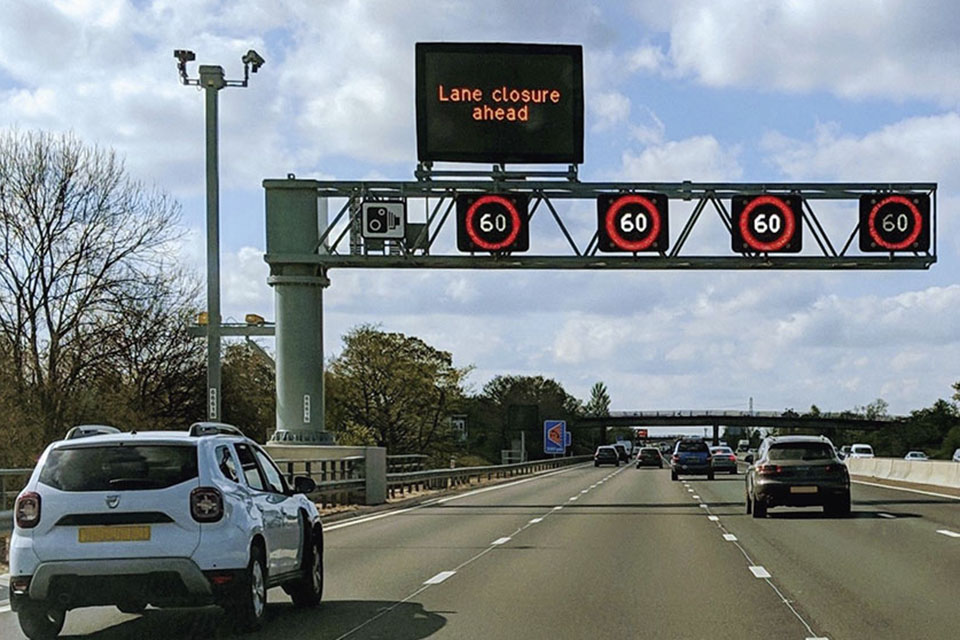
If CCTV is to be upgraded, rather than simply renewed and replaced when life-expired, that could be an investment, but upgrading cameras “to detect incidents” misrepresents what they are used for, which is to allow operatives to view incidents, including those that have been flagged by other technology.
But, assuming that there were plans to improve technology under RIS3, these are now under threat. After extensive requests for clarification, National Highways responded:
DfT is currently consulting on proposals to reduce RIS3 capital funding by £428 million over the first four years of the RIS3 period, from 2026-27 to 2030-31. This includes the possible cancellation of two enhancement schemes – the A46 Newark Bypass and A38 Derby Junctions – and an approximately 2 per cent reduction in other capital funding.
Because of this, in relation to roadside technology renewals, including CCTV, and maintenance in RIS3 for smart motorways, we will set out our future programme through our Strategic Business Plan and Delivery Plan once that process is complete.
Therefore, and in accordance with Section 1 (1) of the Freedom of Information Act, I can confirm that this information is not held yet.
Note here that there is no mention of “upgrades”, just renewals and maintenance, but what they are avoiding saying in honest language is that capital funding for smart motorway technology could be cut – particularly as it is only about improving confidence.
The ORR reported in July that last year National Highways did not meet its renewals commitment for signs technology and delivered to the lower end of the performance range it proposed for signals and CCTV technologies.
The response is also problematic in FOI terms, as Mercer has noted. National Highways has thrown a non sequitur in here, suggesting that because the plans are due to be published shortly, the information is “not yet held”. This conflates the existence of the information with its publication.
According to the response:
Finalisation and publication [of the plans] was expected to be during the summer. However, the Department has begun a consultation on proposed changes to RIS3 following publication of the Defence Investment Plan.
But, again, finalising the plans and publishing them are not the same thing. It is possible and indeed likely, that at the time of Mercer’s request the budget had been set. Given that any cuts are the subject of a consultation – and are therefore not guaranteed to happen – the relevant information for the purposes of the FOI request is the current budget. Mercer has requested a review on this basis.
Meanwhile, the Independent reports:
Smart motorway drivers have been hit with criminal convictions and more than £100,000 in fines, court costs and victim surcharges this year for ignoring “red X” lane closure signs, research has found.
Aside from the continuing level of non-compliance, the enforcement must be a good thing, surely?


Leave a Reply