
There’s a good write-up in the (Sheffield) Star of the current situation over the release of the 14 evaluation reports on smart motorways that ministers are sitting on, with the Department for Transport’s (DfT) excuses not fooling anyone.
It features Claire Mercer’s reaction to the DfT being unable to say that there is anything other than a made-up “assurance” process to justify the ongoing suppression of the Post Opening Project Evaluations (POPEs).
The reality, as National Highways told me, is that ministers have to agree a “comms handling plan” before telling us how (un)safe the projects are.
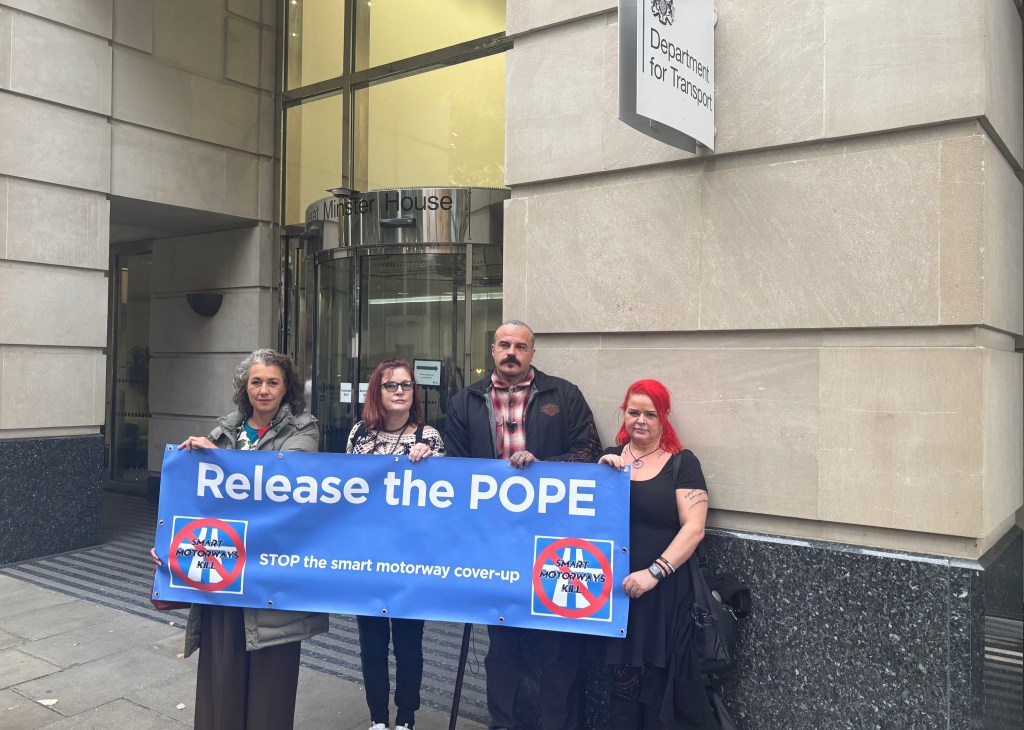
Speaking to The Star, Claire – founder of the Smart Motorways Kill Campaign – scolded the DfT and said she believes the “only reason” for the delays can be that roads minister Simon Lightwood is “merely preparing to spin what are likely to be very negative findings.”
The Star does include Mercer’s allegation that Lightwood lied to her by falsely claiming that an assurance process is “ongoing”:
As he made this claim directly to me in writing, someone widowed by government policy, I have sadly reached the conclusion that I have been lied to by a government minister.
There has been a suggestion that the reports could be released around Christmas but Mercer is not sure:
Requests for the expected release date by solicitors Irwin Mitchel, MP for Rotherham Sarah Champion, and The Star were sidestepped.
When The Star asked the DfT to confirm if the POPE reports will be released in 2025, a Department for Transport spokesperson gave no date and only said: “Smart motorways remain our safest roads in terms of deaths or serious injuries.
“While our roads are amongst the safest in the world, we are making them even safer with our forthcoming Road Safety Strategy, the first in more than a decade.”
“That reply is an insult,” said Claire in response. “They’ve not even tried to answer any questions. It is just copy and pasted sound bites.”

 Transport Insights
Leave a reply to clearlyteenage2e6308de03 Cancel reply