Transport Insights

The transport stories you won't see in the industry-friendly media

Author

Chris Ames

Tag: dft

  • DfT sets new record for hype

    The statistics regulator is to have a very quiet word with the people at the Department for Transport (DfT) who have a habit of making up claims of “record” funding but, as usual with regulators, the touch is so light as to be almost intangible.

    I grassed the DfT up to the Office for Statistics Regulation over this claim in a press release about £3m funding to help councils with bus franchising:

    local authorities are already using record government funding to introduce schemes such as discounted and free fares, as well as new services to previously unserved rural areas

    which was repeated by minister Simon Lightwood.

    And this one in a press release about the mythical structures fund:

    a record £1 billion total package to enhance England’s roads

    Bizarrely, the DfT told me that

    the minister’s quote refers to the fact that this is the first time ever that multi-year bus settlement have been provided to all local transport authorities

    (more…)

  • How Labour factionalism got us to Better Connected

    In a piece that is mainly about the Mandelson scandal, Tom Clark of Prospect addresses the factionalism at the top of government that led to the resignation of the previous transport secretary, Louise Haigh.

    You will remember that No 10 put the knife into Haigh by leaking the news of a trivial conviction relating to a mobile phone to a friendly (Tory) Newspaper.

    It was obvious that Haigh was far too radical on transport policy for the right wingers in No 10 under the then chief of staff, Morgan McSweeney, and that her defenestration was intended to allow someone like the more driver-friendly Heidi Alexander to take over.

    In a piece titled The Mandelson saga is really about Labour factionalism, Clark argues that Starmer’s appointment of Mandelson “shows how rule-by-clique dominates his party”.

    He notes that fired Foreign Office mandarin Olly Robbins revealed that Number 10 had enquired about an ambassadorship for former press chief Matthew Doyle, “another veteran partisan of the right in Labour’s internecine wars”.

    Regarding Haigh in particular, he adds:

    To grasp the zealotry of Labour’s ruling clique, compare the cavalier disregard for convention in advancing Mandelson and, potentially, Doyle, with the stance applied to Starmer’s first transport secretary, Louise Haigh. Haigh was widely seen as a success in her job, but never regarded as “one of us”. Before becoming a frontbencher, Haigh had judged she had better fill Starmer in on an embarrassing old conviction – albeit one so minor the court had left her unpunished – regarding a company mobile phone. Someone or other dug this detail out of a desk draw and handed it to the Times, before it was decided the story had become such a distraction that Haigh would have to go.

    Haigh was resigned just after launching a call for ideas on an integrated national transport strategy.

    She said of the strategy:

    (more…)
  • DfT stretches £1bn for local roads into “record” funding

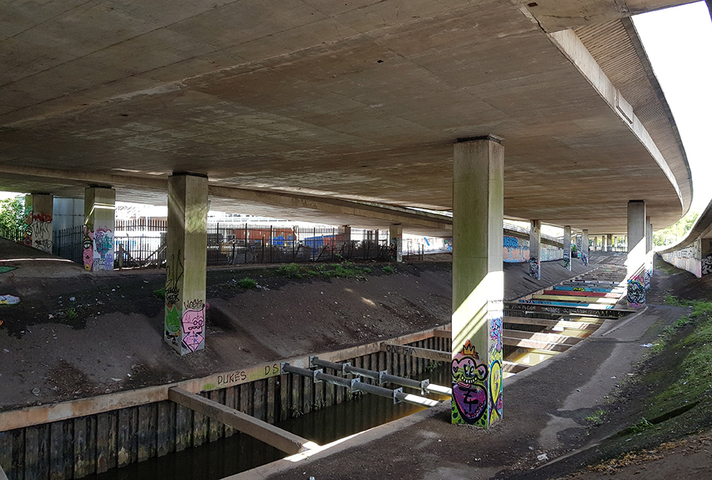
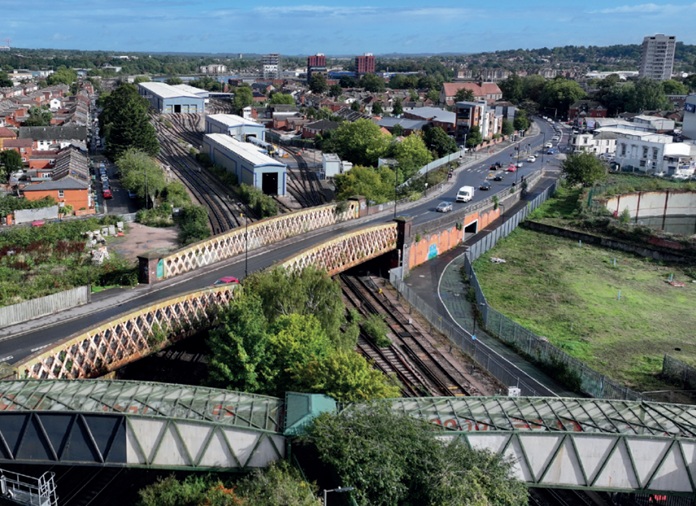
    The Department for Transport (DfT) has doubled down on its refusal to reveal how much money is in its so-called “Structures Fund” for “fixing” bridges, flyovers and tunnels on English local authority roads.

    By way of a recap, all it is saying is that the fund shares £1bn (implicitly up to 2029-30) with local authority road upgrades, another funding stream that is likely to be very heavily oversubscribed.

    As I have pointed out, not only does the absence of dedicated funding call into question whether it should be called a fund at all, but the fact that some structures on the local authority network already get upgrade funding when they need “fixing” calls into question whether a discrete fund – as opposed to a statement of priorities – is even necessary.

    What we do know is that, unlike other local road upgrades, funding for structures is currently a one-off under the 2025 Spending Review and councils have a limited window this spring to put in bids.

    Funding decisions will be announced in Autumn 2026, with all successful schemes required to complete works by March 2030.

    The DfT has suggested to me that it may be able to say how much is in the fund when funding decisions are announced, which is in some ways a statement of the obvious, as we could tot up all the individual allocations.

    The department has also said that:

    A local contribution must be included in the submission. No minimum local contribution to costs has been set, however proposals with a higher contribution will be assessed positively.

    This means that the DfT could fit its contribution within a set budget, if it exists, by adjusting local authority contributions.

    It has been suggested to me by someone who knows about this sort of thing that the DfT may be keeping the size of the pot under wraps so as neither to give the impression that it is not worth applying or to suggest that it will fund any old scheme.

    The DfT has said it expects the “fund” to be oversubscribed, which would of course suit it because:

    Details of schemes that do not receive a funding award will be retained by the department in support of building the evidence base for investing in local highways structures in the future.

    This implicitly means post-2030 under a future spending review.

    With the DfT pointing out that…

    (more…)
  • All structure and no funding?

    The launch of the Structures Fund today comes with the usual mix of hype and a lack of detail, with the continued failure to confirm that the fund has dedicated funding again strengthening doubts that it actually exists.

    From the fanfare that the Department for Transport has given the fund in a press release headed “fixing the foundations”, you would think it has solved the problem:

    Government is backing councils across England to fix crumbling bridges, failing flyovers and deteriorating tunnels as the new Structures Fund opens today in the latest move to back drivers.

    Decades of neglected infrastructure have led to weight-restricted crossings adding miles to everyday journeys and deteriorating flyovers, leaving communities unsure when the next closure will come. The new fund will put money directly into the hands of councils to tackle the most pressing cases they cannot afford to fix alone.

    The fund is now open for bids and will inject cash into repairing critical structures across England, ensuring transport infrastructure is more resilient to extreme weather, while making everyday journeys safer, smoother and more dependable.

    The phrase “across England” – used twice – is typical PR language to make it look as if the funding will be universal, where as we are very much back to the bad old days of competitive bidding, with the reality being that money will be put into the hands of *some* councils and some journeys will improve.

    Always happy to go along with the hype, transport secretary Heidi Alexander is reported to have said:

    (more…)

  • Is Labour doing a John Terry?

    The Department for Transport (DfT) has – perhaps justifiably – praised councils for doing good things with the bus funding it is giving them, but once again spoiled a good news story with hype.

    On the back of announcing just £3m for six mayoral authorities to progress bus franchising, the DfT has proclaimed:

    Millions of bus passengers across England are benefitting from cheaper fares, new routes and better services as local authorities are putting government funding to work in their communities.

    With the cost-of-living crisis continuing to play a part in people’s everyday lives, local authorities are stepping up to make buses work better for everyone, reducing the burden on households.

    That’s very positive, as is:

    These schemes are all backed by the government, with more than £3 billion invested through the Local Authority Bus Grant between 2026 and 2029 – money that local leaders can spend on the things passengers actually need.

    (Apart from the baffling but seemingly obligatory reference to subsidies being an investment.)

    But is the £3bn really “record” funding, as both the DfT and minister Simon Lightwood claim? There is no evidence in the press release to back this up and I have asked the DfT to justify it.

    The six authorities that are getting half a million quid each are:

    (more…)

  • As you were

    It’s a sign of how desperate the government is for good news that today the Department for Transport (DfT) has issued a press release in which the prime minister claims that not putting up rail fares “will put more money in working people’s pockets”.

    It is indeed good news that fares have not gone up at the beginning of this month and if the DfT says this is the first freeze for 30 years, I am happy to believe them, although they seem to be happier pointing to increases under the Tories than last year’s increase.

    British rail tickets for Standard off-peak travel day return for disabled. Image shot 11/2008. Exact date unknown.

    Here’s what Keir Starmer is claimed to have said:

    This freeze – the first since the 90s – will put more money in working people’s pockets. By keeping costs down we are making journeys more affordable for millions of people – putting train travel back into the service of passengers, not profits.

    I’m not sure how not charging people more is actively putting money in their pockets and of course the government takes the revenue risk on rail fares under National Rail Contracts.

    Meanwhile, the DfT says:

    With transport costs making up 14% of household spending, this cost-cutting move is providing real savings for passengers

    This is true but a bizarre thing to say all the same. Transport costs may make up 14% of household spending but rail fares could be as low as 1% of spending in the average household.

    It’s also quite funny that the DfT has used a picture (above) of old fashioned orange magnetic stripe tickets to illustrate the story – the ones the whole industry is trying to move away from. Just for fun, I left the caption in.

    But the DfT also rather stupidly refers to:

    building on the expansion of successful Pay As You Go and fares trials across the country

    In fact, the whole process of expanding pay as you go in the South East beyond London is and continues to be, a shambles.

    Of 50 stations that were due to go live in December, 20 (on Greater Anglia Routes) had to be delayed.

  • Ministers fail to back “Structures Fund” with actual cash

    Eight months after ministers announced a fund to repair and “futureproof” local authority road structures, the Department for Transport (DfT) is unable to say how much money will be in the fund or how it might operate.

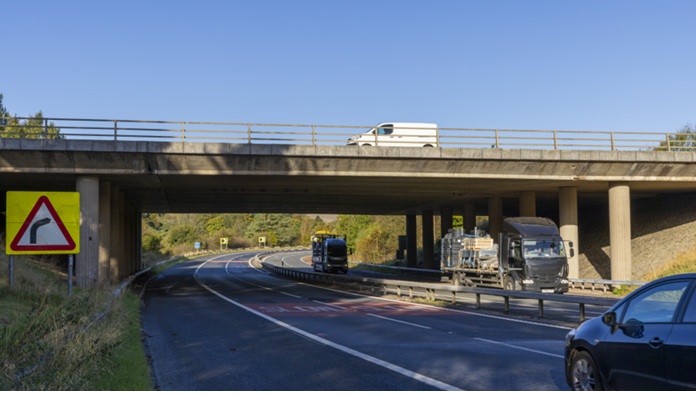
    The DfT has only just launched a targeted “stakeholder consultation” for its so-called “Structures Fund” just as the latest closure of a local authority road bridge was announced.

    In June ministers announced £1bn “to enhance and repair run down transport infrastructure and futureproof England’s road network” to be split between the structures fund and local road upgrades under what was called the Major Road Network/Large Local Majors (MRN/LLM) programme.

    But, despite claiming in a press release that it would “set out more detail about how funding will be allocated shortly”, the DfT has yet to finalise the budget for the fund, which means that funding for local authority road upgrades remains uncertain.

    This paralysis explains why the DfT refused last year to tell me how much the MRN/LLM budget was.

    I would argue that as the Structures Fund does not have dedicated funding, it cannot legitimately be called a fund.

    (more…)
  • DfT budget shrinks without getting smaller

    It looks to me as if reported cut to the Department for Transport’s (DfT) budget merely reflects accounting changes that take into account increased business rate retention by Transport for London (TfL).

    New Civil Engineer reported what appeared to be a discrepancy between the DfT’s Departmental Expenditure Limit (DEL), including HS2, as set out in the Spending Review against the same totals in the Autumn Budget.

    Across the five financial years from 2024-25 to 2028-29, this amounted to £2.4bn, the magazine said.

    Spending totals for all five years were set out as “plans”, rather than outturn, with totals only given three years ahead because, while the Spending Review set capital spending for 2029-30, it only set resource spending to 2028-29.

    The discrepancy in the DfT’s total Budget over the next three years is only £1.5bn, with the Budget figures actually showing an increase of £600m in 2027-28, compared against the Spending Review.

    The DfT has reportedly attributed the discrepancy to “accounting changes”, without explaining further.

    However, a reply from roads minister Simon Lightwood to a written parliamentary question from fellow Labour MP and Transport Committee member Alex Mayer may explain these accounting changes.

    Mayer asked what assessment and estimate ministers had made of the difference in the DfT’s capital DEL budget between the two documents across the five-year period.

    While Lightwood replied in terms the government’s capital DEL as a whole from 2025-26 to 2029-30, a footnote in his answer noted that the figures he quoted were “adjusted for TfL Business Rates Retention (£1.2bn p.a. from 2026-27)”.

    This change would see some of TfL’s capital spending being funded from retained business rates, rather than going through the DfT’s budget.

  • Come clean on smart motorways, TAN tells DfT

    Campaign group Transport Action Network (TAN) is adding to the pressure on the Department for Transport (DfT) to “come clean” over smart motorways, accusing it of misleading the public by claiming that none are being built, and calling on DfT ministers to release the evaluation reports that they have been sitting on.

    The campaign group says the DfT is expected to publish 14 Post Opening Project Evaluation (POPE) reports about individual schemes at the end of this week and that their suppression until now suggests that they show that the schemes have been a waste of money.

    But it also notes that this has been a bad week for smart motorways, with polling by the AA showing that the number of people who feel unsafe on smart motorways is increasing and the criminal trial of a driver for causing death by careless driving in circumstances where smart motorway technology had entirely failed.

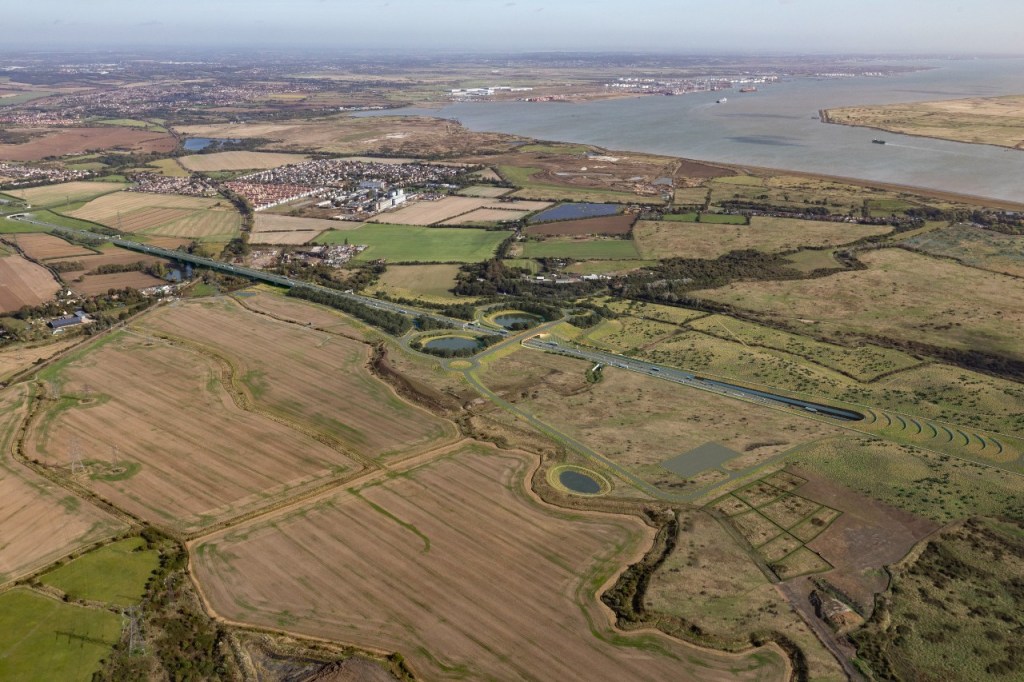
    TAN points out that although the DfT maintains that no more smart motorways are being built, the Lower Thames Crossing is a smart motorway in all but name, as it has three lanes, with no hard shoulder, is only open to the same vehicle classes as a motorway, and uses the same (unreliable) technology as smart motorways.

    It adds that the recently approved M60 Simister Island scheme also has no hard shoulder included in the design.

    TAN director Chris Todd said:

    (more…)

  • Release of POPEs (still) imminent

    With no real sign of the Department for Transport (DfT) allowing National Highways to release the 14 suppressed evaluation reports on smart motorways, the Guardian has picked up on the story:

    Road campaigners and motoring organisations have urged ministers to immediately release a series of “withheld” safety assessments on Britain’s smart motorways – some dating as far back as 2022

    With suggestions that the reports could be released at (last) Christmas having come to nothing, the DfT is still claiming there is nothing to see:

    The Department for Transport has said that the reports, known as Popes (post-opening project evaluations), will be published imminently, and do not undermine the broad case for smart motorways as statistically the safest roads.

    That last bit about a “broad case” is perhaps the key part of the whole article, suggesting that some POPEs may show that individual stretches of motorway have become less safe since the hard shoulder was removed, particularly as they have once again filled up with traffic.

    The article quotes Claire Mercer of Smart Motorways Kill, who has campaigned with me for the POPEs to be released, as saying that:

    If [the reports] showed good news, they’d release them.

    And links to this blog, in which I made a similar point:

    Ames was told that a total of 14 reports would eventually be released before Christmas last year “subject to the DfT agreeing the communications handling plan”. He said the continuing delay suggested the contents “must be really, really bad”.

    Jack Cousens, the head of roads policy at the AA, said: “These safety reports on so-called ‘smart’ motorways have been withheld for far too long, and we urgently need to see them published.”

    He said the reports needed to “show the outcomes of these schemes regardless of their failures or successes”.

    Leave a comment