Transport Insights

The transport stories you won't see in the industry-friendly media

Author

Chris Ames
  • Labour botches start of East West Rail

    Services on the first phase of East West Rail are set to miss the target of the end of this year as the operator seeks to continue the de-staffing of the railways in the wake of the recent attack on a train.

    At the same time, the completion of the whole, three-phase route is at the very least delayed further, if it ever happens.

    I’ve written before about the lack of a commitment to the previous December start date for the first phase and last week Heidi Alexander was unable to say anything positive to the Transport Committee. Now the BBC reports that:

    The BBC understands train operator Chiltern Railways is in a standoff with the Rail, Maritime and Transport (RMT) union, which represents train guards, over how East West Rail services between Oxford and Milton Keynes will run.

    The RMT said the operator wants train drivers to open and close the doors at stations, with no guards required.

    Passenger trains were scheduled to start running between Oxford and Milton Keynes for the first time in nearly 60 years by the end of December.

    An RMT spokesman said: “On Chiltern and East West Rail, we can confirm that management have written to the union spelling out their plans for DOO.

    “We are seeking talks and RMT’s standing policy is that we are opposed to DOO.”

    (more…)

  • Greenwood and Alexander mangle their messages on safety strategy

    Road safety minister Lilian Greenwood appears to want the credit for delivering “the first road safety strategy in a decade”, without actually delivering it – and is causing confusion along the way.

    I joked recently that the boast would soon be extended to 11 years as the Department for Transport fails to produce the strategy.

    Now Greenwood has resorted to saying “over a decade”, as in this recent Instagram post, where she is pictured with transport secretary Heid Alexander, proclaiming “safer roads ahead”.

    How much safer? and how far ahead? remain the questions and a the lack of a timetable led to a bit of backtracking on LinkedIn from Jamie Hassall, executive director at the Parliamentary Advisory Council for Transport Safety (PACTS).

    After originally commenting “What great news!”, he admitted: “I should have used a ? rather than a ! I thought this might be the release of the strategy.”

    Anyone looking at this can be forgiven for thinking that the hype from ministers might signal that the strategy is imminent, and indeed it may be.

    If the plan will indeed save lives, the delay is costing them.

    Meanwhile, Greenwood has returned to saying “this year” after going back to the “in due course” formulation.

    In a response this week to a parliamentary question, she wrote:

    Our Road Safety Strategy is under development and will include a broad range of policies. We intend to publish by the end of the year.

    If (still) under development is true, it isn’t imminent.

    What’s that saying about the road to hell?

  • No end in sight for delayed contactless roll-out

    The Department for Transport (DfT) has confirmed that there is no target date to complete its programme of enabling rail stations in the South East outside London to accept contactless payments.

    As I reported on Monday, the 50 stations due to be upgraded are the first stations in the second phase of a programme being delivered by Transport for London (TfL), which should have been completed last year.

    The first phase of 53 stations was delivered earlier this year, meaning that so far less than half the overall programme of 233 has been delivered.

    A DfT spokesperson told me “We don’t have a specific target completion date to share,” which could just mean that they don’t want to disclose a new target date that might be missed.

    The DfT did say that it expects to announce further stations in the South East for delivery mid 2026 “in due course”.

    TfL refused to tell me anything, on the grounds that the programme that it is delivering for the DfT is the DfT’s programme.

    That didn’t stop Alex Williams, TfL’s chief customer and strategy officer, saying

    We are delighted to be extending pay-as-you-go with contactless to a further 50 stations from 14 December, including Stansted Airport, making it easier for those arriving at the airport to travel to London and experience all the city has to offer.

    It may be of course that the delay is not due to technical difficulties but to the DfT releasing the funding slowly.

  • National Highways blows half a billion on a roundabout

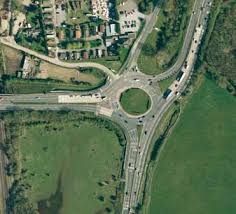
    The BBC reports that half of the work on a £1bn National Highways road improvement project is being taken up with improving one roundabout.

    In fact, National Highways senior project manager Paul Salmon clarifies, the Black Cat roundabout is also taking up “half of the scheme cost”.

    “With everything linking into the flyover at the Black Cat and the A421 and the underpass of the A1 it is just not feasible to open sections” at the moment, Mr Salmon said.

    As the site is also on a high water table near the River Great Ouse, “we have put in around 450 piles, which build a wall to stop ingress of water and silt in preparation of the underpass,” he said.

    Following flooding on the A421 at Marston Moretaine last year, Mr Salmon said: “We have taken learnings over that unfortunate event and we have changed some of the designs of the water tanks.”

    (more…)
  • DfT and TfL adrift on contactless roll-out

    The Department for Transport’s (DfT) claim that tap-in, tap-out payment for trains has been “expanded across south-east England” has to be one of the most misleading press releases I have seen for a long time.

    It’s misleading not only because it’s by no means the universal coverage that the word “across” implies but because the programme is nowhere near the coverage that should have been achieved by the end of last year.

    The good news is that the addition of the 50 new stations to the Transport for London (TfL) system in four weeks’ time, including Stansted and Southend airports, means that passengers travelling to every London airport will be able to use contactless ticketing – assuming that they could tap in when then started their journeys.

    But, as I have reported extensively, this is part of a programme of 233 stations that TfL is delivering for the DfT – effectively extending the Oyster network – that was originally due to be completed by the end of 2024.

    It’s the first instalment on the “main phase” of 180 stations, with the “initial phase” of 53 stations being completed earlier this year, nearly two years late.

    (more…)

  • Alexander gives mixed messages on resilience cash

    The transport secretary has declined to say that she is confident that Network Rail has the funds to keep the railway safe as landslips hit the rail and road networks, driven by climate change.

    Appearing before the Transport Committee, Heidi Alexander was asked by Rebecca Smith, Conservative MP for South West Devon, if she was

    confident that Network Rail has the resources to safely maintain the railway network during this control period.

    Her reply emphasized that spending has gone up, which it has, rather than answering what is the real question:

    We are spending more money in Control Period 7 on activities to address improving resilience connected to weather and climate change. So climate change adaptation, I guess, is the phrase that I’m searching for. So in Control Period 7, we’re spending 2.6 billion, which is significantly more than we were spending in Control Period 6. So I think it’s right that the Network Rail are doing that because they are very alive to the challenges that changing weather patterns have for the rail network.

    Smith had referenced a recent incident in Cumbria, i.e. the derailment of a train caused by a landslip onto the track. The Rail Accident Investigation Branch has said its preliminary examination found that a drainage channel running across the slope above the washed-out material, was unable to accommodate the volume of water present, saturating the material and initiating the landslip.

    But, as this BBC report points out in a detailed piece that looks at the wider issue, that was followed by a landslip affecting the A592 in the region, which Westmorland and Furness Council said could be closed for months. After Storm Desmond in 2015, the nearby A591 was blocked by landslips that both blocked the road and washed its base away.

    (more…)
  • LTT covers POPEs and Ely stories

    The latest (12 November) issue of Local Transport Today (LTT) has a couple of stories based on my work – on smart motorways and on the confused picture on the Ely Area Capacity Enhancements rail scheme.

    Among lots of news and analysis of key transport issues, LTT covers last week’s demonstration outside the Department for Transport (DfT) to press ministers to release a whole raft of evaluation reports on smart motorways that they are sitting on.

    And in a story to which I contributed, LTT picks up on my reporting on the Ely scheme:

    Doubt surrounds the prospects for a key freight-related rail upgrade scheme following conflicting signals from the government.

    The shadow transport secretary has accused Labour of “deliberately misleading the public” after the Department for Transport (DfT) declined to back a minister’s claim that the Tories “closed” the major Ely Area Capacity Enhancements scheme intended to boost the potential for switching port freight from road to rail.

    I am working increasingly collaboratively with LTT, which clearly covers a lot more than local transport for local people, and I would (of course) suggest that it is worth subscribing, if you don’t already.

    You can do so here or via the TransportXtra website, which also includes some – but not all – articles from the magazine.

    As it says below, you can also subscribe for free to get updates from this blog.

  • DfT backs away from Road Safety Strategy “this year”

    The Department for Transport (DfT) has confirmed that it is no longer pledging to publish its new Road Safety Strategy this year, despite a very recent pledge from a minister.

    I noticed that in a written parliamentary answer on 27 October, Lilian Greenwood said:

    Our Road Safety Strategy is under development and will include a broad range of policies. We intend to publish by the end of the year.

    But in (multiple) subsequent answers, such as this one just a few days later, she has only said e.g.

    We will set out more details in due course.

    I asked the DfT if it still intends to publish the road safety strategy by the end of the year and a spokesperson told me that “in due course” – i.e. no public target date – is its current line.

    It should be a great embarrassment for ministers. In August “government sources” briefed the Times that the strategy is “due to be published in the autumn”, as well as spinning quite a lot of what might be in it.

    I don’t think transport secretary Heidi Alexander was asked about the timing of the document when appearing before the Transport Committee yesterday, although she did mention that it was on its way.

    Ministers are fond of saying that the new strategy will be “the first for 10 years”.

    At this rate their achievement will be even better, perhaps the first for 11 years.

  • Paralysis at the DfT

    Recent parliamentary answers from transport ministers suggest that Labour is completely stuck on many of key issues it should be addressing.

    In response to a question from fellow Labour MP Darren Paffey about the “planned timetable is for announcing further details on the regulation of private electric scooters, as indicated in the Advanced Manufacturing Sector Plan”, roads minister Simon Lightwood said:

    The Government is committed to pursuing legislative reform for micromobility vehicles when parliamentary time allows.

    We understand the importance of providing a clear legislative timeline and my Department is working with colleagues across government to secure this.

    So another example of when being committed to something doesn’t mean actually doing anything about it. Maybe just extend the trials again?

    Other MPs have been asking what is happening about pavement parking, including Labour MP Damian Egan. Lilian Greenwood is fully aware that it’s an issue that needs to be addressed, but:

    The Government fully understands the serious problems that vehicles parked on the pavement, and other obstacles on the pavement, can cause for pedestrians, especially for people with mobility or sight impairments and disabled people with wheelchairs, prams or pushchairs. To inform next steps, the Department has considered the potential options, assessing the costs and benefits to households and businesses, which includes well-being, social isolation and economic opportunities. This assessment drew on existing evidence, including the 2020 pavement parking consultation. We will announce the next steps and publish our formal response as soon as possible.

    It’s now the fifth anniversary of that pavement parking consultation closing. Neither the Tories nor Labour has had the courage to take it forward.

    And then there is the promised and widely trailed road safety strategy, “the first for ten years”.

    On 27 October, Greenwood told shadow transport secretary Richard Holden:

    Our Road Safety Strategy is under development and will include a broad range of policies. We intend to publish by the end of the year.

    But in subsequent answers, such as this one, she appears to have backed away from this target date, saying:

    More details will be published in due course.

    “In due course” is of course what officials and ministers say when they can’t or don’t want to give a date. I’ve asked the DfT to clarify and transport secretary Heidi Alexander has been in front of the Transport Committee this morning.

    Of course, if Lightwood is to be believed, the department is still carrying out “assurance” of evaluations of smart motorway schemes that National Highways completed in 2022.

    The question is, are they incompetent, or just kicking the tricky stuff into the long grass?

    Leave a comment

  • Going underground?

    The process of getting the £10bn Lower Thames Crossing under the ground is rumbling on without any sense of urgency, almost as though the government doesn’t want to do it, but can’t admit it.

    The story so far is that Labour has said that the clearly unaffordable project is to be paid for on the never never, sorry privately, and has granted a development consent order.

    The next step was apparently the submission of a full business case (FBC) for the scheme, in order for funding to be released. Well, two lots of funding have been released but there is no sign of an FBC.

    The Department for Transport (DfT) is hoping to work some magic on the FBC to improve the benefit cost ratio (BCR).

    According to the (hopelessly out of date) accounting officer assessment, the last investment decision point was the 2020 outline business case and the BCR currently gives low vfm at 1.46 and is expected to fall further following “the recent lowering of the future economic forecasts for the UK economy and the consequent fall in value of journey time savings”.

    But at FBC, there is an expectation that key strategic benefits not reflected in the BCR will be quantified.

    Is the government hiding the FBC or still trying to make the numbers look better, as it claims to be doing with smart motorway evaluations?

    In the meantime, the DfT is trying to get people in to help it progress the private financing model.

    (more…)

Subscribe

Subscribe to get our the latest stories in your inbox.