I’ve previously raised the question about whether the government is putting sufficient cash into our transport networks to fund climate change adaption, with ministers often just saying they are putting in more money rather than asserting that it’s enough.
But a new written parliamentary answer from transport minister Keir Mather doesn’t even bother to address the question of whether there will be more money.
Asked by Sarah Dyke, Liberal Democrat MP for Glastonbury and Somerton:
To ask the Secretary of State for Transport, if she will provide additional funding to help mitigate ongoing soil moisture deficit effects for railway companies.
Mather gave a long and rambling reply on behalf of Heidi Alexander that began with a description of the problem…
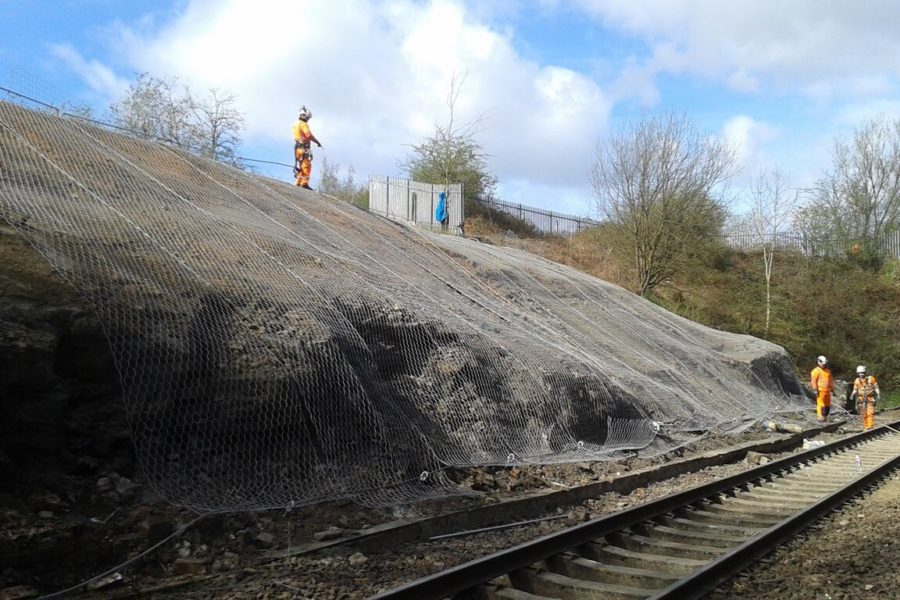
The Department for Transport funds Network Rail to operate, maintain, and develop the nation’s railway infrastructure. As the climate changes, we expect to see hotter, drier summers, and therefore we will expect to encounter more instances of soil moisture deficit.
The Treasury has insisted that the Labour government remains committed to fixing an extra million potholes across England in each year of the Parliament, despite some very contradictory language in yesterday’s Budget document.
And it looks as if funding for local authority highway maintenance may be restored to this year’s level to do this, with a funding announcement deliberately held back to get new headlines.
Yesterday I noted that the Treasury’s official Budget document had redefined Labour’s manifesto commitment as “to fix an additional 1 million potholes per year by the end of the Parliament”, rather than every year along the way
However, a Treasury spokesperson has told me that the “every year” commitment remains intact.
I also noted, correctly, that none of the Budget documents had stated what funding would be for the years between now and 2029-30, when the commitment is over £2bn annually.
This year’s funding is around £1.6bn, which is said to include an “uplift” of £500m on base funding of £500m.
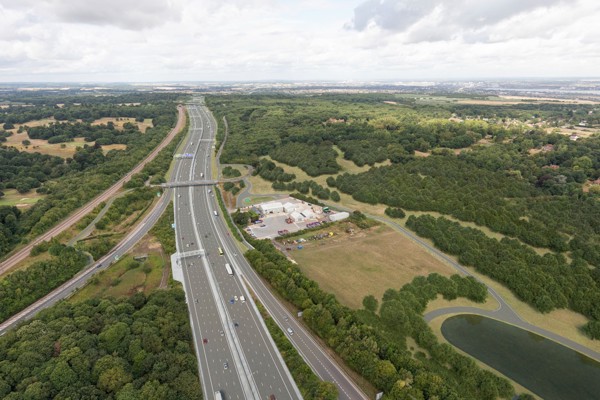
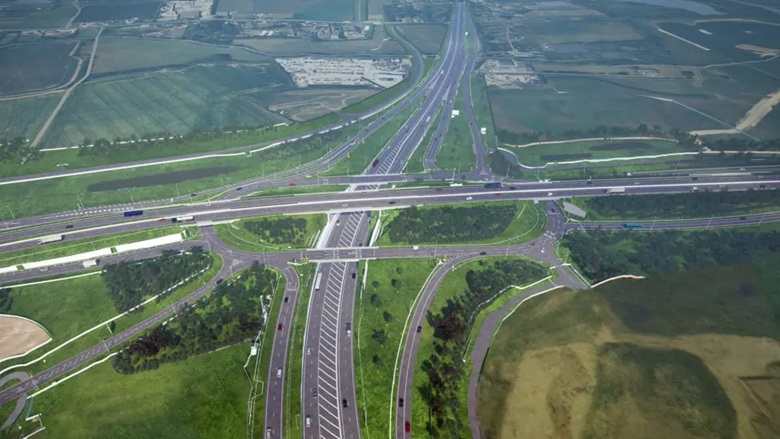
Funding for the Lower Thames Crossing in 2027-28 and 2028-29 – The government is committing a further £891 million to complete the publicly funded works for the Lower Thames Crossing, as part of its staged approach, after which the private sector will take forward construction and long-term operation.
This is on top of the £840m already allocated for 2025-26 and 2026-27. Ironically, as I have reported, £250m for the current year was allocated in last year’s Budget but kept quiet.
The budget document says the further £891m is “the final tranche of government support to enable the private sector to take forward construction and long-term operation”.
It adds:
The government’s preferred financing option at this stage is the Regulated Asset Base (RAB) model. The project will be taken forward on that basis, with formal market engagement launching in 2026.
It looks very much as if ministers are some way from securing finance for building the project and even further from anything actually happening.
In the meantime, they tout it as a “key driver of growth”, without any real evidence that this is true.
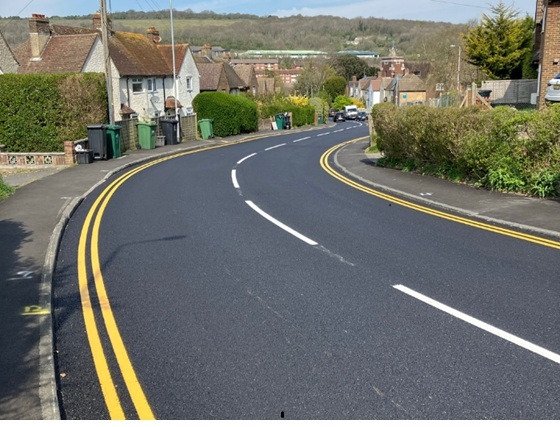
It looks as if Rachel Reeves has dropped the £500m “uplift” for local road maintenance (in England) and Labour appears to have ditched its manifesto pledge to “additional one million potholes across England in each year of the next parliament”.
By 2029-30, the government will commit over £2 billion annually for local authorities to repair, renew and fix potholes on their roads – doubling funding since coming into office. This record level of funding will enable the government to exceed its manifesto commitment to fix an additional 1 million potholes per year by the end of the Parliament.
So the extra million potholes a year have been put back from every year of the Parliament to the last year of the Parliament, i.e. 2029-30.
Despite promises of long-term funding settlements, the Budget document does not appear to give a total funding figure for 2026-27 or any year between now and 2029-30.
And the extra £500m that went into 2025-26 allocations with great fanfare in last year’s Budget is not trumpeted today, suggesting that it has gone.
The “doubling” claim is dubious as it does not take five years’ worth of inflation into account but concentration on 2029-30 suggests that the next few years will be bleak.
The Budget document also states:
The implementation of eVED will provide revenues for this new higher level of roads maintenance funding to be continued for the long term.
The focus on what happens at the end of the parliament reliance on eVED, which begins in 2028, again supports the idea that money will be tight in the meantime.
The Department for Transport’s Capital Departmental Expenditure Limit (DEL) wobbles around for the next four years from about £23bn to a bit over £24bn but it’s impossible within that to pick out highway maintenance funding.
The road gully into which a woman poured a small amount of coffee – and was briefly fined – discharges unmitigated into the River Thames with all the toxic runoff from roads in the area.
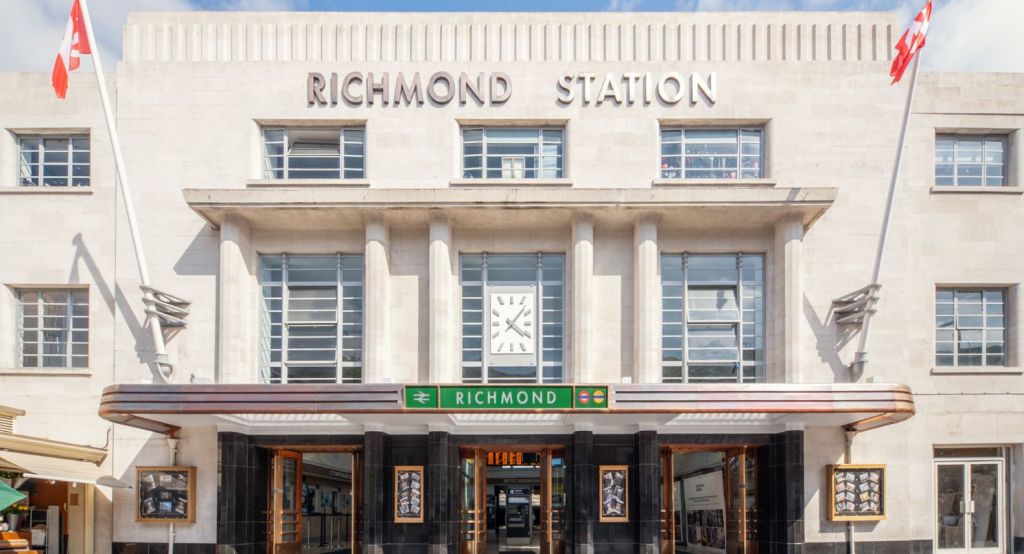
Thames Water has told me that the gully near the train station in Richmond, Surrey is linked to a surface water drainage sewer system (rather than a combined sewer system with domestic waste water) linked to an outfall on the Thames. A Thames Water map shows that there is no facility to mitigate the runoff at the outfall.
This means that although the small amount of coffee poured away by Burcu Yesilyurt would – when it rained – have made its way into the river, it would have joined many gallons of rainwater contaminated with oil residues, tyre and brake wear particles, heavy metals, and other organic matter.
Update: National Highways has told me that the DfT is sitting on a total of 14 reports. Of these, nine are five years after and five are one year after.
National Highways has said it will publish the reports on smart motorway performance that the Department for Transport (DfT) has been suppressing for nearly three years once ministers have decided how to spin the “complicated” data.
As I have reported, ministers called in the Post Opening Project Evaluation (POPE) reports, at least nine of which were due to be completed by National Highways in 2022, and have not allowed the government-owned company so publish them, supposedly while it carries out “assurance”.
The reports could show that individual smart motorway schemes are failing on issues such as safety, the environment and their impact on the economy.
I asked both National Highways and the DfT to disclose the reports under the Freedom of Information Act but the company has refused under section 22 (1), claiming that it had agreed “a clear route” to publication with the DfT.
Among other “public interest” reasons for withholding the data it said:
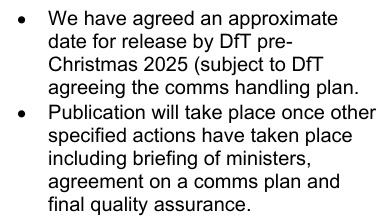
We have agreed an approximate date for release by DfT pre Christmas 2025 (subject to DfT agreeing the comms handling plan.
Publication will take place once other specified actions have taken place including briefing of ministers, agreement on a comms plan and final quality assurance.
It explained that the POPE are “complicated” and that it is in the public interest “that the communication of the results is led by the DfT”.
Significantly, National Highways added that the safety sections “include further analysis of data that is already in the public domain, and which has been reported on by NH in its annual stocktake and safety reports”.
Unable to resist spinning the findings even in a supposedly objective balancing exercise, National Highways added:
The POPE reports support the conclusion already drawn that Smart Motorways are amongst the country’s safest roads.
This is clearly the DfT’s concern – National Highways can amalgamate data to disguise the fact that individual schemes are less safe than they want to admit but POPE reports are at a scheme level.
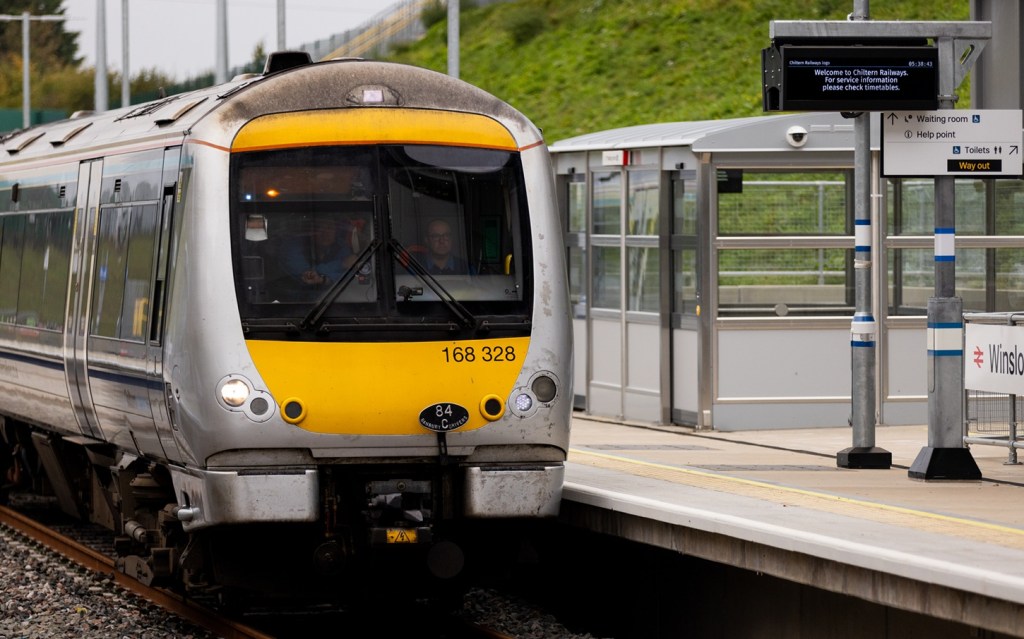
Services on the first phase of East West Rail are set to miss the target of the end of this year as the operator seeks to continue the de-staffing of the railways in the wake of the recent attack on a train.
At the same time, the completion of the whole, three-phase route is at the very least delayed further, if it ever happens.
I’ve written before about the lack of a commitment to the previous December start date for the first phase and last week Heidi Alexander was unable to say anything positive to the Transport Committee. Now the BBC reports that:
The BBC understands train operator Chiltern Railways is in a standoff with the Rail, Maritime and Transport (RMT) union, which represents train guards, over how East West Rail services between Oxford and Milton Keynes will run.
The RMT said the operator wants train drivers to open and close the doors at stations, with no guards required.
Passenger trains were scheduled to start running between Oxford and Milton Keynes for the first time in nearly 60 years by the end of December.
An RMT spokesman said: “On Chiltern and East West Rail, we can confirm that management have written to the union spelling out their plans for DOO.
“We are seeking talks and RMT’s standing policy is that we are opposed to DOO.”
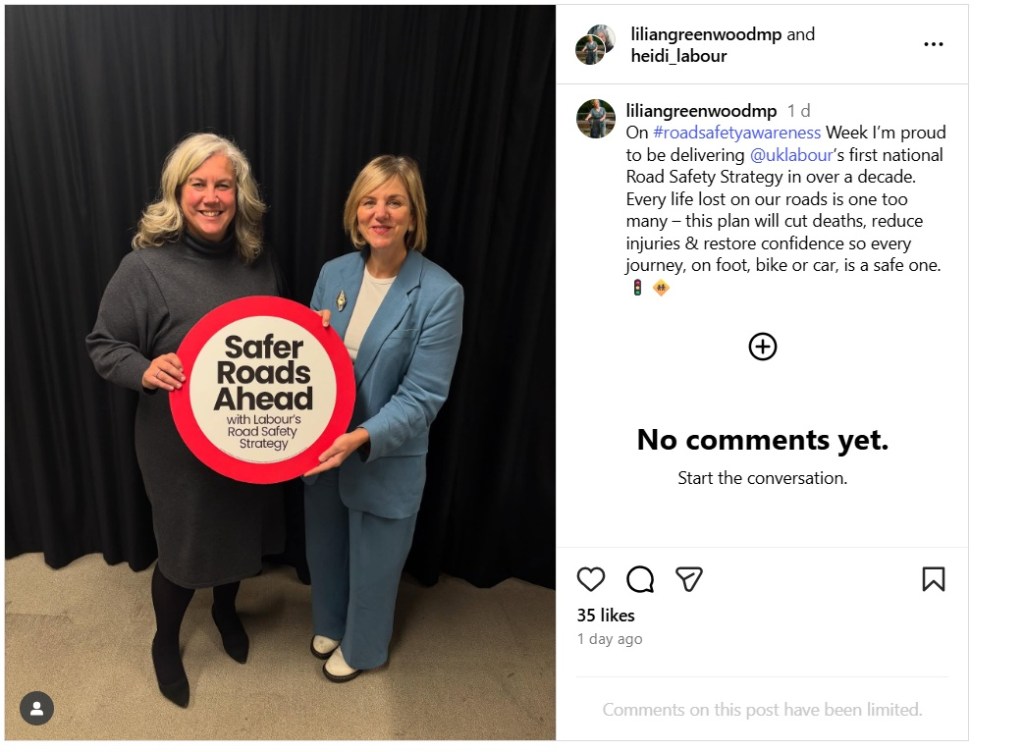
Road safety minister Lilian Greenwood appears to want the credit for delivering “the first road safety strategy in a decade”, without actually delivering it – and is causing confusion along the way.
I joked recently that the boast would soon be extended to 11 years as the Department for Transport fails to produce the strategy.
Now Greenwood has resorted to saying “over a decade”, as in this recent Instagram post, where she is pictured with transport secretary Heid Alexander, proclaiming “safer roads ahead”.
How much safer? and how far ahead? remain the questions and a the lack of a timetable led to a bit of backtracking on LinkedIn from Jamie Hassall, executive director at the Parliamentary Advisory Council for Transport Safety (PACTS).
After originally commenting “What great news!”, he admitted: “I should have used a ? rather than a ! I thought this might be the release of the strategy.”
Anyone looking at this can be forgiven for thinking that the hype from ministers might signal that the strategy is imminent, and indeed it may be.
If the plan will indeed save lives, the delay is costing them.
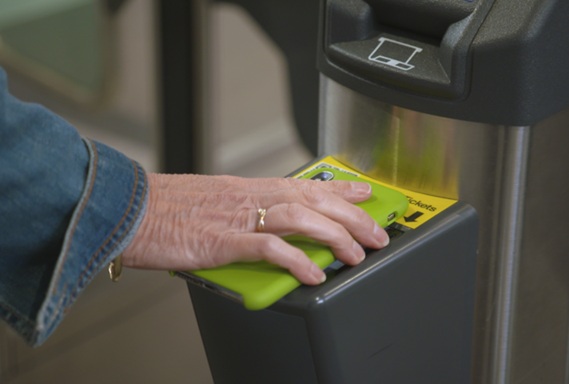
The Department for Transport (DfT) has confirmed that there is no target date to complete its programme of enabling rail stations in the South East outside London to accept contactless payments.
As I reported on Monday, the 50 stations due to be upgraded are the first stations in the second phase of a programme being delivered by Transport for London (TfL), which should have been completed last year.
The first phase of 53 stations was delivered earlier this year, meaning that so far less than half the overall programme of 233 has been delivered.
A DfT spokesperson told me “We don’t have a specific target completion date to share,” which could just mean that they don’t want to disclose a new target date that might be missed.
The DfT did say that it expects to announce further stations in the South East for delivery mid 2026 “in due course”.
TfL refused to tell me anything, on the grounds that the programme that it is delivering for the DfT is the DfT’s programme.
That didn’t stop Alex Williams, TfL’s chief customer and strategy officer, saying
We are delighted to be extending pay-as-you-go with contactless to a further 50 stations from 14 December, including Stansted Airport, making it easier for those arriving at the airport to travel to London and experience all the city has to offer.
It may be of course that the delay is not due to technical difficulties but to the DfT releasing the funding slowly.
The BBC reports that half of the work on a £1bn National Highways road improvement project is being taken up with improving one roundabout.
In fact, National Highways senior project manager Paul Salmon clarifies, the Black Cat roundabout is also taking up “half of the scheme cost”.
“With everything linking into the flyover at the Black Cat and the A421 and the underpass of the A1 it is just not feasible to open sections” at the moment, Mr Salmon said.
As the site is also on a high water table near the River Great Ouse, “we have put in around 450 piles, which build a wall to stop ingress of water and silt in preparation of the underpass,” he said.
Following flooding on the A421 at Marston Moretainelast year, Mr Salmon said: “We have taken learnings over that unfortunate event and we have changed some of the designs of the water tanks.”


 Transport Insights
Leave a comment