Transport Insights

The transport stories you won't see in the industry-friendly media

Author

Chris Ames
  • Road condition data: how bad can it be?

    I have got an explanation of sorts for the Department for Transport (DfT) postponing its latest road condition data because of an “issue”, but I have to admit that I am none the wiser.

    The department said last month that it was postponing publication of Road Conditions in England to March 2025, which was scheduled for 25 November 2025 but will now be published in January 2026.

    It explained:

    This is due to a data issue identified by a data provider which means some of the underlying data which informs these statistics needs to be reprocessed. It is essential this step is undertaken prior to publication to ensure the ongoing quality standards of these statistics. We are temporarily pausing the release of this publication whilst we work with the data provider to resolve this issue.
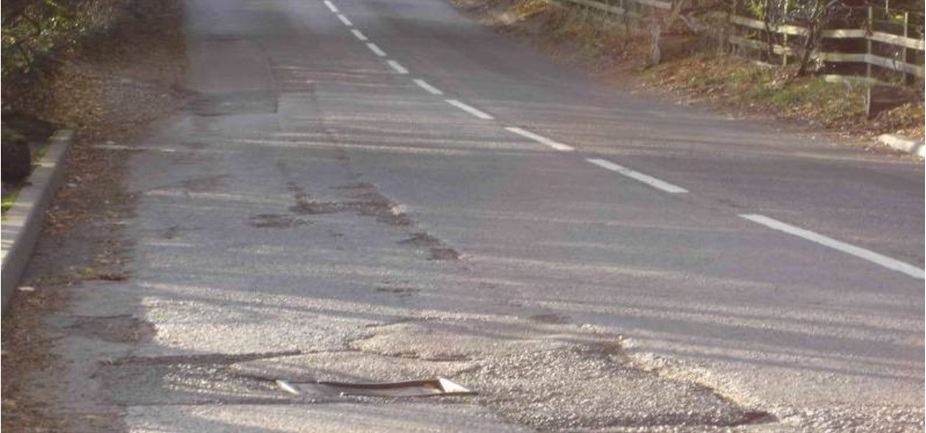
    This is taking place at a time when the DfT is seeking to move to a new model for councils to report on the condition of their A, B and C roads, although councils are still using the old methodology and did so last year.

    This involves using the Surface Condition Assessment for the National Network of Roads (SCANNER) system.

    I asked the DfT to clarify the issue with last year’s data. A spokesperson told me:

    Road Conditions in England are Official Statistics released by the Department for Transport and are held to the standards set in the Code of Practice for Statistics. One of the core pillars of the code is quality and as such producers must use suitable data sources and sound methods and assure the quality of the statistics across the production and release processes. Although an issue was identified in a small amount of data, this must addressed accordingly ensure the quality of our statistics and abide by the code.

    It all makes sense and it’s good to see officials taking this seriously but I would have liked to know what the “issue” was.


  • Minister fibs to keep smart motorway failings secret

    Roads minister Simon Lightwood has admitted that no genuine assurance process is taking place that would justify his cover-up of National Highways’ evaluations of smart motorways.

    He has responded (sort of) to another question from fellow Labour MP Sarah Champion about the 14 Post Opening Project Evaluation (POPE) reports on smart motorways that the Department for Transport (DfT) is suppressing.

    Judging from Lightwood’s determination to hide these reports until he works out how to spin them, you might imagine that they show that the safety, economic benefits and environmental impact of individual schemes are not great

    Asked:

    what the assurance processes are under which the Post Opening Project Evaluation (POPE) of Major Schemes are conducted

    Lightwood replied:

    National Highways follows its established “Analytical Assurance Framework” for assuring POPE reports, which includes fourth line independent external expert analytical assurance from DfT.

    As these are complex reports it is right that my officials take the time to provide summary advice of these reports in the round and undertake wider assurance to advise me on the quality of collective findings.

    The first part appears to be untrue as National Highways does not have an analytical assurance framework that is separate from the DfT’s framework, but this is probably irrelevant as Lightwood is no longer claiming that this is still happening.

    Instead he has made up a completely new process under which his officials supposedly group together a whole bunch of POPE reports to summarise them and carry out a fictional “wider evaluation”. Implicitly, he is admitting that no formal assurance process is being carried out.

    To be fair, he is not actually saying either that an informal “wider assurance” process is happening, just that it is right that it should happen.

    Of course, the point about such a process is that concern for the “quality of collective findings” does not mean that the individual reports need any further assurance before they can be released.

    We are back to the reality – that ministers are working out to spin – or bury – the bad news.

  • Smoke and mirrors on bus funding

    Ministers have announced what they are branding a “3bn boost for buses” but, as is happening increasingly often these days, it’s a continuation of existing funding – and possibly a cut – dressed up as new money.

    The good news is that:

    Multi-year funding gives local authorities the funds they need to provide passengers with lower fares, more frequent and reliable services and safer journeys.

    Basically, the Department for Transport (DfT) has consolidated a number of existing funding streams such as Bus Service Improvement Plans (BSIP) cash and Local Authority Bus Service Operators Grant (BSOG) into capital and revenue Local Authority Bus Grant (LABG).

    It looks as if the funding for the £3 bus fare cap (which is short-term) is separate and, in the short term, it looks like revenue funding is lower next year than this.

    Cash for zero emission buses is also (I think) separate.

    But with funding going through city regions, it’s often hard to work this out.

    The DfT also seems to be doing quite a lot of rounding up: to get to £3bn

    Almost £700 million of funding will be allocated to local authorities every single year up to 2028 to 2029 and can be spent however they want.

    It’s worth remembering that Boris Johnson also promised a “£3 billion bus revolution” back in the days when £3bn was a lot of money.

  • More bang for your buck

    A piece that I co-wrote for the latest issue of Local Transport Today (LTT) about last weekend’s local highways maintenance allocations is now available for free on TransportXtra.

    It’s mainly based on my reporting earlier this week, when ministers sought to pull a rabbit out of the hat after withholding funding details on Budget day itself:

    Ministers have announced £7.3bn capital funding for local highway maintenance in England over the next four years, keeping the £500m ‘uplift’ from last year, but requiring councils to jump through more hoops to get the extra cash.

    It includes the RAC welcoming something for which they have been calling for a long time:

    RAC head of policy Simon Williams said “We welcome the Government linking additional funding to councils who commit to carrying out preventative maintenance, as this stops potholes forming in the first place and extends the life of roads. It’s also far cheaper than continuously patching pothole-ridden roads only to have to pay far more to resurface them.”

    As it says on the website, it’s one of many articles that you can get if you subscribe to LTT.

    Leave a comment

  • DfT continues to spurn honesty on Schrödinger’s Cat road scheme

    Returning to the issue of how the Tories secretly shelved a major road scheme and roped National Highways and the Office of Rail and Road (ORR) into lying about it, I’ve just received from the Department for Transport what is perhaps the most disingenuous attempt to wriggle out of a freedom of information (FOI) request that I have seen in 20 years.

    To recap, the government secretly defunded and deprioritised the scheme in the (late) 2021 Spending Review and told the government-owned company and the Office of Rail and Road (ORR) this in February 2022 and the DfT claims that it immediately approved a National Highways change control request to pause the scheme that same month.

    But National Highways’ Delivery Plan 2022-2023 listed the scheme under “Our activities during 2022-23” and the ORR’s Annual Assessment of National Highways’ performance April 2021 to March 2022 also showed the scheme as beginning in 2022-23.

    And the July 2022 National Highways’ Performance Report to Parliament 2021/22, which was presented to Parliament by the then transport secretary, Grant Shapps, as part of oversight of the government-owned company, stated:

    In total, as at the end of March 2022, of the 69 schemes originally announced in RIS2; 10 have been completed, 23 are currently under construction, 25 are in the development phase (including 23 at various stages of the planning process) and 11 have been paused following the Transport Select Committee’s recommendations.

    As the 11 paused schemes are smart motorways, this (implicitly) puts the A1 scheme “in the development phase”. To clear this up, I asked the DfT press office to tell me the official status of the scheme as of 31 March 2022. When it didn’t answer, I asked the department to treat it as an FOI request.

    Its response, this week, was to claim:

    your query does not involve a request for recorded information

    Given that the DfT reported to Parliament on the status of all RIS enhancement schemes, this is obviously untrue: the status of the A1 scheme is information that it should have held.

    (more…)

  • DfT warns of dangers of premature release

    The Department for Transport (DfT) has joined National Highways in refusing my freedom of information request for the 14 evaluations of smart motorway safety that ministers are suppressing, but officials don’t seem keen to claim explicitly that the documents are still trapped in a three-year “assurance” process.

    Neither have they repeated the National Highways line that ministers have to work out how to spin the data in the Post Opening Project Evaluation (POPE) reports, which could show that the safety, economic benefits and environmental impact of individual schemes are not great.

    Like the government-owned company, the DfT has withheld the POPEs under Section 22 of the Freedom of Information Act, which applies an exemption to information intended for future publication, claiming that “they are intended for publication in the near future”.

    But in making the public interest case for keeping the public in the dark, DfT officials have not said that any kind of assurance process is *actually taking place*:

    Premature release before pre publication checks are carried out could result in inaccurate or misleading information being shared. This would not be in the public interest. Pre-publication procedures, such as verification and full review are essential to ensuring the integrity of the information contained therein.

    We are very much in The Thick of It “this is exactly the sort of thing we should be doing” territory here. Officials may know that these things are not happening in reality.

    (more…)

  • Thames Tunnel hole gets bigger

    The Financial Times has picked up on the spiralling costs of the Lower Thames Crossing (LTC), as well as the huge sums that we will all be putting in, before private finance comes riding over the hill.

    Taxpayers will contribute more than £3bn to the Lower Thames Crossing despite ministers’ plans to seek private finance for the most expensive new highway in British history.

    The cost of the project, the first wholly new crossing across the river Thames to the east of London in 60 years, has risen from an estimate of between £5.3bn and £6.8bn in 2017 to almost £11bn, the Treasury has confirmed.

    The first figure, the £3bn of public money, may be news to some people but it is simply adding £1.2bn of historic costs to the £1.8bn that the Treasury has allocated across this financial year and the next three, including nearly a billion in last week’s Budget.

    But the cost increase to a current price tag of £11bn means a big rise in the part that the government is hoping to get private finance to contribute, to get them into a hole on a project that is otherwise unaffordable.

    The government hopes it will secure about £7.5bn of private capital, up from a figure of £6.3bn set out in March by National Highways, the public body responsible for the scheme between Kent and Essex.

    Predictably, Transport Action Network (TAN) has condemned the “utterly predictable” news, which it says will lead to significantly higher tolls being charged at the existing Dartford Crossing and the LTC.

    TAN has previously calculated that tolls at Dartford could triple to pay for the LTC. Director Chris Todd said:

    (more…)
  • Lightwood hides behind non-existent process on POPEs

    Hapless roads minister Simon Lightwood continues to own the cover-up over the unpublished evaluation reports on smart motorways, while giving nothing away.

    To recap, the Department for Transport (DfT) is sitting on a total of 14 Post Opening Performance Evaluation (POPE) reports, at least nine of which were due to be completed by National Highways in 2022, and will not allow the government-owned company so publish them.

    This is supposedly while it carries out “assurance”, but National Highways has said it cannot publish the reports until ministers work out how to spin the data.

    Rotherham MP Sarah Champion (pictured, left) has asked two parliamentary questions (so far). The first was:

    To ask the Secretary of State for Transport, what discussions she has had with National Highways on Post Opening Project Evaluation (POPE) reports; and what her planned timetable is for publication of existing unpublished POPE reports.

    In response to which, Lightwood merely owned the cover-up without answering the question:

    Post opening project evaluation (POPE) reports are detailed and complex evaluations and it is right that we take the time to fully assure findings. We are committed to transparency and will provide an update on publication in due course.

    Champion then asked:

    (more…)

  • Reeves seeks more spin for her buck

    With Rachel Reeves under fire for her pre-Budget spin, it’s worth another look at how misleading her claims were about the post-Budget announcement of local highways maintenance funding for the last four years of the Parliament.

    The unfortunate thing is, Labour is (for now) giving councils the funding boost and medium-term certainty they need, but mangling the message.

    There is a significant – and positive – emphasis on councils doing preventative treatments, which takes the emphasis away from filling potholes in the short term but should mean there are fewer to fill later on.

    This may explain why, as I have said, Reeves again misstated the Labour manifesto pledge to fix a million extra potholes for every year of the Parliament, now only talking about doing so by the end of the period.

    But (according to the Treasury press release) she also said:

    We are doubling the funding promised by the previous government

    This is, I am afraid to say, doubly misleading, as the small print in the press release explains that it compares:

    £1.067bn funding allocated by the previous Government for FY2024/25, to £2.134bn funding allocated by this Government for FY2029/30

    So, firstly, it isn’t money promised by the Tories but actually allocated.

    And this confirms that the claim is based on two years that are five years apart and therefore subject to inflation.

    The Office for Statistics Regulation (OSR) has published Regulatory guidance on intelligent transparency, which states:

    (more…)
  • No surprise! Reeves pulls pothole cash out of the hat

    Ministers have announced £7.3bn capital funding for local highway maintenance in England between 2026-27 and 2029-30, keeping the £500m annual “uplift” , now badged as “incentive funding”, with councils required to jump through as yet undefined hoops to get three quarters of the extra cash.

    As I reported, the Budget deliberately held back details of this cash to allow a new announcement, stating at the time only that there would be “over £2 billion” in 2029-30.

    The cash will gradually ramp up, from £1,617m next year to £2,134m with the largest increase around a quarter of a billion pounds coming in the final year.

    The Department for Transport (DfT) said that “as the case in 2025 to 2026, a portion of this funding will be designated as incentive funding”. This ranges from £525m next year to £540m.

    This funding will be subject to local highway authorities demonstrating that they comply with best practice in highways maintenance, for example, by spending all the Department for Transport’s capital grant on highways maintenance and adopting more preventative maintenance.

    The DfT said that at least 25% of the extra cash will be dependent on local highway authorities publishing transparency reports. Rather confusingly, it said all incentive funding will be withheld if reports are not published. 

    The DfT said that in 2026-27, (a further) 50% of the incentive funding will be subject to local highways authorities’ performance.

    Of course they don’t know how it will work yet:

    (more…)

Subscribe

Subscribe to get our the latest stories in your inbox.