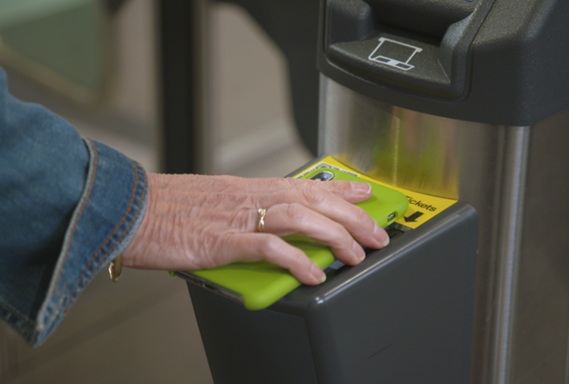
The Department for Transport’s (DfT) claim that tap-in, tap-out payment for trains has been “expanded across south-east England” has to be one of the most misleading press releases I have seen for a long time.
It’s misleading not only because it’s by no means the universal coverage that the word “across” implies but because the programme is nowhere near the coverage that should have been achieved by the end of last year.
The good news is that the addition of the 50 new stations to the Transport for London (TfL) system in four weeks’ time, including Stansted and Southend airports, means that passengers travelling to every London airport will be able to use contactless ticketing – assuming that they could tap in when then started their journeys.
But, as I have reported extensively, this is part of a programme of 233 stations that TfL is delivering for the DfT – effectively extending the Oyster network – that was originally due to be completed by the end of 2024.
It’s the first instalment on the “main phase” of 180 stations, with the “initial phase” of 53 stations being completed earlier this year, nearly two years late.
The transport secretary has declined to say that she is confident that Network Rail has the funds to keep the railway safe as landslips hit the rail and road networks, driven by climate change.
Appearing before the Transport Committee, Heidi Alexander was asked by Rebecca Smith, Conservative MP for South West Devon, if she was
confident that Network Rail has the resources to safely maintain the railway network during this control period.
Her reply emphasized that spending has gone up, which it has, rather than answering what is the real question:
We are spending more money in Control Period 7 on activities to address improving resilience connected to weather and climate change. So climate change adaptation, I guess, is the phrase that I’m searching for. So in Control Period 7, we’re spending 2.6 billion, which is significantly more than we were spending in Control Period 6. So I think it’s right that the Network Rail are doing that because they are very alive to the challenges that changing weather patterns have for the rail network.
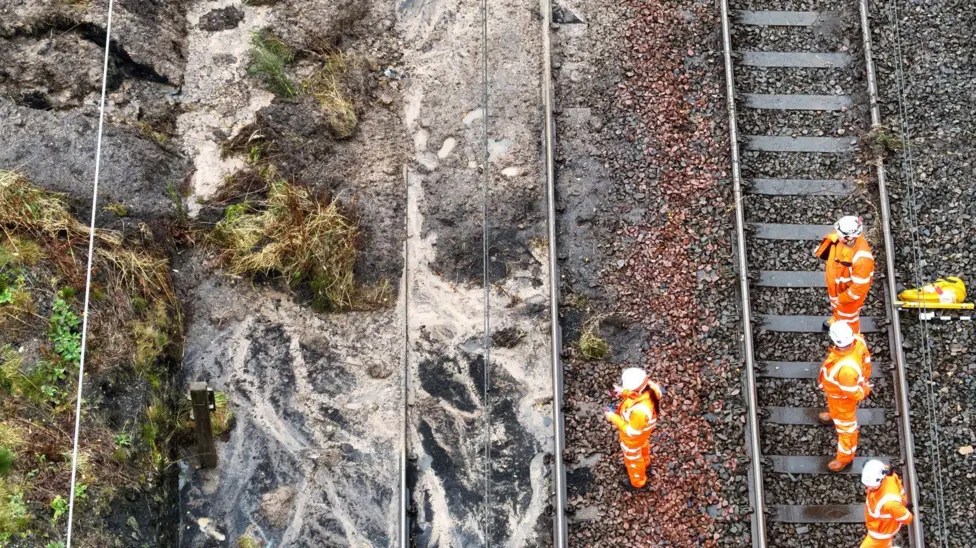
Smith had referenced a recent incident in Cumbria, i.e. the derailment of a train caused by a landslip onto the track. The Rail Accident Investigation Branch has said its preliminary examination found that a drainage channel running across the slope above the washed-out material, was unable to accommodate the volume of water present, saturating the material and initiating the landslip.
But, as this BBC report points out in a detailed piece that looks at the wider issue, that was followed by a landslip affecting the A592 in the region, which Westmorland and Furness Council said could be closed for months. After Storm Desmond in 2015, the nearby A591 was blocked by landslips that both blocked the road and washed its base away.
The latest (12 November) issue of Local Transport Today (LTT) has a couple of stories based on my work – on smart motorways and on the confused picture on the Ely Area Capacity Enhancements rail scheme.
Doubt surrounds the prospects for a key freight-related rail upgrade scheme following conflicting signals from the government.
The shadow transport secretary has accused Labour of “deliberately misleading the public” after the Department for Transport (DfT) declined to back a minister’s claim that the Tories “closed” the major Ely Area Capacity Enhancements scheme intended to boost the potential for switching port freight from road to rail.
I am working increasingly collaboratively with LTT, which clearly covers a lot more than local transport for local people, and I would (of course) suggest that it is worth subscribing, if you don’t already.
The Department for Transport (DfT) has confirmed that it is no longer pledging to publish its new Road Safety Strategy this year, despite a very recent pledge from a minister.
Our Road Safety Strategy is under development and will include a broad range of policies. We intend to publish by the end of the year.
But in (multiple) subsequent answers, such as this one just a few days later, she has only said e.g.
We will set out more details in due course.
I asked the DfT if it still intends to publish the road safety strategy by the end of the year and a spokesperson told me that “in due course” – i.e. no public target date – is its current line.
It should be a great embarrassment for ministers. In August “government sources” briefed the Times that the strategy is “due to be published in the autumn”, as well as spinning quite a lot of what might be in it.
I don’t think transport secretary Heidi Alexander was asked about the timing of the document when appearing before the Transport Committee yesterday, although she did mention that it was on its way.
Ministers are fond of saying that the new strategy will be “the first for 10 years”.
At this rate their achievement will be even better, perhaps the first for 11 years.
Recent parliamentary answers from transport ministers suggest that Labour is completely stuck on many of key issues it should be addressing.
In response to a question from fellow Labour MP Darren Paffey about the “planned timetable is for announcing further details on the regulation of private electric scooters, as indicated in the Advanced Manufacturing Sector Plan”, roads minister Simon Lightwood said:
The Government is committed to pursuing legislative reform for micromobility vehicles when parliamentary time allows.
We understand the importance of providing a clear legislative timeline and my Department is working with colleagues across government to secure this.
So another example of when being committed to something doesn’t mean actually doing anything about it. Maybe just extend the trials again?
Other MPs have been asking what is happening about pavement parking, including Labour MP Damian Egan. Lilian Greenwood is fully aware that it’s an issue that needs to be addressed, but:
The Government fully understands the serious problems that vehicles parked on the pavement, and other obstacles on the pavement, can cause for pedestrians, especially for people with mobility or sight impairments and disabled people with wheelchairs, prams or pushchairs. To inform next steps, the Department has considered the potential options, assessing the costs and benefits to households and businesses, which includes well-being, social isolation and economic opportunities. This assessment drew on existing evidence, including the 2020 pavement parking consultation. We will announce the next steps and publish our formal response as soon as possible.
It’s now the fifth anniversary of that pavement parking consultation closing. Neither the Tories nor Labour has had the courage to take it forward.
And then there is the promised and widely trailed road safety strategy, “the first for ten years”.
Our Road Safety Strategy is under development and will include a broad range of policies. We intend to publish by the end of the year.
But in subsequent answers, such as this one, she appears to have backed away from this target date, saying:
More details will be published in due course.
“In due course” is of course what officials and ministers say when they can’t or don’t want to give a date. I’ve asked the DfT to clarify and transport secretary Heidi Alexander has been in front of the Transport Committee this morning.
Of course, if Lightwood is to be believed, the department is still carrying out “assurance” of evaluations of smart motorway schemes that National Highways completed in 2022.
The question is, are they incompetent, or just kicking the tricky stuff into the long grass?
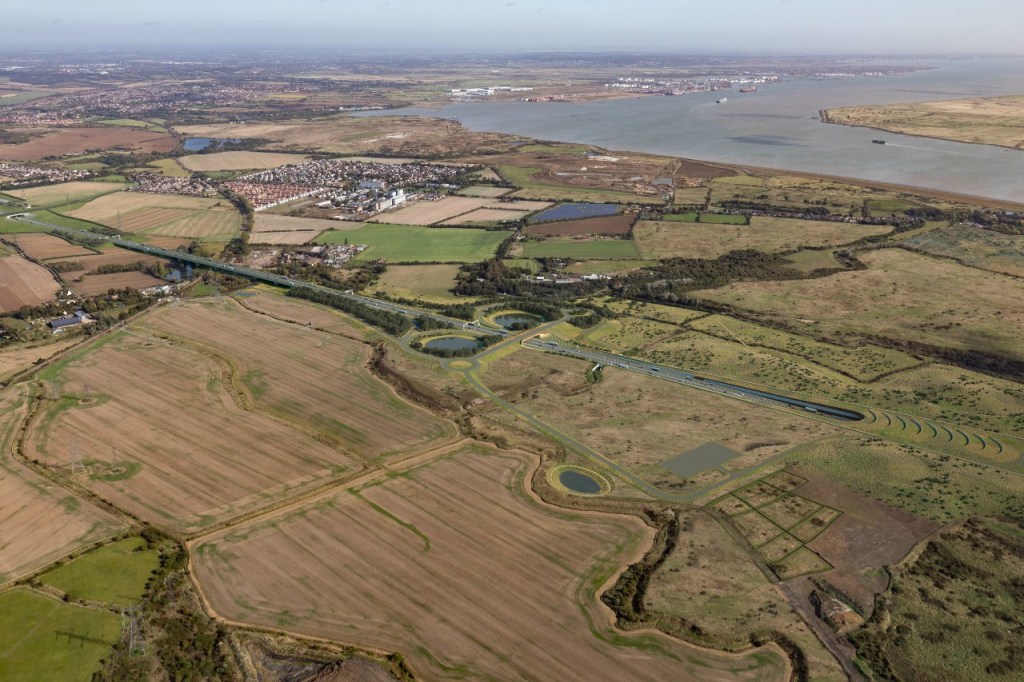
The process of getting the £10bn Lower Thames Crossing under the ground is rumbling on without any sense of urgency, almost as though the government doesn’t want to do it, but can’t admit it.
The story so far is that Labour has said that the clearly unaffordable project is to be paid for on the never never, sorry privately, and has granted a development consent order.
The next step was apparently the submission of a full business case (FBC) for the scheme, in order for funding to be released. Well, two lots of funding have been released but there is no sign of an FBC.
The Department for Transport (DfT) is hoping to work some magic on the FBC to improve the benefit cost ratio (BCR).
According to the (hopelessly out of date) accounting officer assessment, the last investment decision point was the 2020 outline business case and the BCR currently gives low vfm at 1.46 and is expected to fall further following “the recent lowering of the future economic forecasts for the UK economy and the consequent fall in value of journey time savings”.
But at FBC, there is an expectation that key strategic benefits not reflected in the BCR will be quantified.
Highways News has, quite rightly, published a response from National Highways on the issue of the suppressed evaluation reports on smart motorways, and it’s one that subtly makes the case for them to be released.
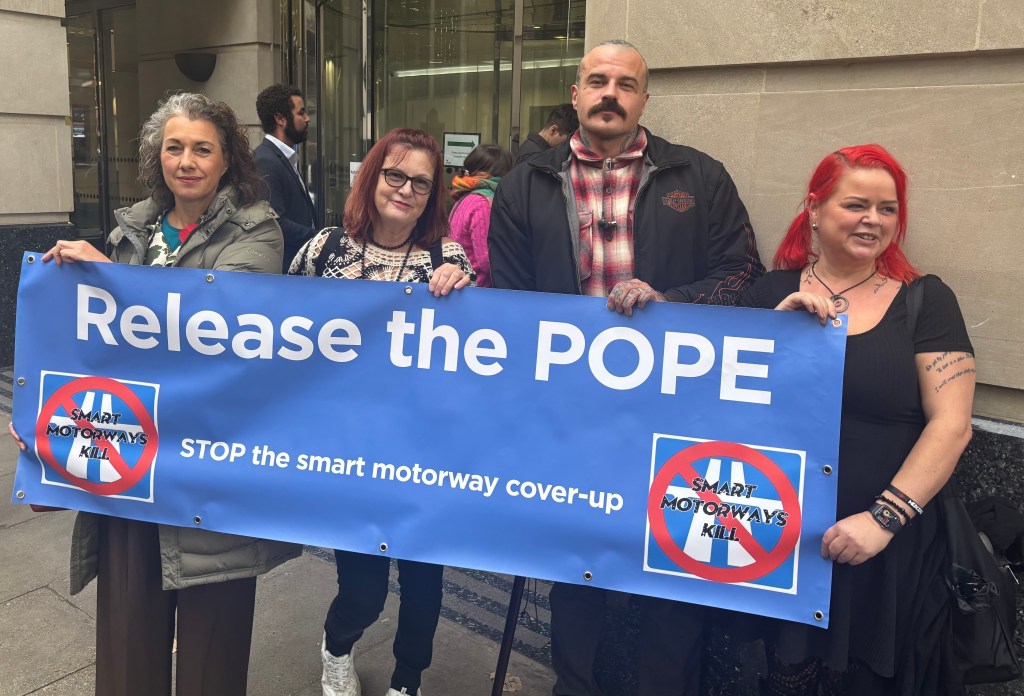
Last week, I attended an event at the Department for Transport (DfT), which I have revealed to be sitting on a large number of Post Opening Project Evaluation (POPE) reports on smart motorways, which would reveal their record on issues such as safety, value for money and environmental impact.
The response from National Highways is I think, pretty much what it told me, but very revealing:
The government is providing “substantial capital funds” for a programme to tackle toxic runoff from its network, a top National Highways official has said.
The comment from Ivan Le Fevre, the company’s head of environment strategy and standards, follows a recent publication that identified “182 confirmed high priority locations where outfalls or soakaways present a high-risk of pollution”, with an expectation that a total of 250 would be mitigated by 2030.
Le Fevre has published on LinkedIn a blog that he wrote in September “primarily for an internal company audience”. He wrote:
Government is providing substantial capital funds, through to 2031, to deliver a programme of improvement – and expects to see efficient and effective results that dramatically reduces the level of pollution risk and provides value for money for the taxpayer. Getting this programme right disproportionately matters to the company’s reputation over the next five years.
To illustrate the importance of the issue he referenced two hearings held by the Environmental Audit Committee.
At one of these, at the beginning of September, National Highways chief executive Nick Harris said the company was “proceeding on the basis that we will be funded to do all 250” sites.
The transport secretary has confirmed that Labour has no plans for further electrification of the rail network, for affordability reasons, once again giving the lie to the rail minister’s claim that the government is giving rail funding it needs.
The FT (paywall) reports Heidi Alexander as telling the Rail Industry Association summit that any further electrification is “not affordable right now” and that the government is “only supporting projects that are fully costed and affordable”.
She said:
We are keeping further electrification of the line under review, which I believe is the responsible thing to do.
Alexander also said this had “allowed us to make commitments elsewhere,” the FT reported.
It’s not clear whether her comments go further than what she said in July when claiming that the government was “greenlighting over 50 rail and road projects”.
She told MPs in relation to the midland main line electrification scheme phase 3:
The costs of the scheme were substantial, and we had to prioritise other schemes that deliver more tangible benefits to passengers sooner. However, we will keep the electrification scheme under review as part of our pipeline of projects for future funding.
But because of ministers’ double speak where “under review” appears to mean shelved and “greenlighting” to mean not shelved, it seems to have been clear for some time that Labour has shelved electrification to spend money on other things.
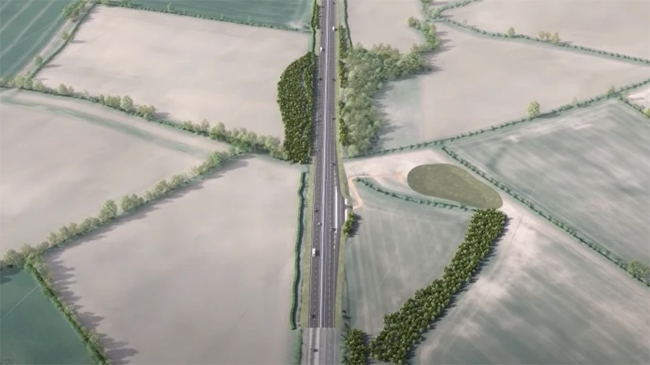
Councillors in Northumberland are continuing to call on ministers to reinstate a National Highways scheme to dual a section of the A1 that Labour publicly scrapped last year and which was secretly shelved four years ago as poor value for money.
National Highways had wasted £68m on the scheme by the time it was finally cancelled, with overall scheme costs expected to reach £500m.
As I have written – at great length – the Tories secretly shelved the scheme following the 2021 Spending Review but ministers, National Highways and the Office of Rail and Road conspired to hide this fact from Parliament and the public.
Councillors have made renewed calls to reverse a government decision to widen a “dangerous” single carriageway main road.
Liberal Democrat councillor Isabel Hunter said the road needed to be dualled as it was getting shut on an “almost a weekly basis” due to accidents.
Hunter said: “We’re not particularly bothered which party does it, we just want the road dualled.”
Conservative council leader Glen Sanderson said it was a “fundamental need” to have a “strong spine” between Northumberland and Scotland.
“The fact that we don’t have that, the fact that we have a dangerous road… and the fact that it has cost people their lives makes it an appalling decision,” he said.
“The A1 must be dualled, there’s no question about it.”






 Transport Insights
Leave a comment