Transport Insights

The transport stories you won't see in the industry-friendly media

Author

Chris Ames
  • “Shocking” Harris wilts under pressure

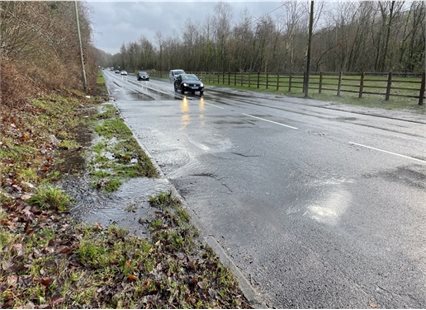
    It’s fair to say that National Highways chief executive Nick Harris got a bit of a kicking from MPs yesterday – on the subject of failed tree planting – but he was allowed to give a very vague answer on the subject of funding for cleaning up water pollution.

    To recap, Harris and the company’s director of environmental sustainability, Stephen Elderkin, were in front of the Environmental Audit Committee to talk about biodiversity, including tree planting, as well as what the company is doing to mitigate the toxic runoff from its roads.

    The headline on water pollution is that Harris said the company had mitigated just 40 “high risk” outlets since he last appeared before the committee in 2021 but now estimated that there are another 250 approximately, which it has pledged to mitigate by 2030.

    That is the date – the original end date for the third Road Investment Strategy (RIS 3) in March 2030 – given in National Highways’ 2030 Water Quality Plan, subject to funding of course.

    Harris described this as a prioritisation process of getting stuck into the very worst locations, adding that the company has 180 locations where it is developing designs, with more high risk locations expected to be identified.

    The problem is that National Highways has no funding for this at the moment. It has a promise of nearly £25bn up to 2031 under the draft RIS but no specific funding streams. Ministers have promised a new focus on repairs and renewals, alongside a long and growing tail of enhancement schemes but there are as yet no designated funds for the environment, for example.

    Labour MP Olivia Blake raised the issue of funding and asked Harris what certainty he had that the company would be able to meet the target on mitigation. He replied with wishful thinking:

    We’re proceeding on the basis that we will be funded to do all 250. The interim year hasn’t affected our design work. We’re moving forward on the assumption that it’s all going to be funded.

    He went on to explain the convoluted process by which National Highways, the Office of Rail and Road and the Department for Transport work towards a final RIS 3 by 2030.
    (more…)

  • Up a highly polluted creek without a paddle

    With National Highways appearing before the Environmental Audit Committee on Wednesday, Transport Action Network (TAN) has published another piece in its National Highways Watch series – this time on “Toxic Run-Off”.

    This covers the company’s plans, or lack of them, to address the pollution being discharged from its network into the natural environment.

    Once again, I have contributed to the TAN piece, despite a lack of co-operation from National Highways, although I would stress that the phrasing used is not necessarily mine. It does punch quite hard, but by no means unfairly.

    The piece also quotes from research by Stormwater Shepherds, a group doing great work on the issue, whose UK director of operations, Jo Bradley, will also be appearing before the committee.

    The group has pointed out that while Section 100 of the Highways Act 1980 allows highway authorities like National Highways to discharge surface water into any inland or tidal waters, a discharge of polluting matter into a watercourse would usually require a permit from the Environment Agency, and argued that the company is not exempt from enforcement action in this area.

    (more…)
  • It’s not investment; it’s spending

    The Department for Transport (DfT) has managed to pull off two of its favourite tricks in an announcement this morning, re-announcing funding and labelling it “investment” when it’s day-to-day.

    Millions of people across the country will have greater access to jobs, education and public services thanks to a £104 million government funding boost, which will be shared with communities outside England’s major cities.

    The gist of the story is that the DfT has confirmed the Local Transport Grant (LTG) resource allocations that English councils outside city regions will receive for the next three years, with the headline figure of £104m having been announced in the Spending review.

    So, despite claims that the cash is a “boost”, it’s the deceitful labelling of the continuation of an existing funding stream as extra cash.

    There is a small amount of extra cash for a small number of councils from 2027, but this comes on the back of previous freezes, which continue into 2026-27.

    The annual total of £28m next year is therefore the same as this year, and the year before, with £38m a year after that.

    (more…)
  • Greenwood goes back to the future of roads

    Future of roads minister Lilian Greenwood has been out and about in the Midlands, touting Labour’s decision not to cancel a road building scheme from the second Road Investment Strategy (RIS 2).

    The M54-M6 link road was one of five schemes from RIS 2 that were confirmed by the Department for Transport (DfT) in July, following the spending review, having been subject to the value for money review that the then transport secretary, Louise Haigh, announced a year earlier.

    Apparently forgetting that her own government had called the longstanding scheme into question, Greenwood called it a “no-brainer”. It has also been said that it could be a “game changer” for the region. Other cliches are available.

    Apparently also forgetting that the scheme had been subject to a value for money review, Greenwood said she did not know how much it was going to cost. It was estimated at around £200m in 2019 so the current cost of the blank cheque will be a lot higher.

    According to the BBC, she said:

    We’ve got National Highways working really hard now to finalise the costs, to work out the schedule, to appoint a delivery partner; all that will be confirmed as part of the roads investment strategy that we’ll be publishing before the end of March next year.

    The DfT rather carelessly lost its previous contractor, sorry, “delivery partner”, Bam Nuttall in 2023.

    The four other schemes that the government “confirmed” in July were: A38 Derby Junctions; M60/M62/M66 Simister Island; A46 Newark Bypass; and the A66 Northern Trans-Pennine.

    All were “confirmed” RIS 2 schemes but frozen by Labour so it is giving itself credit for unblocking things it blocked. At least, for once, Greenwood didn’t claim that this was part of its Plan for Change.

    All schemes will be returned to RIS 3 and take up quite a lot of whatever capital funding it includes for enhancements. It was always expected that the “tail” of schemes slipping from RIS 2 to RIS 3 would make up a big chunk of the latter.

    The big picture is that Labour’s future of roads minister has confirmed that the future of roads is a lot of road schemes from the past.

    Leave a comment

  • Puttng lipstick on a pig

    Transport Action Network (TAN) has posted another of its National Highways Watch pieces, with significant input from me, and it has been almost simultaneously vindicated by comments in the draft Third Road Investment Strategy (RIS 3).

    The piece Highway robbery – abusing Designated Funds compares National Highways’ use of designated funds, pictorially at least, to putting lipstick on a pig – i.e. prettifying large and potentially environmentally destructive road building schemes with greenwashing.

    TAN has discovered that National Highways is syphoning off money from a dedicated fund for environmental and safety improvements (called ‘Designated Funds’1) to use it as sweeteners or greenwashing for new roadbuilding schemes. National Highways is also raiding the “ringfenced” funding to pay for mitigation that should come out of the scheme budgets.

    The piece highlights a number of alleged misuses of designated funds, including “sweetening the Lower Thames Crossing”:

    A document on “Benefits and Outcomes” submitted as part of the scheme’s planning application mentions “Designated Funds” 25 times, and claims that “Over £30 million of designated funds have been allocated to Lower Thames Crossing”, despite having to make clear that these benefits technically “fall outside of the remit of the DCO [planning application]”.

    (more…)
  • Smart motorway shortcomings combined in fatal crash

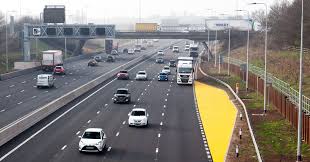
    National Highways’ response to the coroner examining the death of a motorist on a “smart motorway” section of the M6 where the emergency areas are officially too far apart also raises concerning questions about the effectiveness of the technology involved.

    In June 2023, Kevin O’Reilly ran out of petrol on the all lane running M6 northbound approaching Junction 12 and was stationary in lane three when his car was hit by an HGV.

    Emma Serrano, area coroner for Staffordshire sent National Highways a Regulation 28: Report to Prevent Future Deaths in relation to the death of Mr O’Reilly, expressing concern over the frequency of emergency areas and that the motorway was ‘not monitored’.

    I wrote about the issues around emergency area spacing – and what the government isn’t doing about them – earlier today but what National Highways said about the role that stopped vehicle detection (SVD) played is very worrying:

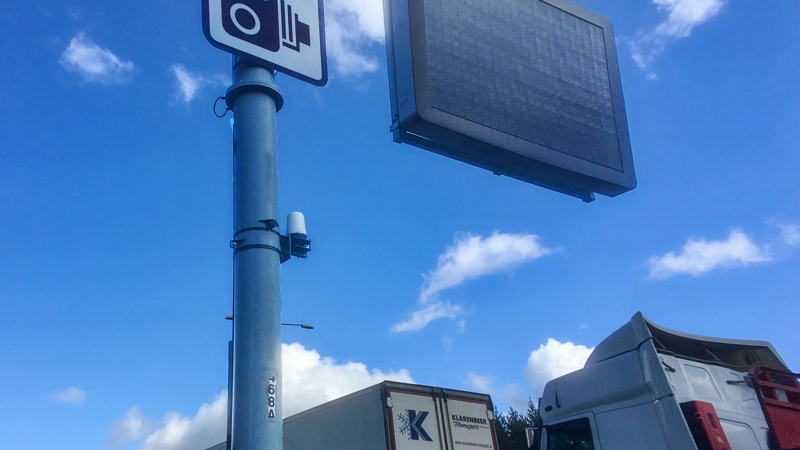
    Having reviewed our CCTV footage after the incident, we determined that Mr O’Reilly’s vehicle was slow moving until approximately 30 seconds before the collision. Once stopped, SVD operated correctly in detecting the vehicle and triggered the automatic “Report of obstruction” message just after the HGV, that collided with Mr O’Reilly’s car, passed the variable message sign. Therefore the HGV driver was not presented with this warning message.

    So, everything worked as it should, but a driver in a stationary vehicle without access to an emergency area (in the absence of a hard shoulder) still lost his life.

    (more…)

  • Don’t look to Labour to fix smart motorways

    The draft of the third Road Investment Strategy (RIS 3) published this week suggests that ministers are happy with a smart motorway network where many places to stop in an emergency are officially too far apart, putting drivers at increased risk.

    In November 2021, the Transport Select Committee recommended that:

    The Department and National Highways should retrofit emergency refuge areas to existing all-lane running motorways to make them a maximum of 1 mile apart, decreasing to every 0.75 miles where physically possible.

    The Department (for Transport – DfT) accepted this recommendation in principle and in January 2022 announced that £390m would be spent by the end of March 2025 to retrofit “more than 150 additional emergency areas”, alongside a pause on the construction of new all lane running smart motorways.

    The waters were muddied when it emerged that National Highways was counting other places to stop towards the spacing standard, but the company did deliver a promised 151 new emergency areas by the end of March under the National Emergency Area Retrofit (NEAR) programme.

    Although this was said to provide “around a 50% increase in places to stop”, neither the DfT nor National Highways ever said how far the programme would go to fill in all the gaps where the spacing was longer than the official standard.

    National Highways has told me that it had  “prioritised locations where emergency areas could make the most difference and bring benefits to drivers as soon as possible” and suggested that it would like to see a continuation of the programme.

    Labour delayed the start of RIS 3 by a year and gave the company an interim settlement for the current year that says nothing about improving safety on smart motorways.

    In a section on Smart Motorways, the draft RIS 3 document claims that “substantial investment continues to improve the safety of the existing network” citing “the recent completion of additional Emergency Refuge Areas on the All Lane Running (ALR) smart motorways under the National Emergency Areas Retrofit (NEAR) programme”, which it acknowledges “was finished in March 2025” – a whole year before the new RIS.

    There is no commitment to continuing the retrofit of what Labour has now returned to calling “Emergency Refuge Areas”, which leaves National Highways with a spacing standard that it is not funded to deliver.

    (more…)

  • Official: Smart motorway tech not fit for purpose

    Following on from my piece yesterday about the safety commitments – or lack of them – in the draft 3rd Road Investment Strategy, perhaps the most important comment on the issue comes in a section not about safety but “A technology enabled and enabling network”:

    National Highways should not be over-reliant on technology, for example drawing on insights from the use of cameras and stopped vehicle detection when considering driver safety and welfare.

    For me this is a recognition from government that technology such as stopped vehicle detection (SVD) is not up to the job given to it – keeping people safe when vehicles stop on all lane running “smart motorways” that do not have a hard shoulder.

    It can even be read as a repudiation of “smart motorways” themselves, where the word “smart” was used to imply that their key feature was technology, rather than the removal of the hard shoulder, or at least that the former compensated for the latter.

    (more…)
  • Has the draft RIS taken a sledgehammer to local road funding?

    An obvious point to make about the draft of the 3rd Road Investment Strategy (RIS 3) is that it looks set to gobble up almost all of the £24bn announced by Rachel Reeves in the spending review, with the local network getting around £1bn a year.

    Let’s start with the spending review:

    Providing £24 billion of capital funding between 2026-27 and 2029-30 to maintain and improve motorways and local roads across the country. This funding increase will allow National Highways and local authorities to invest in significantly improving the long-term condition of England’s road network, delivering faster, safer and more reliable journeys;

    The draft RIS 3 sets a total funding envelope of £24.98bn up to and including 2030-31. Assuming that this is approximately £5bn a year, that makes £20bn up to 2030, leaving just £4bn to maintain and improve local roads across the country.

    Even before you get into funding for improvements under the Major Road Network and Large Local Majors funding stream(s), this isn’t even enough to fund the current level of £1.6bn a year for local road maintenance.

    On the other hand, we don’t know how much of the RIS funding will be capital and how much resource.

    Leave a comment

  • Safety takes a back seat in Labour’s “draft RIS”

    Ministers have let National Highways off the hook over its continued failings on safety, excusing the company’s failure to meet its 2025 casualty reduction target and allowing it to put its 2040 zero harm pledge back by a whole decade.

    The Department for Transport has published what it is calling a Draft Road Investment Strategy 3, running from April 2026 to March 2031, although the document is billed as a “high-level vision” policy paper and has very little detail.

    The document notes that a consultation on previous papers “revealed that respondents placed the highest importance on improving road safety and environmental outcomes” but offers almost nothing to take these issues forward.

    (more…)

Subscribe

Subscribe to get our the latest stories in your inbox.