Transport Insights

The transport stories you won't see in the industry-friendly media

Author

Chris Ames
  • Ministers announce intention to align with EU safety standards

    There’s a lot in the government’s road safety strategy, finally published yesterday, and specifically a lot of consultation about changing things, largely for the better.

    The adoption of a casualty reduction target, albeit one that still envisages that large numbers of people will be killed and seriously injured on the roads in 10 years’ time, is largely welcome and welcomed and of course it allows the spin doctors to claim that the strategy will save thousands of lives.

    I’d like to focus on one aspect of one of the consultations as it illustrates how far ministers are and are not willing to go to save lives. The strategy says:

    Ensuring all new vehicles made in Great Britain have 18 new vehicle safety technologies

    The government is committed to ensuring that new vehicles entering the market in Great Britain comply with the very latest safety standards.
    For a start, surely “made” is an error. They mean all new vehicles sold here.

    And when I see the PR language of “committed to ensuring” I always ask why they didn’t just say they will ensure it.

    There is in fact a consultation on Mandating vehicle safety technologies in GB type approval, which includes a number of emergency braking technologies. Didn’t ministers consult on changing the law on pavement parking in 2020? (and are finally doing something in 2026)

    The consultation document makes clear that a key issue is aligning with EU-wide General Safety Regulations, but the inclusion of autonomous emergency braking has been labelled as “Dev’s law”.

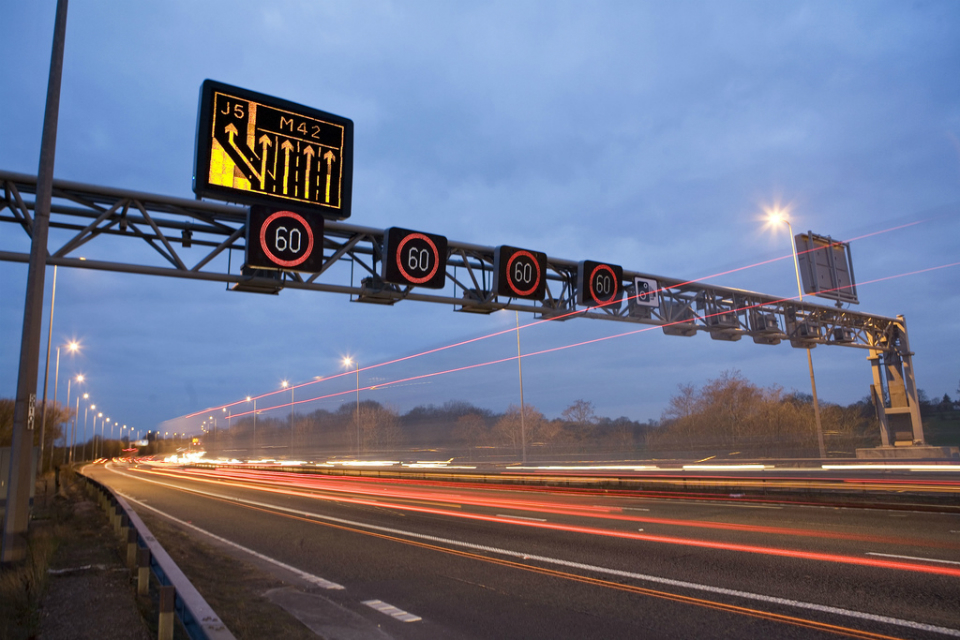
    This reflects the campaign run by Meera Naran MBE, whose eight-year-old son Dev was killed in 2018 when the car his grandfather was driving stopped on the a smart motorway section of the M6 and was hit by a lorry. 

    As her former solicitors, fieldfisher, said yesterday:

    Since then, his mother Meera has campaigned non-step to have the Highway Agency’s policy around smart motorways revoked, as well as specific measures such as compulsory braking technology.

    Following Dev’s death, Keith Barrett supported the family at inquest and successfully concluded a personal injury claim on their behalf against the insurers of the vehicles involved. The Telegraph initially highlighted the case and supported Meera’s campaign to overturn the widespread introduction of smart motorways.

    After hearing evidence, the West Midlands area coroner Emma Brown issued a Section 28 Preventing Future Deaths report – the most serious ruling open to a coroner – warning that further lives were at risk with the continued use of ‘smart’ motorways to ease traffic congestion. She said turning the hard shoulder into an active lane can ‘confuse motorists’.

    Ms Brown also highlighted that the Highway’s Agency staff failed to spot the car, despite numerous CCTV cameras covering the route and voiced her concern that no discussions were in place to improve monitoring of smart motorways.

    Meanwhile, Meera also campaigned for Dev’s Law to make mandatory braking technology that automatically slows a vehicle when sensors detect an impending collision (AEB). 

    So ministers have spun a measure that is as much about aligning with EU standards as safety (and is already in force in Northern Ireland) as a win for this campaign, while continuing to cover up the safety failings of smart motorways.

    Automated emergency braking and other technologies will save lives but for years there will be many cars legally on the road without them and there will continue to be fatal crashes on smart motorways because the technology that is meant to prevent them is not up to the job.   

    Leave a comment

  • Safety strategy delay is a car crash

    With the government due to publish its long-delayed road safety strategy tomorrow and selected highlights being fed to newspapers, it’s worth going back to what the Times reported in August.

    Drivers over 70 who fail eye tests face ban in road safety overhaul

    Ministers are preparing the biggest shake-up of driving rules for two decades, including a reduction in the drink-drive limit

    The measures are expected to be contained in a new road safety strategy, due to be published in the autumn. 

    Today, five months on, the same paper reports basically the same story:

    Older drivers face eyesight tests, alcohol limits could be tightened and penalty points given for not wearing seatbelts under plans to improve road safety.

    The strategy is reported to have targets for cutting thousands of deaths and serious injuries over the next 10 years, which means, if we take them at their word, that a lot of deaths and serious injuries could have been prevented if it had come out a few months ago.

    Leave a comment

  • A fine mess…continued

    With Parliament back in action, a Labour MP has asked an interesting follow-up question about the National Highways snafu that saw thousands of innocent drivers wrongly fined and many more speeding drivers escape prosecution.

    And got a total non-answer from the man who has made a ministerial career of keeping information from the public.

    Slough MP Tan Dhesi asked:

    … with reference to National Highways press release entitled Fix being rolled out after variable speed camera anomaly, published on 15 December, whether she has any plans to (a) contact insurance companies of or (b) provide assistance in any other way to affected drivers to help obtain a reassessment of their current premiums.

    It’s a good question but smart motorway cover-up minister Simon Lightwood made no attempt to answer it:

    Data has been provided to the police forces to enable them to start contacting those drivers who were impacted by this anomaly and allow the process of redress to begin. While we expect the number of drivers impacted by this issue to be very small, all those notified by the police will receive details on how to contact National Highways, who will consider the details of each claim on a case-by-case basis.

    Leave a comment

  • Official: minister made up smart motorway “assurance” claim

    The Department for Transport (DfT) has admitted that a minister had no basis for his claim that he is suppressing a raft of evaluation reports on smart motorway schemes because an assurance process is “ongoing”.

    Roads minister Simon Lightwood made the claim in a letter to widow Claire Mercer, after she wrote to ask for the release of Post Opening Project Evaluation (POPE) reports that the DfT is preventing National Highways from publishing, including one on the stretch of all lane running smart motorway where her husband was killed in 2019.

    Although some of the reports are believed to have been completed in 2022, the DfT has claimed that they are still undergoing an “assurance” process; in fact, National Highways has said that the department needs ministers to agree a “comms handling plan” before they can be released.

    The POPE reports are expected to reveal the real-world performance of individual smart motorway schemes, including their safety and environmental records and their economic benefits, or otherwise.

    In his letter to Mercer, Lightwood wrote:

    National Highways does evaluate the economic impact after schemes have been operational for five years and we are committed to transparency, but this is a complex process, and it is right that we take the time to fully assure findings. This process is ongoing, and we will provide an update on publication in due course.

    But I asked the DfT what advice Lightwood was given on which he made the claim that the assurance process was “ongoing”. It admitted:

    no specific advice on the assurance process was provided to Ministers

    It added:

    …at the date of the letter I can confirm that Ministers were considering advice on the findings from the reports. As POPE reports contain a complex set of analysis, it is right that the process of assurance, governance and preparation prior to publication is undertaken thoroughly.

    Although this second part references “assurance”, it does so only in a “this is exactly the sort of thing we should be doing” sense, rather than claiming that such a thing is currently happening.

    It appears in any case that the process is now at the stage that the DfT describes as “governance and preparation prior to publication”, by which it means, working out how to spin what is obviously bad news.

    And the bigger picture is that, despite suggestions that the POPE reports might be published around Christmas, they remain suppressed.

    They must be really, really bad.

  • A year of failure at the DfT

    As 2025 ends, I think it might be a good idea to produce a quick run-through of the things Labour hasn’t done on the transport front, and it’s quite a long list.

    As I noted last week, promises that the first road safety strategy for a decade would be published by the end of the year have not been met.

    There is no sign of a follow-up to the consultation on pavement parking, despite the (Tory) government consultation having closed five years ago.

    In November 2024, the then transport secretary, Louise Haigh, set out the government’s vision for the first integrated national transport strategy in over two decades but it has failed to follow that through.

    Ministers have given the Lower Thames Crossing planning permission but have yet to nail down how to pay for it and National Highways has a plan, but not the funding to begin to tackle road runoff.

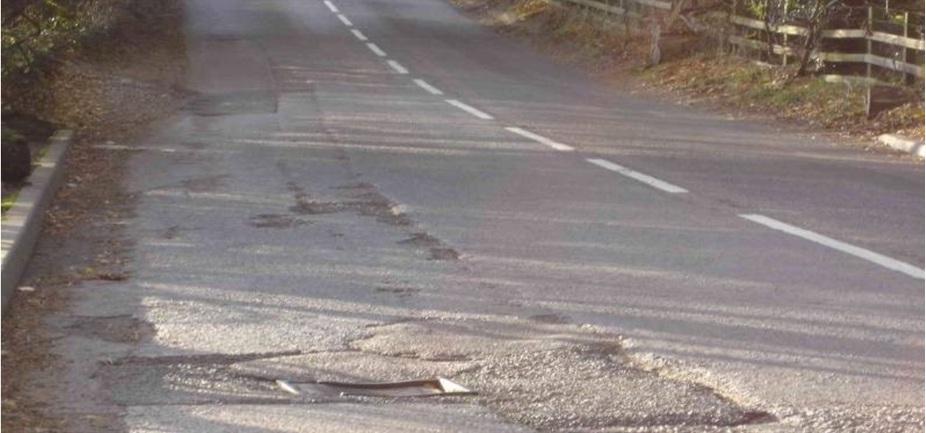
    On local roads, £2bn a year has been promised to fill and prevent potholes, but not yet.

    Similarly, the legislation to create Great British railways has been introduced, but there is no target date for implementation, other than a statement that “GBR is expected to be operational around 12 months after the bill receives Royal Assent.”

    On the other hand, there is some new branding.

    Also on the trains, a programme to roll-out contactless payments in South East England beyond London is still some way behind where it should be and a target date to start services on the first bit of East West rail has been missed.

    Finally, if we take at face value that ministers really, really want to publish those smart motorway POPE reports that the Department for Transport has been suppressing, as soon as they have a “comms handling plan”, they have failed to deliver that.

    Alternatively, they are just happy for now to have swept the bad news under the carpet.

  • Deliberately worsening the service

    Many people working in this week or so between Christmas and New Year are having to wait longer for trains, not because of engineering works, but because the service has been intentionally made worse, despite Labour’s claim to be putting passengers first.

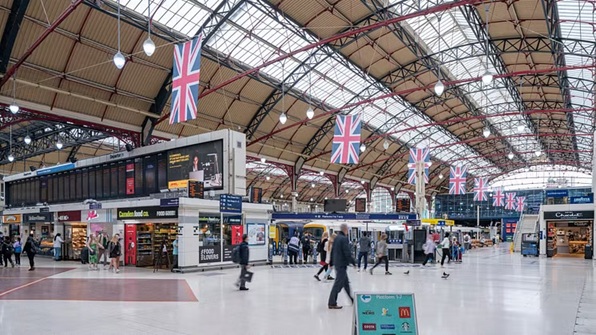
    For example, trains to and from London from where I live in Epsom have been cut from one every fifteen minutes in the rush hour to one every half hour – and that goes for both Southern trains to and from Victoria and SWR trains to and from Waterloo.

    As far as I can tell, in at least the case of Southern, there is no impact from engineering works; the company is just choosing to save money by running fewer trains, based on assumptions that fewer people will be travelling.

    Those people are not paying any less to have a worse service and the peak time charges have not been waived.

    And the trains are still overcrowded.

    Another problem is that if you cut the frequency of the trains and then cancel one, as Southern did yesterday, a fifteen-minute wait can become an hour.

    This says a lot about the state of our railways today, with cost-cutting instead of an attempt to run the best service possible. A total lack of imagination about the benefits of giving customers a service where they feel valued.

  • Pothole half full

    Although the media have gone with the obvious bad news angle on the RAC’s survey showing that pothole compensation claims submitted to councils in England, Scotland and Wales jumped by 91% in three years, things actually seem to be improving.

    While the comparison to 2021 is concerning, the number of claims has thankfully come down slightly year-on-year. The local authorities that responded to the RAC’s request for data received a total of 56,655 claims in 2023, meaning compensation requests have dropped by six per cent to 2024’s number (53,015).

    There is a lot of discussion in the RAC’s press release and in the reporting about preventative maintenance instead of putting resources into repairs but the downside of this is that until it pays off, vehicles will continue to be damaged.

    The RAC press release ends on a positive note (or is it wishful thinking?) with its head of policy Simon Williams saying:

    We’re now hopeful the dial will really begin to shift as highways authorities in England were this year given a record £1.6bn by the Government for road maintenance. And for the first time they’ve been required to show how much vital preventative maintenance they’ll be carrying out to stop potholes forming in the first place.

    On top of this, the Government has now announced multi-year settlements which will give councils the certainty they need to plan and deliver better maintenance programmes. This can only be a good thing.

    So, while the figures we’ve analysed are a cause for concern, we hope pothole compensation claims will begin to decline as local authorities increase the amount of preventative surface dressing work on their roads.

    One response to “Pothole half full”

    1. queengenuine756b40418a avatar
      queengenuine756b40418a

      Hi Chris.

      The RAC comment on number of claims is at best a single point within a complex system. It is not just the number of claims that matters. On its own it gives little indication of the state of the roads, highways services or value for public money.

      Yes reducing claims numbers is a good thing. But claims and incidents do not necessarily relate to the year the claim is submitted. Taking 1 year in isolation is not a good indicator. You need to look at the 3 to 5 year trend. You need to look at the make up of the total claims, are they motor vehicle damage due to road surface?, are they slips, trips, falls?, are they cyclists, pedestrians? are they town centre? rural, suburban? what is the road or footways class?????????

      Secondly it is the effort to defend and the relationship between claims and accepted liability i.e. pay out that really tells you something about the state of our highways and the impact on the public and communities.

      At the NHT Network https://nhtnetwork.org/ our members have been using the right range of metrics to asses their efficiency and effectiveness in terms of potholes and defect repairs, claims management and repudiation as part of their whole service performance management and asset management decision making.

      Less claims hitting councils is good but it doesn’t tell you the real picture.

      All the best. Jon

      Like

    Leave a comment

  • Ministers fail to publish road safety strategy

    The Government appears to have missed its own target of publishing its new and widely trailed road safety strategy “this year”.

    I have written extensively on this blog about the varying commitment to publish the strategy, as well as the boast from ministers that it will be “the first for ten years”.

    As early as 11 December – less than two weeks ago – asked directly by Tory MP Andrew Griffith when the strategy would be published, transport minister Lilian Greenwood said:

    The Government intends to publish the Road Safety Strategy this year.

    But, with Parliament sitting and just a day before Christmas, there has been a wobble, with Greenwood telling Green Party MP Ellie Chowns this week:

    My Department is developing our road safety strategy and we will set out more details in due course.

    As I have noted in relation to smart motorway evaluation reports, ministers sometimes say they are working on things when they have simply chosen not to publish them, but the idea that officials are still putting the strategy together – or ministers are arguing over the content with No 10 – is mind blowing.

    Greenwood also told Labour MP Juliet Campbell:

    We are considering a range of policies under the new Road Safety Strategy; the first for ten years. Details on this will be published shortly.

    I think that you can safely say that if ministers say they intend to do something and then don’t do it, you have failed.

  • No time for trams

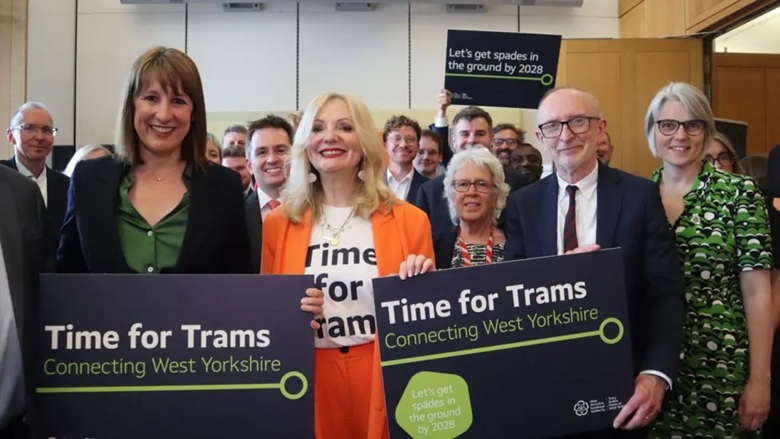
    The press release from West Yorkshire Combined Authority announcing ministers’ decision to put the region’s mass transit system on the not yet list, along with Northern Powerhouse Rail, is a classic of its kind, and trips over its own contradictions.

    Announcements that a scheme will be later than promised never come out and say that up front but begin with an assurance that everything is going swimmingly:

    West Yorkshire Combined Authority has been working with the Government to consider the plans for successfully delivering this game-changing scheme for the region. 

    This has included undertaking an independent review, which is part of the usual process for projects of this size and scale.  As a result, a robust, sequential timeline has been developed, which aims to reduce risks and ensure that the project is put firmly on the path for successful delivery.

    And then the kicker:

    The revised plan has been welcomed by West Yorkshire Mayor Tracy Brabin and Transport Minister Lord Peter Hendy, despite the changes meaning services will now start running later than planned, from the mid-2030s to the late 2030s.  

    I’m sure West Yorkshire mayor Tracy Brabin thought she was being helpful when she said:

    (more…)

  • Did Lightwood exaggerate speed camera fix?

    The Daily Mail has reported that National Highways is some way off identifying and implementing a permanent solution to the issue that led to thousands of drivers being wrongly clocked for speeding on smart motorways.

    The paper picks up on yesterday’s statement from roads minister Simon Lightwood and in particular the revelation that the problem was fully identified in October and prosecutions halted, adding that “speed camera enforcement on smart motorways was secretly switched off two months ago”.

    Lightwood also said:

    A Home Office-approved solution to this issue has now been agreed. National Highways will be working with the police to allow them to implement this solution as a priority.

    However, the Mail reports:

    But it has emerged that National Highways still does not fully understand how the fault occurred and a permanent solution won’t be found until next year. 

    In the meantime, when the camera enforcement system is switched back on, National Highways will have to provide daily updates to police on the times when they believe the camera system is not functioning properly.

    Leave a comment

Subscribe

Subscribe to get our the latest stories in your inbox.