Transport Insights

The transport stories you won't see in the industry-friendly media

Author

Chris Ames
  • “Better, greener and smaller” but probably not cheaper

    National Highways is spending more than £2m a year on what have been described as “swanky” new offices in Birmingham, a freedom of information request has disclosed.

    It was reported in August 2024 that the government-owned company had agreed a lease on 58,697 sq ft at Three Snowhill, to replace its current HQ at The Cube and other offices at Colmore Square.

    The “anchor tenant” at the building is BT.

    National Highways said at the time that the move would

    bring our Birmingham-based teams together under one roof at a convenient location in the centre of the city enabling better collaborative working and building on the community workplace feel that we have developed. 

    This was said to be part of its

    workplace and location strategy to create better, greener and smaller workplaces.

    Indeed, the Cube alone was 5,196.9 sq m, which translates as 55,936 sq ft.

    Asked for:

    a breakdown of the rental / purchase costs of National Highways head office at Snow Hill Queensway in Birmingham in 2024-2025, and how much has been spent so far per month in 2025-26

    The company replied:

    (more…)


  • Will Lightwood cover for National Highways…again?

    The Department for Transport (DfT) has asked a member of its own board to carry out the “independent” review of the snafu that led to thousands of drivers on smart motorways being wrongly prosecuted, with no guarantee that the outcome will be published.

    It has also admitted that National Highways is still working with the police to implement “a Home Office-approved solution to this issue”.

    The “anomaly” identified was that, while there should be a delay between a variable speed shown on a motorway gantry changing and HADECs cameras detecting vehicles over the new limit, this has not always happened.

    The DfT has claimed that National Highways has identified approximately 2,650 total erroneous activations since 2021, but the terms of reference for the review go back to 2019, when the upgrade of cameras began, “to ensure that everyone who has been impacted is identified”.

    In a written ministerial statement on 16 December, roads minister Simon Lightwood, who has made a career of covering things up since arriving at the DfT, promised ‘an independent investigation into how this technical anomaly came about, to ensure that lessons can be learnt’. 

    Transport Heidi Alexander has now appointed

    Tracey Westall OBE, Non-Executive Director of DfT, to be the lead reviewer for this independent review.

    I’m sceptical of any government appointed review being described as “independent” but appointing a member of the DfT board to lead an independent review invites ridicule.

    The terms of reference include who knew what, when?

    (more…)

  • Shelved but never paused: how the DfT hid defunding of A1 scheme

    The Department for Transport (DfT) has backtracked on its claim that a major National Highways road scheme that it secretly shelved was officially “paused” as a result, which explains why the government-owned company ran up a £70m bill for an “enhancement” that never happened.

    But there remains the scandal of how both National Highways and regulator the Office of Rail and Road (ORR) lied to Parliament and the public by pretending that the A1 Morpeth to Ellingham was going ahead imminently, despite being defunded and deprioritised, and how the ORR falsely attributed a quarter-billion-pound to the shelved scheme.

    The story of the various deceptions perpetrated by these various bodies and how they destroy any pretence that the Road Investment Strategy (RIS) process allows transparency and oversight of National Highways’ enhancements programme is a long and complicated one.

    It begins with a Treasury decision to defund and deprioritise the scheme as part of the 2021 Spending Review (SR21).

    This decision was taken on value for money grounds in a context where National Highways was failing to spend its budget, meaning that the scheme could be afforded but was not cost effective.

    When National Highways became aware of the SR21 decisions, it interpreted them as meaning that the Morpeth to Ellingham scheme was “paused” and said in a February 2022 change control document sent to the DfT that this would be formalised through a separate change control document.

    The DfT has previously insisted that the first change control form formally paused the scheme, which was obviously untrue, but in any case on 31 March 2022 a senior National Highways official told the DfT’s Kate Cohen:

    (more…)

  • Regulator finds holes in Reeves’ pothole cash claims

    The government is having to backtrack on its big announcement about funding for council road maintenance in England “doubling” after I pointed out to the official statistics regulator that it was full of spin.

    My biggest problem with this Treasury Press release in November was that it failed to take inflation into account by stating whether the promised future increase will be in real terms or cash terms.

    Of course it’s in cash terms, which can always be used to make spending increases look bigger than they are in real terms.

    The Office for Statistics Regulation at the UK Statistics Authority agreed with this point and the Treasury has promised to be clearer in future.

    The other main trick that the spin doctors pulled was to compare two individual financial years that were five years apart, i.e. 2024-25 (the last funding settlement determined by the Tories) and 2029-30.

    This meant a degree of cherry picking and using a previous figure rather as a comparator, rather than what would have been spent.

    Note that chancellor Rachel Reeves said:

    We are doubling the funding promised by the previous government

    (more…)

  • Coffee fine council still won’t come clean on road runoff risk

    I have got more information (but not much) from Richmond Council about its farcical decision to fine a resident for pouring the remains of a cup of coffee down a gully, with the upshot being that it really should outright withdraw its claim that an offence was committed.

    Equally important, the point remains that if a small quantity of coffee risks polluting the borough’s waterways, runoff from its own roads is far worse.

    As I have said before, where my request under the Freedom of Information Act should have elicited factual information, the highway authority has responded with PR.

    This has not changed and in particular, very specifically-worded questions have been met with generalisations , obfuscation and wishful thinking, no doubt because the council is aware that it (still) doesn’t have a leg to stand on.

    To recap, in October Burcu Yesilyurt was given a fine by Richmond’s enforcement officers under Section 33 of the Environmental Protection Act 1990, which makes it an offence to deposit or dispose of waste in a way likely to pollute land or water. Although the council rescinded the fine, it still insisted that an offence had occurred.

    I have already established that the gully in question links to a Thames Water surface drainage system, which then flows into the river of the same name.

    This means that, despite being “committed to protecting Richmond’s waterways”, the council is potentially discharging thousands of gallons of contaminated runoff into the Thames.

    The specific question I asked the council was:

    what mitigation is in place to protect Richmond’s waterways from the runoff via gullies on the street in question?

    Despite expressly referencing the street in question, I got a very generic response:

    (more…)
  • Show me the money, Blunkett demands

    The government’s framing of more dither and delay over so-called Northern Powerhouse Rail as an end to dither and delay, alongside a spending cap instead of new money, is breathtaking.

    So far this morning, the Department for Transport (DfT) has issued separate press releases for the North West and for Yorkshire and the North East, with the former (eventually) getting a brand new rail line between Liverpool and Manchester and the latter getting (first) upgrades and electrification between Leeds-Sheffield, Leeds-York and Leeds-Bradford.

    A third phase will focus on improved connections between Manchester and Sheffield, Manchester and Leeds, and explore options for Manchester to Bradford.   

    Manchester Picadilly station

    In an act of ineptitude that seems par for the course for the DfT just now, the press release about Yorkshire and the North East includes the wholly uninspiring image of “Manchester Picadlily Station” replicated here.

    With the Yorkshire part “set to be delivered in the 2030s” and delivery of the second part “starting in the 2030s”, transport secretary Heidi Alexander seems to believe she has Jedi-level powers of misdirection:

    For too long, the North has been held back by underinvestment and years of dither and delay – but that ends now.

    On the funding front:

    (more…)
  • Even more full of holes

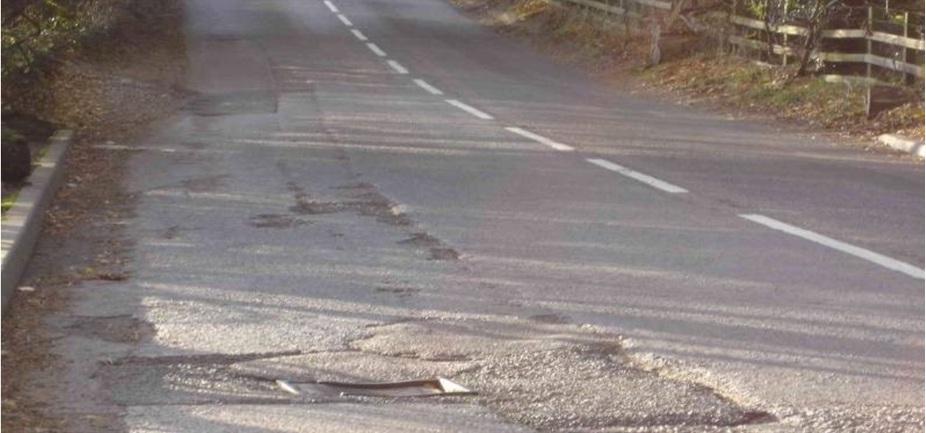
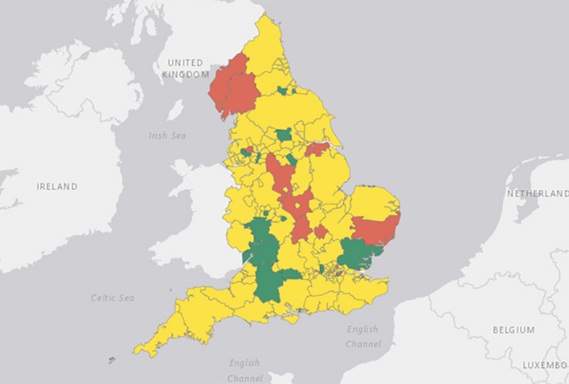
    Highways magazine has raised some concerns from within the local authority sector about the data on which the Department for Transport has based its red, amber, green (RAG) ratings of English local authorities when it comes to filling potholes highway maintenance.

    The gist of the story seems to be both that some councils have wrongly been rated red and others undeservedly rated as green.

    The twist in the tale, as I mentioned yesterday, is that councils with a red rating, deserved or not, will get extra cash.

    As transport secretary Heidi Alexander told MPs yesterday, the ratings are based on three underlying scorecards,

    measuring local road condition, the level of capital spend on highways maintenance and the extent to which local authorities have adopted best practice in highways management.

    Highways mainly focuses on complications over capital spend, with suggestions that data is not consistent, either because the DfT has not explained the nuances very well, or councils have got the wrong end of the stick, or both:

    (more…)
  • No time for complacency on EV charging

    The Mail/This is Money has an interesting story about a North-South divide that has developed over the installation of public charge points for electric vehicles, slightly spoilt by some gratuitous Labour-bashing.

    First, there is a suggestion that the rate of installation is now on a downward curve:

    A mere 628 public chargers were installed in December, taking the total number added last year to 14,097, according to industry group Zapmap.

    That was down nearly 30 per cent on the 19,834 installed in 2024 and more than 2,500 fewer than in 2023.

    On the subject of location, it does seem that close to half are in London and the South East:

    Of the 87,796 chargers installed, 27,895 are in London and the South East has 11,136.

    By contrast, there are just 2,550 in the North East. Westminster alone has more public charging points than Manchester, Liverpool, Leeds, Sheffield and Newcastle combined.

    Ginny Buckley of Electrifying.com is quoted as saying:

    (more…)
  • Full of holes

    The mixed messages coming from the latest Department for Transport (DfT) press release on English local authority approaches to road maintenance are mind-blowing, with the idea that prevention is better than cure getting lost in simplistic headlines.

    How well is your council fixing your roads?

    New map rates how record government pothole funding is being used.

    Absent from the top line is the idea that fixing roads and filling in potholes is a sign of failure.

    • new red, amber, green ratings let public see which local highway authorities are fixing potholes effectively
    • government’s record £7.3 billion funding announced at budget is helping councils get on with fixing nation’s roads
    • record investment will drive real improvement, saving drivers money by preventing costly repairs and restoring pride in communities

    The press release explains that red, amber, green (RAG) ratings are based on three key areas:

    • the condition of local roads
    • how much LHAs are spending on road repairs
    • whether they are following best practice in maintaining highways

    Eventually, the DfT gets around to explaining what they mean by best practice, and it isn’t “patching up potholes”:

    Those that scored ‘green’, like Leeds, Sandwell and Manchester, were able to demonstrate they are following best practice, such as investing in more long-term preventative measures rather than just patching up potholes, while also maintaining good road conditions and investing significantly into improving local roads. 

    Despite all the tough talk, the DfT has created a system of perverse incentives, where the councils with a red rating get *more* money.

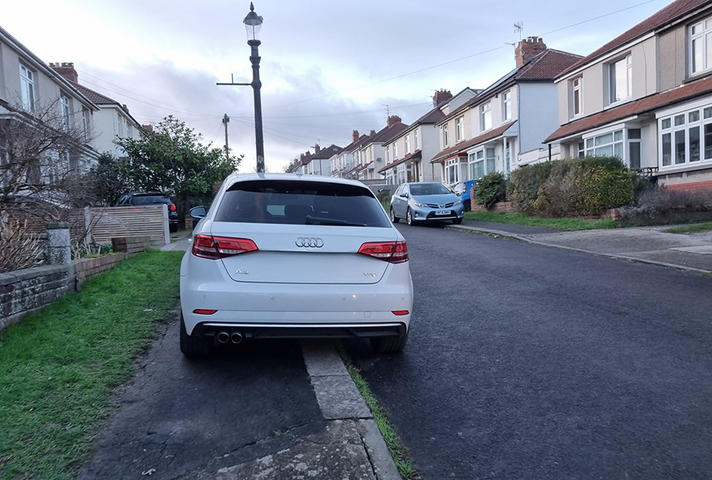
  • Don’t park pavement parking again, Cadbury warns

    I’ve been catching up with the government’s response to the responses to the pavement parking consultation – i.e. what they are actually planning to do – as well as the responses to the response to the responses.

    The weight of opinion that I have seen is that ministers have bottled it by going for the halfway house of giving individual councils (in England outside London) the power to take action and I wonder again why it took so long to do so little.

    Let’s start with the convoluted way the Department for Transport (DfT) framed its approach in yesterday’s press release:

    New local powers to keep pavements clear for those who rely on them most

    You can see what they are getting at, but it’s also bizarre to suggest that pavements (footways in the trade) will only be kept clear for those who rely on them the most. There seems to be an obsession among spin doctors to highlight protecting “the most vulnerable”, for example when cutting benefits.

    (more…)

Subscribe

Subscribe to get our the latest stories in your inbox.