Transport Insights

The transport stories you won't see in the industry-friendly media

Author

Chris Ames
  • Alexander unconvinced by National Highways funding “bid”

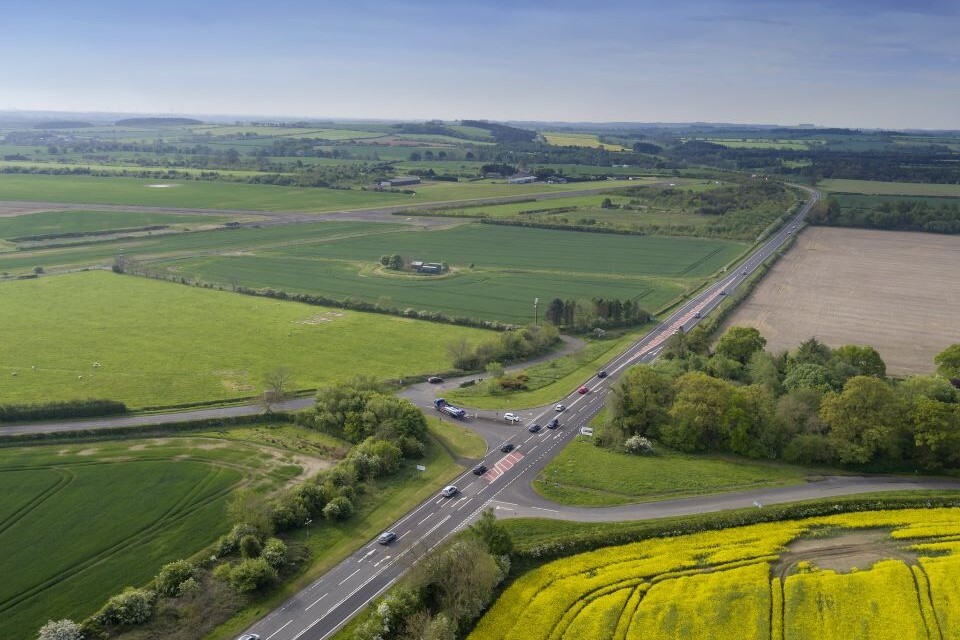
    Campaigners have declared a partial victory over National Highways’ M60/M62/M66 Simister Island scheme, despite the award of a development consent order (DCO) by the transport secretary.

    Transport Action Network (TAN) said it is “very pleased to see that [Heidi Alexander] agreed with us that National Highways must improve the Haweswater Underpass as part of the M60 Simister Island scheme”.

    The underpass featured in a National Highways Watch piece that I wrote for TAN about the company’s use of “designated funds” on roadbuilding schemes. National Highways claimed that improving the underpass as an active travel route under the motorway was not part of its scheme, but TAN argued that it should be.

    The decision letter on the scheme does not resolve this dispute but does say clearly that Alexander considers that a proposed addition to the DCO  of a “requirement” for the company to deliver the scheme of improvements to the Haweswater Underpass “is necessary and proportionate to impact from the Proposed Development”.
    (more…)

  • Road deaths continue as Starmer plays musical chairs

    As the BBC reports on the “relentless” toll of deaths on Essex’s roads in 2025, we wait to see what impact the latest game of musical chairs at the Department for Transport (DfT) may have on Labour’s long-promised road safety strategy.

    BBC News, Essex reports that crashes have killed 48 people in the county since the turn of the year, almost matching the 50 total for 2024.

    It’s the beginning of September so we are just over two-thirds of the way into the year.

    Adam Pipe, head of roads policing at Essex Police, cited drug-driving, speed and carelessness as the biggest problems seen on the county’s highways.

    “It is relentless,” Mr Pipe added.

    Twenty-five of the 48 deaths on Essex’s roads in 2025 have been sent to the Crown Prosecution Service to consider charging drivers.

    “These are not, in most cases, an accident – there is a behaviour behind it,” Mr Pipe continued.

    (more…)

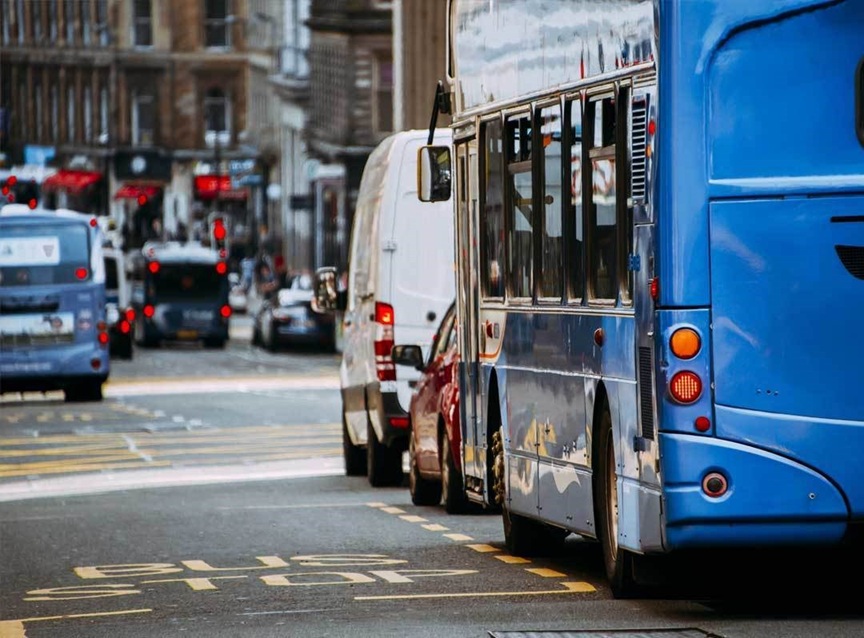
  • New moves to stop buses being held up in Scotland

    The Scottish Government has got at least one good headline from a press release today about a £20m spend from its new Bus Infrastructure Fund in the current financial year – a fund that is falling well short of the £500m promised by its ill-fated and probably fictitious predecessor.

    The Scotsman reports:

    Pioneering Glasgow City Council AI technology to cut bus journey times by up to 50 per cent

    Pioneering AI technology that could cut bus journey times by up to half is to be trialled in Glasgow thanks to £490,000 in Scottish Government Funding.

    I can’t read the story as it is behind a paywall but I note that a 2022 report from Strathclyde Partnership for Transport (SPT) states that:

    Since 2019, SPT has provided £490,000 of funding to the Council to support the roll-out of Traffic Light Priority (TLP) systems. This technology offers greater journey time reliability for buses by allocating additional ‘green phase’ signal time for approaching services.

    It could be a coincidence or that someone has got the wrong end of a stick.

    But of course what is new and sexy about today’s story is the addition of AI.

    It comes as Transport Scotland – an arm of the Scottish Government – announces that:

    The Scottish Government has now allocated £20 million through the new Bus Infrastructure Fund in 2025-26.

    (more…)
  • Exclusive: DfT, NH, ORR caught in Weekend at Bernie’s scam

    I have obtained another document about the secret shelving of the A1 Morpeth to Ellingham scheme that amounts to something of a smoking gun, showing that both National Highways and its regulator deliberately hid from Parliament that fact that the scheme had been “paused” as well as defunded.

    To recap, the Treasury secretly defunded and deprioritised the scheme in the (late) 2021 Spending Review and told the government-owned company and the Office of Rail and Road (ORR) this in February 2022.

    Despite this, both organisations said in reports presented to Parliament in July 2022 that the scheme would go ahead in the financial year 2022-23.

    The new document is a Department for Transport (DfT)/ National Highways “change control” form on the subject of a funding change for the 2020-25 Roads Period (RP2) to formalise the outcome of the Spending Review, which overall saw the company’s budget cut from £27.4bn to £24bn.

    The document makes clear that the A1 scheme was “paused” which is obviously incompatible with the claim in National Highways’ 2022-23 Delivery Plan that works would start that year. The ORR repeated this lie in its annual assessment 2021-22.

    The document also makes clear that the scheme had been “deprioritised with no further development funds”. It further states:

    The SR21 settlement includes pausing the development of two schemes with poof VfM. These will be dealt with as separate change control submissions, the timing and communication of which will have to be carefully timed with any broader announcements in response to TSC or Union Connectivity reports and any DCO process considerations.

    (more…)

  • Ministers on the move

    At the time of writing, there are only four ministers listed on the Department for Transport webpage, with Lilian Greenwood and Mike Kane moving out and just one MP, Keir Mather, coming in.

    The remaining junior ministers, “Lord” Peter Hendy and Simon Lightwood, still have their existing portfolios (rail and local transport respectively) but Mather does not have one. I’m not sure he even has a driving licence.

    We will see how it settles down if/when a fifth minister is announced.

    I should apologise to Greenwood. Last week I mocked her for promising for the second time that progress on pavement parking would be made “very soon”.

    The trouble of course is that Greenwood’s departure will both delay progress on this and mean that her “very soon” promise will not have been made by the current minister.

    She also said the issue was a personal “bugbear” and this may have been her downfall with a No 10 operation determined not to upset drivers.

    Perhaps the new minister will even be a fan of pavement parking, particularly for delivery, delivery, delivery vehicles.

    Leave a comment

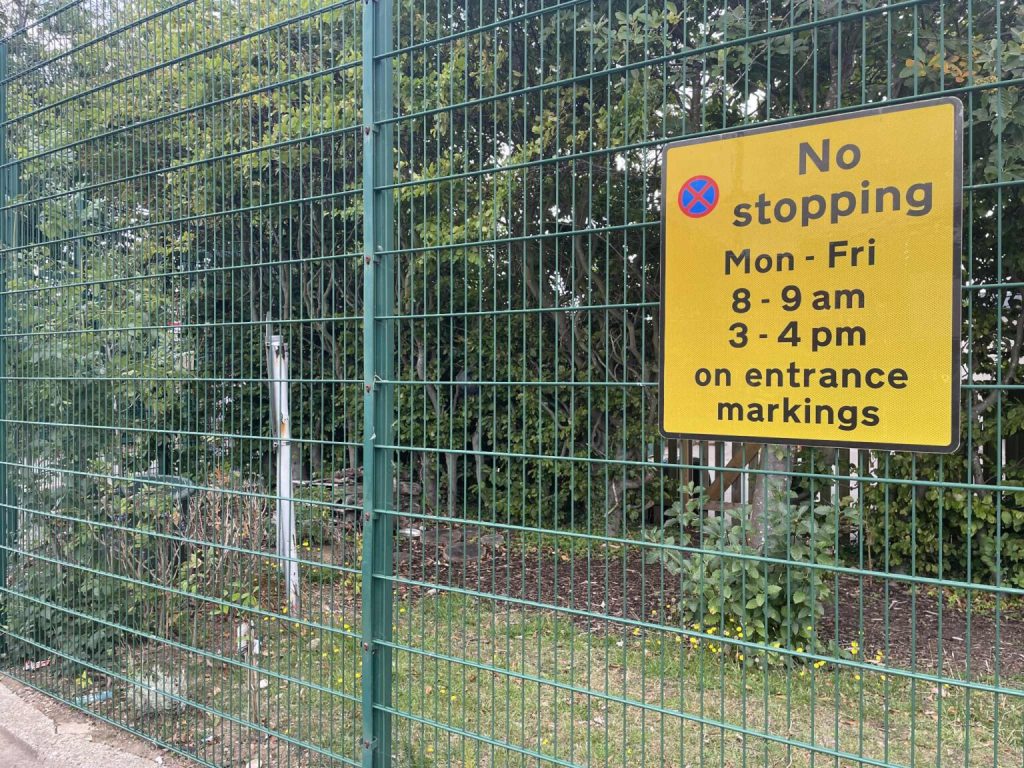
  • Parents back school parking crackdown

    Fair play to BBC news for reporting the positive side of a story about road safety that could have turned into one about unhappy drivers.

    Parents back school parking crackdown

    Parents have backed parking enforcement cameras outside their children’s school, after a council said it had issued hundreds of fines to those ignoring restrictions.

    Great Coates Primary, near Grimsby, is among 12 schools in a CCTV scheme designed to ensure the safety of children at drop-off and pick-up times.

    North East Lincolnshire Council issued a total of 924 penalty charge notices across the sites between the start of the year and August.

    Hundreds of fines is often reported as suggesting that large numbers of people are being treated unfairly, particularly when you add in enforcement cameras.

    But:

    As parents settled back into the school routine following the summer holidays, most who spoke to the BBC said they supported the scheme.

    The fly in the ointment is of course that every fine represents a driver who added to the risk of children going to school.

    While the cameras here are used to enforce parking restrictions, they can also be used by councils with powers under Part 6 of The Traffic Management Act 2004 to enforce moving traffic violations, such as cars using streets where they have been banned during certain school-related hours.

    Leave a comment

  • Robbing maintenance to pay renewal?

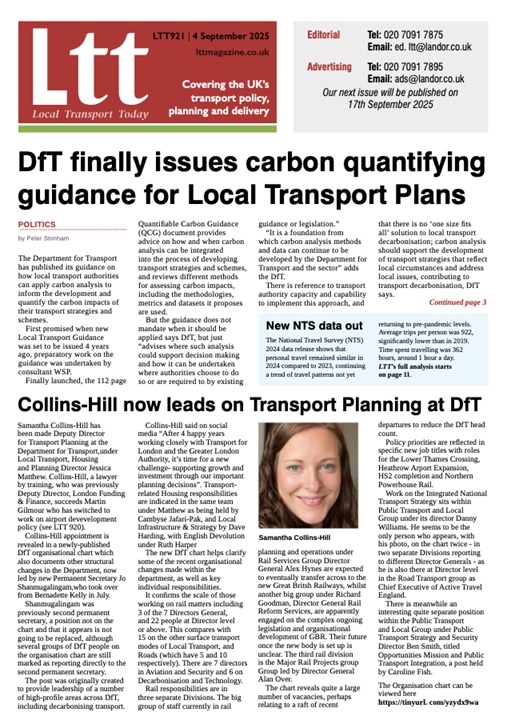
    This week I have made my debut as a columnist in LTT magazine, with an analysis of the draft third Road Investment Strategy, (RIS 3) concluding with the idea that there are a lot of gaps to be filled in.

    Promises of “a greater focus than ever before on the maintenance and renewal of the network” have not, SOFA, been backed with confirmation that asset management will get more money.

    The closest the document comes is a reference to “increased renewals funding” which isn’t even described as increasing in real terms.

    The document states:

    The final RIS strategy will define how this [£25bn] is split between capital and resource expenditure and outline the main categories of spend, including the schemes that will be delivered.

    Operations, Maintenance and Renewals are lumped together in a single section, which begins with a classic lie:

    43% of the RIS2 investment programme focussed on operating, maintaining, and renewing the existing network.

    Yes, £10.8bn of the eventual RIS 2 budget of £24bn was spent on these three things, but money spent on operating the network was resource spending, not investment.

    There is then a statement of the should-does-not-mean-yes variety – an assertion of what is needed without a commitment to actually do it:

    Maintaining a safe and reliable road network depends on a well-funded, carefully coordinated maintenance programme, delivered through a balanced combination of operations, maintenance, and renewals (OMR) activities.

    (more…)

  • DfT makes no promises over National Highways runoff clean-up

    The government has, unsurprisingly, failed to back National Highways chief executive Nick Harris’ optimism that it will fund the company’s plans to clean up its “very worst locations” for water pollution.

    Yesterday, Harris was asked at the Environmental Audit Committee about National Highways plan to “mitigate” by 2030 what it now estimates to be around 250 high risk outfalls and soakaways – where toxic road runoff runs off into watercourses and the environment generally.

    What certainty did he have that this would be funded in the third Road Investment Strategy (RIS 3)? Well, he was “proceeding on the basis that we will be funded to do all 250”.

    Naturally I asked the Department for Transport whether it could clarify this.

    It has responded with little more than a confirmation that the RIS 3  document will be published in March (which is a surprise as the draft said “no later than” March rather than giving a specific month) with its funding and what is expected of it only made clear at that point.

    What we know is that National Highways will have nearly £25bn over five years, with no clarity on how much of this will be capital and how much “resource” or how much will be spent on enhancements or maintenance, renewals or operations. There may or may not be a designated fund for the environment, and perhaps something else called a national programme.

    Is Harris simply engaging in wishful thinking, or does he know something we don’t?

  • Up to its old tricks: DfT conceals local road upgrade budget

    The Department for Transport (DfT) has confirmed that there is a budget for local road upgrades in England for the next four years but has refused to say what that budget is.

    The secret fund will pay for two categories of local authority upgrade – the Major Road Network (MRN) and Large Local Majors (LLM), which previously fell under a funding stream called the National Roads Fund (NRF) that also included National Highways’ funding.

    A DfT spokesperson has effectively confirmed that the NRF no longer exists but did refer to an MRN/LLM programme.

    Using the Freedom of Information Act, I asked the DfT what the individual or combined budgets were for the MRN and LLMs for the period covered by the Spending Review, which is up to and including 2029-30. It implicitly confirmed that this information exists by explicitly refusing to provide it.

    The DfT may be following a tried and tested PR strategy of announcing a large headline figure and then the smaller allocations within that – effectively re-announcing the same cash as it did this week. But it may be that the total budget is never stated.

    The DfT previously told me that the MRN/LLM funding falls under the £24bn capital funding for strategic and local roads up to 2030 that was announced in the spending review, with further announcements “in due course”.

    The government has since announced that the third Road Investment Strategy (RIS 3) will get nearly £25bn up to 2031. A large proportion of this will come from the £24bn, although not all of the cash for the RIS will be capital funding. Nearly 70% of the “interim settlement” of £4.8bn for the current year is capital.

    (more…)

  • Pavement parking ban remains sidelined

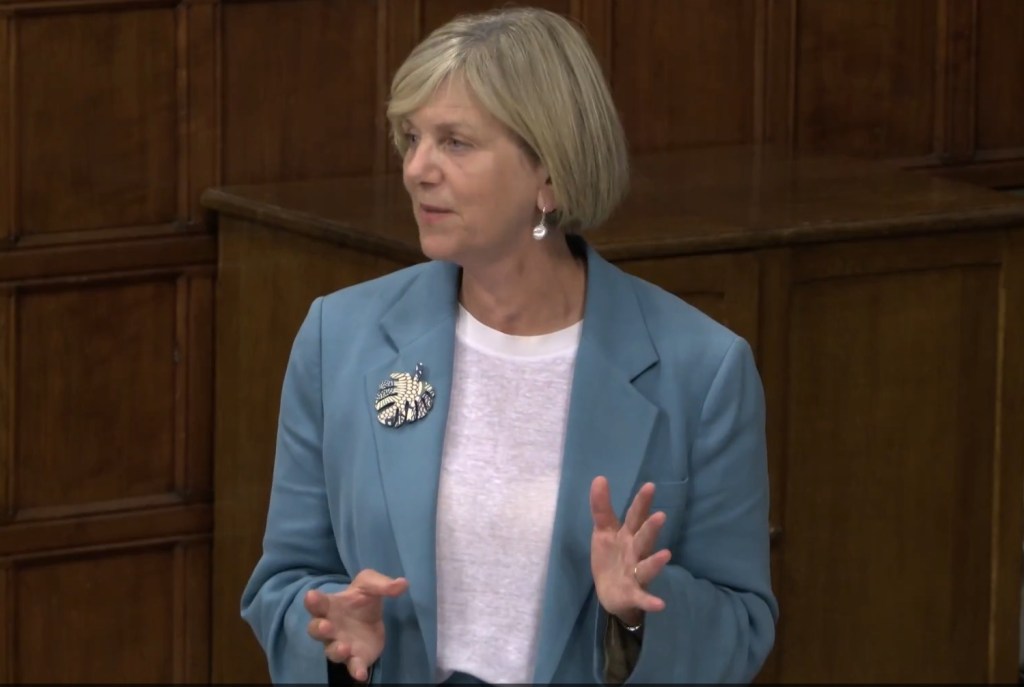
    During a Westminster Hall debate on Wednesday, future of roads minister Lilian Greenwood signalled that a ban on pavement parking is imminent – or did she?

    Well it looks like it could happen…some time in the future of roads.

    Local news outlets such as Bristol Live report:

    Parliamentary Under-Secretary of State for Transport, Lilian Greenwood, revealed that a policy announcement was imminent.

    “Our work is helping us shape a policy that is not only effective but equitable. As a result of all that work, I expect to make an announcement very soon.”

    Greenwood noted that the last government had sat on the issue for four years (after its consultation closed in November 2020) but said Labour, which came to power 14 months ago, was dealing with the matter as a matter of urgency.

    “Very soon” sounds like good news. It’s such good news that Greenwood has said it (at least) twice.

    (more…)

Subscribe

Subscribe to get our the latest stories in your inbox.