Plans to bring trams, or at least some form of mass transit, to West Yorkshire continue to go forward at a glacial pace, with the government continuing to talk a good game, while Leeds United do their talking on the pitch.
Plans to bring trams to Leeds United’s redeveloped ground as part of a new mass transit network for the city have taken a step closer with a fresh agreement between the club and Mayor Tracy Brabin, The Yorkshire Post can reveal.
On Tuesday, Leeds’ development partner, The Lowy Family Group, Leeds City Council and Ms Brabin’s West Yorkshire Combined Authority will sign a Memorandum of Understanding committing to working together to transform the site around Elland Road.
The memorandum apparently cites the plan to include Elland Road as an arm of mass transit:
If the strategic outline case is approved later in the year, then pre-development work can start to plan the mass transit network into Elland Road’s designs.
Newcastle City Council is reportedly thinking about installing a barrier to tackle toxic air pollution on a road where illegal levels of nitrogen oxide (NO2) are forecast to persist until 35 years after what should be strict legal limits became law.
Stephenson Road in Heaton, Newcastle, has high levels of nitrogen dioxide (NO2).
Newcastle City Council is exploring whether a barrier, or rerouting the pavement itself, could reduce the amount of pollution pedestrians are exposed to.
According to the BBC:
Annual average NO2 levels estimated by a monitor on Stephenson Road, on the entrance to Jesmond Park West, are 1.6 times higher than average UK permitted maximum levels and 6.45 times higher than the World Health Organization’s advised amounts.
Micromobility is another issue on which the government’s lack of dynamism is causing frustration, with the failure to bring forward legislation in the King’s Speech to legalise e-scooters on public roads drawing new criticism from campaigners.
In an article on TransportXtra, Richard Dilks, chief executive of national shared transport charity Collaborative Mobility UK (CoMoUK), pointed out that the government had previously committing to doing so when parliamentary time allows and described the absence of legislation as “a significant blow that will prolong uncertainty and deter investment”.
Of course, “when parliamentary time allows” is merely a function of the government’s priorities, which is what the King’s Speech is meant to set out, and Dilks urged the government “to rethink its timeline”.
CoMoUK was a signatory to an open letter sent to the Prime Minister called for legislation to create a new powered light vehicle class, giving e-scooters and other e-mobility options access to public roads.
The letter was also signed by operators including Lime, Voi, and Bolt, local councillors, and transport and environmental organisations such as Campaign for Better Transport and Clean Cities.
Dilks described the failure to legislate as “deeply frustrating”, adding:
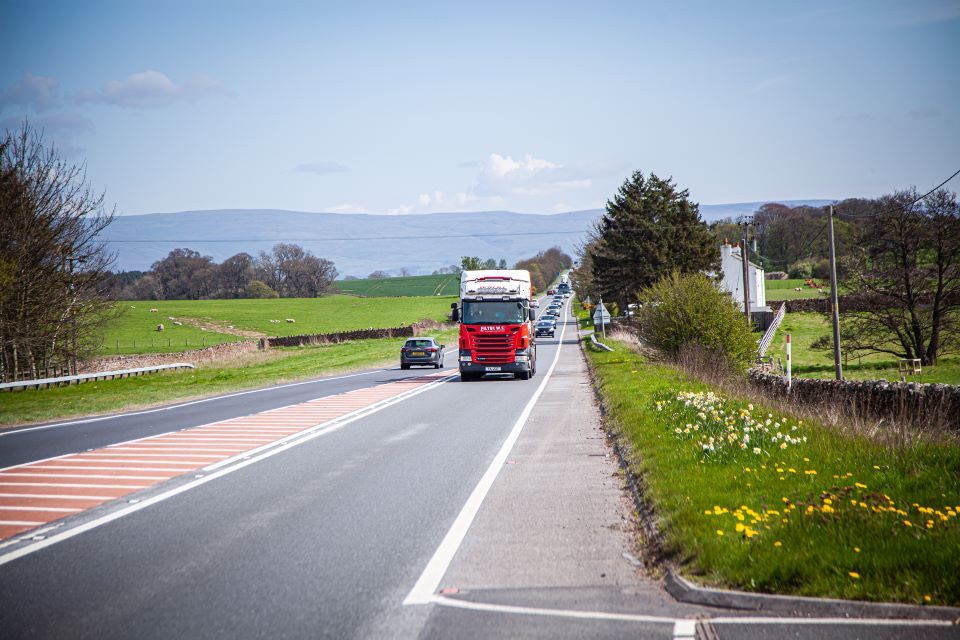
As has been pointed out, Labour is now privatising roads while nationalising (parts of) the rail network and the King’s Speech yesterday made this clear.
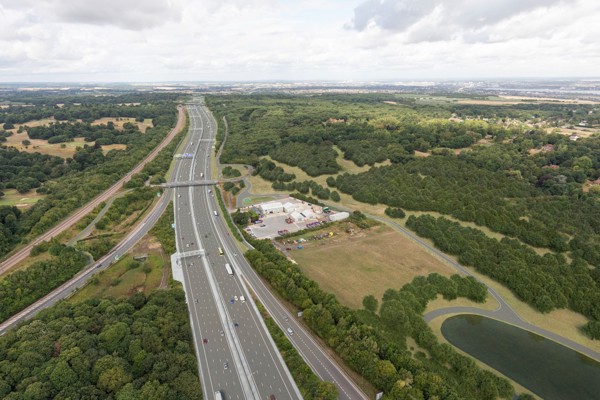
“Legislation will be introduced to… enable roads to be built at pace, including the Lower Thames Crossing;”
The Highways (Financing) Bill will enable a new financing approach to fund large-scale road schemes, supporting the Government’s commitment to deliver a modern transport network that helps people get to where they need to more easily and safely. The Bill enables the delivery of schemes through private investment, reducing the financial burden on taxpayers while ensuring strong regulatory oversight to protect the interests of users.
This is a necessary step to the unnecessary plan to build the Lower Thames Crossing (LTC) under the Regulated Asset Base (RAB) funding model, “to unlock greater levels of private capital investment in road infrastructure”.
But we should not forget that the entity that will finance and then own the LTC will also be given the existing Dartford Crossings forever. A publicly-owned asset that is providing an income stream to the government will be handed over to a private entity. That’s privatisation.
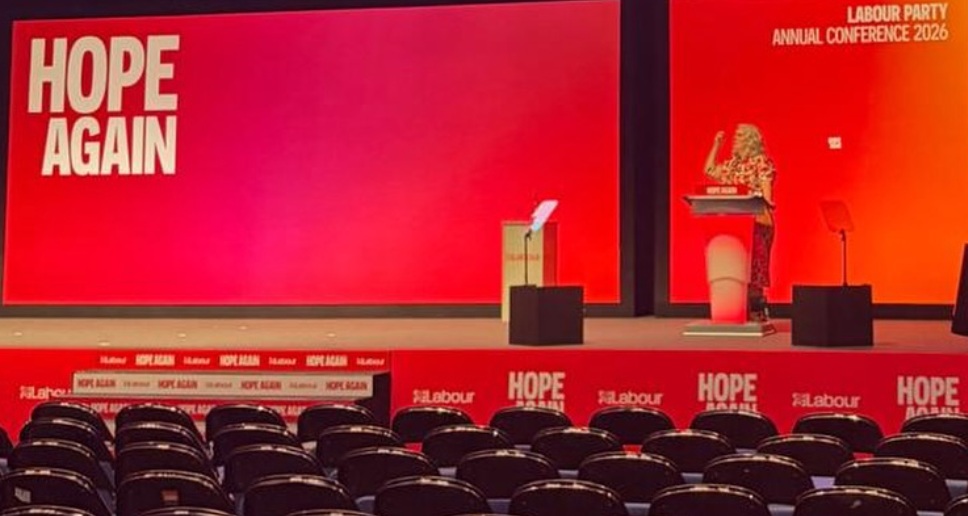
“My Government will improve critical infrastructure with legislation to… establish Great British Railways”
a new publicly owned company that will be at the core of the reformed rail industry. GBR will unite track and train under a single body for the first time in a generation. GBR will be unambiguously accountable for making the railway work for passengers, customers, and taxpayers. Whether reuniting family and friends, transporting critical goods across the country, or connecting Britain’s business, GBR will ensure that the railways deliver for all those that rely on it.
Transport for London (TfL) is to introduce a “safety-critical” 18 tonne weight restriction on Vauxhall Bridge from July, after it failed to find the cash to do “top priority” renewal works that Heidi Alexander deferred in 2018.
It said the restriction follows a recent assessment that showed that elements of the structure had “recently” deteriorated and that it has “a lower weight-bearing capacity than previously assessed”.
While emergency vehicles and buses will be exempt from the restriction, the 0.5% of current traffic that is above 18 tonnes will be required to use a signed diversion.
The weight restriction will remain in place while TfL works to resolve the problems as quickly as possible and continues to develop a long-term plan for the bridge
The issue with these structures, as with the original Severn Bridge, is not individual (ordinarily) heavy vehicles, but the risk that too many will be on the bridge at the same time.
The imposition of such restrictions has been on the cards since TfL postponed planned renewals work on the bridge in 2018, estimated at the time to cost £40-70m.
This was part of a “two-year pro-active renewals freeze”, which included the deferral of major proactive renewals on London’s roads, as described in this paper to TfL’s Programmes and Investment Committee.
Attending the meeting as deputy mayor for transport was Heidi Alexander, now transport secretary.
Waymo has issued a non-apology after one of its trial robotaxis reportedly repeatedly woke up residents in a London street by reversing loudly after finding itself blocked by a gate.
A driverless taxi company has apologised after one of its cars repeatedly reversed out of an east London cul-de-sac in the early hours, making a loud noise.
Residents of Elder Street in Spitalfields said a Waymo car had been waking everyone up with a “ridiculous mixture of a reversing noise and siren sound” at about 04:00 BST most days last week.
The problem appears to be the robotaxi is too stupid to realise that it cannot get out of the street going forward. According to the BBC report, the safety driver told residents that he just had to let the car do what it wanted. It said:
US firm Waymo, which plans to be operating a robo-taxi service in London by September, apologised “sincerely for any disruption caused”.
Apologising for “any disruption caused” is a refusal to admit that disruption has actually been caused – presumably on lawyers’ advice – and is meaningless.
The rail operator Great Western Railway (GWR) is to be renationalised in a “significant” move for trains in the West of England, the government has confirmed.
GWR, based in Swindon, runs services linking London to the south-west of England and South Wales. It will come back under public ownership on 13 December.
It’s not really news, other than the confirmation that it will happen, and will happen this year. In fact, it might be seen as later than expected. The BBC reported last September:
Train firm GWR ‘to be renationalised in a year’
Train company GWR (Great Western Railways) will be returned to public ownership “in about a year’s time”, one of its bosses has said.
Meanwhile, the Department for Transport (DfT) has announced:
The statistics regulator is to have a very quiet word with the people at the Department for Transport (DfT) who have a habit of making up claims of “record” funding but, as usual with regulators, the touch is so light as to be almost intangible.
local authorities are already using record government funding to introduce schemes such as discounted and free fares, as well as new services to previously unserved rural areas
a record £1 billion total package to enhance England’s roads
Bizarrely, the DfT told me that
the minister’s quote refers to the fact that this is the first time ever that multi-year bus settlement have been provided to all local transport authorities
National Highways has appointed WSP to lead of a group of firms supporting delivery of its Water Quality Plan, but the government-owned company is still refusing to be straight with the public about whether the plan can be afforded.
WSP, which has been technical partner on the programme since 2024, said that under the new contract it will lead as National Highways’ technical partner, supported by Mott MacDonald, Ramboll, Arup and AECOM, providing programme leadership, technical assurance and delivery support.
Its announcement appeared to give a hint as to how National Highways may deliver the 250 interventions that it is still promising to make by 2030, but which its regulator previously said were unaffordable.
The project will identify and deliver designs to treat water running from the highest risk outfalls on the strategic road network. Treatment will include either nature based solutions or mechanical approaches delivered within the existing road boundary.
Working closely with National Highways, WSP will continue to support the development of a long term, evidence led approach to water quality, ensuring interventions are targeted, proportionate and aligned with wider environmental goals.
The first bit is perhaps ambiguous as to whether all schemes will be within the existing road boundary, or just the “mechanical approaches”.
As I have reported, when the Office or Rail and Road advised in November that National Highways could not afford to mitigate 250 sites at high risk of polluting the environment, it said:
For some schemes land is required beyond the highway boundary. Consequently, estimated costs have more than doubled to between £900,000 and £1.2m per asset.
So, have the company and WSP scaled back or ruled out some interventions outside the highway boundary to save money, or is it just a badly worded announcement?
Scaling back would certainly be consistent with the suggestion that interventions should be targeted and proportionate, words that are usually code for cutbacks.
Replying to a question from me on LinkedIn, David Symons of WSP wrote:
If you want a definition of hubris, look no further than what the Department for Transport (DfT) and ministers are saying about the risk that the billions being put into the Lower Thames Crossing (LTC) will be wasted.
In one of the Debrief Drop In Sessions that took place just after the Road Investment Strategy was released in March, a wholly understandable question was:
If £1,655m is being spent on preparatory works for the Lower Thames Crossing before any private sector delivery agreement is in place, is there a risk that this money could be wasted?
This is actually part of a total of around £3bn of public money put in so far, in advance of a form of private finance that is a long way from being put in place.
The DfT’s response is typical of its current lines about the issue:
The Government remains committed to delivering the Lower Thames Crossing, the most significant road investment project in a generation, and to securing private sector involvement to support its construction and operation. The £1,655m included in RIS3 represents Government funding for the essential preparatory and enabling works required before the scheme transfers to a regulated private sector entity. This includes activities such as procurement, all of which are necessary to progress the project and would be required irrespective of the precise timing of any private sector transaction.
So far, we have an assertion of commitment, a bit of PR spin, and an explanation of where the money is going. The issue of whether it might not happen at all is simply ignored.
The answer continued:
The project is expected to be delivered using a Regulated Asset Base (RAB) model, under which responsibility for construction and long term operation would pass to the private sector part way through the third road period. As part of this approach, there is an expectation that the private sector will reimburse the taxpayer for some of the costs incurred ahead of the transfer, helping to reduce the overall burden on the public finances. The total spend by Government will depend on the final timing and terms of the transaction, which are still being developed, with the current expectation that the project will transfer in 2028.
This again ignores the possibility that the project might not go ahead at all, acknowledging uncertainty only over the extent to which the public money put in might be recouped if it does.
But there are known and acknowledged material risks for a scheme costing well over £10bn that will not have a full business case until 2028, for which there is no legislation in place and where there is “significant uncertainty” around the expectation that the Office of National Statistics will declare the scheme to be off the government’s balance sheet.