
National Highways has appointed WSP to lead of a group of firms supporting delivery of its Water Quality Plan, but the government-owned company is still refusing to be straight with the public about whether the plan can be afforded.
WSP, which has been technical partner on the programme since 2024, said that under the new contract it will lead as National Highways’ technical partner, supported by Mott MacDonald, Ramboll, Arup and AECOM, providing programme leadership, technical assurance and delivery support.
Its announcement appeared to give a hint as to how National Highways may deliver the 250 interventions that it is still promising to make by 2030, but which its regulator previously said were unaffordable.
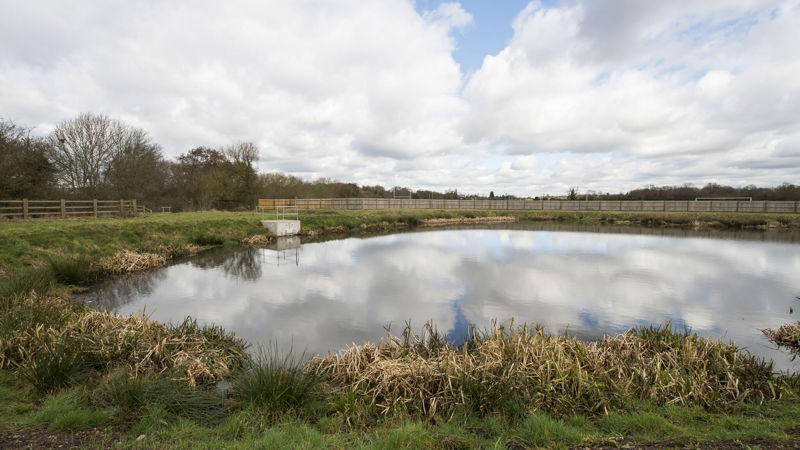
The project will identify and deliver designs to treat water running from the highest risk outfalls on the strategic road network. Treatment will include either nature based solutions or mechanical approaches delivered within the existing road boundary.
Working closely with National Highways, WSP will continue to support the development of a long term, evidence led approach to water quality, ensuring interventions are targeted, proportionate and aligned with wider environmental goals.
The first bit is perhaps ambiguous as to whether all schemes will be within the existing road boundary, or just the “mechanical approaches”.
As I have reported, when the Office or Rail and Road advised in November that National Highways could not afford to mitigate 250 sites at high risk of polluting the environment, it said:
For some schemes land is required beyond the highway boundary. Consequently, estimated costs have more than doubled to between £900,000 and £1.2m per asset.
So, have the company and WSP scaled back or ruled out some interventions outside the highway boundary to save money, or is it just a badly worded announcement?
Scaling back would certainly be consistent with the suggestion that interventions should be targeted and proportionate, words that are usually code for cutbacks.
Replying to a question from me on LinkedIn, David Symons of WSP wrote:
Nature based solutions are a good option, but can be more expensive and take longer to deliver. They’re not always possible in constrained, urban areas.
He subsequently clarified that not all solutions will be within the road boundary, but it remains open to National Highways to have fewer nature based solutions outside the road boundary as they are “more expensive and take longer to deliver”.
A further twist here is that nature based solutions outside the road boundary might also be inappropriate. In reply to Symons, Jo Bradley of Stormwater Shepherds wrote:
Nature based solutions are not always a good option, unless the runoff has received effective pre-treatment. Runoff from motorways is grossly polluted with toxic pollutants and it is rarely appropriate to discharge it into a natural environment directly.
It remains unclear therefore how National Highways will deliver 250 interventions costing around a million each out of its planned budget of £159m.
As I have pointed out, the ORR’s statutory advice was:
National Highways should seek to work with the department to manage expectations where it has previously committed publicly to deliver a bigger programme and the reasons this is no longer feasible.
The regulator told me this week that National Highways did not provide it with a refined cost estimate for its planned interventions between the draft strategic business plan on which it commented and the publication of the road investment strategy.
National Highways clearly does not feel the need to be transparent and declined to clarify whether the renewed commitment to 250 interventions is based on refined cost estimates or an increased budget.


Leave a comment