Transport Insights

The transport stories you won't see in the industry-friendly media

Author

Chris Ames

Tag: runoff

  • Road runoff plans remain clear as mud

    National Highways has appointed WSP to lead of a group of firms supporting delivery of its Water Quality Plan, but the government-owned company is still refusing to be straight with the public about whether the plan can be afforded.

    WSP, which has been technical partner on the programme since 2024, said that under the new contract it will lead as National Highways’ technical partner, supported by Mott MacDonald, Ramboll, Arup and AECOM, providing programme leadership, technical assurance and delivery support.

    Its announcement appeared to give a hint as to how National Highways may deliver the 250 interventions that it is still promising to make by 2030, but which its regulator previously said were unaffordable.

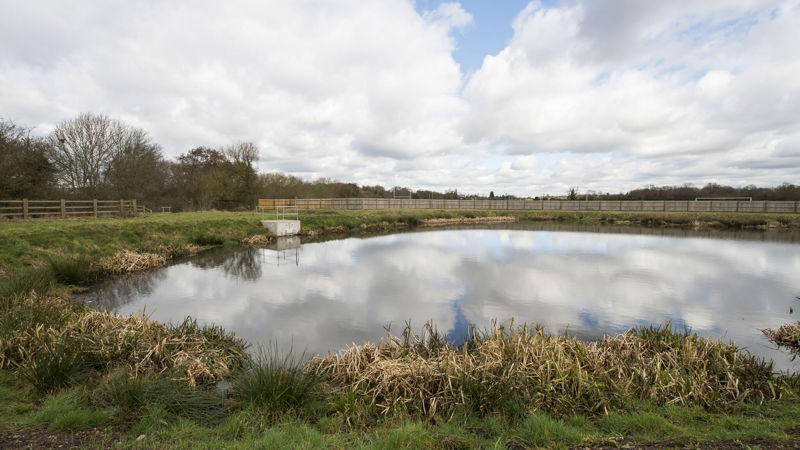
    The project will identify and deliver designs to treat water running from the highest risk outfalls on the strategic road network. Treatment will include either nature based solutions or mechanical approaches delivered within the existing road boundary.

    Working closely with National Highways, WSP will continue to support the development of a long term, evidence led approach to water quality, ensuring interventions are targeted, proportionate and aligned with wider environmental goals.
    The first bit is perhaps ambiguous as to whether all schemes will be within the existing road boundary, or just the “mechanical approaches”.

    As I have reported, when the Office or Rail and Road advised in November that National Highways could not afford to mitigate 250 sites at high risk of polluting the environment, it said:

    For some schemes land is required beyond the highway boundary. Consequently, estimated costs have more than doubled to between £900,000 and £1.2m per asset.

    So, have the company and WSP scaled back or ruled out some interventions outside the highway boundary to save money, or is it just a badly worded announcement?

    Scaling back would certainly be consistent with the suggestion that interventions should be targeted and proportionate, words that are usually code for cutbacks.

    Replying to a question from me on LinkedIn, David Symons of WSP wrote:
    (more…)
  • National Highways manages expectations upwards on road runoff

    National Highways has reiterated its commitment to improving around 250 sites where road runoff provides a high risk of polluting the environment, despite a lower target in the Road Investment Strategy (RIS 3) and advice from its regulator that it should come clean about what can really be afforded.

    As I wrote here, although the company’s 2030 Water Quality Plan sets that date to mitigate all confirmed high-risk outfalls and soakaways, the commitment in the new RIS is to mitigate 190–250 high risk sites, implicitly by 2031.

    This is subject to “reviewing a deliverability plan by the end of 2027/28” and “includes those outfalls and soakaways mitigated during Road Period 2 and 2025/26”.

    As defined by the bottom of the range, the RIS pledge is significantly less ambitious than the 2030 plan but higher than what the company said it could afford, as quoted in its regulator’s November 2025 advice on its draft business plan:

    National Highways estimates that between 110 and 130 mitigated assets will be delivered from the allocated budget as part of this programme in RP3.

    However, appearing before the Transport Committee on Wednesday, chief operating officer Duncan Smith said:

    We’re very pleased to say that we’ve been given funding in RIS 3 to mitigate those locations where they have the highest potential risk to the environment. So it’s not saying they are polluting, but based on the receiving watercourse and some of the topography and dynamics of the road that they are supporting, those are ones that are the highest priority for us to invest in. And we think that by 2030, we will have improved around 250 of those locations to ensure that the receiving waterourses are protected.

    I asked National Highways whether this meant that it was sticking to the 2030 plan. A spokesperson referenced the plan and said the company estimated that by the end of 2030 it will have mitigated around 250 sites, adding:

    (more…)

  • What the RIS doesn’t say

    Two articles from me in the latest edition of Local Transport Today pick up on pledges that the Department for Transport (DfT) has failed to honour in the new Road Investment Strategy (RIS) – on both smart motorway safety and toxic  road runoff.

    One piece says:

    Campaigners have slammed the DfT after it quietly dropped a commitment to consider adding more emergency areas (EAs) on smart motorways under the new RIS, leaving the network short of the spacing standard recommended by MPs in a landmark report.

    The story notes that in its November 2021 report on smart motorways, the Commons Transport Committee recommended that the DfT and National Highways should retrofit EAs to existing all lane running (ALR) motorways to make them a maximum of 1,500 metres apart, decreasing to every 1,000 metres (0.75 miles) where physically possible.

    In its response, the DfT said it “agrees in principle with this recommendation” and committed £390m over RIS 2 to retrofit over 150 additional EAs to ALRs by 2025.

    And, in an implicit recognition that the extra 150 EAs would not bring the whole network into compliance with the standard recommended by MPs, the DfT also said: “A decision on whether to retrofit across the remainder of ALR smart motorways will be considered as part of the formulation of the third Road Investment Strategy, based on evidence of safety benefits.”

    The story notes that I had approached the DfT and National Highways for comment, but had not received a response at the time of publication. I still haven’t.

    Similarly, neither replied in relation to this story on toxic road runoff:

    National Highways’ longstanding pledge to mitigate “high priority” water outfalls on its network by 2030 is mired in confusion after its regulator questioned whether it could be achieved following a doubling of costs and the new RIS appeared to backtrack on the pledge.

    The story notes that company’s 2030 Water Quality Plan set that year as the target to first confirm and then mitigate sites on the strategic road network where there was a high risk of toxic runoff polluting watercourses and the wider environment.

    While this was subject to funding during RIS 3, last September National Highways’ then chief executive Nick Harris told MPs that it that it expected to be “funded to do all 250” of the “high-risk” outflows that were expected to be confirmed and that in October, the company published a document setting out 182 confirmed high-risk locations in tranches representing “when we expect to deliver improvements work at each location, subject to funding and delivery constraints, with all to be delivered “before 2030”.

    A month later the Office of Rail and Road’s (ORR) advice on National Highways’ draft strategic business plan noted that estimated costs had more than doubled to between £900,000 and £1.2m per asset, meaning that National Highways expected to deliver 110 and 130 mitigations from the allocated budget, leaving between 75 and 95 assets carried over under RIS 4. The regulator noted that National Highways had “previously proposed and committed” to mitigating 250 assets and said it should work with the DfT “to manage expectations where it has previously committed publicly to deliver a bigger programme and the reasons this is no longer feasible”.

    The new RIS includes a commitment to mitigate a total of 190 – 250 high risk water outfalls / soakaways, implicitly by 2031, “reviewing a deliverability plan by the end of 2027/28”. It adds: “This range includes those outfalls and soakaways mitigated during Road Period 2 and 2025/26”.

    So it’s entirely unclear whether there is more money or whether the DfT and National Highways are simply misleading the public about what can be done. Either way, the 2030 deadline has slipped by at least a year.

  • How to eat the elephant that’s poisoning our rivers

    In this guest post, Jo Bradley of Stormwater Shepherds looks at National Highways’ plans to address toxic road runoff it the context of the legal and regulatory framework that should be protecting our watercourses.

    Pollution from highway runoff is finally getting the recognition that it deserves, and being discussed in high places. The pollution is acknowledged, albeit very briefly, in the recent Water Sector White Paper, and there is a nod to it in last year’s Environmental Improvement Plan. But this is not enough; this is one of the largest sources of river pollution, so passing mentions in policies and plans are inadequate.

    There are no highway outfalls identified in the River Basin Management Plans as sources of pollution, and the Environment Agency still refuses to regulate the outfalls using the appropriate regulations. We are eating this elephant one bite at a time but it simply isn’t fast enough; we need to put it through the mincer and find a way to eat it more quickly than ever before.

    (more…)
  • Richmond Council polluting the Thames with a lot more than coffee

    The road gully into which a woman poured a small amount of coffee – and was briefly fined – discharges unmitigated into the River Thames with all the toxic runoff from roads in the area.

    Thames Water has told me that the gully near the train station in Richmond, Surrey is linked to a surface water drainage sewer system (rather than a combined sewer system with domestic waste water) linked to an outfall on the Thames. A Thames Water map shows that there is no facility to mitigate the runoff at the outfall.

    This means that although the small amount of coffee poured away by Burcu Yesilyurt would – when it rained – have made its way into the river, it would have joined many gallons of rainwater contaminated with oil residues, tyre and brake wear particles, heavy metals, and other organic matter.

    (more…)
  • We have cash to tackle toxic runoff, National Highways boss says

    The government is providing “substantial capital funds” for a programme to tackle toxic runoff from its network, a top National Highways official has said.

    The comment from Ivan Le Fevre, the company’s head of environment strategy and standards, follows a recent publication that identified “182 confirmed high priority locations where outfalls or soakaways present a high-risk of pollution”, with an expectation that a total of 250 would be mitigated by 2030.

    Le Fevre has published on LinkedIn a blog that he wrote in September “primarily for an internal company audience”. He wrote:

    Government is providing substantial capital funds, through to 2031, to deliver a programme of improvement – and expects to see efficient and effective results that dramatically reduces the level of pollution risk and provides value for money for the taxpayer. Getting this programme right disproportionately matters to the company’s reputation over the next five years.

    To illustrate the importance of the issue he referenced two hearings held by the Environmental Audit Committee.

    At one of these, at the beginning of September, National Highways chief executive Nick Harris said the company was “proceeding on the basis that we will be funded to do all 250” sites.

    (more…)
  • National Highways confirms need, but not action, on toxic runoff

    National Highways has declined to confirm that it will meet a pledge to mitigate by 2030 all outfalls that pose a “high-risk” of polluting the environment with toxic road runoff.

    The company has published a document that its director of environmental sustainability, Stephen Elderkin, described on LinkedIn, as “detailing 182 confirmed high priority locations where outfalls or soakaways present a high-risk of pollution”.

    But, while the locations are confirmed, the pledge to mitigate them appears far less certain.

    The detailed document and map represent the next stage of the government-owned company’s 2030 Water Quality Plan, which:

    sets out a high-level programme of work that achieves the plan to mitigate all high risk outfalls by 2030

    However, that document also emphasizes that:

    Delivery in RP3 will be subject to funding being agreed through RIS3.

    Such funding has still not been formally agreed, although National Highways’ chief executive told Parliament that it is “proceeding on the basis that we will be funded” and the plan appears to be part of a funded National Programme.

    Elderkin’s statement National Highways has “committed to mitigate the risk at high-risk locations by 2030 with the installation of new or upgraded treatment facilities” conspicuously lacks the word “all”.

    The new document states that it:

    contains details of sites confirmed through these processes as having an confirmed risk of pollution at the end of August 2025. These high priority locations include a total of 182 assets.

    It adds:

    We expect that, in all, approximately 250 outfalls and soakaways will be confirmed as requiring new or upgraded treatment systems by 2030.

    While Elderkin stated that:

    In total, we expect to deliver improvements to around 250 locations

    this is a statement of expectation without a date.

    Similarly, the new document conspicuously avoids making firm commitments. It lists for each location:

    (more…)
  • Thames Water won’t come clean over Thames water pollution

    Thames Water has joined Richmond Council in refusing to say where road runoff goes next from a gully into which a resident famously poured a small amount of coffee, raising concerns that toxic pollution may be flowing unmitigated into the river whose name the company bears.

    The highway authority made national headlines when its enforcement officers fined Burcu Yesilyurt £150 for pouring a small amount of coffee down the gully outside Richmond Station, only to rescind the fine on the grounds that she had only committee a minor contravention of Section 33 of the Environmental Protection Act 1990.

    The reality is that, aside from the small amount of a relatively innocuous liquid, whether it was “likely to pollute land or water” would depend on what the gully drains into.

    This would either be into the combined sewer system or a surface water only sewer, both likely operated by Thames Water.

    If the former, there is no pollution risk; if the latter, the pollution risk would pale into insignificance compared with the risk from other runoff from the road, including oil spills, particulate matter and microplastics from tyre and brake wear.

    With Richmond Council refusing to tell me, I asked Thames Water, who also refused to say but didn’t deny that it was its sewer.

    This is an astonishing situation where two major organisations, one a public authority and one a private company fulfilling a public function, are refusing to be straight with the public about a matter of significant public concern.

    (more…)
  • Council’s credibility goes down the drain

    Richmond Council’s statement that it had withdrawn a fine against a woman who poured coffee down a drain, while still alleging that she had committed an environmental offence, leaves many questions unanswered, including the question of defamation.

    In brief, if the drain (gully) discharges into the combined sewer system, any coffee poured into it would end up in the same place as coffee tipped down a nearby sink. If however it goes into a nearby watercourse, there is a lot more to worry about than a small amount of leftover coffee.

    In revealing that it had revoked the fine against Burcu Yesilyurt, the council doubled down on its claim that she had committed an offence under Section 33 of the Environmental Protection Act 1990, which, as the BBC says, “makes it an offence to deposit or dispose of waste in a way likely to pollute land or water, including pouring liquids into street drains”:

    It is likely that, had this case progressed through that route, the notice would have been rescinded because it is a minor contravention which the recipient agreed not to repeat.

    The council also told the BBC that it is:

    committed to protecting Richmond’s waterways

    The implication of all this is that the gully discharges into a waterway, rather than a combined sewage system. But when I asked Richmond Council’s press office to clarify this, they refused to answer.

    (more…)

  • National Highways looks to clear funding stream to fund clear streams

    National Highways is set to be given funding and a clear target to tackle toxic water runoff from its roads under a new-style “National Programme” in the forthcoming road investment strategy (RIS 3).

    The government-owned company is under pressure to tackle the contaminated water that runs off the strategic road network (SRN) into sensitive waterways in particular.

    Last month Parliament’s Environmental Audit Committee (EAC) challenged its chief executive, Nick Harris, on its plans and funding.

    He replied without explanation that it expects to be “funded to do all 250” of the “high-risk” outflows on the strategic road network that it has prioritised for mitigation.

    It has now emerged that water quality will fall under a National Programme for environmental mitigation, as floated in the draft RIS 3 published in August:

    We are considering introducing new National Programmes to deliver defined outputs that support RIS objectives or commitments which are not within other programmes (for example, supporting specific programmes of activity around safety and environmental mitigation).

    The company has since published a Preliminary Design Playbook, produced by consultants and setting out measures to mitigate high-risk outflows.

    In an interview with New Civil Engineer, Stephen Elderkin, director of environmental sustainability at the government-owned company, said:

    Rather than having different design teams coming afresh to each of those locations, given that we’ve now got a national programme, we’ve centralised it.

    He added:

    We take pollution contained in water running off our network incredibly seriously. It can contain heavy metals, hydrocarbons, tyre crumbs and other particulates and without suitable management of that runoff there is a risk of polluting water bodies where it gets discharged into water so this, this matters. It matters for health and it matters for ecosystems; it’s quite an extensive problem.

    (more…)