
If you want a definition of hubris, look no further than what the Department for Transport (DfT) and ministers are saying about the risk that the billions being put into the Lower Thames Crossing (LTC) will be wasted.
In one of the Debrief Drop In Sessions that took place just after the Road Investment Strategy was released in March, a wholly understandable question was:
If £1,655m is being spent on preparatory works for the Lower Thames Crossing before any private sector delivery agreement is in place, is there a risk that this money could be wasted?
This is actually part of a total of around £3bn of public money put in so far, in advance of a form of private finance that is a long way from being put in place.
The DfT’s response is typical of its current lines about the issue:
The Government remains committed to delivering the Lower Thames Crossing, the most significant road investment project in a generation, and to securing private sector involvement to support its construction and operation. The £1,655m included in RIS3 represents Government funding for the essential preparatory and enabling works required before the scheme transfers to a regulated private sector entity. This includes activities such as procurement, all of which are necessary to progress the project and would be required irrespective of the precise timing of any private sector transaction.
So far, we have an assertion of commitment, a bit of PR spin, and an explanation of where the money is going. The issue of whether it might not happen at all is simply ignored.
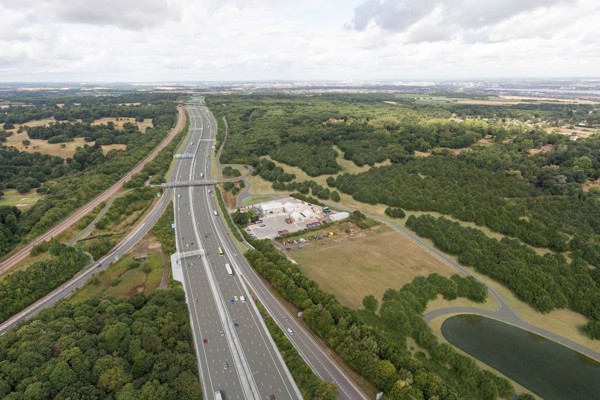
The answer continued:
The project is expected to be delivered using a Regulated Asset Base (RAB) model, under which responsibility for construction and long term operation would pass to the private sector part way through the third road period. As part of this approach, there is an expectation that the private sector will reimburse the taxpayer for some of the costs incurred ahead of the transfer, helping to reduce the overall burden on the public finances. The total spend by Government will depend on the final timing and terms of the transaction, which are still being developed, with the current expectation that the project will transfer in 2028.
This again ignores the possibility that the project might not go ahead at all, acknowledging uncertainty only over the extent to which the public money put in might be recouped if it does.
But there are known and acknowledged material risks for a scheme costing well over £10bn that will not have a full business case until 2028, for which there is no legislation in place and where there is “significant uncertainty” around the expectation that the Office of National Statistics will declare the scheme to be off the government’s balance sheet.
The Accounting Officer Assessment for the scheme, which is itself a piece of spin, admits:
There are still risks to delivery of the RAB model, including market appetite from investors, the balance sheet position, the need for new primary legislation, risks on the delivery schedule and required user charge levels. All of these will be further examined ahead of future business case stages, but there is sufficient confidence in them to take the RAB model forward at this stage as the preferred option.
To put this hubris into context, look at what National Highways told MPs about the sunk cost of major transport schemes, as reported by Local Transport Today/TransportXtra:
MPs have voiced concerns that £500m spent on preparatory work for road schemes which were subsequently scrapped was a waste of taxpayers’ money. At a Transport Committee meeting, National Highways was unable to confirm that any benefits had been gained from spending money on schemes cancelled in 2024.
Last year the National Audit Office (NAO) revealed that the DfT had written off more than £2.7bn due to the cancelling of HS2 Phase 2 and major road projects in 2024.
The Lower Thames Crossing; what could possibly go wrong? It’s a question minsters really should be asking, rather than hubristically wishing away.
 Transport Insights
Leave a comment