Transport Insights

The transport stories you won't see in the industry-friendly media

Author

Chris Ames
  • An economic disaster

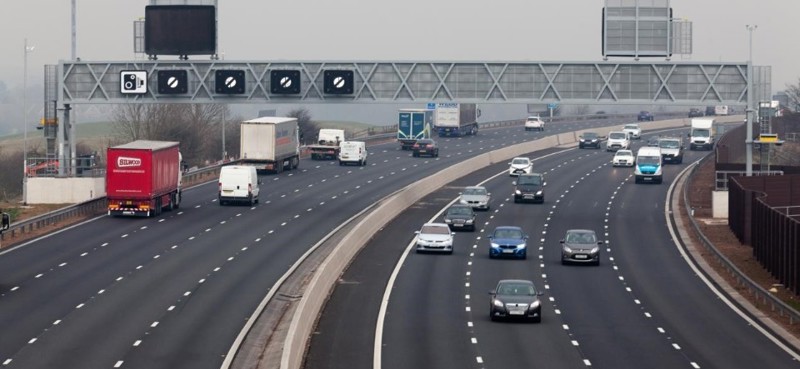
    Transport Action Network (TAN) has published its analysis of the 16 evaluation reports on smart motorway schemes that the government finally allowed National Highways to publish this month, concluding that as expected, they showed that almost all had been costly failures.

    Instead of delivering a predicted £10 billion of economic benefits, they delivered under £2bn, which is less than they cost to build. And that’s not counting the £900 million spent on retrofitting additional emergency laybys and upgrading technology.
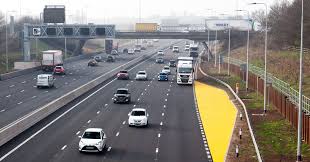
    TAN notes that Post Opening Project Evaluation (POPE) studies are produced after a new scheme is built to assess whether it worked in terms of relieving congestion, improving safety, whether the environmental mitigation worked, and overall whether they provided value for money for taxpayers.

    It focuses on the 11 schemes with five-year studies and the most reliable data, finding that only two came anywhere near delivering their claimed benefits.

    The other nine were an economic disaster, costing the economy over £400m on (lack of) time savings, when National Highways had predicted over £7 billion of benefits. This is before counting the cost of building these nine ‘smart’ motorways, which comes in at a staggering £1.6 billion. This doesn’t include the £900 million that has been spent on retrofitting more emergency refuges and upgrading the technology across all ‘smart’ motorways. That means that these nine ‘smart’ motorways have cost the economy well over £2 billion.

    Looking across all 11 schemes, the economy lost over £500 million, showing how bad these motorways are financially, before any consideration of safety.

    (more…)
  • WYCA prejudices effective conduct of public affairs

    Alongside West Yorkshire Combined Authority’s (WYCA) refusal to disclose the secret “peer review” into its mass transit plans, it has totally embarrassed itself in its response to a similar request.

    In December someone asked for:

    details of expenditure on consultants and external professional services connected with mass transit activity from January 2024 to present.

    Specifically, please provide: A list of consultancy or professional services suppliers engaged.

    The value and duration of each engagement.

    The procurement route used for each engagement (for example open tender, framework call-off, or direct award).

    The total consultancy expenditure incurred during this period.

    All pretty routine transparency information, you might think. But WYCA responded:

    the information you are seeking may be exempt under Section 36(2) of the FOIA. Information to which this section applies is exempt information if, in the reasonable opinion of a qualified person, disclosure of the information under this Act would or would be likely to prejudice the effective conduct of public affairs.

    (more…)
  • Mass transit could mean a few better buses

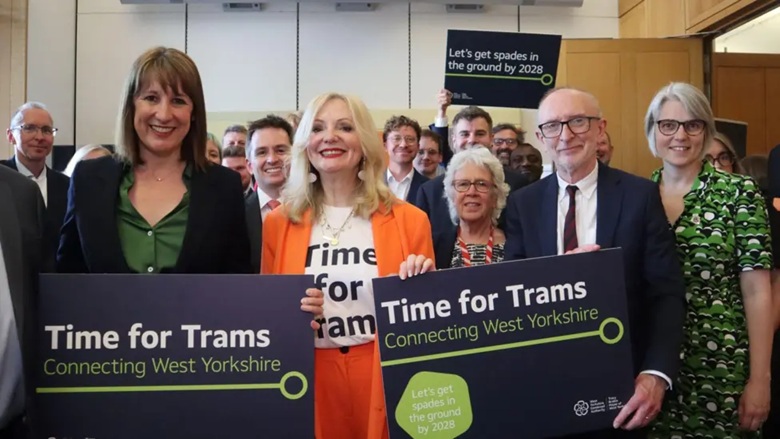
    As the West Yorkshire Combined Authority (WYCA) continues to hide the independent peer review report into its mass transit plan, suspicions are growing that the underlying problem is an insistence within government that the authority should drop its proposals for trams and settle for a few more buses.

    At a recent meeting of the authority, mayor Tracy Brabin quoted chancellor and Leeds MP Rachel Reeves as saying that “mass transit means trams”, adding that the authority is conscious of the need to prove to government that tram (rather than buses) is the right option.

    As TransportXtra/Local Transport Today pointed out, WYCA’s West Yorkshire Mass Transit: Spatial Development Framework Joint Development Plan, published for consultation a week after the meeting, states:

    Mass Transit is a large-scale public transport system, which may comprise one or more of the following transport technologies: advanced bus rapid transit, light rail, tram or tram-train vehicles.

    Someone should tell Reeves. She stated very clearly to the Yorkshire Post:

    (more…)
  • Mass transit is in peril, WYCA admits

    West Yorkshire Combined Authority (WYCA) has refused to disclose the controversial peer review of its mass transit plans on the grounds that disclosure “will impact the programme by a loss of public confidence” – effectively admitting that the review was highly critical of the scheme.

    The admission is a vindication for the Tory councillor who has claimed that WYCA was putting forward a “dishonest” version of the review’s findings and suggests that the outrage that West Yorkshire mayor Tracy Brabin expressed over the suggestion was confected.

    To recap, the review by the National Infrastructure and Service Transformation Authority (NISTA) led to the WYCA’s plans for mass transit (probably trams) being put back from the early 2030’s to the end of the decade.

    Both Brabin and transport ministers have tried to put a brave face on the situation but have refused to publish the report for various reasons, although it was made available to members of the combined authority.

    At a meeting last month, Cllr Alan Lamb, the leader of the Conservative opposition on Leeds City Council, alleged that the public presentation of the report was “dishonest” and that people needed to see the report itself because it shows that “mass transit is in peril”. Brabin said she was “outraged” by the claim.

    But WYCA has now effectively admitted that this is true and that the situation set out in the report is so dire that the public would lose confidence in the scheme if this were known.

    In response to a freedom of information request, it said:

    on the balance of probabilities releasing the information will impact the programme by a loss of public confidence

    Although the response sought to tie this up with issues around “a free and frank exchange of views by NISTA” and a report “provided in confidence”, it clearly stated that it would be “public confidence” that would be damaged.

    It also referred to:

    the real and significant likelihood that disclosure would prejudice WYCA’s ability to manage and develop a complex, high-value transport programme.

    As Cllr Lamb said “mass transit is in peril” if you look behind the curtain.

    Leave a comment

  • A cast iron non denial

    National Highways has published a response to the Sunday Times story this week that said the £11bn Lower Thames Crossing (LTC) is “poised to be built with foreign steel”, but I’m not sure whether its a carelessly worded rebuttal or a carefully worded non denial.

    The gist of the Sunday Times story is that UK-based steel manufacturers are not able, and will not be able, to produce the “low embodied carbon steel” that the government-owned company has promised to use as part of its greenwashing.

    Industry sources say this will exclude domestic manufacturers from the tender and force ministers to approve the provision of steel from abroad that meets the UK’s green targets. 

    Clearly the alternative to sourcing steel from abroad is to drop the “low embodied carbon steel” pledge.

    There is also a question of *when* as the tunnel is nowhere near being built but:

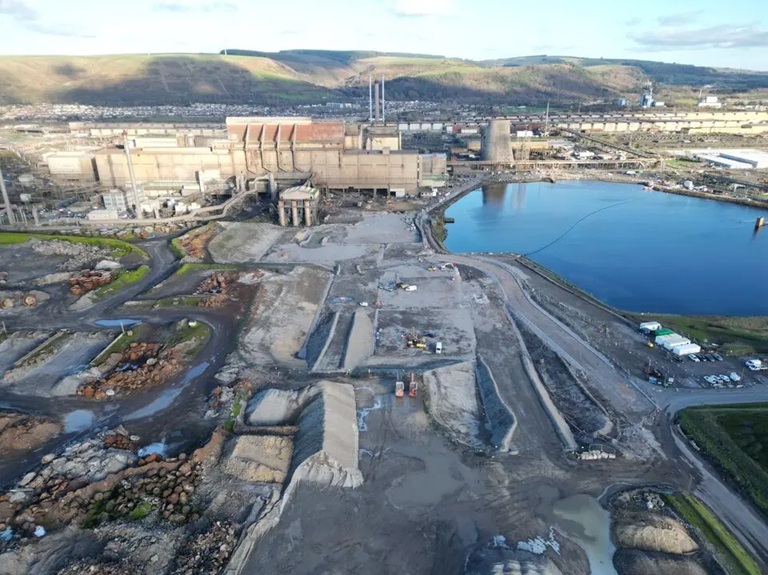
    Tata Steel is in the process of building an electric arc furnace on the site of Britain’s biggest blast furnace steelworks in Port Talbot, south Wales. It is understood that the furnace will not be up and running to tender for the multimillion-pound Lower Thames Crossing contract.

    The National Highways webpage starts off by saying the Sunday Times claim that the LTC is set to be built with foreign steel “is not the case”, adding:

    No procurement process for steel is currently under way.

    Our Delivery Partners have carried out early market engagement simply to understand existing capability ahead of launching procurements later this year. This engagement shows that the UK steel sector can meet between 85% and 90% of the project’s requirements, reflecting both the capability and ambition of British manufacturers.

    (more…)
  • All change in Wales?

    To be fair to ministers, they are as capable of reannouncing and overstating spending promises on rail as they are with road schemes.

    Take this non-announcement:

    A generational UK Government commitment to modernise Welsh rail is set to support 12,000 jobs across Wales.

    The Welsh and UK Government’s plan sets out a long-term commitment that will put an end to the previous government’s chronic chop-and-changing and underinvestment that held the country back for too long.

    The Prime Minister is set to formally endorse the Transport for Wales vision for the future of Welsh rail today [Wednesday 18 February] – agreeing that it should set the framework for their pipeline of projects and committing the UK Government to work with the Welsh Government to deliver this pipeline as quickly as possible.

    So, what exactly is going on?

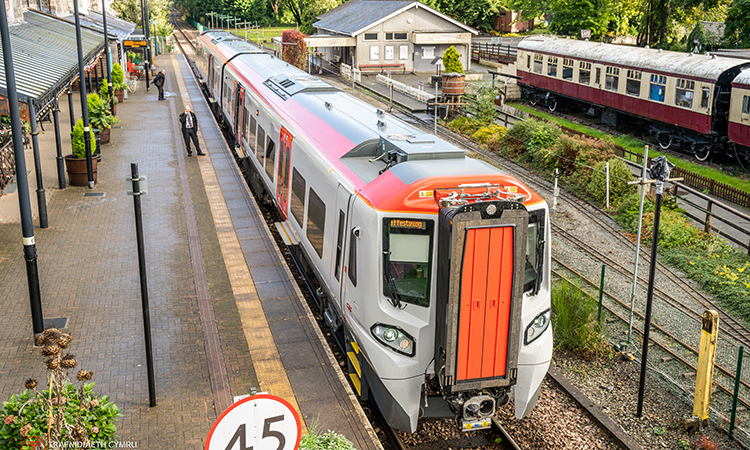
    This investment will see the further transformation of Wales’ rail network, building on the Welsh Government’s £1.1bn in upgrading and electrifying the Core Valley Lines and £800m investment in a new rail fleet. 

    Together, both governments will provide better and more frequent services for passengers across the country, with the UK Government committing significant funding to deliver the next generation of Welsh rail projects.  

    Using the almost half a billion pounds promised this Spending Review, seven new stations are set to be built across Wales – a massive win for commuters and a boost for the construction industry.

    Ok, so you’ve reannounced some spending, including a “new rail fleet” that was announced nearly a decade ago, but what about the “long-term commitment”?

    (more…)
  • No winners in smart motorway death crash case

    Barry O’Sullivan has been found guilty of causing the death of Pulvinder Dhillon by careless driving on a smart motorway section of the M4 in 2022 but the verdict in no way lets National Highways off the hook and it is unarguable that the crash would not have happened if the “smart” technology had done its job.

    A jury sat through the trial and heard the evidence – plus the judge’s summing up – and decided that O’Sullivan was guilty so I won’t argue with them.

    But in this case it has always been possible to argue both that O’Sullivan was culpable despite National Highways’ shocking failings and that National Highways failed abysmally despite O’Sullivan’s culpability.

    I first wrote about the crash soon after it happened and was told by a senior National Highways official that the stopped vehicle detection (SVD) technology had worked as far as possible, except that a fault with the wider system meant that alerts were not posted on gantries.

    The M4 [incident] was a particular issue with some of our back office systems that were offline at the time – we’ve now corrected the system so that can’t happen. The scheme was still in operational acceptance so, as tragic as it was, this was a shortcoming of a system that [hadn’t yet] been handed into business as usual.

    What I didn’t know then was that this was the fifth day of this fault and that National Highways had failed to effect what turned out to be quite a quick fix because the fault was wrongly categorised.

    (more…)

  • “£110 million was allocated for the project in November 2020”

    Labour ministers have stepped in to take the credit (again) for a £218m local road scheme that they falsely claimed last year to have green-lit and which the last Conservative government allocated £110m six years ago.

    According to the Department for Transport (DfT):

    Tens of thousands of people across Lincoln and Lincolnshire are set to benefit from faster journeys, after the government confirmed funding for the North Hykeham Relief Road today (18 February 2026).

    Roads minister Simon Lightwood, who never knowingly tells the truth, said:

    We’re putting our money where our mouth is, with a £110 million investment that will mean faster journeys and less congestion. 

    It is not Labour’s money but taxpayers’ money and in fact, the road was funded from a much earlier Major Road Network/Large Local Majors (MRN/LLM) budget.

    To be fair, the DfT press release does note that:

    First proposed in the mid-2000s, the relief road has long been anticipated

    If I had a pound for every time the government (Tory or Labour) has tried to make political capital out of the same £110m, I could build my own relief road.

    In 2020, I noted (in a complicated story about vehicle excise duty hypothecation) that the road was cited in the National Infrastructure Strategy and had been awarded £110m and entry to the LLM programme.

    To this day, Lincolnshire County Council’s own webpage for the scheme states:

    (more…)
  • Mather looking increasingly foolish over secrecy claims

    It has been pointed out to me that there is some history behind the refusal of the various authorities to publish the “peer review” into West Yorkshire’s mass transit plans on the grounds that participants should expect confidentiality, with the Information Commissioner rejecting these arguments in a similar case.

    The Commissioner has also made it absolutely clear that authorities cannot withhold whole reports on the grounds that some of its contents need to remain secret.

    Both the West Yorkshire Combined Authority (WYCA) and the Department for Transport have refused to publish the entire review by the National Infrastructure and Service Transformation Authority (NISTA) on various grounds, including a statement from transport minister Keir Mather that:

    All major project reviews undertaken by NISTA are treated as confidential, in the interests of ensuring that everyone involved is able to share their honest feedback. This has been standard practice across successive governments.

    Although NISTA is not a simple continuation of the Infrastructure and Projects Authority (IPA), campaigners previously obtained a ruling from the Information Commissioner that the Cabinet Office was wrong to withhold a November 2021 IPA “stage gate assessment” review and June 2022 follow-up IPA independent peer review on the Lower Thames Crossing.

    That case was judged under the Environmental Information Regulations and involved some discussion of whether emails between National Highways and government departments are “internal” (they aren’t) but also hinged on whether disclosure would “the interests of the person who provided the information”.

    (more…)
  • Smart motorway death crash fault “assigned 7-day priority”

    As the trial of Barry O’Sullivan for allegedly causing the death of Pulvinder Dhillon by careless driving approaches its conclusion, the story gets worse for National Highways, whatever the verdict.

    ITV news reports that:

    An unresolved technical failure on the M4 smart motorway network meant alerts for broken-down vehicles were not properly communicated in the days leading up to a fatal collision, a court has heard.

    The technical malfunction on March 2 2022 was flagged by the system and automatically generated tickets, but they were assigned to the wrong National Highways team and with an incorrect priority level of “7-day resolution”, the court was further told.

    This meant the alert system had been malfunctioning for five days when Barry O’Sullivan, 45, crashed his grey Ford Transit Connect into the back of a Nissan Micra that had come to a halt in the fast lane of the motorway on March 7 2022.

    (more…)

Subscribe

Subscribe to get our the latest stories in your inbox.