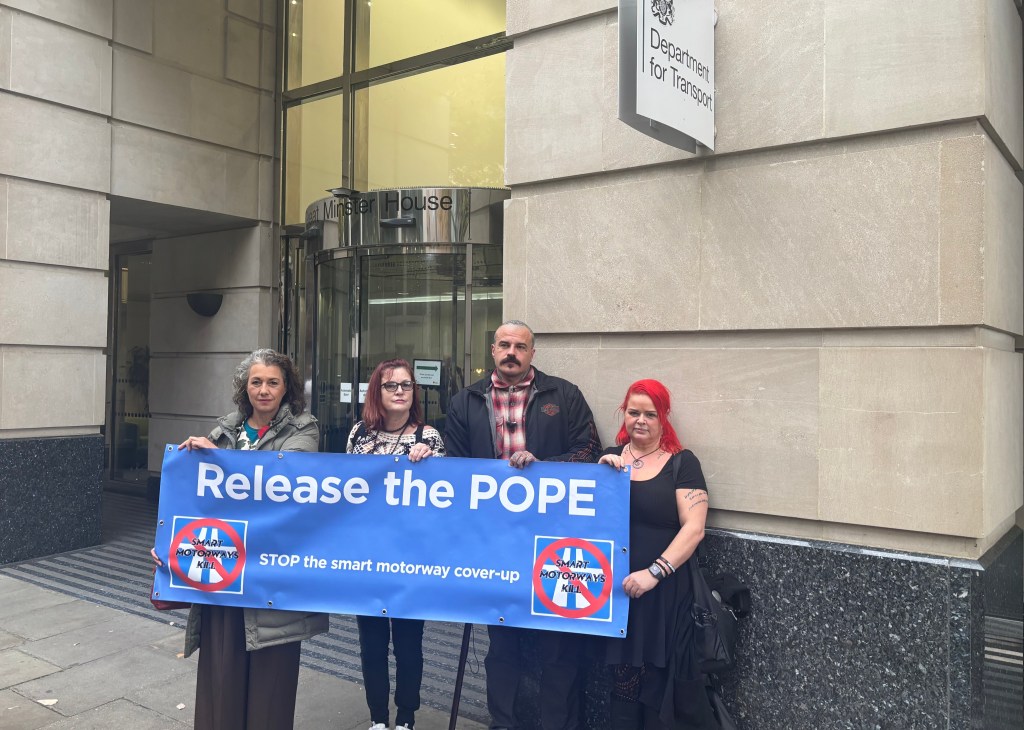
The release of POPE evaluation reports on smart motorways has triggered a debate in the House of Lords, with a government spokesperson quoting a statistic about the high level of danger on A roads to suggest that smart motorways are safer by comparison.
The debate began with Lord Harries of Pentregarth asking the government:
what assessment they have made of the post opening project evaluations of smart motorways in relation to (1) safety, and (2) value for money.
The initial answer from Baroness (Judith) Blake of Leeds, previously leader of Leeds City Council, appeared to be that the government had made no assessment in relation to value for money:
While National Highways reports show that smart motorways are meeting or exceeding safety objectives in all but one upgrade, we know that people need to feel safe as well as be safe. That is why National Highways invested some £900 million to improve safety and educate drivers. The reports show that these upgrades have added vital capacity to some of the country’s busiest roads and are largely on course to meet their environmental goals.
Given that most smart motorways were literally a way of adding capacity to motorways by using the hard shoulder as a running lane, it’s a bit desperate to say the POPE reports show that they had done this.
But Lord Harries tried again on the value for money point:
Transport ministers have again resorted to lying to justify their obsessive secrecy – this time over the secret “peer review” of the West Yorkshire Mass Transit programme.
As I have written, the peer review was carried out by the National Infrastructure and Service Transformation Authority (NISTA), despite the project not being a part of the government’s major projects portfolio, and resulted in the project being “resequenced” and delayed by years.
Both the West Yorkshire Combined Authority (WYCA) and the Department for Transport (DfT) have refused to publish the review, amid claims that the public presentation of its findings has been “dishonest”.
Now very junior transport minister Keir Mather has made up a tradition for NISTA reviews going back through “successive governments”, despite the body only having been created (by Labour) last April.
Asked by Tory David Simmonds if the government will place the review into the public domain, Mather said:
All major project reviews undertaken by NISTA are treated as confidential, in the interests of ensuring that everyone involved is able to share their honest feedback. This has been standard practice across successive governments.
Not only is the claim that NISTA reviews have always been confidential a fabrication – and indeed the phrase has no meaning in this context – but the excuse for not publishing the West Yorkshire one is a departure from what the DfT has previously said, which is that the project is subject to “live” policy discussions.
Mather’s lie follows fellow transport minister Simon Lightwood falsely claiming the smart motorway “POPE” evaluation reports whose publication the DfT delayed for years were subject to an “assurance” process.
Eight months after ministers announced a fund to repair and “futureproof” local authority road structures, the Department for Transport (DfT) is unable to say how much money will be in the fund or how it might operate.
The DfT has only just launched a targeted “stakeholder consultation” for its so-called “Structures Fund” just as the latest closure of a local authority road bridge was announced.
But, despite claiming in a press release that it would “set out more detail about how funding will be allocated shortly”, the DfT has yet to finalise the budget for the fund, which means that funding for local authority road upgrades remains uncertain.
This paralysis explains why the DfT refused last year to tell me how much the MRN/LLM budget was.
I would argue that as the Structures Fund does not have dedicated funding, it cannot legitimately be called a fund.
The latest issue of Local Transport Today (LTT) also has my take on the departure (or defenestration) of National Highways chief executive Nick Harris.
There has been a lot of speculation about why Harris supposedly chose this moment to depart, including the variable speed cameras fiasco.
At the time that LTT went to press last week, the Department for Transport was still preventing National Highways publishing what turned out to be 16 Post Opening Project Evaluation (POPE) reports on smart motorways.
Aware that it was a bit of a hostage to fortune if the reports turned out to be a damp squib, I wrote:
I have (jointly) written the lead story in the latest issue of Local Transport Today (LTT) looking at the escalating row over the “independent peer review” that put the proposed £2.5bn West Yorkshire mass transit project back by years.
The refusal by all concerned to publish the publicly funded review was controversial enough, but a senior councillor who sits on the West Yorkshire Combined Authority (WYCA) has alleged that was is being said about the review’s findings publicly does not reflect is contents, to the point of dishonesty.
Cllr Alan Lamb, leader of the Conservative Group on Leeds City Council, told a meeting of the WYCA last month:
I think people need to see and understand what is in this paper and what the implications are because mass transit is in peril.
Cllr Lamb told me that he also strongly disputes the reasons given by the authority for not publishing the review by the National Infrastructure and Service Transformation Authority (NISTA).
Having read the [review report], I do not believe there is anything commercially sensitive and I remain of the view that it is strongly in the public interest for the report to be publicly available.
He added:
I have asked to see the legal advice and have been told my request is being considered under access to information rules. I will use every legitimate means available to me to try and get the report released from its exempt status.
The WYCA insists that the report is exempt from publication under paragraph 3 of Part 1 of Schedule 12A to the Local Government Act 1972, but appears to have mixed up issues of commercial confidentiality with the need for a a “safe space” for officials to think through policy options.
The problem for both the authority and the Department for Transport, which insists that live policy discussions are ongoing, is that this contradicts the official story that the decision to “resequence” the mass transit project has been taken and the government remains committed to it.
It’s almost as if the Labour Government and a Labour regional mayor are colluding to put a brave face on a project that has gone badly wrong.
It looks to me as if reported cut to the Department for Transport’s (DfT) budget merely reflects accounting changes that take into account increased business rate retention by Transport for London (TfL).
New Civil Engineer reported what appeared to be a discrepancy between the DfT’s Departmental Expenditure Limit (DEL), including HS2, as set out in the Spending Review against the same totals in the Autumn Budget.
Across the five financial years from 2024-25 to 2028-29, this amounted to £2.4bn, the magazine said.
Spending totals for all five years were set out as “plans”, rather than outturn, with totals only given three years ahead because, while the Spending Review set capital spending for 2029-30, it only set resource spending to 2028-29.
The discrepancy in the DfT’s total Budget over the next three years is only £1.5bn, with the Budget figures actually showing an increase of £600m in 2027-28, compared against the Spending Review.
The DfT has reportedly attributed the discrepancy to “accounting changes”, without explaining further.
However, a reply from roads minister Simon Lightwood to a written parliamentary question from fellow Labour MP and Transport Committee member Alex Mayer may explain these accounting changes.
Mayer asked what assessment and estimate ministers had made of the difference in the DfT’s capital DEL budget between the two documents across the five-year period.
While Lightwood replied in terms the government’s capital DEL as a whole from 2025-26 to 2029-30, a footnote in his answer noted that the figures he quoted were “adjusted for TfL Business Rates Retention (£1.2bn p.a. from 2026-27)”.
This change would see some of TfL’s capital spending being funded from retained business rates, rather than going through the DfT’s budget.
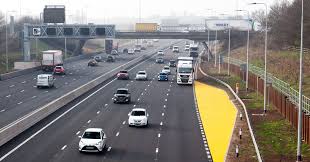
The AA has published its analysis of 16 previously suppressed Post Opening Project Evaluation (POPE) reports on smart motorways, pointing out that many are losing the economy money, while their safety record is at best mixed, with some becoming more dangerous after the hard shoulder is removed.
The motoring group has been careful to distinguish between the different types of motorway given so-called “smart” technology – controlled motorways, which keep the hard shoulder; dynamic hard shoulder (DHS), where the hard shoulder can be used as a running lane at during periods of high congestion; and all lane running (ALR), where the hard shoulder is permanently converted into a running lane.
It points out that two schemes – the M25 ALR section between junctions 23 to 27, and the M6 DHS section between junctions 5 to 8 – are losing the economy money and have been rated “very poor” value for money.
A further six schemes have been rated as “not on track – poor” or “not on track – low” in respect of providing value money at the end of the evaluation period once the motorway has been opened to traffic.
The AA points out that in many cases, converting the hard shoulder into a permanent or temporary running lane has reduced the speed of traffic.
Just three schemes were “on track” in relation to value for money at the end of the five-year evaluation period.
The AA noted that many of the reports are dated September 2023, despite many completing their evaluation period between 2017 and 2019.
President Edmund King said:
After a lengthy wait, these reports finally see the light of day. The reluctant release of these documents, without any announcement feels like an attempt to bury bad news.
This has been a catastrophic waste of time, money and effort. Many of the schemes have slower journeys which causes traffic jams, loses the country cash and worsened the safety record of motorways.
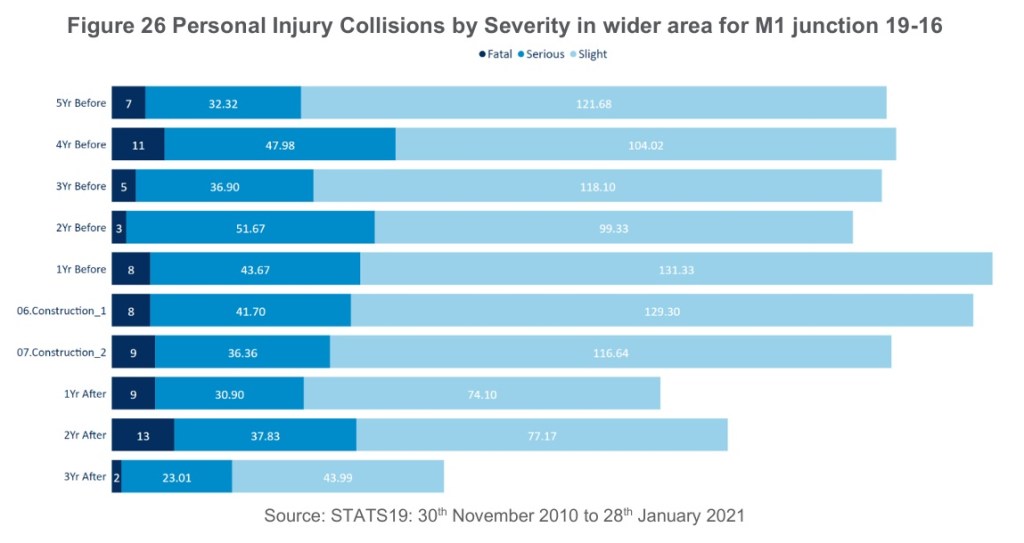
National Highways buried increases in fatalities from a new smart motorway by comparing a five-year period before the scheme opened with a three-year period afterwards.
The company has finally released a huge batch of Post Opening Project Evaluation (POPE) reports that the Department for Transport (DfT) has prevented it publishing, some going back many years.
They show a mixed picture for safety across a variety of all lane running (ALR), dynamic hard shoulder and controlled motorways, and that some schemes worsened journey times to the point where they provide “very poor” value for money, on top of the huge disruption involved in building them.
The number of fatal collisions has not changed with a total of four before and after the project became operational.
However, in the three years before the scheme opened, there were three fatalities, meaning that fatalities had increased by 33%.
The report did the same for fatalities recorded in the wider area around the scheme. It stated:
After the project was constructed, we have observed a decrease in collisions resulting in fatalities (the total before the project was 34, compared to 24 after).
In fact, the figure of 24 comes from the three years after opening and during the thee years before construction started there were 16 fatalities, representing a 50% increase. The figure of 24 fatalities over three years represents an annual average of eight, and would be 40 over five years.
In addition, the last of these years, running to 28 January 2021, was a year of significantly lower traffic levels due to the Covid-19 pandemic.
The POPEs also include a mixture of killed and seriously injured crashes (KSIs – the measure against which National Highways was measured over the 2020-25 roads period) and other measures, such as fatality weighted injuries.
Among POPE reports showing a KSI total is the M3 Junctions 2-4a ALR scheme, which opened in 2017 and showed an increase of around a third in both the overall number of KSIs and the number per hundred vehicle miles, which measures KSIs compared to traffic levels.
The five-year POPE report for the M1 junctions 39 to 42 ALR project shows that the scheme led to an increase in KSI casualties but offered ‘poor’ value for money because predicted journey time savings used to justify the scheme did not materialise.
The appraisal forecast a significant traffic growth and improving journey times; the observed data suggested a more modest traffic growth accompanied by slightly slower journey times in most time periods and considerably slower average journey times in the northbound morning peak.
The M1 report covers a period from 2018 to 2021 and has a foreword from National Highways’ chief customer and strategy officer, Elliot Shaw, dated September 2024.
The five-year pope for the M3 scheme is dated September 2025 while other reports have forewords dated September 2023, despite the DfT claiming that it was carrying out “assurance”.
Roads minister Simon Lightwood, who seems to be making a career of hiding the truth from the public, also seems to see answers to parliamentary questions as an opportunity to spin spurious and unfounded claims while saying as little as possible in relation to the question asked.
With controversy swirling over the decision to hand over the existing Dartford Crossing and around £120m a year in revenue to the operator of the Lower Thames Crossing (LTC), Tory MP Greg Smith asked:
whether the Department will treat the transfer of Dartford Crossing toll revenues to a private Lower Thames Crossing operator as a loss of income to the Department.
It’s worth breaking Lightwood’s non answer into chunks.
He starts off saying that under the Government’s preferred financing option, the Regulated Asset Base model, a new private sector entity would be responsible for operating and maintaining both the Dartford Crossing and the LTC,
ensuring a consistent and reliable service.
When politicians and PR types use the word “ensuring”, they are spinning. It’s wishful thinking dressed up as certainty.
Lightwood continues:
This entity will be overseen by a regulator to ensure it performs and protects users.
Same again. Expecting a regulator to “ensure” anything is not just wishful thinking but totally at odds with the performance of regulators in this country.
Then Lightwood claims that charges from the Dartford Crossing and the new Lower Thames Crossing received by the entity
will be used towards keeping the crossings well‑maintained and journeys running smoothly for users.
This implies that the revenues are inadequate to maintain the Dartford crossing, leaving the entity to chip in from its own funds, when the reality is that the £120m that the government is set to forego is net revenue *after* the roughly £135m cost of running it.
Campaign group Transport Action Network (TAN) is adding to the pressure on the Department for Transport (DfT) to “come clean” over smart motorways, accusing it of misleading the public by claiming that none are being built, and calling on DfT ministers to release the evaluation reports that they have been sitting on.
The campaign group says the DfT is expected to publish 14 Post Opening Project Evaluation (POPE) reports about individual schemes at the end of this week and that their suppression until now suggests that they show that the schemes have been a waste of money.
But it also notes that this has been a bad week for smart motorways, with polling by the AA showing that the number of people who feel unsafe on smart motorways is increasing and the criminal trial of a driver for causing death by careless driving in circumstances where smart motorway technology had entirely failed.
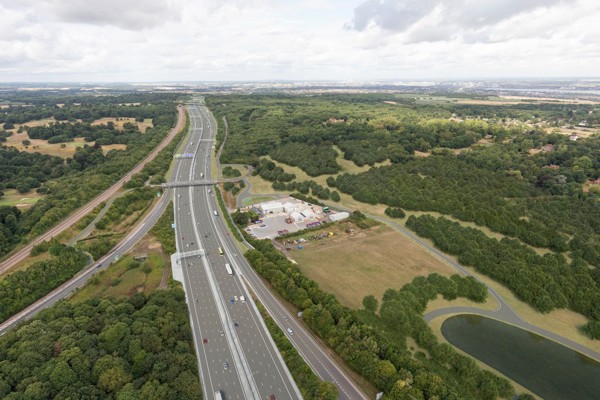
TAN points out that although the DfT maintains that no more smart motorways are being built, the Lower Thames Crossing is a smart motorway in all but name, as it has three lanes, with no hard shoulder, is only open to the same vehicle classes as a motorway, and uses the same (unreliable) technology as smart motorways.
It adds that the recently approved M60 Simister Island scheme also has no hard shoulder included in the design.






 Transport Insights
Leave a comment