Transport Insights

The transport stories you won't see in the industry-friendly media

Author

Chris Ames
  • Labour allows National Highways to get worse

    Another detail from National Highways’ Interim Period Delivery Plan April 2025 – March 2026 is that the government has given the company that it owns an even lower target for customer satisfaction, based presumably on its failure to get anywhere near the original target for the 2020-25 road investment strategy (RIS 2).

    As I wrote on Tuesday, the latest Strategic Roads User Survey (SRUS) annual report found a further fall in the KPI for road user satisfaction from 71% in 2023-24 to 69% last year.

    This compared against a target of 82% road user satisfaction score in 2020-21 and 2021-22, with year-on-year increases in following years, which was downgraded to 73% in 2023-24 and then 71% in 2024-25.

    The new KPI target is 69.6%.

    So the pattern appears to be that National Highways falls 2% below its target, which is then adjusted for the next year to match performance, and then National Highways falls 2% below the new target.

    (more…)

  • National Highways publishes safety inaction plan

    National Highways will deliver very little by way of actual safety improvements on its network during the current financial year, and appears determined to delay admitting publicly that it has dropped its 2040 “Zero Harm” target.

    The government-owned company has published its Interim Period Delivery Plan April 2025 – March 2026, where the word interim reflects the fact that it is operating during the year between road investment strategies.

    The document also includes (as an annex) a safety action plan, which existed before the delivery plan but which National Highways, the Office of Rail and Road, and the Department for Transport all refused to publish in the meantime.

    The delivery plan states that the company will spend “up to” £32m on network interventions to improve safety on high-risk roads, including post collision response and suicide prevention. I wonder if that figure may end up being reduced by “up to” 50% as dodgy retailers would say.

    But the lack of commitment in the safety action plan to actual action is astonishing. It states “5 to 7 no. safety designated fund schemes”. This compares with 76 between 2020 and 2025.

    (more…)
  • A1 cancellation lies – who knew what when?

    Local news outlets in the North East are reporting a potentially huge scandal over a recently cancelled National Highways scheme, with a shocking tale of deceit potentially involving the government-owned company, the previous (Tory) government and the Office of Rail and Road (ORR).

    The Newcastle Chronicle reports that:

    Department for Transport staff were ordered to stop working on plans to dual the A1 in Northumberland back in 2021 – three years before it was approved by the Conservative Government, leaked documents have revealed. 

    And:

    …during the 2021 Spending Review the funding for the scheme was “withdrawn” and the plan was “deprioritised”. The report adds: “The funding decision was not made public, but we instructed National Highways to cease work on the scheme.”

    In another twist on this story, the Chronicle notes that the scheme was included in the Network North announcement following the cancellation of the northern leg of HS2.

    This goes some way to explaining something that baffled me at the time. In October 2023 I reported that:

    …the A1 scheme is described in the current RIS programme as a ‘committed’ scheme. As part of the process of seeking a development consent order (DCO), National Highways submitted a document to the Planning Inspectorate (PINS) asserting that the scheme was funded.

    However, as Highways has reported, the scheme has been held up by repeated delays from ministers. So far there remains an unpublished recommendation from PINS.

    In its annual assessment of National Highways 2022-23, the Office of Rail and Road noted that the scheme should have started work during that year but was delayed by ministers’ postponement of the DCO decision.

    (more…)

  • NEAR, far…Watchdog and National Highways get close

    Perhaps the most shocking revelation from the latest Strategic Roads User Survey (SRUS) annual report from “independent” watchdog Transport Focus is the inclusion of a “commentary” from National Highways in which it declares the two organisations to be in a “partnership”.

    In the report itself, Transport Focus takes the same line as the government-owned company that it is supposed to be keeping tabs on – that a further fall in overall satisfaction from 71% to 69% is not the continuation of a trend (it is) but is related to roadworks to deliver the National Emergency Area Retrofit (NEAR) programme.

    Here is what Transport Focus had to say:

    Our analysis indicates a key part of the decrease in overall satisfaction has been the roadworks to deliver the National Emergency Area Retrofit (NEAR) programme.

    And here is National Highways’ commentary:

    Our 2024/25 customer satisfaction score is 2.4 per cent lower than the same period last year. This reflects the impact of major improvement works across the network – especially the National Emergency Area Retrofit programme – which have temporarily disrupted journeys.

    (more…)
  • More random numbers from the DfT

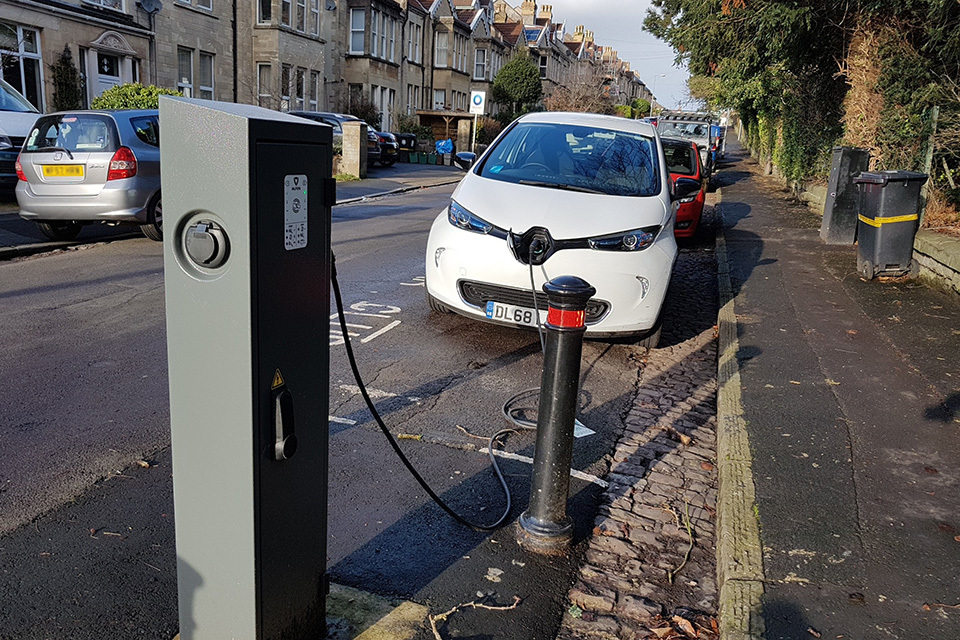
    The Department for Transport (DfT) has put out another press release with big numbers quoted out of context, this time a “New £63 million boost for Britain’s electric vehicle revolution”.

    Whether the boost is new is always the first question, with the age-old tradition of announcing a funding envelope and then each tranche of funding from it as a separate “new” boost.

    Image: DfT

    It looks as if the £63m is drawn from the “£200m for charging infrastructure” announced in the Autumn budget.

    The details are quite vague: £25m for local authorities, £8m for the NHS and the rest apparently for a “major new grant scheme to help businesses install charging points at depots nationwide”, which the government says it “is launching” but only on the basis that it intends to launch it.

    The money is said to “build on” – implicitly to be additional to – the “£400 million announced in the Spending Review to support charging infrastructure, including on the strategic road network”, or rather the redirected portion of the £950 rapid charging fund that Labour scrapped.

    (more…)

  • Uncertainty remains over local road upgrades

    It’s worth returning to Tuesday’s announcement about rail and road projects, in which the government falsely claimed to have green-lit 28 local road schemes, while actually confirming two, for what transport secretary Heidi Alexander told MPs about the schemes that are not (yet) getting funding.

    We know expectations were raised. And, sadly, we know there was no plan to pay for them. Indeed, schemes that formed part of the previous government’s major road network programme, all of which were meant to be in construction by now, have not progressed as expected. Almost half are yet to reach the outline business case stage, despite being in the programme for 6 years. Years of dither and delay wasted everyone’s time and left communities in limbo. This, I must say, is the tragic legacy of the farcical ‘Network North’ announcement made by the previous Prime Minister.

    I have probably covered the major road network (MRN), which ran alongside large local majors (LLM), more closely than any other journalist, noting how it was supposed to be part of a National Roads Fund paid for hypothecated Vehicle Excise Duty, but the money was never there and schemes just dribbled out.

    I also wrote extensively about how the Network North shambles promised to ensure that schemes happened but that really only meant potentially paying the full cost at outline business case stage for schemes that had got significantly more expensive since.

    The Department for Transport also suggested that £1.6bn MRN/LLM funding – focused on the North and Midlands – could continue into the next parliament (now the current parliament).

    (more…)
  • Not all good news

    The local authority that will receive government funding for one of the two local road schemes that the Department for Transport (DfT) *actually announced* yesterday is far from happy and expects the cost of the scheme to rise further.

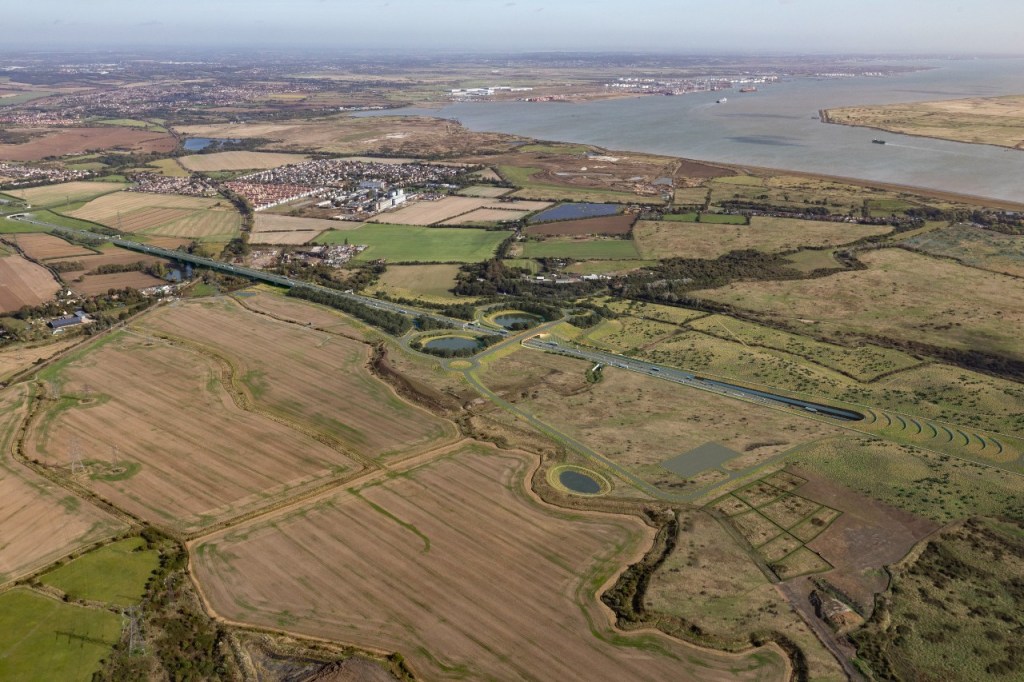
    The Middlewich Eastern Bypass is a 1.6-mile bypass including a new bridge over a railway line and a combined cycleway and footway. Cheshire East Council has told me that the estimated total cost of the scheme is currently £97.941m, of which the DfT will provide a maximum funding contribution of £48.037m, including £1.257m already paid.

    “Cheshire East Council is solely responsible for meeting any expenditure over and above this maximum amount.”

    Yesterday the council’s leader and deputy leader, Nick Mannion and Michael Gorman, issued a statement with a strong good news, bad news flavour:

    (more…)
  • Labour re-announces road schemes “in construction”

    The Department for Transport’s (DfT) announcement of a “green light” for 28 local road schemes has fallen apart as quickly as the Tories’ notorious Network North announcement, as it emerges that many of the green lit schemes have been in construction for a while and others are still awaiting confirmation of cash promised years ago.

    I wrote earlier that the DfT had clarified that only two of the Large Local Major (LLM) and Major Road Network (MRN) schemes had actually had funding confirmed (today) but the department’s list of schemes with “funding confirmed” (now at the bottom of the announcement) includes schemes that are not only in construction, but were promised funding as far back as 2018.

    These include “Gallows Corner” and “A595 Grizebeck Bypass”, both of which were promised money in 2018 by the then transport secretary Chris “failing” Grayling, even before the MRN existed as a network.

    Also on the “funding confirmed” list is the North Hykeham Relief Road, which was the only new road project announced in the Tories’ November 2020 National Infrastructure Strategy.

    (more…)
  • DfT doubles down on planned publication

    National Highways’ delivery plan and safety action plan for the current financial year will be published this month, the Department for Transport (DfT) has told me.

    The government-owned company’s Interim Settlement for the current year, during which no road investment strategy is in place, states that to support progress towards achieving its December 2025 casualty reduction target “National Highways must deliver a series of safety improvements set out in its Safety Action Plan for 2025/26”.

    The safety action plan has not been published, but in May roads minister Lilian Greenwood told fellow Labour MP Ruth Cadbury, who is chair of the Transport Select Committee, that it “will form part of National Highways 2025-26 delivery plan for the Interim Settlement which will be published in the coming months”.

    I have requested the plan under the Freedom of Information Act from the DfT, National Highways and the Office of Rail and Road but each refused my request on the spurious grounds that a document that was not produced for publication is intended for future publication alongside another document.

    In response to a review request, the DfT has now told me: “We expect the requested information to be published in July 2025.”

    (more…)

  • Rapid u-turn on green light for 28 local road schemes

    The Department for Transport (DfT) has confirmed that the “green light for over 50 road and rail upgrades” is not actually a green light for around half the schemes involved.

    The claim that more than 28 local road upgrades had been “given the green light” was an obvious lie. At best, 26 of the upgrades have, or still have, an amber light.

    I quoted and queried this bit, suggesting that there was some sleight of hand over the number of road schemes that have actually been green lit.

    To support local journeys, the government is also committing support to continue 28 local road schemes vital to connecting and growing communities. These schemes, which include the Middlewich Eastern Bypass and A382 Drumbridges to Newton Abbot schemes, are not motorways or trunk A-roads, but junctions, bypasses and traffic-easing projects which will improve millions of congested commutes and unlock further housing and jobs.   

    The DfT has now confirmed to me that the only confirmed schemes are the Middlewich Eastern Bypass and the A382 Drumbridges to Newton Abbot – a large local major (LLM) and a major road network (MRN) scheme respectively – while the others have been given ongoing development funding.

    Having followed the funding for LLM and MRN schemes for years, I know that final funding is confirmed two or three schemes at a time, not 28 all at the same time.

    The DfT has not “given the green light” to 50 road and rail upgrades.

    Image: Cheshire East Council 

    2 responses to “Rapid u-turn on green light for 28 local road schemes”

    1. […] *UPDATE: I have now confirmed that the government has not green lit 28 local road schemes* […]

      Like

    2. […] wrote earlier that the DfT had clarified that only two of the Large Local Major (LLM) and Major Road Network […]

      Like

    Leave a comment

Subscribe

Subscribe to get our the latest stories in your inbox.