
You might think that to have to go back and fix one emergency area (EA) on a stretch of motorway is unfortunate and two would be careless, but what would Oscar Wilde say about remedial works to four EAs on the same stretch?
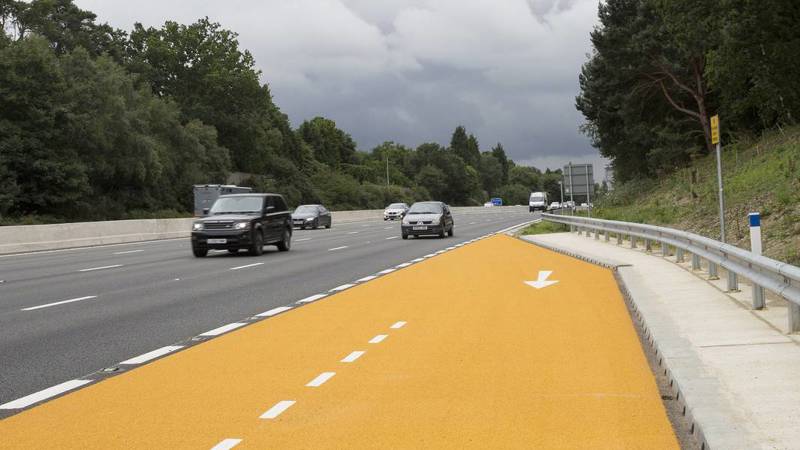
A parliamentary question from (Baroness) Caroline Pidgeon has accidentally revealed that National Highways’ National Emergency Area Retrofit (NEAR) programme has not been formally completed, because works are neededto strengthen embankments adjacent to four new emergency areas on the M1.
It was all going so well, with the NEAR programme appearing to have been delivered on time and on budget.
… what is the final cost of the installation of new emergency areas on smart motorways; and what is the break down of costs for each relevant motorway.
Transport minister (Lord) Peter Hendy replied:
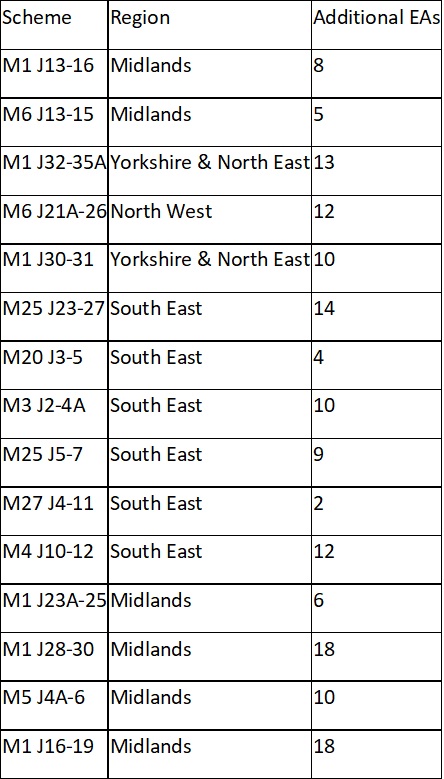
National Highways committed to add over 150 new emergency areas on existing All Lane Running smart motorways by the end of March 2025, prioritising locations where these would provide the greatest benefit and could be delivered within the £390 million budget. The table below sets out the number of additional emergency areas delivered on each relevant motorway section.
On average, across the programme, an emergency area costs approximately £2.6 million to construct (pending final accounts). Individual emergency areas have varying design requirements, including topography, requirement for supporting structures, drainage, and technology, which mean they can cost less or more than the expected average to construct.
National Highways has recently commenced work on the M1 between junctions 16 and 19 to undertake remedial works to strengthen embankments adjacent to four new emergency areas. These works are expected to be completed by August 2026. As a result, programme close-out activities have been extended and final costs for the National Emergency Area Retrofit programme are now expected to be available in Spring 2027, subject to final accounting and internal governance.
The maths works, except that there are 151 EAs, but what does it say that four EAs in the same area had to be redone for the same reason? Was it careless (bad scheme design), unfortunate, or wider incompetence?
It’s hard to tell at this point; there may be particular problems with embankments in this area, but they are probably not unique and you might think any difficulties would have been foreseen.
Geotechnical surveys will have been done, but it looks as if National Highways did not fully understand the soil–drainage–loading interaction on legacy embankments, perhaps because the ground investigation was not deep or extensive enough to address some quite complex issues.
It certainly doesn’t look as if National Highways is expecting the contractor to pay for the fix.
We can also say that the story seems to be another illustration of the problems of retrofitting smart motorway infrastructure on legacy earthworks, like the recent problems on a nearby stretch of the M1, where putting in concrete central barrier (a good thing) messed up the drainage.


Leave a Reply