
Barry O’Sullivan has been found guilty of causing the death of Pulvinder Dhillon by careless driving on a smart motorway section of the M4 in 2022 but the verdict in no way lets National Highways off the hook and it is unarguable that the crash would not have happened if the “smart” technology had done its job.
A jury sat through the trial and heard the evidence – plus the judge’s summing up – and decided that O’Sullivan was guilty so I won’t argue with them.
But in this case it has always been possible to argue both that O’Sullivan was culpable despite National Highways’ shocking failings and that National Highways failed abysmally despite O’Sullivan’s culpability.
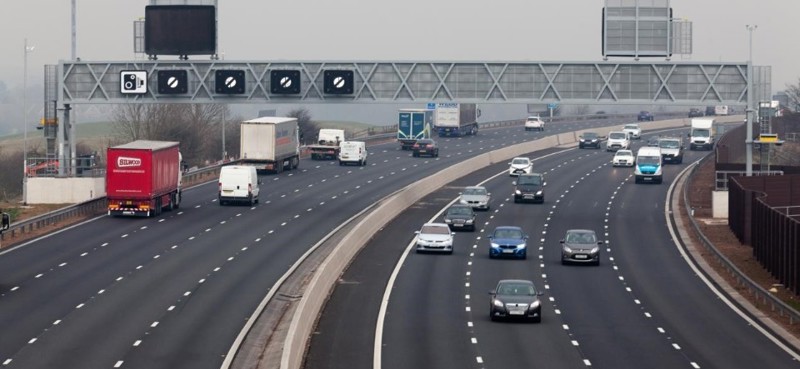
I first wrote about the crash soon after it happened and was told by a senior National Highways official that the stopped vehicle detection (SVD) technology had worked as far as possible, except that a fault with the wider system meant that alerts were not posted on gantries.
The M4 [incident] was a particular issue with some of our back office systems that were offline at the time – we’ve now corrected the system so that can’t happen. The scheme was still in operational acceptance so, as tragic as it was, this was a shortcoming of a system that [hadn’t yet] been handed into business as usual.
What I didn’t know then was that this was the fifth day of this fault and that National Highways had failed to effect what turned out to be quite a quick fix because the fault was wrongly categorised.
The BBC reports that:
The £814m project to install a 32-mile stretch of smart motorway, between junction 3 at Hayes and junction 12 at Theale in Berkshire, was completed in December 2022.
In fact, National Highways admitted in January 2023 that SVD systems on the M4 and elsewhere still hadn’t passed operational acceptance into business as usual. The company was running the smart motorway at 70mph despite the technology not being up to scratch.
The stopped vehicle in this case was of course in lane four and it seems unlikely that it would have got to the hard shoulder if there had been one and if must have been terrifying for the people in the car for the six minutes before the crash.
I know that National Highways was reluctant to disclose its report into the failings but I understand that a redacted version has been made available and I hope to have sight of that soon.
It seems that ministers have already learned one key lesson from this and other incidents on smart motorways. As the draft third Road Investment Strategy states:
National Highways should not be over-reliant on technology, for example drawing on insights from the use of cameras and stopped vehicle detection when considering driver safety and welfare.
And the bottom line is that a woman died and others, including O’Sullivan, were seriously injured and it should not have happened.
One response to “No winners in smart motorway death crash case”
-
Why even consider a derestrict/ 70mph limit or more for any vehicle on an eight lane motorway without hard shoulders. Thurrock/Dartford Bridge has a rigourously enforced 50 mph limit.
The M25 seems to have much more serious long lasting incidences at other points than at the crossing which might very well be at least partially due to Hard Shoulder running.
Ah – but it is now best to spend £10Bn+ a new lower Thames Crossing (LTC) while we persist with hard shoulder running generating more traffic in order to make a more ‘visible case’ in public impressions for the ‘need’ for the LTC. Almost all of us know also that the LTC will in itself generate extra traffic and widescale congestion elsewhere.
LikeLike

 Transport Insights
Leave a reply to clearlyteenage2e6308de03 Cancel reply