
The process of getting the £10bn Lower Thames Crossing under the ground is rumbling on without any sense of urgency, almost as though the government doesn’t want to do it, but can’t admit it.
The story so far is that Labour has said that the clearly unaffordable project is to be paid for on the never never, sorry privately, and has granted a development consent order.
The next step was apparently the submission of a full business case (FBC) for the scheme, in order for funding to be released. Well, two lots of funding have been released but there is no sign of an FBC.
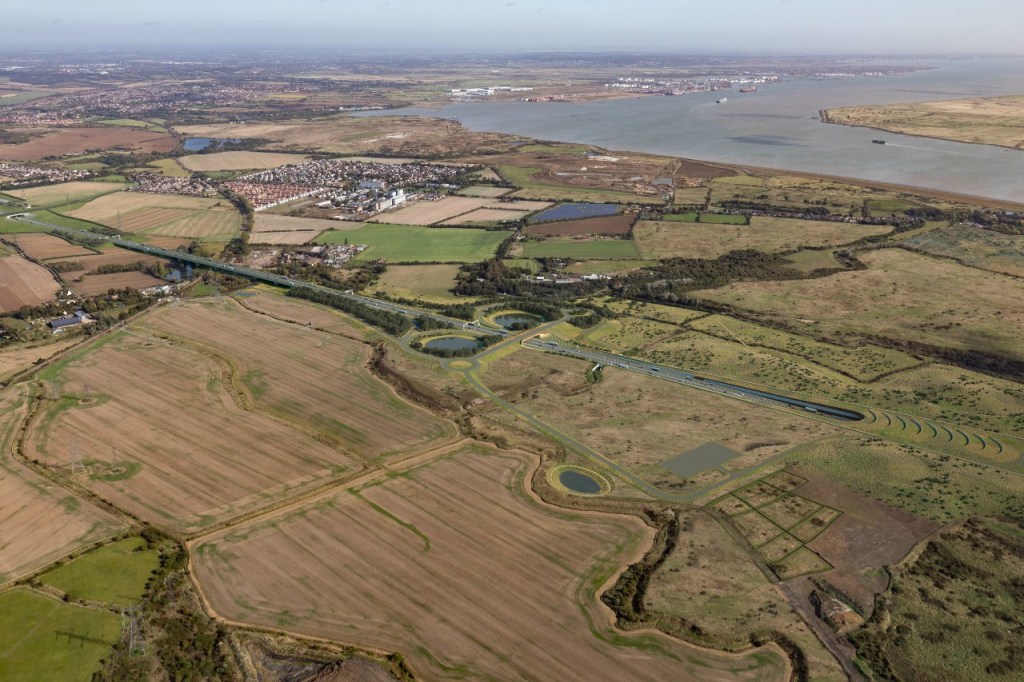
The Department for Transport (DfT) is hoping to work some magic on the FBC to improve the benefit cost ratio (BCR).
According to the (hopelessly out of date) accounting officer assessment, the last investment decision point was the 2020 outline business case and the BCR currently gives low vfm at 1.46 and is expected to fall further following “the recent lowering of the future economic forecasts for the UK economy and the consequent fall in value of journey time savings”.
But at FBC, there is an expectation that key strategic benefits not reflected in the BCR will be quantified.
Is the government hiding the FBC or still trying to make the numbers look better, as it claims to be doing with smart motorway evaluations?
In the meantime, the DfT is trying to get people in to help it progress the private financing model.
It has advertised a contract worth £24m for “an organisation to act as a Strategic Sale Advisor” for the project, i.e. to sell the entity that will build both the tunnel and roads and milk the revenue.
HMG have been examining private finance options for the main works. The leading option is now a Regulated Asset Base model, in which a new economically regulated company (LTC Co) will undertake the main construction works, as well as maintain and operate both Lower Thames Crossing and Dartford Crossings.
The contract will run from January 2026 to December 2027, with a possible extension to December 2028 “as a result of a materialisation of a known risk (including delay to the overall project and transaction, and such other known risks)”.
Here’s the basis of the risk:
A successful outcome for the project will be determined by a transaction that achieves a timely competitive sale of the LTC Co, including the Dartford Crossing, to private sector investors with acceptable user charge levels representing value-for-money to society and minimal or no government support package.
Good luck with that.
At the same time, the DfT has advertised for head of economic regulation policy – Lower Thames Crossing to “lead on the economic regulation of the Lower Thames Crossing, helping to unlock private investment”, who will be “leading on key policy decisions related to that structure, the development of detailed regulatory mechanisms, and developing/ implementing the required legislation”.
The salary is advertised at £74,540, plus 29% pension contributions.
Interestingly, the National Infrastructure and Service Transformation Authority pipeline has the scheme as two different projects – the publicly funded Lower Thames Crossing (FY 2025/26-2026/27 only), which is burning through nearly a billion pounds of public money before anything is built, and the Lower Thames Crossing itself, described as public/private.
Glad we cleared that up.


Leave a comment