
It’s great to see another rail service (London to Essex c2c services) return to public control, with the Department for Transport (DfT) highlighting – somewhat unconvincingly – the potential savings to the taxpayer.
In an announcement on Sunday, the DfT described the development, under the Public Ownership Act, as a “step towards Great British Railways” but it’s very much Labour’s version of Great British Railways.
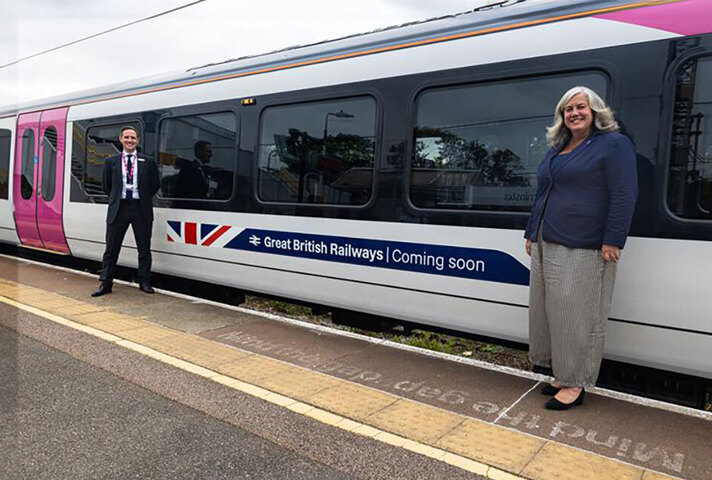
When I hear the name, I can’t help remembering that it’s Grant Shapps’ bullshit branding – basically British Rail with “Great” at the front and “ways” at the back. What a difference adding two carriages to the set makes.
The Shapps version was the integration of track and train without nationalising the train operating companies, which leaves the DfT claiming that both public ownership of c2c and the company’s already popular services are “driving growth”.
But also:
Two-thirds of Britons have already expressed their support for public ownership, which will save the taxpayer up to £150 million a year in fees alone and ensure every penny can be spent for the benefit of passengers.
The “up to” expression of the claimed savings is obviously dodgy, as is the phrase “ensure every penny can be spent for the benefit of passengers,” which mixes the PR buzzword of “ensure” with the uncertainty of “can”.
The DfT makes a good case for what it’s currently doing, but with a possible non sequitur it remains unclear how much of the claimed benefit comes from nationalisation and how much from better integration.
Public ownership puts passengers back at the heart of the rail network. Passengers can use their tickets on another publicly owned operator at no extra cost during disruption, and passengers in the north are now making journeys across Northern and TransPennine Express with just one booking, with over 15,000 journeys estimated to be booked this way since June 2024. Through working with Network Rail, Southeastern has increased capacity to popular seaside spots in the summer months allowing more passengers to take the train to beaches like Margate, Whitstable and Herne Bay.
Looking ahead:
The Railways Bill, which will be introduced to Parliament later this year, will enable the establishment of Great British Railways. This means passengers will travel on GBR trains, running on GBR tracks, working to a GBR timetable.
But no date for the actual establishment of Great British Railways, which is odd because the official DfT webpage states:
The Railways Bill is due to go before Parliament this parliamentary session. GBR is expected to be operational around 12 months after the bill receives Royal Assent.
 Transport Insights
Leave a comment