Transport Insights

The transport stories you won't see in the industry-friendly media

Author

Chris Ames

Tag: great british railways

  • Defeatism triumphs as GBR “innovation” goes forward

    You might imagine that if a train service is unreliable, you would make it more reliable, rather than scrapping or curtailing it, but not the publicly-owned Northern Rail or the West Yorkshire Combined Authority (WYCA).

    The BBC reports:

    A rail service linking two former Yorkshire City of Culture winners is to be scrapped by a train operator in a bid to tackle what it said was “poor reliability”.

    Northern plans to axe the Hull to Halifax route, which stops at Leeds and Bradford, due to regular delays which it said often ended with the service being terminated at Bradford or Leeds.

    To tackle the issue, the Hull train will now terminate at Leeds – no longer continuing on to Bradford and Halifax. Passengers wanting to travel to Hull from Bradford would instead have to change in Leeds, a spokesperson said.
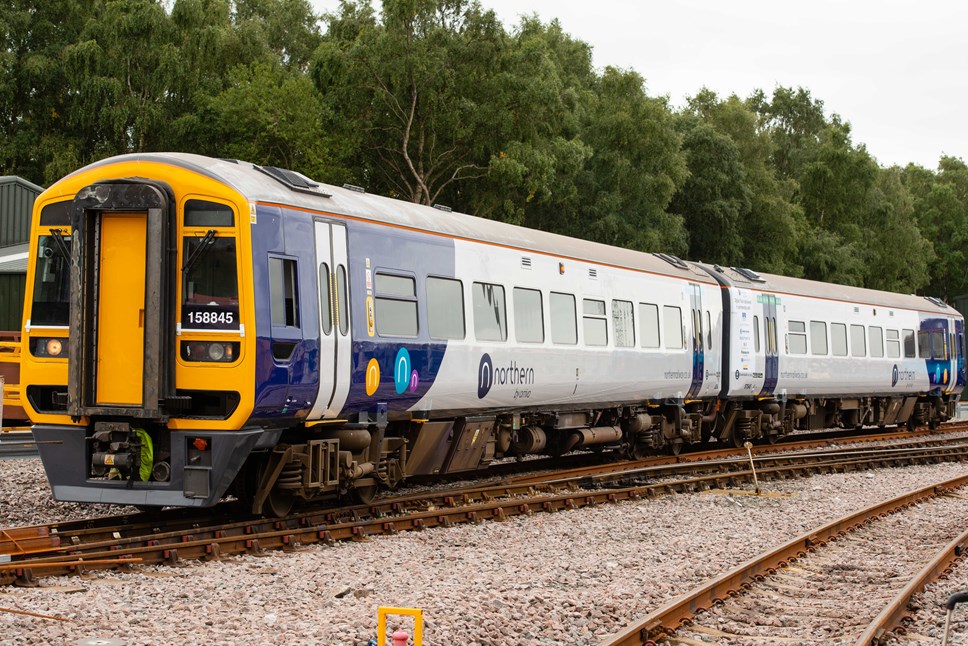
    A paper to the WYCA “Weaver Network Board” last week backed the plan to curtail the service introduced in 2019 without ever asking what the cause of the delays is, or whether they can be fixed:

    The Hull–Leeds–Bradford–Halifax service has experienced poor reliability for some time. Delays occurring on either side of Leeds often affect the wider route, meaning services are regularly terminated early at Leeds or Bradford and do not reach Halifax as planned.

    There may be complex reasons why certain diagrams and timings are unrealistic on a crowded bit of the rail network, but it would be good to see the question being addressed.

    Looking at the video of the meeting, the officer presenting the paper did nothing beyond reading from it and no members asked the question, why not fix it?

    On the bright side, the plan would see the Bradford–Halifax–Huddersfield service extended to start and finish at Leeds, which I think would produce the benefit of more trains at Low Moor and Brighouse because it would use the stopping line.

    On the even brighter side, Mayor Tracy Brabin described bringing track and train together under Great British Railways – i.e. the model previously used under British Rail and widely used elsewhere – as:

    A really amazing innovation from Peter Hendy
    Leave a comment

  • Confused? You’re meant to be

    The Department for Transport (DfT) has issued one of the most baffling press releases I have ever seen, whose role seem to be to make it look as if the creation of Grant Shapps’ Great British Railways (GBR) is “on track”, when it really isn’t.

    Apparently:

    • Shadow GBR moves to a new phase in March 2026 as Laura Shoaf joins the DFTO board, creating a solid foundation for the next stage of rail reform
    • DFTO board also welcomes Tony Poulter, former GBR Transition Team Non-Executive Director
    • developments bring experts together to continue to pave the way for the creation of GBR in 2027

    The 2027 date is because the actual GBR cannot come into existence until around 12 months after the Railways Bill receives Royal Assent and it’s not exactly steaming through Parliamentary processes.

    So the DfT wants to show that things are happening in the meantime and is limited to board level changes.

    But what does this mean?

    The appointments mark the official transition towards GBR from Shadow Great British Railways (SGBR), chaired by Laura Shoaf.

    It looks as if shadow GBR is being wound down and folded into the Department for Transport Operator (DFTO) but somehow the DfT won’t or can’t say this directly.

    (more…)

  • Expect delays on delay repay changes

    Ministers have made headlines with the announcement that rail passengers will be able to claim Delay Repay compensation directly from third party retailers, but without saying anything about when it will happen.

    The BBC has reported:

    Train Delay Repay rule changes to make claims easier

    But the story begins:

    Train travellers who buy discounted tickets using railcards will face additional checks, as part of a trial to crack down on ticketing fraud starting in April.

    If the trial is successful, the plan will save £20m a year in lost revenue, while preventing confused passengers from being prosecuted for fare evasion, the Department for Transport says.

    Followed by:

    A separate scheme will also make it easier for passengers who buy their tickets from third-party retailers such as Trainline to claim compensation for late or cancelled services under the Delay Repay scheme.

    The confusion is entirely the result of the Department for Transport bundling two slightly related announcements together.

    (more…)
  • Another empty pledge from the DfT

    Another Department for Transport (DfT) announcement throws random and unsubstantiated numbers at a problem in a successful attempt to get headlines from gullible journalists.

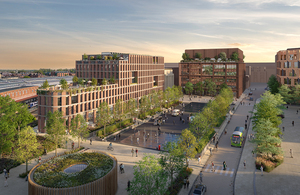
    The DfT press release First-time buyers to benefit from 40,000 new homes on brownfield railway land already contains a small quibble in the sub-headline:

    Neighbourhoods in Manchester, Newcastle, Nottingham and Cambridge will be transformed with homes, green spaces, shops and hotels.

    And of course many of these railway properties will be more suitable for shops and hotels, which may also be more economically viable.

    Here’s the plan:

    Previously, London and Continental Railways Ltd and Network Rail’s Property Team operated independently, each managing different aspects of surplus rail land across the UK.

    This fragmented approach often led to inefficiencies, duplicated efforts and missed opportunities for strategic development.

    Now, Platform4 will bring these 2 functions, skills and capabilities together in a unified structure to deliver 40,000 homes over the coming decade by disposing of surplus rail land, attracting private investment and accelerating community regeneration. By working together, instead of separately, Platform4 is expected to generate an additional £227 million by delivering at greater pace and scale.

    The press release provides no evidence that these numbers are realistic and it is noticeable that the figure of 40,000 new homes (over 10 years) is not only unsubstantiated – and presented elsewhere as an “up to” – but also does not say how many of these homes are additional to what would have happened under the existing structure.

    (more…)

  • New Dawn Fades

    There’s an interesting revelation in the Guardian’s story abut hundreds of civil servants being transferred from the Department for Transport (DfT) to the state-owned rail operator, as part of the creation of Great British Railways (GBR):

    sources indicated that GBR would now probably not be up and running until 2028

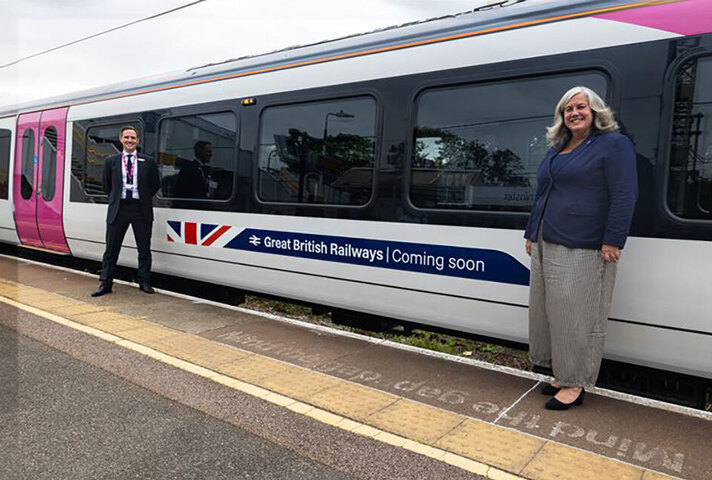
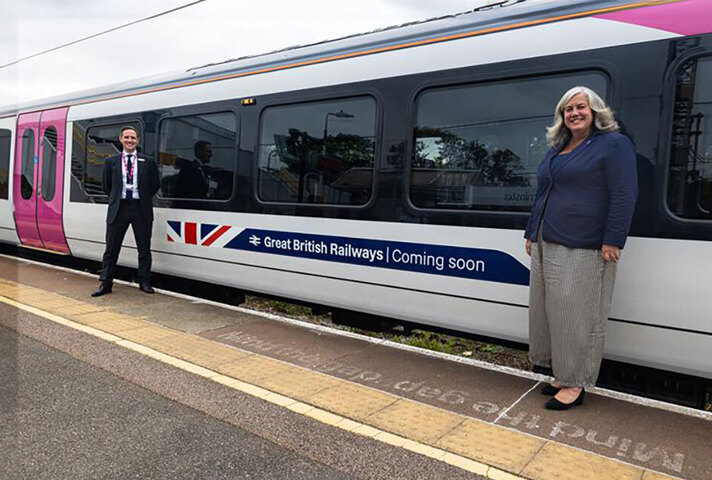
    I noted a couple of weeks back that, although the DfT’s webpage implies a start date of 2027, the absence of a date from a recent press release was saying that GBR was “coming soon”, was conspicuous.

    In April, the DfT described the return to public hands of as South Western Railway as a “new dawn for rail”, but the state-owned firm has just quietly announced cuts to services.

    As has been observed, there was no fanfare about this deterioration. Heidi Alexander certainly didn’t stand in front of an SWR train to publicise it.

    Leave a comment

  • DfT not entirely certain on return of (Great) British Rail (ways)

    It’s great to see another rail service (London to Essex c2c services) return to public control, with the Department for Transport (DfT) highlighting – somewhat unconvincingly – the potential savings to the taxpayer.

    In an announcement on Sunday, the DfT described the development, under the Public Ownership Act, as a “step towards Great British Railways” but it’s very much Labour’s version of Great British Railways.

    When I hear the name, I can’t help remembering that it’s Grant Shapps’ bullshit branding – basically British Rail with “Great” at the front and “ways” at the back. What a difference adding two carriages to the set makes.

    The Shapps version was the integration of track and train without nationalising the train operating companies, which leaves the DfT claiming that both public ownership of c2c and the company’s already popular services are “driving growth”.

    (more…)