Transport Insights

The transport stories you won't see in the industry-friendly media

Author

Chris Ames

Tag: funding

  • Labour postpones pothole pledge

    It looks as if Rachel Reeves has dropped the £500m “uplift” for local road maintenance (in England) and Labour appears to have ditched its manifesto pledge to “additional one million potholes across England in each year of the next parliament”.

    Here is what Labour’s manifesto said:

    We will fix an additional one million potholes across England in each year of the next parliament

    Here is what the Budget document says:

    By 2029-30, the government will commit over £2 billion annually for local authorities to repair, renew and fix potholes on their roads – doubling funding since coming into office. This record level of funding will enable the government to exceed its manifesto commitment to fix an additional 1 million potholes per year by the end of the Parliament.

    So the extra million potholes a year have been put back from every year of the Parliament to the last year of the Parliament, i.e. 2029-30.

    Despite promises of long-term funding settlements, the Budget document does not appear to give a total funding figure for 2026-27 or any year between now and 2029-30.

    And the extra £500m that went into 2025-26 allocations with great fanfare in last year’s Budget is not trumpeted today, suggesting that it has gone.

    The “doubling” claim  is dubious as it does not take five years’ worth of inflation into account but concentration on 2029-30 suggests that the next few years will be bleak.

    The Budget document also states:

    The implementation of eVED will provide revenues for this new higher level of roads maintenance funding to be continued for the long term.

    The focus on what happens at the end of the parliament reliance on eVED, which begins in 2028, again supports the idea that money will be tight in the meantime.

    The Department for Transport’s Capital Departmental Expenditure Limit (DEL) wobbles around for the next four years from about £23bn to a bit over £24bn but it’s impossible within that to pick out highway maintenance funding.
    Leave a comment

  • Alexander gives mixed messages on resilience cash

    The transport secretary has declined to say that she is confident that Network Rail has the funds to keep the railway safe as landslips hit the rail and road networks, driven by climate change.

    Appearing before the Transport Committee, Heidi Alexander was asked by Rebecca Smith, Conservative MP for South West Devon, if she was

    confident that Network Rail has the resources to safely maintain the railway network during this control period.

    Her reply emphasized that spending has gone up, which it has, rather than answering what is the real question:

    We are spending more money in Control Period 7 on activities to address improving resilience connected to weather and climate change. So climate change adaptation, I guess, is the phrase that I’m searching for. So in Control Period 7, we’re spending 2.6 billion, which is significantly more than we were spending in Control Period 6. So I think it’s right that the Network Rail are doing that because they are very alive to the challenges that changing weather patterns have for the rail network.

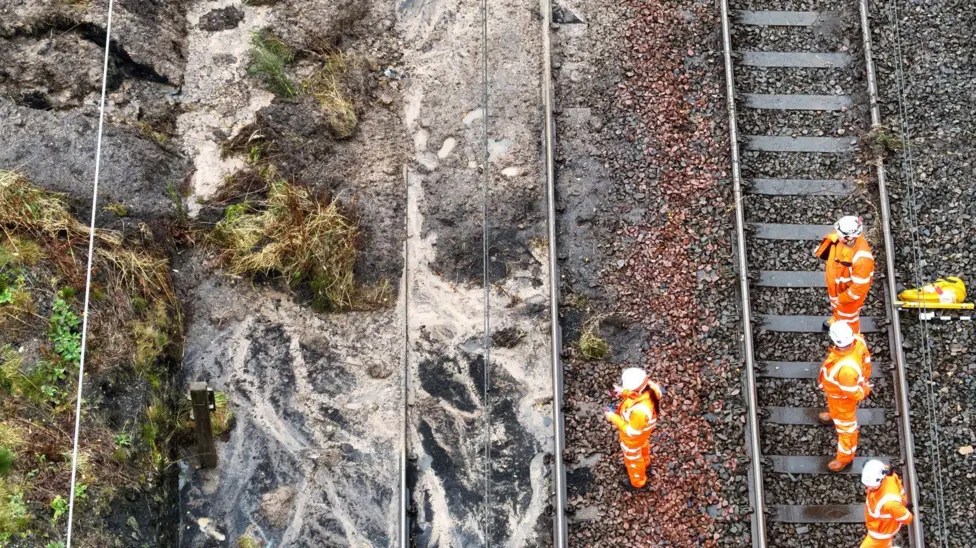
    Smith had referenced a recent incident in Cumbria, i.e. the derailment of a train caused by a landslip onto the track. The Rail Accident Investigation Branch has said its preliminary examination found that a drainage channel running across the slope above the washed-out material, was unable to accommodate the volume of water present, saturating the material and initiating the landslip.

    But, as this BBC report points out in a detailed piece that looks at the wider issue, that was followed by a landslip affecting the A592 in the region, which Westmorland and Furness Council said could be closed for months. After Storm Desmond in 2015, the nearby A591 was blocked by landslips that both blocked the road and washed its base away.

    (more…)
  • Going underground?

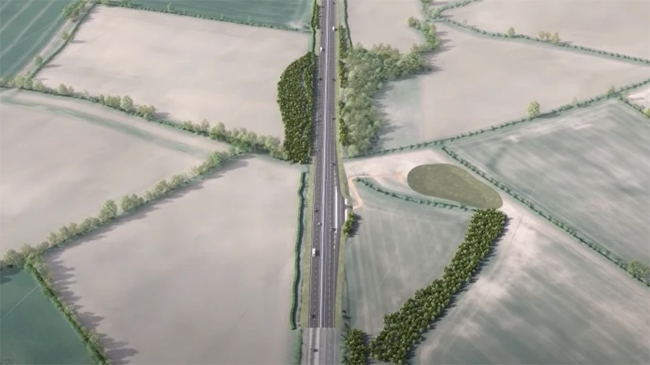
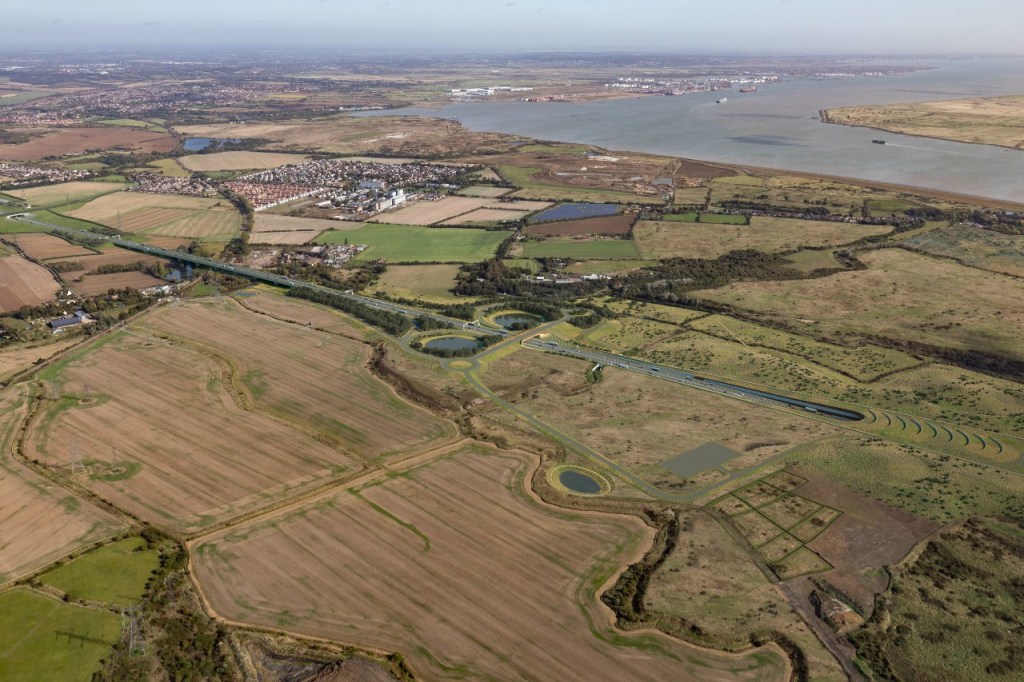
    The process of getting the £10bn Lower Thames Crossing under the ground is rumbling on without any sense of urgency, almost as though the government doesn’t want to do it, but can’t admit it.

    The story so far is that Labour has said that the clearly unaffordable project is to be paid for on the never never, sorry privately, and has granted a development consent order.

    The next step was apparently the submission of a full business case (FBC) for the scheme, in order for funding to be released. Well, two lots of funding have been released but there is no sign of an FBC.

    The Department for Transport (DfT) is hoping to work some magic on the FBC to improve the benefit cost ratio (BCR).

    According to the (hopelessly out of date) accounting officer assessment, the last investment decision point was the 2020 outline business case and the BCR currently gives low vfm at 1.46 and is expected to fall further following “the recent lowering of the future economic forecasts for the UK economy and the consequent fall in value of journey time savings”.

    But at FBC, there is an expectation that key strategic benefits not reflected in the BCR will be quantified.

    Is the government hiding the FBC or still trying to make the numbers look better, as it claims to be doing with smart motorway evaluations?

    In the meantime, the DfT is trying to get people in to help it progress the private financing model.

    (more…)

  • We have cash to tackle toxic runoff, National Highways boss says

    The government is providing “substantial capital funds” for a programme to tackle toxic runoff from its network, a top National Highways official has said.

    The comment from Ivan Le Fevre, the company’s head of environment strategy and standards, follows a recent publication that identified “182 confirmed high priority locations where outfalls or soakaways present a high-risk of pollution”, with an expectation that a total of 250 would be mitigated by 2030.

    Le Fevre has published on LinkedIn a blog that he wrote in September “primarily for an internal company audience”. He wrote:

    Government is providing substantial capital funds, through to 2031, to deliver a programme of improvement – and expects to see efficient and effective results that dramatically reduces the level of pollution risk and provides value for money for the taxpayer. Getting this programme right disproportionately matters to the company’s reputation over the next five years.

    To illustrate the importance of the issue he referenced two hearings held by the Environmental Audit Committee.

    At one of these, at the beginning of September, National Highways chief executive Nick Harris said the company was “proceeding on the basis that we will be funded to do all 250” sites.

    (more…)
  • Rail electrification shelved, Alexander confirms

    The transport secretary has confirmed that Labour has no plans for further electrification of the rail network, for affordability reasons, once again giving the lie to the rail minister’s claim that the government is giving rail funding it needs.

    The FT (paywall) reports Heidi Alexander as telling the Rail Industry Association summit that any further electrification is “not affordable right now” and that the government is “only supporting projects that are fully costed and affordable”.

    She said:

    We are keeping further electrification of the line under review, which I believe is the responsible thing to do.

    Alexander also said this had “allowed us to make commitments elsewhere,” the FT reported.

    It’s not clear whether her comments go further than what she said in July when claiming that the government was “greenlighting over 50 rail and road projects”.

    She told MPs in relation to the midland main line electrification scheme phase 3:

    The costs of the scheme were substantial, and we had to prioritise other schemes that deliver more tangible benefits to passengers sooner. However, we will keep the electrification scheme under review as part of our pipeline of projects for future funding.

    But because of ministers’ double speak where “under review” appears to mean shelved and “greenlighting” to mean not shelved, it seems to have been clear for some time that Labour has shelved electrification to spend money on other things.

    But what is clear is that Labour is not “backing rail with the funding needed”, as rail minister Lord Peter Hendy claimed.

    Leave a comment

  • Councillors want half a billion thrown at poor value scheme

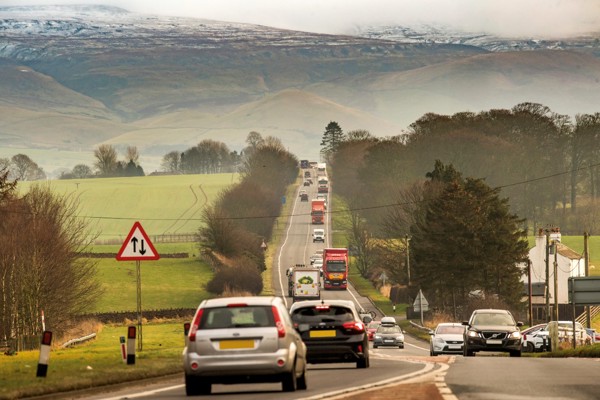
    Councillors in Northumberland are continuing to call on ministers to reinstate a National Highways scheme to dual a section of the A1 that Labour publicly scrapped last year and which was secretly shelved four years ago as poor value for money.

    National Highways had wasted £68m on the scheme by the time it was finally cancelled, with overall scheme costs expected to reach £500m.

    As I have written – at great length – the Tories secretly shelved the scheme following the 2021 Spending Review but ministers, National Highways and the Office of Rail and Road conspired to hide this fact from Parliament and the public.

    But the BBC reports this week that:

    Councillors have made renewed calls to reverse a government decision to widen a “dangerous” single carriageway main road.

    Liberal Democrat councillor Isabel Hunter said the road needed to be dualled as it was getting shut on an “almost a weekly basis” due to accidents.

    Hunter said: “We’re not particularly bothered which party does it, we just want the road dualled.”

    Conservative council leader Glen Sanderson said it was a “fundamental need” to have a “strong spine” between Northumberland and Scotland.

    “The fact that we don’t have that, the fact that we have a dangerous road… and the fact that it has cost people their lives makes it an appalling decision,” he said.

    “The A1 must be dualled, there’s no question about it.”

    (more…)

  • Official: Lightwood got it wrong with Ely “closed” claim

    The Department for Transport (DfT) has rowed back on an apparently false claim from a minister that the previous government “closed” the Ely Area Capacity Enhancements rail scheme.

    As I noted last week, roads minister Simon Lightwood stated in a written parliamentary answer that:

    The Ely Area Capacity scheme was closed by the previous government…

    This was inconsistent with what has been said elsewhere, including by Lightwood, and Network Rail considers the scheme to be awaiting a funding decision.

    I asked the DfT to clarify Lightwood’s claim that the scheme had been “closed”.

    It did not do so. Instead, a spokesperson told me:

    We recognise the importance of the Ely Junction scheme, and we fully anticipate it will be part of a pipeline of projects to be considered as part of future funding decisions.

    There is a strong case for Ely Junction, and we are committed to working with a broad range of stakeholders to support its inclusion in the future pipeline.

    (more…)
  • Cumbria derailment “a wake-up call”

    With rail getting all the funding it needs, the local LibDem MP has used the derailment of a passenger train in Cumbria to highlight the risk of landslips on the rail network as climate change increases the risks.

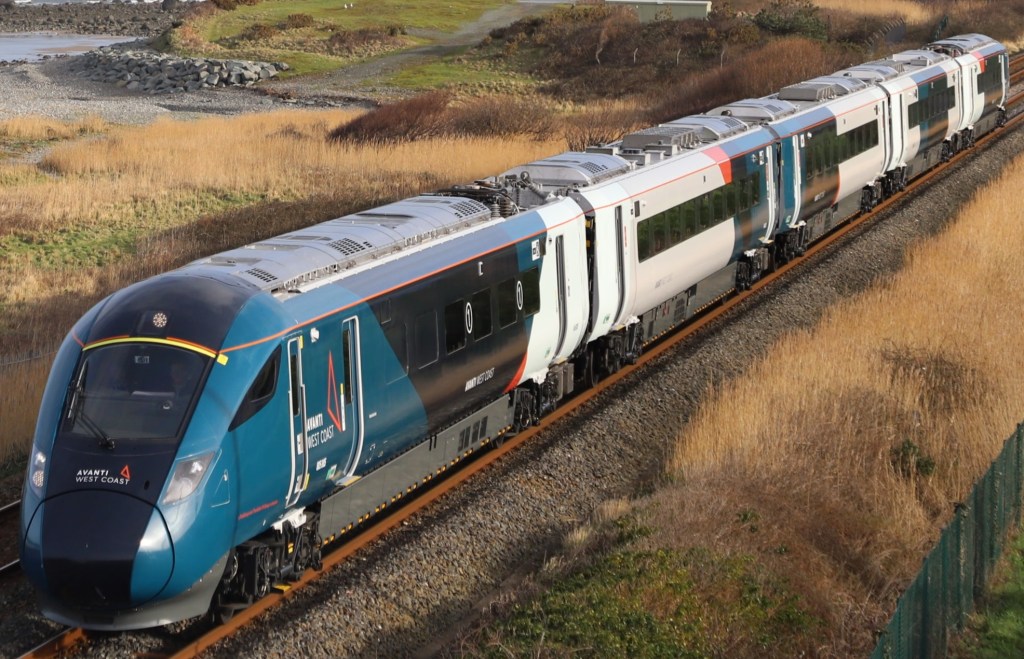
    A high-speed Avanti West Coast train said to be travelling at around 80mph partly derailed after hitting a landslide in Cumbria early this morning.

    The operator said all 86 people plus its train crew were evacuated to a nearby hotel and were were assessed by paramedics, with four treated for minor injuries but none requiring hospital treatment.

    Former LibDem leader Tim Farron called for an investigation into whether enough resources were being spent on the line.

    (more…)

  • National Highways confirms need, but not action, on toxic runoff

    National Highways has declined to confirm that it will meet a pledge to mitigate by 2030 all outfalls that pose a “high-risk” of polluting the environment with toxic road runoff.

    The company has published a document that its director of environmental sustainability, Stephen Elderkin, described on LinkedIn, as “detailing 182 confirmed high priority locations where outfalls or soakaways present a high-risk of pollution”.

    But, while the locations are confirmed, the pledge to mitigate them appears far less certain.

    The detailed document and map represent the next stage of the government-owned company’s 2030 Water Quality Plan, which:

    sets out a high-level programme of work that achieves the plan to mitigate all high risk outfalls by 2030

    However, that document also emphasizes that:

    Delivery in RP3 will be subject to funding being agreed through RIS3.

    Such funding has still not been formally agreed, although National Highways’ chief executive told Parliament that it is “proceeding on the basis that we will be funded” and the plan appears to be part of a funded National Programme.

    Elderkin’s statement National Highways has “committed to mitigate the risk at high-risk locations by 2030 with the installation of new or upgraded treatment facilities” conspicuously lacks the word “all”.

    The new document states that it:

    contains details of sites confirmed through these processes as having an confirmed risk of pollution at the end of August 2025. These high priority locations include a total of 182 assets.

    It adds:

    We expect that, in all, approximately 250 outfalls and soakaways will be confirmed as requiring new or upgraded treatment systems by 2030.

    While Elderkin stated that:

    In total, we expect to deliver improvements to around 250 locations

    this is a statement of expectation without a date.

    Similarly, the new document conspicuously avoids making firm commitments. It lists for each location:

    (more…)
  • RIS 3 will not give the full picture on enhancements cost

    A transport minister has confirmed that we will be kept in the dark about the costs of individual “enhancement” schemes when the next road investment strategy (RIS 3) is published in March, underlining just how little transparency there is about roads spending.

    It follows the Department for Transport (DfT) still refusing to say how much the Structures Fund that it announced in June will actually be worth and how much the four-year budget for local road enhancements will be, even after clarifying that there will be a total of £1bn for both.

    Responding to yet another question from shadow transport secretary Richard Holden – this time about whether the full scheme costs for all projects will be published in the final RIS 3 document – Simon Lighwood said:

    The third Road Investment Strategy (RIS3) will be published in March 2026 and will include a total funding line for all enhancements to the strategic road network to be delivered during the period 2026-2031.

    This does mean that we will be able to judge whether the DfT has put its money where its mouth is over pledges in the draft RIS of “a greater focus than ever before on the maintenance and renewal of the network”.

    Without even a headline figure so far for the cost of enhancements, or even the capital/resource split in the £25bn five-year budget, it is impossible to judge this pledge.

    (more…)