Transport Insights

The transport stories you won't see in the industry-friendly media

Author

Chris Ames
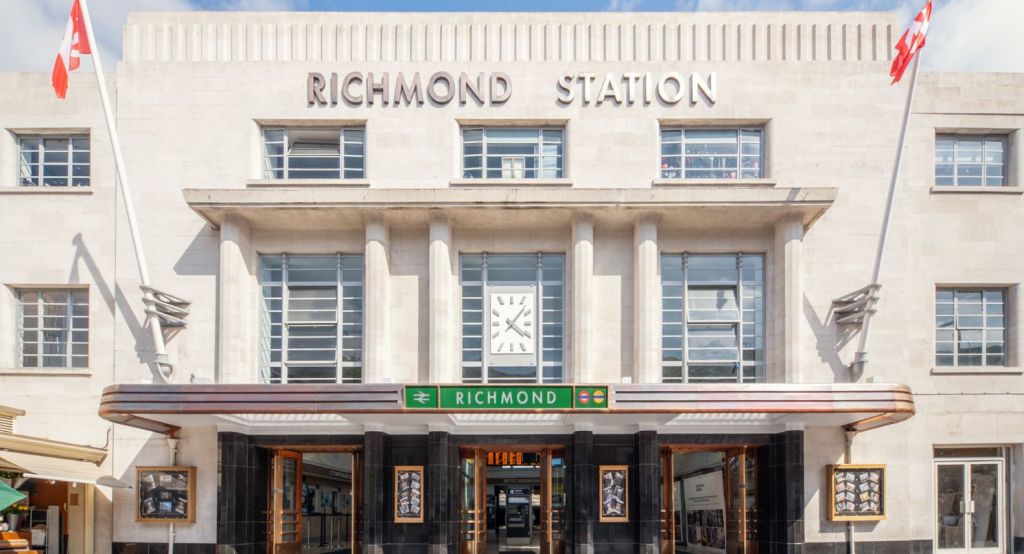
  • Council’s credibility goes down the drain

    Richmond Council’s statement that it had withdrawn a fine against a woman who poured coffee down a drain, while still alleging that she had committed an environmental offence, leaves many questions unanswered, including the question of defamation.

    In brief, if the drain (gully) discharges into the combined sewer system, any coffee poured into it would end up in the same place as coffee tipped down a nearby sink. If however it goes into a nearby watercourse, there is a lot more to worry about than a small amount of leftover coffee.

    In revealing that it had revoked the fine against Burcu Yesilyurt, the council doubled down on its claim that she had committed an offence under Section 33 of the Environmental Protection Act 1990, which, as the BBC says, “makes it an offence to deposit or dispose of waste in a way likely to pollute land or water, including pouring liquids into street drains”:

    It is likely that, had this case progressed through that route, the notice would have been rescinded because it is a minor contravention which the recipient agreed not to repeat.

    The council also told the BBC that it is:

    committed to protecting Richmond’s waterways

    The implication of all this is that the gully discharges into a waterway, rather than a combined sewage system. But when I asked Richmond Council’s press office to clarify this, they refused to answer.

    (more…)

  • Severn Bridge is safe, National Highways protests…too much

    National Highways has blamed the wrong kind of traffic as it insists that the sixty-year-old Severn Bridge is safe, while bringing in some fairly drastic measures just to allow HGVs to use it.

    Goods vehicles weighing over 7.5 tonnes are currently not allowed on the bridge – now redesignated the M48 – but are diverted onto the M4 Prince of Wales bridge.

    The problem is the continued corrosion of the cables that hold up the bridge decks, first discovered in 2006, which led to vehicles above 7.5 tonnes being banned from the outside lane in order stop having two lanes of heavy vehicles stuck on the bridge if an incident occurred.

    Follow-up monitoring, which I witnessed in late 2020, found the problem had got quite a lot worse, leading to an outright ban on HGVs.

    National Highways has now announced its preferred solution (of two) for the medium term, while it explores longer-term options.

    (more…)

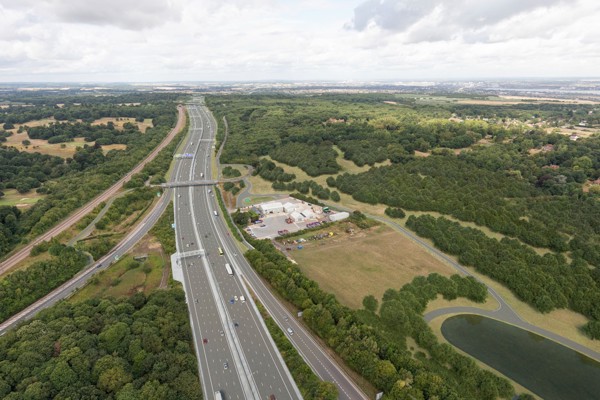
  • Heidi hits the greenhouse gas on Heathrow expansion

    With ministers spinning a review of airports policy as bringing a third runway at Heathrow “one step closer to take-off”, the chair of the Commons Transport Committee has welcomed the move as bringing a dose of reality to the climate-damaging plan.

    Transport secretary Heidi Alexander launched a previously promised review of the Airports National Policy Statement (ANPS), which her department said “will provide the framework within which any future expansion will be considered”.

    The Department for Transport said a draft ANPS will be published for consultation by summer 2026 “so that a decision can be made on a third runway by the end of this parliament to realise the government’s ambition of seeing flights take off from a new runway by 2035”.

    It issued a press release full of quotes about backing builders, not blockers, signalling that it sees the outcome of the review as a forgone conclusion.

    image: Heathrow Ltd

    But Transport Committee chair Ruth Cadbury sees things rather differently:

    (more…)

  • New HS2 delay “is good news”

    The FT (paywall) is reporting that HS2 Ltd is further delaying the planned link between the bit of the high speed railway that survived Rishi Sunak’s cull and the West Coast Main Line (WCML).

    When Rishi Sunak scrapped the second phase of HS2 in October 2023, the extension to Handsacre (via Birmingham and direct) became part of Phase One as a compromise, albeit one that would potentially worsen congestion on the WCML.

    The plan was to allow HS2 trains to join the WCML at Handsacre Junction, just north of Lichfield in Staffordshire, from where they could continue towards the North West and possibly Scotland.

    But work was deferred.

    Now, in a move attributed to a reset of the project under new CEO Mark Wild, the company building the high speed railway has said the link will be deferred further:

    (more…)
  • Labour makes £1bn go a long way

    It’s still unclear what budget, if any, the Department for Transport (DfT) has for the local road enhancement schemes that it “green lit” in July and the roads minister’s reply to a parliamentary question has muddied the waters.

    By way of a reminder, in August I asked the DfT under FOI what the combined or individual budgets are for Major Road Network (MRN) and Large Local Major (LLM) schemes over the period of the spending review.

    It implicitly admitted that “this information” exists, but refused to disclose it, claiming that:

    Ministers are actively considering matters that directly relate to this information, and further decisions are expected to be made in due course.

    As I have observed, the absence of a clear budget for MRN/LLM schemes leaves Labour looking like it is guilty of what it criticised the Tories for – making unfunded transport spending announcements.

    In June the DfT announced a Structures Fund (in title case) as part of a £1bn package that also included £590m for the Lower Thames Crossing (LTC).

    That same month, the 10-year infrastructure strategy said the government was “investing £1 billion to enhance the road network and create a new Structures Fund that will repair major structures like bridges, flyovers and collapsed roads”.

    That billion could include the £590m for the LTC, which is part of the overall road network, although that would involve an element of double counting as that sum is promised elsewhere in the strategy.

    But this is where it gets murky. In its July press release, the DfT said it was “providing £1 billion to enhance the local road network and create a new structures fund”.

    (more…)

  • We made it up

    Shadow transport secretary and former transport minister Richard Holden has asked another perceptive question, with the result that ministers are unable to provide the evidential basis for a claim that nationalising rail operations could save £150m.

    To ask the Secretary of State for Transport, with reference to the press notice entitled New dawn for rail as South Western services return to public hands, published on 25 May 2025, on what evidential basis her Department calculated that public ownership of railways would save £150 million from the public purse; and if she will publish (a) the categories of fees that are no longer payable and (b) the estimated value of each fee category.

    Note however that the original wording said the move will save “up to £150 million a year in fees alone”, which is an obviously sneaky PR framing.

    But the answer from Simon Lightwood (pictured) is that ministers are unable or unwilling to show their workings.

    He merely asserts that there was an estimate:

    Private sector train operating companies are paid fixed and performance-based fees are set out in their National Rail Contracts with the Department. Operations are being transferred into public ownership as their National Rail Contract expire, meaning these fees will no longer be applicable once services have transferred. This saving is estimated to be up to £150million per annum once all franchised contracts have expired, with a proportion of these savings achieved each year in the interim as individual operators’ services transfer.

    (more…)

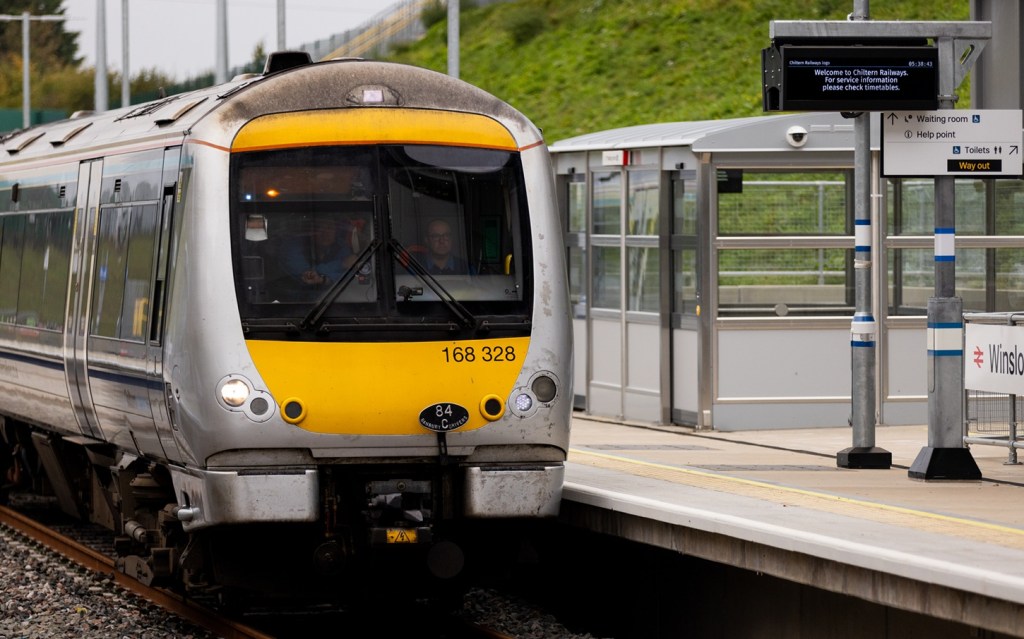
  • SWR losing revenue and train carriages

    Fare dodging is the unavoidable story of the day but concerns are also being raised about how South Western Railway – officially state-run – is actually being run and whether its service is getting better or worse.

    The BBC reports that:

    An estimated £45.5m of annual revenue is being lost from passengers not paying for tickets, South Western Railway (SWR) has said.

    The data was released after a campaign group submitted a Freedom of Information request to SWR, which said the overall rate of ticketless travel was about 3.9%.

    On the other hand, Transport for London is proactively publicising its revenue loss from fare dodging:

    It is a huge problem for TfL, costing it £190m a year. Fare evasion has increased since the opening of the Elizabeth line as more passengers use the TfL network, and many stations on the line don’t have staffed barriers.

    The loss equates to 3.5% of all fare income. TfL wants to get that down to 1.5% by 2030 although it admits this will be a significant challenge.

    Image: SWR

    The huge number of open stations on SWR’s network is obviously going to be a major factor.

    But elsewhere in the SWR story are concerns about how the Department for Transport is actually running the company and whether it is doing enough to improved the firm’s performance.

    The data was obtained by SWR Watch, whose spokesperson, Jeremy Varns, said he believed the service had got worse since May, when it became the first to be renationalised by the Labour government.

    He said: “My primary concern is a lack of accountability.

    “There’s still no publicly accessible contract between the operator and government and Department for Transport.”

    SWR said it was in a transitional arrangement and subject to amendments.

    It added that a copy of the final Service Agreement would be published in due course.

    Varns also criticised SWR’s longstanding policy of treating its passengers as an afterthought when disruption occurs:

    (more…)

  • Labour’s plan for no change as leasing fleecing continues

    As a former transport minister and now shadow transport secretary, Richard Holden’s questions to transport ministers are very entertaining and you get the sense that he knows where the bodies are buried.

    He recently asked:

    To ask the Secretary of State for Transport, what estimate her Department has made of the annual cost to the public purse for payments associated with rolling stock leasing agreements following the transfer of train operating companies into state control.

    It’s not clear whether he was implying that the new arrangements will increase these costs.

    But the gist of the reply from very junior minister Keir Mather is that they won’t:

    It is expected that future transfers will see existing rolling stock leasing arrangements novate to the new public sector operator on existing terms as part of the transfer of operations into public ownership. Therefore, we do not expect changes to current cost estimates as a result of the transfer of operations into public ownership.

    So huge amounts of money will continue to leak from the rail industry to the companies that own the trains.

    The phrase about “the transfer of operations into public ownership” is an interesting one. Can you really own operations?

    By way of a recap, before nationalisation, the infrastructure was already in public ownership and the trains will remain in private ownership.

    It’s neither all change, nor a plan for change.

  • Cohen remains in charge of Lower Thames Crossing

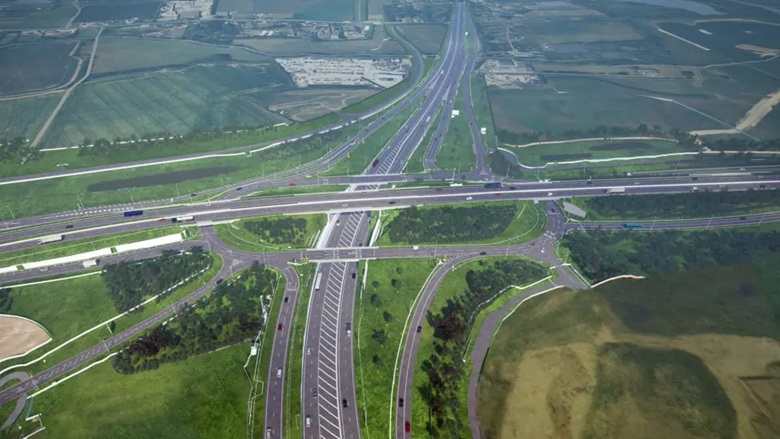
    The Department for Transport’s (DfT) longstanding roads delivery director, Kate Cohen, has taken over the role of senior responsible owner of the Lower Thames Crossing (LTC).

    The news, reported by Highways magazine, follows a report in the Guardian, since denied by the DfT, that the government-owned company had been stripped of responsibility for the £10bn+ project.

    According to the DfT website, Cohen is director of Roads and Projects Infrastructure Delivery, a section that includes responsibility for the LTC.

    Speaking to Highways, National Highways chief executive Nick Harris stressed that the company remains responsible for delivering the LTC, but National Highways’ Sean Pidcock had been its senior responsible owner since 2021.

    Harris said:

    The DfT has recognised the size of the Lower Thames Crossing project means they have to put focus on it and I am really chuffed to see Kate Cohen becoming the SRO. She is going to focus on the LTC and we have worked with Kate on the rest of the portfolio and I think that is a decision that makes a lot of sense.

    (more…)

  • Council takes small risk to “unlock” thousands of homes

    Returning to Gloucestershire County Council’s stalled redevelopment of Junction 10 of the M5, the BBC has some news, of sorts:

    Work has begun on upgrading a motorway junction despite a £70m funding gap.

    Preliminary ecological works for the £363m junction 10 near Cheltenham and Gloucester revamp – which would allow motorists to drive on and off both northbound and southbound – has already begun.

    Councillor Julian Tooke, Gloucestershire County Council’s cabinet member for infrastructure, admitted they were taking a “financial risk” by starting work before having all the funds in place.

    It might not be wise, but it isn’t that unusual for preliminary works to take place before a scheme gets a full green light.

    Just look at the hundreds of millions being sunk into the Lower Thames Crossing, which may never get under the ground.

    In this case, there remains a £70m gap between the funding and the projected cost of the scheme, which the council is hoping to fill with more cash from the Housing Infrastructure Fund.

    The BBC helps out a bit with some wishful thinking:

    The scheme is expected to unlock further development including up to 15,000 homes, 12,000 high-skilled jobs, and support for the £1bn Golden Valley development.

    All those houses, just waiting to be unlocked.

    Leave a comment

Subscribe

Subscribe to get our the latest stories in your inbox.