National Highways has effectively confirmed that it will halve the budget of its Driving for Better business campaign, which aims to reduce work‑related road risk.
Fleet News understands that details around the future funding of the road safety programme are included in a draft business plan submitted by National Highways in response to the Government’s draft Road Investment Strategy (RIS).
Sources suggest its annual budget will be halved from around £750,000 to £375,000 for the next financial year (2026/27).
It notes that:
Asked about the future of the Driving for Better Business campaign by Fleet News, National Highways wouldn’t be drawn on specifics, but said it remained “committed” to the programme.
A National Highways spokesperson added: “National Highways funding for this programme continues, but we are reviewing as part of developing our plans for the next ‘road period’.
“As with all our work, we regularly review to ensure we deliver the best value for taxpayer.”
The non-denial, the use of the word “committed”, and the reference to “the best value for taxpayer” (sic) all provide a strong indication that the story is true.
The transport secretary watered down National Highways’ plan to reduce deaths and serious injuries on its network, despite telling MPs that the plan set out “a series of safety improvements” that her department had required the company to deliver.
Heidi Alexander also misled MPs on the Transport Committee last April by presenting the plan as complete when it was still in draft form, despite the year that it covered already having begun.
In fact, she subsequently directed National Highways to remove one action from its 2025-26 Safety Action Plan, while the company shortened two others, for reasons that it has declined to explain.
According to the plan, all three actions had the “expected impact” of reducing killed and seriously injured (KSI) casualties at a time when National Highways was expected to miss its official casualty reduction target.
The obvious implication of this is that watering down the plan will have led to more KSI casualties than if it had been implemented in full.
The revelations, which stem from my Freedom of Information (FOI) Act requests and subsequent complaints to the Information Commissioner’s Office (ICO), raise new questions about transparency at the Department for Transport (DfT), National Highways, and its regulator, the Office of Rail and Road (ORR).
Asked by Liberal Democrat MP Steff Aquarone whether she was “minded to make a specific direction” to the company, which was expected to miss its December 2025 KSI reduction target, she replied:
We have been clear with National Highways that it must deliver a series of safety improvements. It has set that out in its safety action plan for 2025‑26.
I then asked the DfT, National Highways and the ORR for the plan under FOI but all refused, claiming that it was exempt from disclosure as it was due to be published as part of National Highways’ delivery plan for the year. A watered down version of the plan was indeed published in July as Annex 7 to the delivery plan.
The ICO has now issued a decision notice on my complaint about the ORR, which discloses that at the time of my FOI request the ORR held various “draft” versions of the safety action plan:
ORR says that these “drafts included the final version” of the Interim Period Delivery Plan. National Highways (NH) submitted this to the Secretary of State for approval prior to publication and delivery.
However, ORR says that in its approval, the Secretary of State removed from the Safety Action Plan 2025-2026 one action that NH had previously proposed.
Ministers are still unable to give a date for the opening of the Department for Transport’s (DfT) mythical “Structures Fund”, nine months after announcing it.
Two written parliamentary answers from roads minister and serial information concealer Simon Lightwood used “in due course” – which translates as “we can’t/won’t tell you” – in relation to finding out even how the fund will work.
The Department for Transport surveyed local highway authorities and transport stakeholders on the assessment criteria for the Structures Fund in February 2026. We are currently considering the responses and will confirm the final prioritisation criteria in due course. Once these criteria are published, the Fund will be opened for investment proposals from local authorities, and the Department will then be able to confirm which, and how many, schemes are to receive funding from the Structures Fund.
Which is unfortunate because, when announcing the fund, transport secretary Heidi Alexander said:
Our structures fund will make long-overdue investments to repair ageing structures across the country…
Rather bafflingly, the DfT said:
Capital investment today will … address these immediate risks over the next five years.
Adding:
We will set out more detail about how funding will be allocated shortly.
When I say it’s a mythical fund it’s because I take the old-fashioned view that a fund isn’t really a fund unless you put money into it and the DfT still hasn’t said how much of the £1bn it announced last June, to be shared with local road upgrades, will be available for structures.
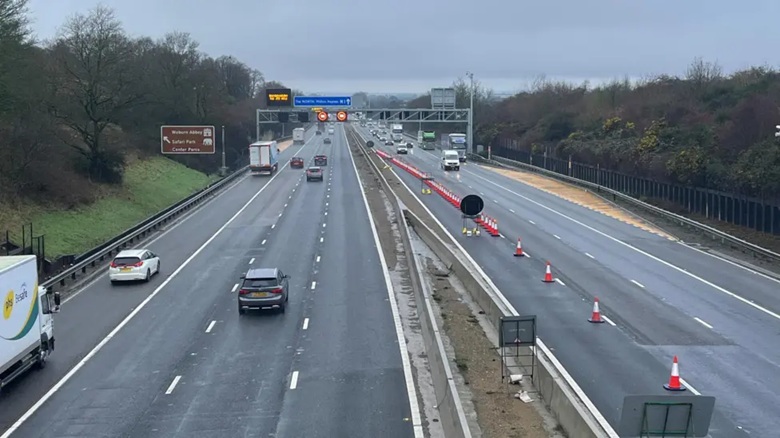
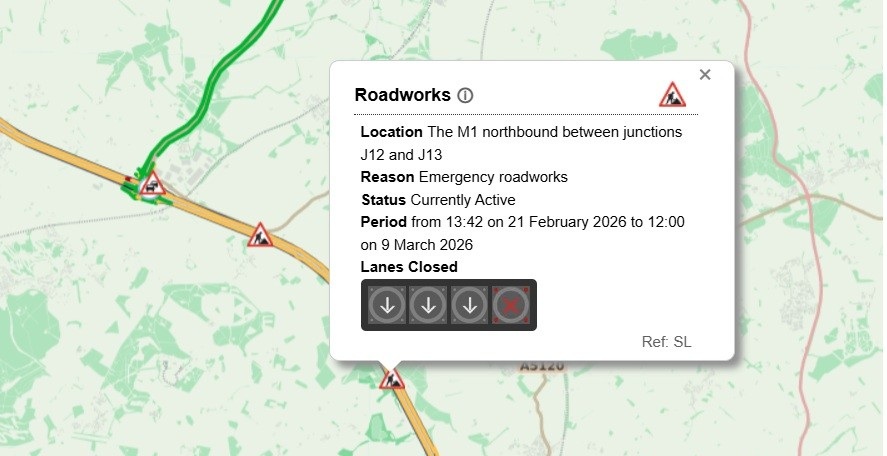
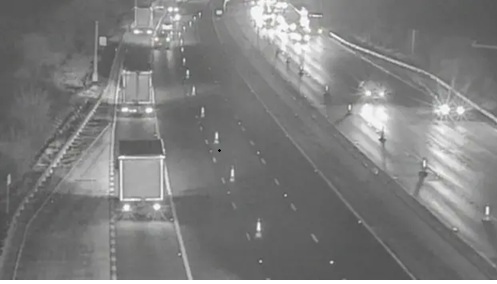
It’s not clear whether National Highways is any closer to solving the drainage defect that has compromised the new concrete central barrier on the M1 between junctions 12 and 13.
The problem first emerged in January and the roadworks, which were officially scheduled to finish this week, have been extended for at least another week.
The story appears to be the same as when the BBC reported it two weeks ago.
Image: Tony Fisher/BBC
National Highways told me today that the barrier supports have been weakened by the drainage defect and that the hard shoulder remains open as a live lane to maintain three lanes open in both directions, with reduced speed limits for safety reasons.
A spokesperson said:
Our engineers have been working hard to identify the cause of a drainage defect in the central reservation. We continue to assess the situation and are planning the repairs needed. We would like to thank drivers for their continued patience.
Meanwhile, an answer from transport minister Lilian Greenwood to a parliamentary question from shadow transport secretary Richard Holden highlights that there are stretches of the strategic road network with wire rope barrier of unknown age:
National Highways has approximately 143 miles of wire rope safety barrier on its network. For context, the total length of Vehicle Restraint Systems (VRS) on National Highways’ network is approximately 6462 miles, of which wire rope safety barrier is one type. National Highways does not hold the data on when all wire rope safety barriers were installed.
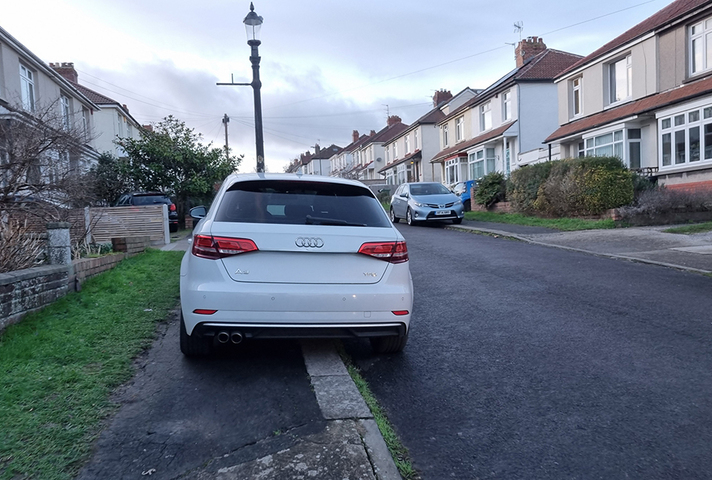
If you detected some reluctance from successive governments to tackle drivers who park on footways, the latest written parliamentary answers on the subject show that ministers are in no hurry to give councils the powers they promised them in January.
Transport minister Lilian Greenwood was asked by fellow Labour MP Peter Dowd what the government’s proposed timeline is. She replied:
On 8 January 2026, I announced the publication of the government’s formal response to the 2020 public consultation ‘Pavement parking: options for change’ which sets out what the government plans to do to tackle pavement parking. In the first instance we plan to give local authorities powers before the end of this year to issue Penalty Charge Notices for vehicles parked in a way that unnecessarily obstructs the pavement. The Department will engage with local authorities on the detail of these plans.
As I reported at the time, the government said it would “create powers to enable local transport authorities to prohibit pavement parking in their areas” and in the meantime “enable local authorities to enforce against ‘unnecessary obstruction’ of the pavement”.
At that time, Commons Transport Committee Chair Ruth Cadbury said:
The Transport Committee will be watching closely to ensure that legislation is enacted without further delays.
But, although ministers originally said the powers for councils to prohibit pavement parking in their areas would be created “at the next legislative opportunity” and “in parallel” with secondary legislation to allow enforcement against unnecessary obstruction of the pavement, the new area-wide power is clearly not happening any time soon.
In relation to the pledge to allow enforcement against unnecessary obstruction of the pavement this year, Greenwood told another Labour MP, Anneliese Dodds:
My officials have begun work on secondary legislation and guidance for this option, and associated stakeholder engagement.
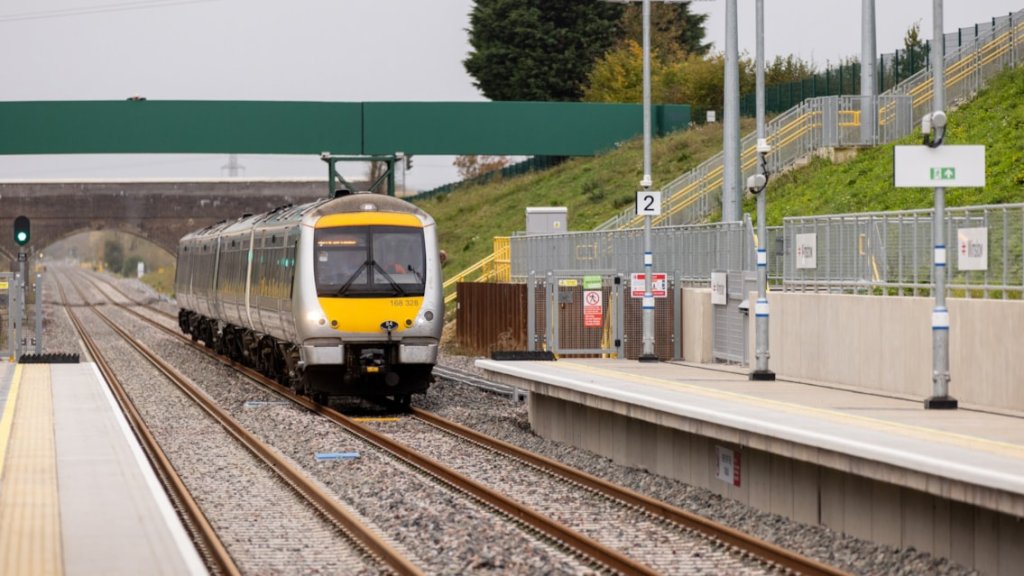
Rail magazine reports that there is still no passenger service on East West Rail 500 days after it opened to traffic.
Frustration is growing among residents and local politicians over the absence of passenger services along the route of the first phase of East West Rail, 500 days since the line opened to traffic and as the first anniversary approaches of Chiltern Railways being awarded the operating contract.
EWR has been beset by problems that have prevented services from running – including trade disputes, issues with rolling stock, and construction delays.
The latter includes at Winslow station – the only new station between Oxford and Milton Keynes.
Following the admission that disclosure of a “peer review” of West Yorkshire’s mass transit plans would damage public confidence in them, central and regional government continue to act in a way that suggests the plans really are “in peril” and that the contribution of trams to the scheme may be limited.
The latest desperate looking move is a press release from the West Yorkshire Combined Authority (WYCA):
Businesses, investors and political leaders have united to reaffirm their backing for West Yorkshire’s Mass Transit plans following a visit to the region from the Rail Minister.
[…]
Leeds United Football Club is the latest high-profile organisation to throw its weight behind Mass Transit, alongside the National Wealth Fund and leading developer Muse.
National Highways appears no nearer to fixing the “drainage defect” that is disrupting a stretch of the M1, closing lane three in each direction.
I wrote last week about the problem, which has, according to the government-owned company, weakened barrier supports in the central reservation, but which it is unable to explain.
The BBC reported last week:
Despite several inquiries by the BBC, National Highways has been unable to clarify the exact nature of what they describe as a “drainage defect” or what caused it.
The roadworks, which began on 28 January (pictured), were officially scheduled to finish yesterday but have been extended for another week.
National Highways has not responded to my request for comment, presumably because it does not know what is going on.
As I post this, there are northbound delays, which is unsurprising as the road is currently operating as a three lane motorway with the hard shoulder in use as a running lane and an obvious lack of resilience.
A baffling announcement from the transport secretary has shone a light on her department’s determination to make the facts (or predictions) around carbon emissions fit Labour’s policy of expanding aviation in a climate emergency.
On 19 February I wrote to the judge hearing the above claim in respect of my ongoing duty of candour in those proceedings.
There is no reference before this, or indeed anywhere in the statement, to any claim or proceedings, although Alexander does later make equally baffling references to:
an order of the court from 10 December 2025
and to having
apologised to the court and the parties and submitted a statement from a senior official in the department to explain the error and correct our position.
At no point does she say which court but, unpicking all this, it looks as if the case is the legal challenge to Alexander’s decision to back expansion of Heathrow. You can tell this because she protests that
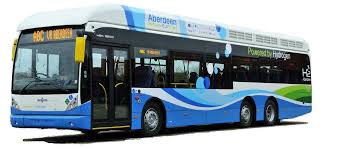
The world’s first hydrogen double-decker bus fleet has reached the end of the road.
The multi-million pound project in Aberdeen – involving 25 buses – was meant to be the future of clean public transportation, with the city billed as the global hub for hydrogen-powered buses.
But the zero emissions vehicles are now being ditched, along with the ambition that 700 jobs could be created.
The council announced on Thursday evening that it was to drop its hydrogen double-decker bus fleet in favour of electric vehicles following a meeting of its urgent business committee.
It is unfortunate that it hasn’t worked, despite the (too?) high hopes.
A lot of this boils down to money. Much, much more green electricity is required to produce the hydrogen required to move a vehicle a given distance than is required to move a battery electric vehicle the same distance. Obviously, the more electricity you use, the more you have to pay – which means, in a nutshell, hydrogen vehicles cost a lot more to fuel and run than electric vehicles. And ultimately, money talks, which explains why battery electric technology is leaving hydrogen behind as the technology of choice when it comes to decarbonising vehicles likes buses.





 Transport Insights
Leave a comment