
It’s still unclear what budget, if any, the Department for Transport (DfT) has for the local road enhancement schemes that it “green lit” in July and the roads minister’s reply to a parliamentary question has muddied the waters.
By way of a reminder, in August I asked the DfT under FOI what the combined or individual budgets are for Major Road Network (MRN) and Large Local Major (LLM) schemes over the period of the spending review.
It implicitly admitted that “this information” exists, but refused to disclose it, claiming that:
Ministers are actively considering matters that directly relate to this information, and further decisions are expected to be made in due course.
As I have observed, the absence of a clear budget for MRN/LLM schemes leaves Labour looking like it is guilty of what it criticised the Tories for – making unfunded transport spending announcements.
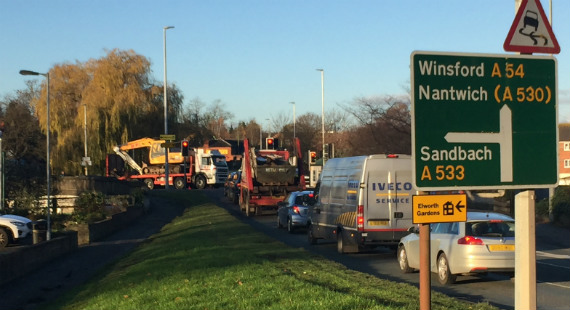
In June the DfT announced a Structures Fund (in title case) as part of a £1bn package that also included £590m for the Lower Thames Crossing (LTC).
That same month, the 10-year infrastructure strategy said the government was “investing £1 billion to enhance the road network and create a new Structures Fund that will repair major structures like bridges, flyovers and collapsed roads”.
That billion could include the £590m for the LTC, which is part of the overall road network, although that would involve an element of double counting as that sum is promised elsewhere in the strategy.
But this is where it gets murky. In its July press release, the DfT said it was “providing £1 billion to enhance the local road network and create a new structures fund”.






 Transport Insights
Leave a comment