Transport Insights

The transport stories you won't see in the industry-friendly media

Author

Chris Ames
  • Lightwood tells Hendy: we can’t give rail the cash it needs

    Transport minister Simon Lightwood has contradicted fellow minister Lord (Peter) Hendy’s patently untrue claim that the government is “backing rail with the funding needed”.

    In reply to a parliamentary question, once again from Tory Richard Holden, about the Ely Area Capacity Enhancements scheme, Lightwood said:

    Secretary of State set out the schemes that have been prioritised for the Spending Review period in her 8 July announcement and made clear that other schemes would be kept under review as part of our pipeline for potential progression in future as funding becomes available.

    Network Rail, which Hendy used to run before becoming the rail minister, says:

    The railway through Ely is a vital part of the rail network. It includes a busy junction where five railway lines converge and is currently operating at full capacity. This is limiting the opportunity for growth of important routes for passenger and cross-country freight services.

    Now, it may be a sensible approach to acknowledge that you don’t currently have the money do everything that needs doing. But, as I noted earlier this week, Hendy claimed that:

    The Government … is backing rail with the funding needed.

    How can you have schemes waiting for funding to become available at the same time as providing all the funding needed?

    Leave a comment

  • Council road schemes and broken bridges to share £1bn

    Funding for local road enhancements and repairing thousands of “run-down bridges, decaying flyovers and worn-out tunnels” over the next four years will be equivalent to the cost of one major project on the strategic road network.

    The Department for Transport (DFT) has clarified its botched press release in June about cash for England’s road network, explaining that while the £1bn in the headline ­will not be used for the Lower Thames Crossing (LTC), it will have to cover both “local highway enhancement projects” and a new Structures Fund.

    The department will still not say how much of the £1bn is for enhancements to local roads under the Major Road Network (MRN) and Large Local Majors (LLM) funding streams and how much is for repairing dodgy structures, but it’s unlikely to do much on either front.

    The original announcement referred to “major investments to improve vital road structures”, with approximately 3,000 bridges currently unable to support the heaviest vehicles, with the package also including £590m to take forward the LTC.

    It made no reference to enhancement schemes on local roads, but was very much focused on making “vital road structures…both more resilient to extreme weather events and to the demands of modern transport”.

    In a further announcement in July, the DfT claimed in July to have “green-lit” 28 local road enhancement schemes, referring to:

    £1 billion to enhance the local road network and create a new structures fund

    As I wrote last week, roads minister Simon Lightwood told shadow transport secretary Richard Holden in a parliamentary written answer that £24bn capital funding for roads over the next four years:

    includes £1 billion for key local highway enhancement projects and a new Structures Fund for repairing run-down bridges, decaying flyovers and worn-out tunnels.

    The DfT has now confirmed that the £1bn covers the Structures Fund and enhancement schemes on local roads, with an additional £590m specifically for developing the LTC.

    It’s not clear why Lightwood thought the £1bn was something to boast about as it is the same as the estimated cost of just one of National Highways enhancement schemes – the A428 Black Cat to Caxton Gibbet.

    (more…)

  • Bike theft claims require further investigation

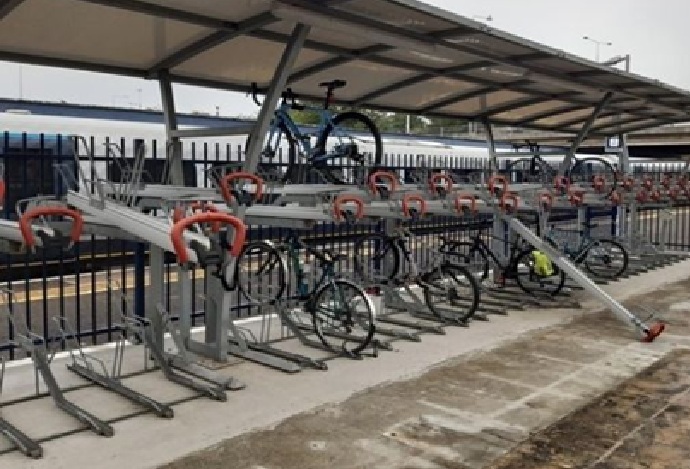
    A transport minister has tried to quash the story that British Transport Police (BTP) will not investigate bike thefts outside stations where the bicycle has been left for more than two hours.

    BTP have themselves tried a few times to counter the story, which appears to have first appeared in a report earlier this month from the BBC’s Tom Edwards.

    Critics say the BTP policy means those facilities are not secure and theft has effectively been decriminalised.

    The BTP said: “The more time our officers spend reviewing CCTV… the less time they have available for patrolling railway stations and trains, investigating crimes which cause the most harm.”

    The problem with the story is that even though the online version had a shot of a document headed “Volume Crime Assessment Factors” that referred to “if the cycle has been left outside the location for over 2 hours”, it wasn’t clear whether this was fully determinative, or, as the word suggests, a factor to be taken into account.

    (more…)
  • ORR praises National Highways as casualties increase

    As National Highways’ safety record gets worse, the spin from both the company’s chief executive and its regulator continues.

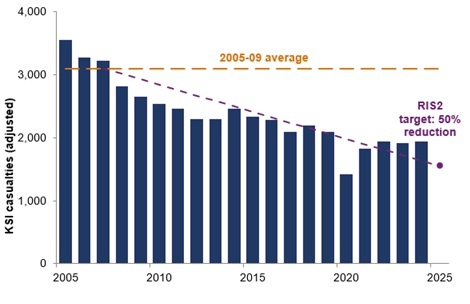
    The latest government data shows that 1,931 people were killed or seriously injured (KSI) on the strategic road network (SRN) in 2024. This is an increase of 23 people (1%) compared to 2023.

    So the number of KSIs is going up when it is supposed to be going down.

    In a blog post, the Office of Rail and Road (ORR) notes that this is 38% below the (2005-09) baseline against which National Highways is required to achieve a 50% reduction by the end of this year, “which means that National Highways needs to achieve a further reduction of 12 percentage points (381 KSI casualties) if it is to achieve its target”.

    The ORR says:

    The latest figures confirm that it is now almost certain the target will not be met.

    Note that the regulator says the target will not be met, rather than that National Highways will miss the target.

    (more…)
  • Making it up as they go along

    A fascinating exchange between two lords has shown the shallowness of the government’s approach to investing in the railways.

    Veteran LibDem peer Lord Rennard asked His Majesty’s Government:

    what assessment they have made of the benefits of expanding local rail services to local economies, and of increasing rail services into cities to reduce road congestion, improve air quality and reduce carbon emissions.

    The reply from transport minister Lord Hendy was basically that the question only arises if civil servants have a specific proposal in front of them, rather than taking a strategic approach, or for example when they have already decided that a major road scheme is the answer:

    Assessments of the benefits of expanding local rail services to local economies, and of increasing rail services into cities, are assessed on a case-by-case basis to reflect local economic conditions, using Transport Analysis Guidance (TAG).

    Expanded local rail services can help drive local economic growth by opening up new development opportunities, unlocking housing, reducing costs for businesses and supporting people into work. 

    Hendy’s answer then descended into something between wishful thinking and lying:

    The Government recognises the crucial role rail plays in delivering these benefits and is backing rail with the funding needed. The 2025 spending review committed £10.2 billion provided for rail enhancements in the period over the next four years.

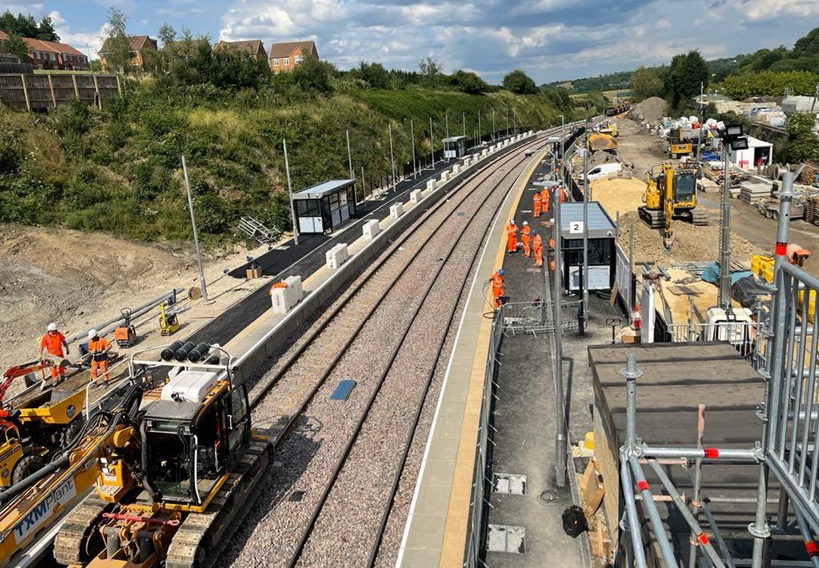
    So let’s take the proposed upgrade at Ely Junction, a rail enhancement that everyone thinks would make a difference to freight and passengers services.

    (more…)

  • Airport expansion “risks lose-lose”

    A parliamentary committee has published a report on the government’s plans to add more airport capacity, the gist of which is that both the economic case and the climate impact are distinctly dodgy.

    It follows ministers talking up plans to add a new runway to Heathrow, despite claiming that it will “only go ahead if it aligns with our legal obligations on climate change”.

    Adding to the scepticism from Transport Committee chair Ruth Cadbury that I reported on Wednesday, the Environmental Audit Committee states starkly:

    Whilst the Government support for airport expansion has been largely based on its expectation of economic growth, the Government has been unable to direct the Committee to any evidence that supports its assertion.

    On climate change, the committee says:

    The mitigation measures the Government is relying on to decarbonise the industry, primarily Sustainable Aviation Fuel, efficiency savings and emissions offsetting, each have their limits. However, the Government has so far not factored in these limitations. This leaves substantial risk to the UK target of Net Zero by 2050.

    Summing it all up, it says:

    The Government is yet to set out how it will ensure climate, environment and biodiversity targets can be delivered whilst consenting to airport expansion; and what level of economic growth the UK can expect from this significant infrastructure development.

    (more…)

  • Council’s credibility goes down the drain

    Richmond Council’s statement that it had withdrawn a fine against a woman who poured coffee down a drain, while still alleging that she had committed an environmental offence, leaves many questions unanswered, including the question of defamation.

    In brief, if the drain (gully) discharges into the combined sewer system, any coffee poured into it would end up in the same place as coffee tipped down a nearby sink. If however it goes into a nearby watercourse, there is a lot more to worry about than a small amount of leftover coffee.

    In revealing that it had revoked the fine against Burcu Yesilyurt, the council doubled down on its claim that she had committed an offence under Section 33 of the Environmental Protection Act 1990, which, as the BBC says, “makes it an offence to deposit or dispose of waste in a way likely to pollute land or water, including pouring liquids into street drains”:

    It is likely that, had this case progressed through that route, the notice would have been rescinded because it is a minor contravention which the recipient agreed not to repeat.

    The council also told the BBC that it is:

    committed to protecting Richmond’s waterways

    The implication of all this is that the gully discharges into a waterway, rather than a combined sewage system. But when I asked Richmond Council’s press office to clarify this, they refused to answer.

    (more…)

  • Severn Bridge is safe, National Highways protests…too much

    National Highways has blamed the wrong kind of traffic as it insists that the sixty-year-old Severn Bridge is safe, while bringing in some fairly drastic measures just to allow HGVs to use it.

    Goods vehicles weighing over 7.5 tonnes are currently not allowed on the bridge – now redesignated the M48 – but are diverted onto the M4 Prince of Wales bridge.

    The problem is the continued corrosion of the cables that hold up the bridge decks, first discovered in 2006, which led to vehicles above 7.5 tonnes being banned from the outside lane in order stop having two lanes of heavy vehicles stuck on the bridge if an incident occurred.

    Follow-up monitoring, which I witnessed in late 2020, found the problem had got quite a lot worse, leading to an outright ban on HGVs.

    National Highways has now announced its preferred solution (of two) for the medium term, while it explores longer-term options.

    (more…)

  • Heidi hits the greenhouse gas on Heathrow expansion

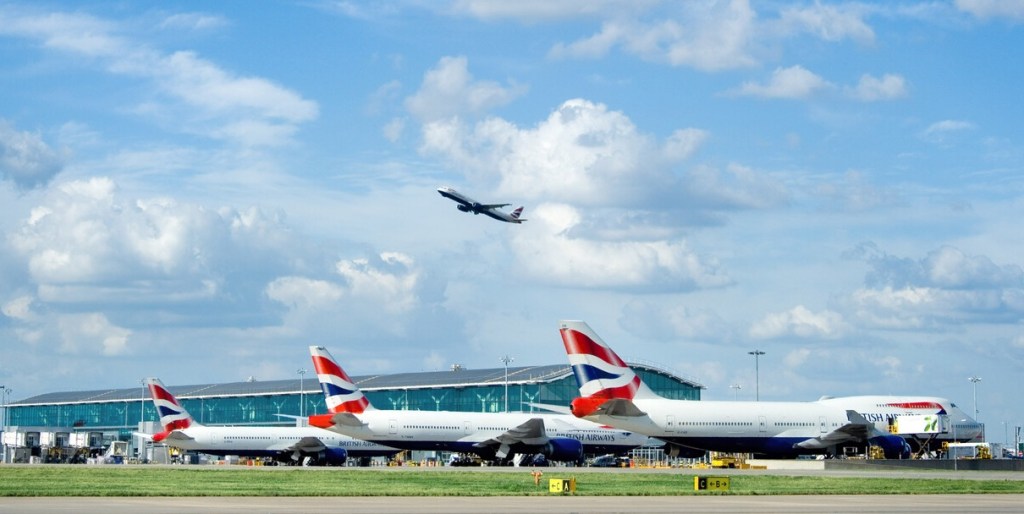
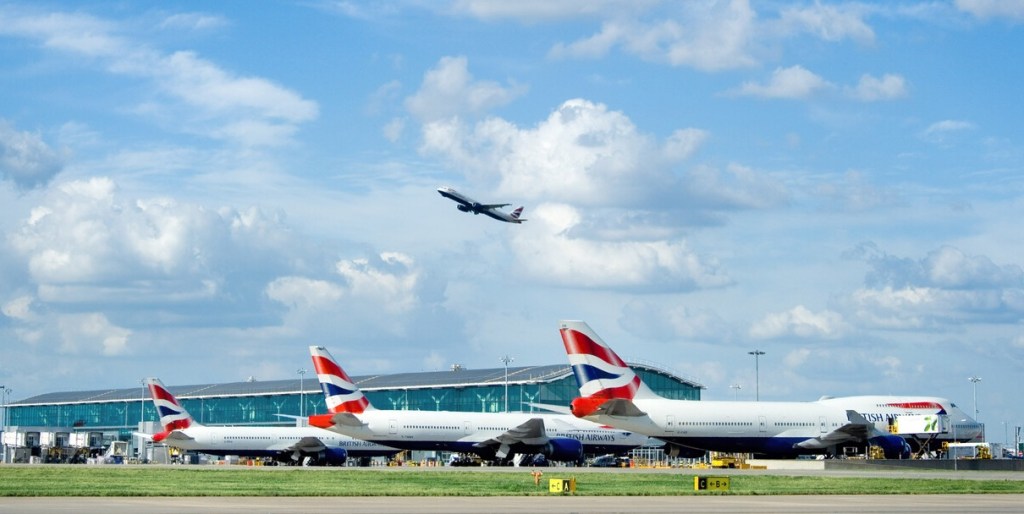
    With ministers spinning a review of airports policy as bringing a third runway at Heathrow “one step closer to take-off”, the chair of the Commons Transport Committee has welcomed the move as bringing a dose of reality to the climate-damaging plan.

    Transport secretary Heidi Alexander launched a previously promised review of the Airports National Policy Statement (ANPS), which her department said “will provide the framework within which any future expansion will be considered”.

    The Department for Transport said a draft ANPS will be published for consultation by summer 2026 “so that a decision can be made on a third runway by the end of this parliament to realise the government’s ambition of seeing flights take off from a new runway by 2035”.

    It issued a press release full of quotes about backing builders, not blockers, signalling that it sees the outcome of the review as a forgone conclusion.

    image: Heathrow Ltd

    But Transport Committee chair Ruth Cadbury sees things rather differently:

    (more…)

  • New HS2 delay “is good news”

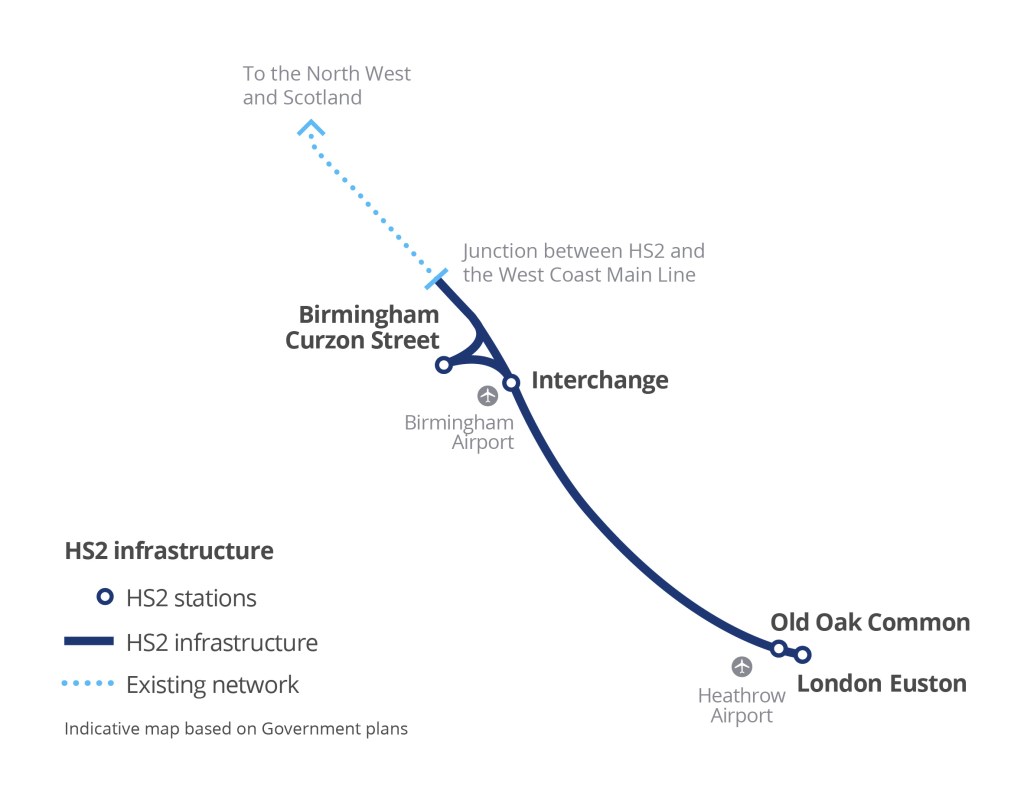
    The FT (paywall) is reporting that HS2 Ltd is further delaying the planned link between the bit of the high speed railway that survived Rishi Sunak’s cull and the West Coast Main Line (WCML).

    When Rishi Sunak scrapped the second phase of HS2 in October 2023, the extension to Handsacre (via Birmingham and direct) became part of Phase One as a compromise, albeit one that would potentially worsen congestion on the WCML.

    The plan was to allow HS2 trains to join the WCML at Handsacre Junction, just north of Lichfield in Staffordshire, from where they could continue towards the North West and possibly Scotland.

    But work was deferred.

    Now, in a move attributed to a reset of the project under new CEO Mark Wild, the company building the high speed railway has said the link will be deferred further:

    (more…)

Subscribe

Subscribe to get our the latest stories in your inbox.