It’s great to see another rail service (London to Essex c2c services) return to public control, with the Department for Transport (DfT) highlighting – somewhat unconvincingly – the potential savings to the taxpayer.
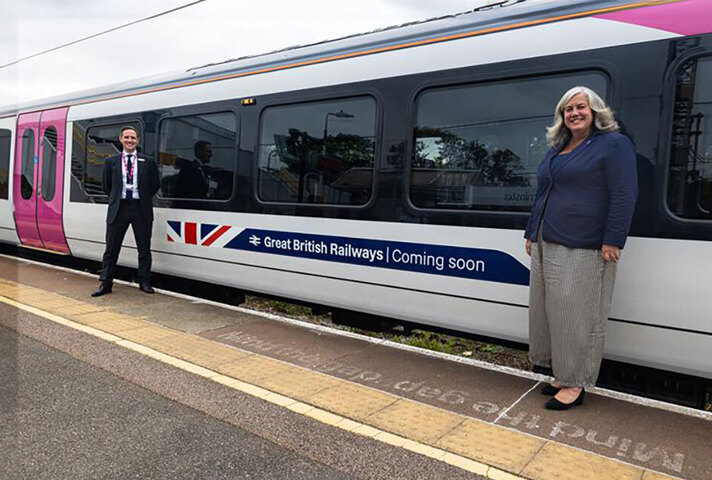
In an announcement on Sunday, the DfT described the development, under the Public Ownership Act, as a “step towards Great British Railways” but it’s very much Labour’s version of Great British Railways.
When I hear the name, I can’t help remembering that it’s Grant Shapps’ bullshit branding – basically British Rail with “Great” at the front and “ways” at the back. What a difference adding two carriages to the set makes.
The Shapps version was the integration of track and train without nationalising the train operating companies, which leaves the DfT claiming that both public ownership of c2c and the company’s already popular services are “driving growth”.
Cutting corporate carbon emissions is one KPI where the company has failed and failed badly; it’s also a measure where I have been tracking the moving of the goalposts for sometime, and have indeed contributed to the moving of the goalposts.
In 2023 I reported that the company was claiming to have a mechanism for reporting against its target of a 75% cut against a 2017-18 baseline that amounted to a one-way bet. The expected cut was mainly because the expected decarbonisation of electricity from the grid.
National Highways claimed to have reached a backroom deal with the government whereby its emissions were based on forecasts of the carbon intensity of electricity, even if they had been proved wrong.
This was news to the government and a few months later it announced that the calculation methodology would remain based on actual emissions, but the target would be reduced to a 67% cut. It said this wouldn’t make the easier to achieve, which was an interesting spin to say the least.
The latest ORR report notes that last year the government reduced the target again – to 56%. But…
At the end of RP2, National Highways achieved a 51% reduction in its corporate carbon emissions compared to the baseline. Therefore, the company did not meet this KPI target of a 56% reduction for the road period.
And the ORR notes that it challenged National Highways to speed up its move to LED lighting but it refused. So it ended up with a 51% cut against an original target of 75%.
National Highways delivered just three quarters of the actions in its secret “Enhanced Safety Plan” for the final year of the 2020-25 roads period (RP2) but its regulator has again claimed that the company is “doing everything that it can” to “try and meet” its casualty reduction target, which it is likely to miss badly.
National Highways’ enhanced safety plan set out 43 actions that the company would take to improve safety in the final year of RP2. These actions are in addition to its existing commitments to improve safety that are set out as part of RIS2, and within annual delivery plans.
It revealed that by the end of January/February it had delivered just 22, comprising five road safety schemes, eight communication campaigns and nine ‘working with others’ actions.
The new report discloses that:
At the end of March 2025, the company had delivered 33 actions of the 43 actions that were included in its enhanced safety plan. It plans to deliver eight more by the end of 2025, with one scheme removed from the plan following objections from a local authority. The remaining action is related to the Roads Policing Review and will be taken forward once government publishes its response to the review.
Despite promising to “hold National Highways to account” for delivery of this plan, the regulator praises its efforts:
We consider that, in 2025, the company is doing everything that it can in the final year to try and meet the target…
There is a clear sleight of hand from the regulator in redefining the year that it is talking about, from the final year of RP2 (i.e. 2024-25) to “the final year” of the calendar year 2025, by the end of which serious casualties should be down by a half.
However, further to my post earlier today, the ORR seems to have dropped the claim that the 43 actions were “additional” to existing plans. I have asked it if it now accepts that it cannot verify this.
All five road safety schemes that National Highways actually delivered under its “enhanced safety plan” for the last year of the second roads period fell under an existing safety programme, with no evidence that they were “beyond its previously planned activities”, as required by the company’s regulator.
But the Office of Rail and Road (ORR), which demanded that the company produce the “enhanced plan” to address its poor casualty reduction record, failed to carry out any checks to ensure the actions were genuinely additional.
In fact, both the company and the regulator have insisted (without evidence) that the actions in the enhanced safety plan, which was given to the ORR in March 2024, were “additional” to National Highways’ 2024-25 Delivery Plan Update, which was not published until this March and does not list specific activities.
National Highways appears to have actually cut the funding available for safety improvements at the end of the whole 2020-25 roads period, including the year covered by the plan.
The disclosure casts further doubt on the competence of the ORR and its willingness to hold National Highways to account, as it claims to do, after it refused to publish the plan but praised the company for “doing everything it reasonably can” to address its failing safety record.
The annual assessment, which is the ORR’s review of Network Rail’s performance during the first year of the five-year control period 7 (CP7), says up front:
As we noted in our final determination for CP7, funding is constrained, reflecting wider fiscal conditions. In planning for this control period Network Rail has had to make choices about how expenditure should be prioritised to deliver best value for the railway now and in the future. Constrained funding means that Network Rail will be spending less on renewals and more on life-extending repairs and maintenance in CP7 than in CP6. As such, Network Rail forecasts a small reduction in the residual life of its assets, which will require effective risk management activities to be identified and implemented.
As a result our monitoring of Network Rail for this control period is focussed on these risks, which if not effectively managed could result in a deterioration of train service performance in the latter part of the control period, will make delivering train performance very challenging for Great British Railways in the next funding period, and will lead to inefficient spend on infrastructure in the future.
The closest the press release comes to addressing this is an opaque quote from chief executive John Larkinson:
Another detail from National Highways’ Interim Period Delivery Plan April 2025 – March 2026 is that the government has given the company that it owns an even lower target for customer satisfaction, based presumably on its failure to get anywhere near the original target for the 2020-25 road investment strategy (RIS 2).
This compared against a target of 82% road user satisfaction score in 2020-21 and 2021-22, with year-on-year increases in following years, which was downgraded to 73% in 2023-24 and then 71% in 2024-25.
The new KPI target is 69.6%.
So the pattern appears to be that National Highways falls 2% below its target, which is then adjusted for the next year to match performance, and then National Highways falls 2% below the new target.
National Highways will deliver very little by way of actual safety improvements on its network during the current financial year, and appears determined to delay admitting publicly that it has dropped its 2040 “Zero Harm” target.
The government-owned company has published its Interim Period Delivery Plan April 2025 – March 2026, where the word interim reflects the fact that it is operating during the year between road investment strategies.
The document also includes (as an annex) a safety action plan, which existed before the delivery plan but which National Highways, the Office of Rail and Road, and the Department for Transport all refused to publish in the meantime.
The delivery plan states that the company will spend “up to” £32m on network interventions to improve safety on high-risk roads, including post collision response and suicide prevention. I wonder if that figure may end up being reduced by “up to” 50% as dodgy retailers would say.
But the lack of commitment in the safety action plan to actual action is astonishing. It states “5 to 7 no. safety designated fund schemes”. This compares with 76 between 2020 and 2025.
Local news outlets in the North East are reporting a potentially huge scandal over a recently cancelled National Highways scheme, with a shocking tale of deceit potentially involving the government-owned company, the previous (Tory) government and the Office of Rail and Road (ORR).
Department for Transport staff were ordered to stop working on plans to dual the A1 in Northumberland back in 2021 – three years before it was approved by the Conservative Government, leaked documents have revealed.
And:
…during the 2021 Spending Review the funding for the scheme was “withdrawn” and the plan was “deprioritised”. The report adds: “The funding decision was not made public, but we instructed National Highways to cease work on the scheme.”
In another twist on this story, the Chronicle notes that the scheme was included in the Network North announcement following the cancellation of the northern leg of HS2.
This goes some way to explaining something that baffled me at the time. In October 2023 I reported that:
…the A1 scheme is described in the current RIS programme as a ‘committed’ scheme. As part of the process of seeking a development consent order (DCO), National Highways submitted a document to the Planning Inspectorate (PINS) asserting that the scheme was funded.
However, as Highways has reported, the scheme has been held up by repeated delays from ministers. So far there remains an unpublished recommendation from PINS.
In its annual assessment of National Highways 2022-23, the Office of Rail and Road noted that the scheme should have started work during that year but was delayed by ministers’ postponement of the DCO decision.
Perhaps the most shocking revelation from the latest Strategic Roads User Survey (SRUS) annual report from “independent” watchdog Transport Focus is the inclusion of a “commentary” from National Highways in which it declares the two organisations to be in a “partnership”.
In the report itself, Transport Focus takes the same line as the government-owned company that it is supposed to be keeping tabs on – that a further fall in overall satisfaction from 71% to 69% is not the continuation of a trend (it is) but is related to roadworks to deliver the National Emergency Area Retrofit (NEAR) programme.
Here is what Transport Focus had to say:
Our analysis indicates a key part of the decrease in overall satisfaction has been the roadworks to deliver the National Emergency Area Retrofit (NEAR) programme.
And here is National Highways’ commentary:
Our 2024/25 customer satisfaction score is 2.4 per cent lower than the same period last year. This reflects the impact of major improvement works across the network – especially the National Emergency Area Retrofit programme – which have temporarily disrupted journeys.
Whether the boost is new is always the first question, with the age-old tradition of announcing a funding envelope and then each tranche of funding from it as a separate “new” boost.
Image: DfT
It looks as if the £63m is drawn from the “£200m for charging infrastructure” announced in the Autumn budget.
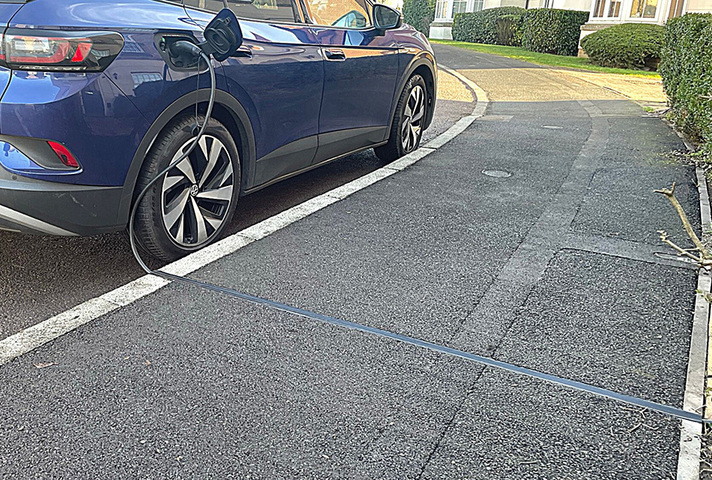
The details are quite vague: £25m for local authorities, £8m for the NHS and the rest apparently for a “major new grant scheme to help businesses install charging points at depots nationwide”, which the government says it “is launching” but only on the basis that it intends to launch it.
The money is said to “build on” – implicitly to be additional to – the “£400 million announced in the Spending Review to support charging infrastructure, including on the strategic road network”, or rather the redirected portion of the £950 rapid charging fund that Labour scrapped.




 Transport Insights
Leave a comment