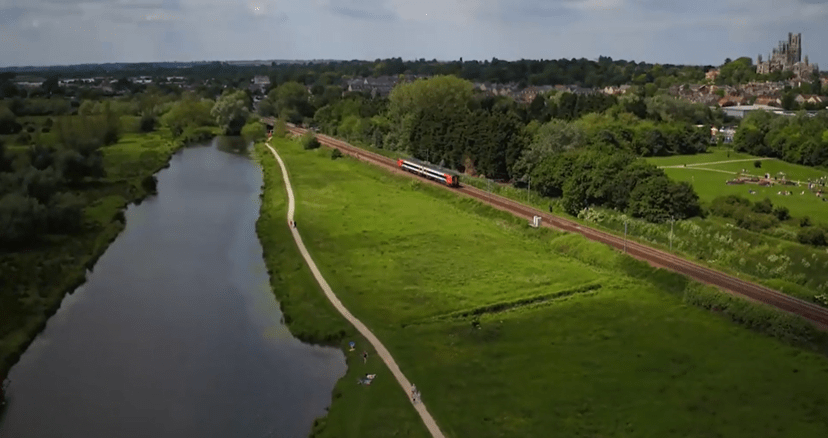
The Department for Transport (DfT) has rowed back on an apparently false claim from a minister that the previous government “closed” the Ely Area Capacity Enhancements rail scheme.
As I noted last week, roads minister Simon Lightwood stated in a written parliamentary answer that:
The Ely Area Capacity scheme was closed by the previous government…
This was inconsistent with what has been said elsewhere, including by Lightwood, and Network Rail considers the scheme to be awaiting a funding decision.
I asked the DfT to clarify Lightwood’s claim that the scheme had been “closed”.
It did not do so. Instead, a spokesperson told me:
We recognise the importance of the Ely Junction scheme, and we fully anticipate it will be part of a pipeline of projects to be considered as part of future funding decisions.
There is a strong case for Ely Junction, and we are committed to working with a broad range of stakeholders to support its inclusion in the future pipeline.
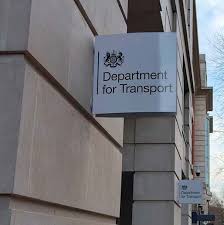
I will be taking part in an event at the Department for Transport on Wednesday to highlight the continuing suppression of evaluation reports on the safety and effectiveness of smart motorways and to call on ministers to release them in the name of transparency.
I revealed in September that ministers are sitting on a huge amount of data on the controversial schemes, in the form of multiple post opening project evaluation (POPE) reports, including at least nine that were due for completion in 2022.
When the five-years after POPE on the scheme to convert the M1 between junctions 10 and 13 to dynamic hard shoulder was published in September 2021, it revealed that it had cost the economy £200m instead of a projected benefit of £1bn, because it slowed traffic down. It made national news.
The event is a collaboration between myself and Claire Mercer of the Smart Motorways Kill campaign, who has done most of the work.
Confirmed attendees at the event include her MP, Sarah Champion, and crash survivor Jack Gallowtree, as well as representatives from road safety and motoring groups.
Irrespective of what you think about smart motorways, as the official press release puts it:
The event’s purpose is to shine a spotlight on the years of delay and lack of transparency surrounding these critical reports. Campaigners are urging the DfT and National Highways to release all outstanding POPE evaluations, answer questions, and ensure that lessons are learned to improve future road safety and infrastructure planning.
Who could argue with that?
The event will include a demand to “Release the POPE”, a playful reference to the occasions in the past when the pontiff has been captured, including following the 1527 sack of Rome.
Expected to be a lot more orderly, it will take place at the Department for Transport, 33 Horseferry Rd, London, SW1P 4DR at 12:15pm on Wednesday 5 November.
There won’t be fireworks, but we hope ministers will feel the heat over the continued cover-up.
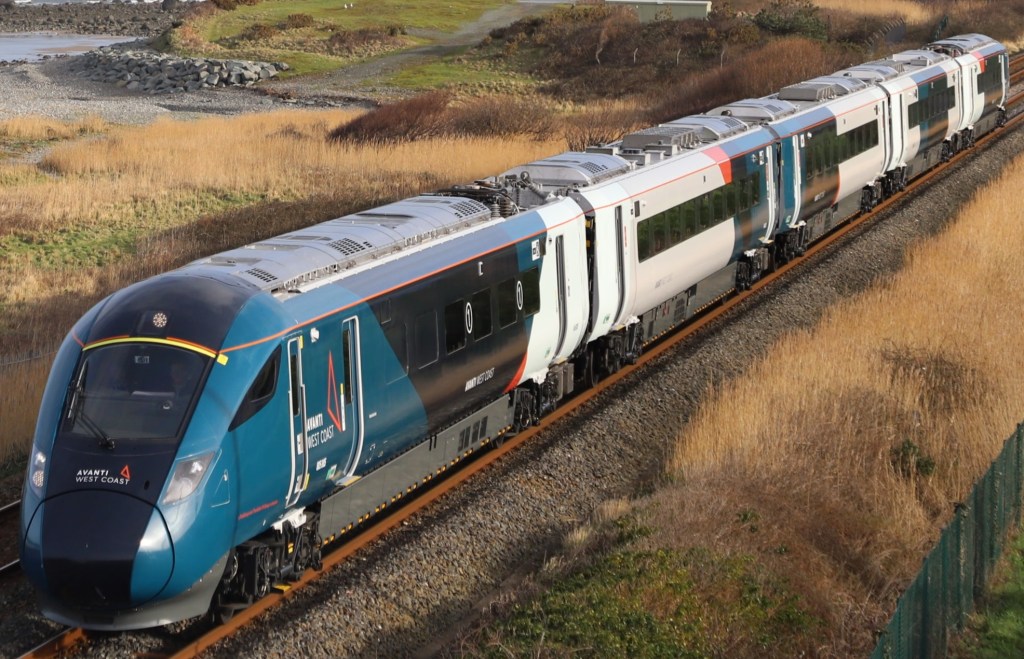
With rail getting all the funding it needs, the local LibDem MP has used the derailment of a passenger train in Cumbria to highlight the risk of landslips on the rail network as climate change increases the risks.
A high-speed Avanti West Coast train said to be travelling at around 80mph partly derailed after hitting a landslide in Cumbria early this morning.
The operator said all 86 people plus its train crew were evacuated to a nearby hotel and were were assessed by paramedics, with four treated for minor injuries but none requiring hospital treatment.
Former LibDem leader Tim Farron called for an investigation into whether enough resources were being spent on the line.
National Highways has declined to confirm that it will meet a pledge to mitigate by 2030 all outfalls that pose a “high-risk” of polluting the environment with toxic road runoff.
The company has published a document that its director of environmental sustainability, Stephen Elderkin, described on LinkedIn, as “detailing 182 confirmed high priority locations where outfalls or soakaways present a high-risk of pollution”.
But, while the locations are confirmed, the pledge to mitigate them appears far less certain.
The detailed document and map represent the next stage of the government-owned company’s 2030 Water Quality Plan, which:
sets out a high-level programme of work that achieves the plan to mitigate all high risk outfalls by 2030
However, that document also emphasizes that:
Delivery in RP3 will be subject to funding being agreed through RIS3.
Elderkin’s statement National Highways has “committed to mitigate the risk at high-risk locations by 2030 with the installation of new or upgraded treatment facilities” conspicuously lacks the word “all”.
The new document states that it:
contains details of sites confirmed through these processes as having an confirmed risk of pollution at the end of August 2025. These high priority locations include a total of 182 assets.
It adds:
We expect that, in all, approximately 250 outfalls and soakaways will be confirmed as requiring new or upgraded treatment systems by 2030.
While Elderkin stated that:
In total, we expect to deliver improvements to around 250 locations
this is a statement of expectation without a date.
Similarly, the new document conspicuously avoids making firm commitments. It lists for each location:
A transport minister has confirmed that we will be kept in the dark about the costs of individual “enhancement” schemes when the next road investment strategy (RIS 3) is published in March, underlining just how little transparency there is about roads spending.
It follows the Department for Transport (DfT) still refusing to say how much the Structures Fund that it announced in June will actually be worth and how much the four-year budget for local road enhancements will be, even after clarifying that there will be a total of £1bn for both.
The third Road Investment Strategy (RIS3) will be published in March 2026 and will include a total funding line for all enhancements to the strategic road network to be delivered during the period 2026-2031.
This does mean that we will be able to judge whether the DfT has put its money where its mouth is over pledges in the draft RIS of “a greater focus than ever before on the maintenance and renewal of the network”.
Without even a headline figure so far for the cost of enhancements, or even the capital/resource split in the £25bn five-year budget, it is impossible to judge this pledge.
A minister’s answer to a parliamentary question this week includes a claim that appears to be untrue but would be just as controversial if it were true.
I wrote yesterday about Simon Lightwood’s response to a parliamentary question from shadow transport secretary Richard Holden, about the Ely Area Capacity Enhancements scheme, making the point that Lightwood contradicted rail minister Peter Hendy’s claim that the government is “backing rail with the funding needed”.
The Ely Area Capacity scheme was closed by the previous government and it has not been possible to reprioritise it at the most recent Spending Review.
Firstly note that Lightwood’s claim that is has not been possible to fund the scheme, which again gives the lie to Hendy’s claim.
But Lightwood also claimed that the Tories had “closed” the scheme.
Although it is true that neither Labour nor the Tories have provided funding for the scheme, this claim is not matched by information in the public domain.
Thames Water has joined Richmond Council in refusing to say where road runoff goes next from a gully into which a resident famously poured a small amount of coffee, raising concerns that toxic pollution may be flowing unmitigated into the river whose name the company bears.
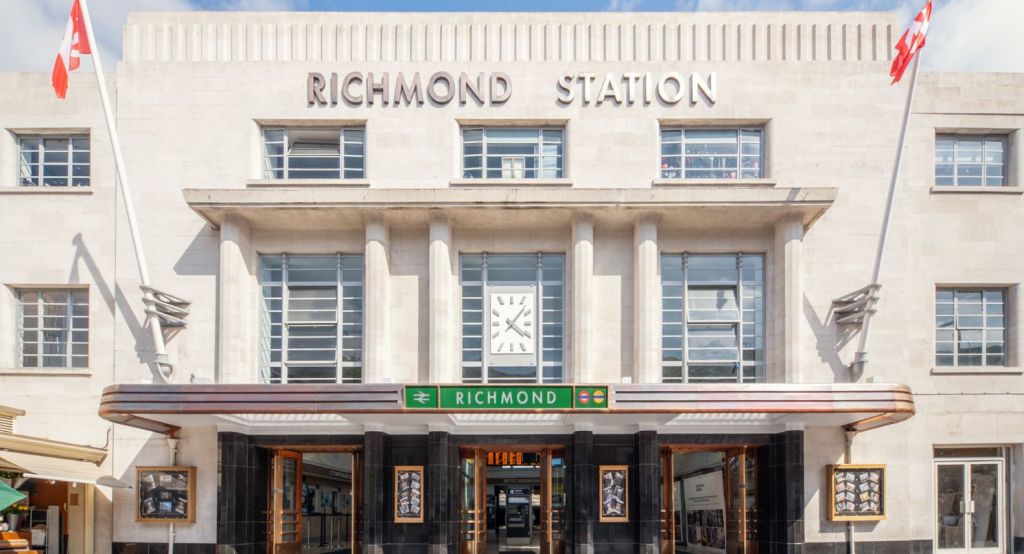
The highway authority made national headlines when its enforcement officers fined Burcu Yesilyurt £150 for pouring a small amount of coffee down the gully outside Richmond Station, only to rescind the fine on the grounds that she had only committee a minor contravention of Section 33 of the Environmental Protection Act 1990.
The reality is that, aside from the small amount of a relatively innocuous liquid, whether it was “likely to pollute land or water” would depend on what the gully drains into.
This would either be into the combined sewer system or a surface water only sewer, both likely operated by Thames Water.
If the former, there is no pollution risk; if the latter, the pollution risk would pale into insignificance compared with the risk from other runoff from the road, including oil spills, particulate matter and microplastics from tyre and brake wear.
With Richmond Council refusing to tell me, I asked Thames Water, who also refused to say but didn’t deny that it was its sewer.
This is an astonishing situation where two major organisations, one a public authority and one a private company fulfilling a public function, are refusing to be straight with the public about a matter of significant public concern.
Transport minister Simon Lightwood has contradicted fellow minister Lord (Peter) Hendy’s patently untrue claim that the government is “backing rail with the funding needed”.
In reply to a parliamentary question, once again from Tory Richard Holden, about the Ely Area Capacity Enhancements scheme, Lightwood said:
Secretary of State set out the schemes that have been prioritised for the Spending Review period in her 8 July announcement and made clear that other schemes would be kept under review as part of our pipeline for potential progression in future as funding becomes available.
Network Rail, which Hendy used to run before becoming the rail minister, says:
The railway through Ely is a vital part of the rail network. It includes a busy junction where five railway lines converge and is currently operating at full capacity. This is limiting the opportunity for growth of important routes for passenger and cross-country freight services.
Now, it may be a sensible approach to acknowledge that you don’t currently have the money do everything that needs doing. But, as I noted earlier this week, Hendy claimed that:
The Government … is backing rail with the funding needed.
How can you have schemes waiting for funding to become available at the same time as providing all the funding needed?
Funding for local road enhancements and repairing thousands of “run-down bridges, decaying flyovers and worn-out tunnels” over the next four years will be equivalent to the cost of one major project on the strategic road network.
The Department for Transport (DFT) has clarified its botched press release in June about cash for England’s road network, explaining that while the £1bn in the headline will not be used for the Lower Thames Crossing (LTC), it will have to cover both “local highway enhancement projects” and a new Structures Fund.
The department will still not say how much of the £1bn is for enhancements to local roads under the Major Road Network (MRN) and Large Local Majors (LLM) funding streams and how much is for repairing dodgy structures, but it’s unlikely to do much on either front.
The original announcement referred to “major investments to improve vital road structures”, with approximately 3,000 bridges currently unable to support the heaviest vehicles, with the package also including £590m to take forward the LTC.
It made no reference to enhancement schemes on local roads, but was very much focused on making “vital road structures…both more resilient to extreme weather events and to the demands of modern transport”.
In a further announcement in July, the DfT claimed in July to have “green-lit” 28 local road enhancement schemes, referring to:
£1 billion to enhance the local road network and create a new structures fund
As I wrote last week, roads minister Simon Lightwood told shadow transport secretary Richard Holden in a parliamentary written answer that £24bn capital funding for roads over the next four years:
includes £1 billion for key local highway enhancement projects and a new Structures Fund for repairing run-down bridges, decaying flyovers and worn-out tunnels.
The DfT has now confirmed that the £1bn covers the Structures Fund and enhancement schemes on local roads, with an additional £590m specifically for developing the LTC.
It’s not clear why Lightwood thought the £1bn was something to boast about as it is the same as the estimated cost of just one of National Highways enhancement schemes – the A428 Black Cat to Caxton Gibbet.
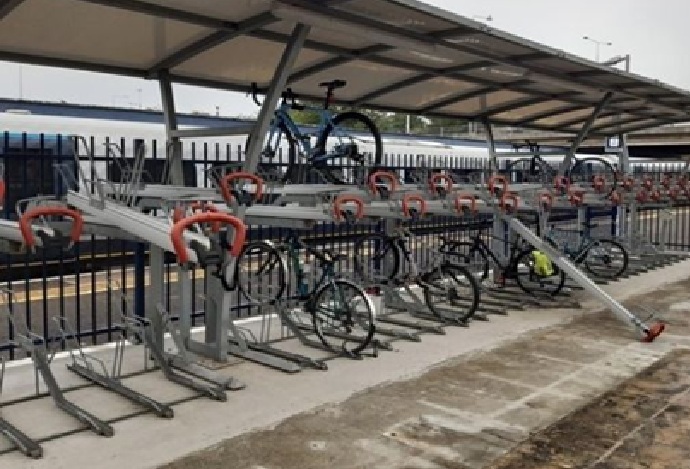
A transport minister has tried to quash the story that British Transport Police (BTP) will not investigate bike thefts outside stations where the bicycle has been left for more than two hours.
BTP have themselves tried a few times to counter the story, which appears to have first appeared in a report earlier this month from the BBC’s Tom Edwards.
Critics say the BTP policy means those facilities are not secure and theft has effectively been decriminalised.
The BTP said: “The more time our officers spend reviewing CCTV… the less time they have available for patrolling railway stations and trains, investigating crimes which cause the most harm.”
The problem with the story is that even though the online version had a shot of a document headed “Volume Crime Assessment Factors” that referred to “if the cycle has been left outside the location for over 2 hours”, it wasn’t clear whether this was fully determinative, or, as the word suggests, a factor to be taken into account.




 Transport Insights
Leave a comment