Transport Insights

The transport stories you won't see in the industry-friendly media

Author

Chris Ames
  • Alexander the not-so-great botches West Midlands Metro extension

    The Express and Star reports that:

    The Midlands Metro tramline will open for passengers in Dudley at the end of August – more than two years late.

    At a meeting of Dudley Council’s Communities and Growth Scrutiny Committee, council leaders faced questions on what help was available for traders affected by the delayed works.

    The Metro had been earmarked for a 2024 opening and later for a launch in the autumn of 2025. It was later announced the opening would be delayed until the start of this year.

    The extension to Dudley is the first phase of the Wednesbury to Brierley Hill extension, which is being built by the Midland Metro Alliance (MMA) on behalf of Transport for West Midlands (TfWM).

    Last October MMA said:

    Work on the first phase of the route, between Wednesbury and Dudley town centre, is nearing completion ahead of opening next year

    TfWM has now confirmed in a statement to journalist Peter Plisner:

    (more…)

  • Mayor welcomes NPR funding cap

    I’ve been looking at one of the so-called “compact agreements” on how central government and northern mayors “will collaborate to deliver the next stage of Northern Powerhouse Rail (NPR)” and wondering if it is less of an agreement and more of a collective whistling to keep their spirits up.

    For a start, the agreements in fact cover several future stages of NPR and that’s really the point as ministers have chosen to chop the project into chunks to be delivered consecutively.

    An then the agreement between transport secretary Heid Alexander, chancellor Rachel Reeves, communities secretary Steve Reed, and – last but not least – West Yorkshire mayor Tracy Brabin opines:

    We welcome the £1.1bn funding allocated for NPR development in this Spending Review period, allowing development work for the first two phases to proceed without delay, and the certainty implied by the funding cap of £45bn for the overall NPR scheme, which will guide development and future delivery.

    So three cabinet ministers and one mayor, who is definitely not in a hostage situation, applaud a relatively small amount of development cash allocated by central government and a promise not to spend more than a specified amount, in place of substantive funding.

    The agreement goes on to explain:

    (more…)

  • Taxpayers to cough up even more for “privately funded” Thames Tunnel

    The Times story on the Lower Thames Crossing raises further doubts that the £11bn project will be privately financed, even beyond the £3bn that the taxpayer is due to put in before anything happens.

    The taxpayer is set to lose net income of at least £120 million a year as a result of the financial arrangements for a new road tunnel under the Thames, The Times can reveal.

    Government plans for the Lower Thames Crossing are built on handing the revenues from the existing tolls on the Dartford Crossing to a new private operator, which will be allowed to keep them in perpetuity.

    My take on this is that if you are diverting £120m of revenue annually and for ever to pay for a project, you are at least partially funding that project (again, beyond the £3bn) and no amount of smoke and mirrors can disguise that.

    The Times reports that:

    Under the Transport Act 2000, these revenues go directly to the DfT, not into the Treasury’s coffers, and must be used for improving transport. The DfT did not respond to TAN’s question as to whether this income would be “included in DfT’s future budgets as a loss” or if it had been factored into the cost-benefit analysis for the Lower Thames project. The DfT also declined to answer similar questions from The Times.

    This is clear obfuscation from the DfT but, whether the money is a hit to the transport budget or will be refunded by the Treasury, it’s taxpayers’ money.

    Elsewhere in the paper, the piece’s author, Alistair Osborne, comments

    …you’d think that before ministers committed £3.1 billion of taxpayer’s money and started early construction works, they might have bothered to produce a full business case for the link, instead of opting to wait until 2028. Or explained why it’s still a zippy scheme, despite it seeming to fail the DfT’s own “value for money” test. Or actually come clean about the implications of its “preferred financing option”, which would see both the crossing and existing taxpayer income transfer to a private sector owner in perpetuity.

    I made similar observations here last month.

    Having said that, the current revelations on the funding represent great work by TAN (Transport Action Network) and the journalist.

  • Release of POPEs (still) imminent

    With no real sign of the Department for Transport (DfT) allowing National Highways to release the 14 suppressed evaluation reports on smart motorways, the Guardian has picked up on the story:

    Road campaigners and motoring organisations have urged ministers to immediately release a series of “withheld” safety assessments on Britain’s smart motorways – some dating as far back as 2022

    With suggestions that the reports could be released at (last) Christmas having come to nothing, the DfT is still claiming there is nothing to see:

    The Department for Transport has said that the reports, known as Popes (post-opening project evaluations), will be published imminently, and do not undermine the broad case for smart motorways as statistically the safest roads.

    That last bit about a “broad case” is perhaps the key part of the whole article, suggesting that some POPEs may show that individual stretches of motorway have become less safe since the hard shoulder was removed, particularly as they have once again filled up with traffic.

    The article quotes Claire Mercer of Smart Motorways Kill, who has campaigned with me for the POPEs to be released, as saying that:

    If [the reports] showed good news, they’d release them.

    And links to this blog, in which I made a similar point:

    Ames was told that a total of 14 reports would eventually be released before Christmas last year “subject to the DfT agreeing the communications handling plan”. He said the continuing delay suggested the contents “must be really, really bad”.

    Jack Cousens, the head of roads policy at the AA, said: “These safety reports on so-called ‘smart’ motorways have been withheld for far too long, and we urgently need to see them published.”

    He said the reports needed to “show the outcomes of these schemes regardless of their failures or successes”.

    Leave a comment

  • “Better, greener and smaller” but probably not cheaper

    National Highways is spending more than £2m a year on what have been described as “swanky” new offices in Birmingham, a freedom of information request has disclosed.

    It was reported in August 2024 that the government-owned company had agreed a lease on 58,697 sq ft at Three Snowhill, to replace its current HQ at The Cube and other offices at Colmore Square.

    The “anchor tenant” at the building is BT.

    National Highways said at the time that the move would

    bring our Birmingham-based teams together under one roof at a convenient location in the centre of the city enabling better collaborative working and building on the community workplace feel that we have developed. 

    This was said to be part of its

    workplace and location strategy to create better, greener and smaller workplaces.

    Indeed, the Cube alone was 5,196.9 sq m, which translates as 55,936 sq ft.

    Asked for:

    a breakdown of the rental / purchase costs of National Highways head office at Snow Hill Queensway in Birmingham in 2024-2025, and how much has been spent so far per month in 2025-26

    The company replied:

    (more…)
  • Will Lightwood cover for National Highways…again?

    The Department for Transport (DfT) has asked a member of its own board to carry out the “independent” review of the snafu that led to thousands of drivers on smart motorways being wrongly prosecuted, with no guarantee that the outcome will be published.

    It has also admitted that National Highways is still working with the police to implement “a Home Office-approved solution to this issue”.

    The “anomaly” identified was that, while there should be a delay between a variable speed shown on a motorway gantry changing and HADECs cameras detecting vehicles over the new limit, this has not always happened.

    The DfT has claimed that National Highways has identified approximately 2,650 total erroneous activations since 2021, but the terms of reference for the review go back to 2019, when the upgrade of cameras began, “to ensure that everyone who has been impacted is identified”.

    In a written ministerial statement on 16 December, roads minister Simon Lightwood, who has made a career of covering things up since arriving at the DfT, promised ‘an independent investigation into how this technical anomaly came about, to ensure that lessons can be learnt’. 

    Transport Heidi Alexander has now appointed

    Tracey Westall OBE, Non-Executive Director of DfT, to be the lead reviewer for this independent review.

    I’m sceptical of any government appointed review being described as “independent” but appointing a member of the DfT board to lead an independent review invites ridicule.

    The terms of reference include who knew what, when?

    (more…)

  • Shelved but never paused: how the DfT hid defunding of A1 scheme

    The Department for Transport (DfT) has backtracked on its claim that a major National Highways road scheme that it secretly shelved was officially “paused” as a result, which explains why the government-owned company ran up a £70m bill for an “enhancement” that never happened.

    But there remains the scandal of how both National Highways and regulator the Office of Rail and Road (ORR) lied to Parliament and the public by pretending that the A1 Morpeth to Ellingham was going ahead imminently, despite being defunded and deprioritised, and how the ORR falsely attributed a quarter-billion-pound to the shelved scheme.

    The story of the various deceptions perpetrated by these various bodies and how they destroy any pretence that the Road Investment Strategy (RIS) process allows transparency and oversight of National Highways’ enhancements programme is a long and complicated one.

    It begins with a Treasury decision to defund and deprioritise the scheme as part of the 2021 Spending Review (SR21).

    This decision was taken on value for money grounds in a context where National Highways was failing to spend its budget, meaning that the scheme could be afforded but was not cost effective.

    When National Highways became aware of the SR21 decisions, it interpreted them as meaning that the Morpeth to Ellingham scheme was “paused” and said in a February 2022 change control document sent to the DfT that this would be formalised through a separate change control document.

    The DfT has previously insisted that the first change control form formally paused the scheme, which was obviously untrue, but in any case on 31 March 2022 a senior National Highways official told the DfT’s Kate Cohen:

    (more…)

  • Regulator finds holes in Reeves’ pothole cash claims

    The government is having to backtrack on its big announcement about funding for council road maintenance in England “doubling” after I pointed out to the official statistics regulator that it was full of spin.

    My biggest problem with this Treasury Press release in November was that it failed to take inflation into account by stating whether the promised future increase will be in real terms or cash terms.

    Of course it’s in cash terms, which can always be used to make spending increases look bigger than they are in real terms.

    The Office for Statistics Regulation at the UK Statistics Authority agreed with this point and the Treasury has promised to be clearer in future.

    The other main trick that the spin doctors pulled was to compare two individual financial years that were five years apart, i.e. 2024-25 (the last funding settlement determined by the Tories) and 2029-30.

    This meant a degree of cherry picking and using a previous figure rather as a comparator, rather than what would have been spent.

    Note that chancellor Rachel Reeves said:

    We are doubling the funding promised by the previous government

    (more…)

  • Coffee fine council still won’t come clean on road runoff risk

    I have got more information (but not much) from Richmond Council about its farcical decision to fine a resident for pouring the remains of a cup of coffee down a gully, with the upshot being that it really should outright withdraw its claim that an offence was committed.

    Equally important, the point remains that if a small quantity of coffee risks polluting the borough’s waterways, runoff from its own roads is far worse.

    As I have said before, where my request under the Freedom of Information Act should have elicited factual information, the highway authority has responded with PR.

    This has not changed and in particular, very specifically-worded questions have been met with generalisations , obfuscation and wishful thinking, no doubt because the council is aware that it (still) doesn’t have a leg to stand on.

    To recap, in October Burcu Yesilyurt was given a fine by Richmond’s enforcement officers under Section 33 of the Environmental Protection Act 1990, which makes it an offence to deposit or dispose of waste in a way likely to pollute land or water. Although the council rescinded the fine, it still insisted that an offence had occurred.

    I have already established that the gully in question links to a Thames Water surface drainage system, which then flows into the river of the same name.

    This means that, despite being “committed to protecting Richmond’s waterways”, the council is potentially discharging thousands of gallons of contaminated runoff into the Thames.

    The specific question I asked the council was:

    what mitigation is in place to protect Richmond’s waterways from the runoff via gullies on the street in question?

    Despite expressly referencing the street in question, I got a very generic response:

    (more…)
  • Show me the money, Blunkett demands

    The government’s framing of more dither and delay over so-called Northern Powerhouse Rail as an end to dither and delay, alongside a spending cap instead of new money, is breathtaking.

    So far this morning, the Department for Transport (DfT) has issued separate press releases for the North West and for Yorkshire and the North East, with the former (eventually) getting a brand new rail line between Liverpool and Manchester and the latter getting (first) upgrades and electrification between Leeds-Sheffield, Leeds-York and Leeds-Bradford.

    A third phase will focus on improved connections between Manchester and Sheffield, Manchester and Leeds, and explore options for Manchester to Bradford.   

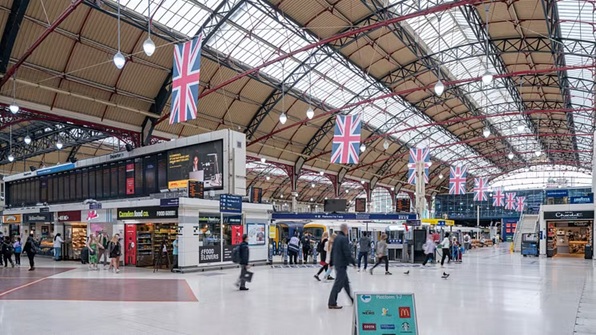
    Manchester Picadilly station

    In an act of ineptitude that seems par for the course for the DfT just now, the press release about Yorkshire and the North East includes the wholly uninspiring image of “Manchester Picadlily Station” replicated here.

    With the Yorkshire part “set to be delivered in the 2030s” and delivery of the second part “starting in the 2030s”, transport secretary Heidi Alexander seems to believe she has Jedi-level powers of misdirection:

    For too long, the North has been held back by underinvestment and years of dither and delay – but that ends now.

    On the funding front:

    (more…)

Subscribe

Subscribe to get our the latest stories in your inbox.