Last week the West Yorkshire Combined Authority (WYCA) responded to the leaking of the secret “peer review” of its plan for trams by claiming the support of the (now defunct) National Infrastructure Commission (NIC) – but what the NIC actually said does not justify this claim.
A quick recap: The House magazine has obtained the review by the National Infrastructure and Service Transformation Authority (NISTA) into WYCA’s mass transit scheme, which was said both to criticise the authority for pursuing “unrealistic milestones” under a “political agenda” and to show buses to be better value for money than trams.
As I reported, in response the WYCA doubled down on mayor Tracy Brabin’s highly performative “spades in the ground by 2028” pledge. But I’ve also obtained its full statement, which both asserts the need for more devolution and invokes the support of the NIC over its insistence on the need for trams, rather than buses.
A spokesperson said:
Delivery of major infrastructure projects in the UK is too slow, and in the spirit of devolution we want to innovate to deliver mass transit more quickly.
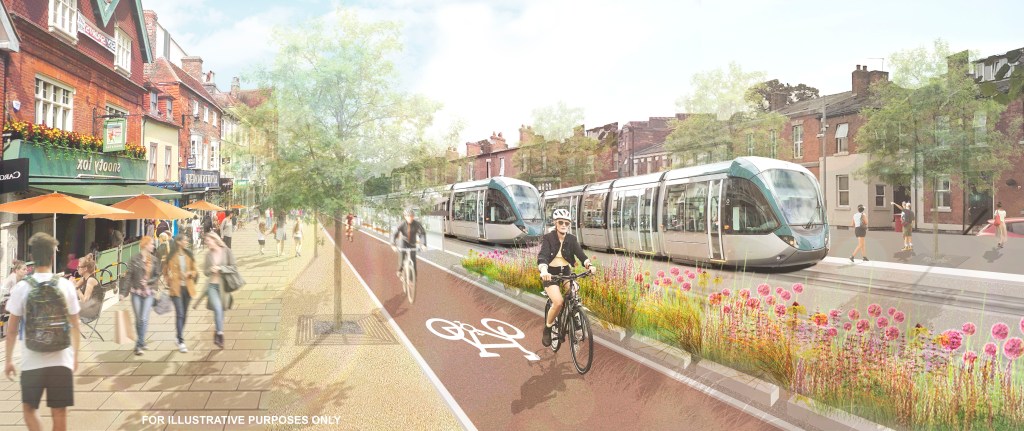
NISTA’s predecessor body, the National Infrastructure Commission, set out clearly in 2023 that Leeds needs a tram.
The second bit is a reference to the Commission’s 2023 Second National Infrastructure Assessment, which does reference the case for trams in Leeds but in a far more cautious way:
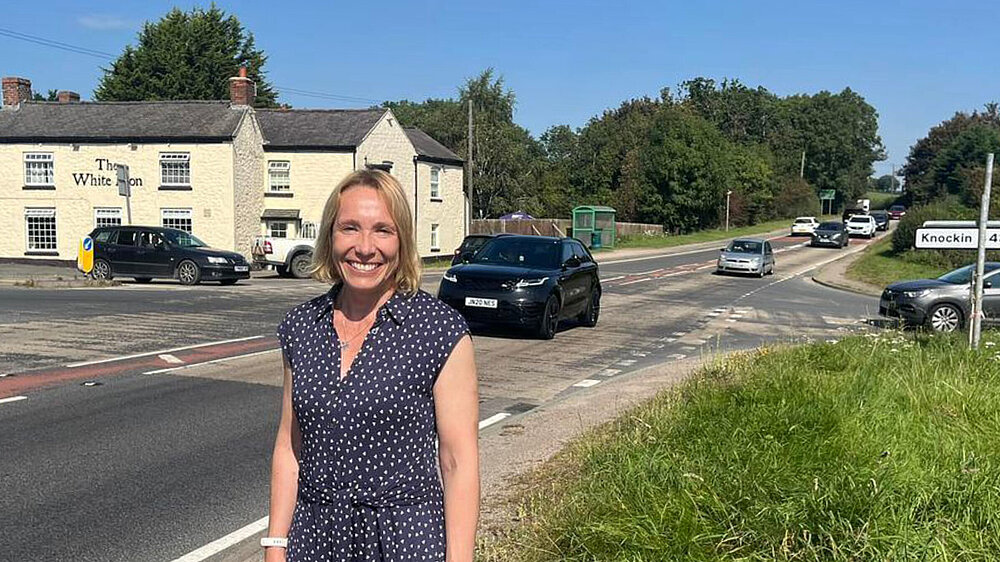
Roads minister Simon Lightwood, who was complicit in hiding the smart motorway evaluation reports and seems to have gone into politics to hide things from the public, has blanked a question from an MP about safety spending under the new road investment strategy (RIS).
Asked by Helen Morgan how much money is committed to the Safety National Programme and Small Schemes National Programme elements of the RIS, Lightwood said:
RIS3 included for the first time a set of four National Programmes, which are a new way for National Highways to deliver defined outputs that support RIS3 objectives, where these are not funded in other programmes. Details of the funding for each National Programme will be confirmed in National Highways’ Delivery Plan for 2026-31, which is expected to be published in the summer.
It’s worth unpicking this to see how evasive Lightwood is being. The RIS, written by his department, is literally a strategy for spending on the strategic road network. Its purpose is to give National Highways a budget and tell it, Parliament and the public how it should be spent.
Lightwood knows how much is in the budget for the Safety and Small Schemes National Programmes but is simply choosing to hide this.
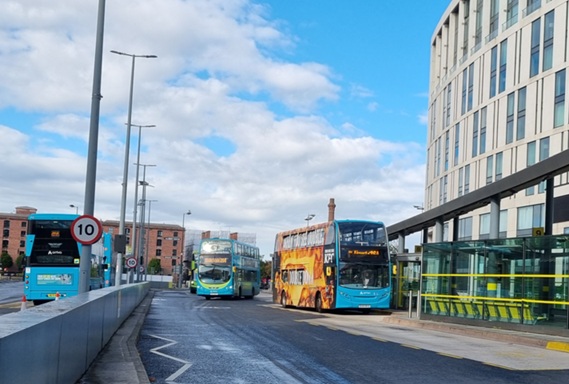
The Department for Transport (DfT) has – perhaps justifiably – praised councils for doing good things with the bus funding it is giving them, but once again spoiled a good news story with hype.
On the back of announcing just £3m for six mayoral authorities to progress bus franchising, the DfT has proclaimed:
Millions of bus passengers across England are benefitting from cheaper fares, new routes and better services as local authorities are putting government funding to work in their communities.
With the cost-of-living crisis continuing to play a part in people’s everyday lives, local authorities are stepping up to make buses work better for everyone, reducing the burden on households.
That’s very positive, as is:
These schemes are all backed by the government, with more than £3 billion invested through the Local Authority Bus Grant between 2026 and 2029 – money that local leaders can spend on the things passengers actually need.
(Apart from the baffling but seemingly obligatory reference to subsidies being an investment.)
But is the £3bn really “record” funding, as both the DfT and minister Simon Lightwood claim? There is no evidence in the press release to back this up and I have asked the DfT to justify it.
The six authorities that are getting half a million quid each are:
The senior councillor who called out West Yorkshire mayor Tracy Brabin over her “dishonest” presentation of the secret report into her mass transit plans has renewed his call for it to be published in full and criticised her for engaging in “spin over substance”.
The statement from Cllr Alan Lamb, leader of the Conservative group on the West Yorkshire Combined Authority (WYCA), followed the leaking of the report to The House magazine, although he did not mention it directly.
Lamb said:
I still cannot disclose the contents of the Independent Peer Review. But I can say it made material recommendations about governance, the business case and other key matters. We know those findings directly preceded the Government’s decision to delay the programme. That matters because residents were told publicly – with great confidence – that spades would be in the ground in 2028. If there is a gap between public certainty and private evidence, that gap must be addressed openly.
The “peer review” by the National Infrastructure and Service Transformation Authority is reported to have criticised Brabin for focusing on an “unrealistic milestone” of “spades in the ground” by 2028, which it warned could be followed by a significant and costly gap before “the start of actual work”.
It’s an important story, but a terrible article. Let’s start with:
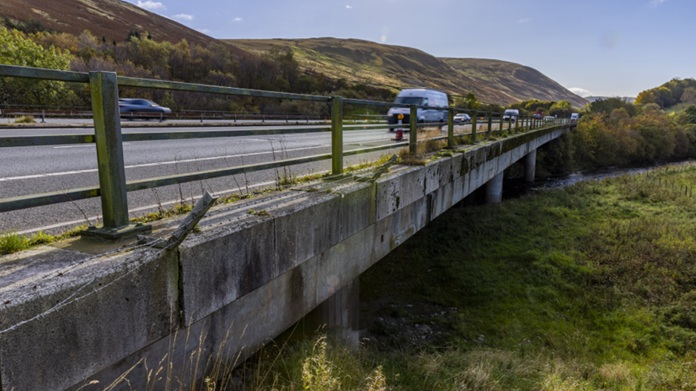
Last summer, the Government spoke of a £1bn Structures Fund to “inject cash into repairing run down bridges”. Slightly worryingly, the statement mentioned that approximately 3,000 bridges nationwide were not fit for 21st-century purpose and that the number of collapses had risen. “A stark reminder of the need for urgent action,” it warned.
But bridge experts say that not only is the 3,000 figure likely to be on the low side, but £1bn will not be anywhere near enough money to solve the issue – not least because local authorities will have to bid against each other for the money.
The article also quotes the Department for Transport as saying that “stakeholders” will be surveyed to determine how best to deliver the Structures Fund, when this actually happened two months ago.
It also cites a 2021 survey by ADEPT/the RAC foundation as the source of the 3,000 figure, when in fact the latest is a 2023 survey published in March 2024.
It’s on firmer ground (sorry) when it cites RAC Foundation director Steve Gooding:
The main aim of the session, led by committee chair Ruth Cadbury, is to probe factors shaping transport users’ behaviour with a number of experts, including behavioural scientists.
But, according to the committee’s explanation of the context for the inquiry, the problem to be addressed is quite a drastic one, beyond the scope of behavioural science:
The session comes as Government data shows that most passenger miles travelled in the UK in 2024 did not involve any mode of public transport. One of the reasons advanced for this in evidence to the Committee is that transport systems are often not reliable or convenient enough for people and that in some cases this is due to a lack of integration.
Pro-building lobby group Britain Remade is making headlines with its “Give mayors the power to build” campaign, citing Leeds in particular as an example of where a lack of mayoral power is causing British cities to fall behind.
With West Yorkshire’s mass transit plans firmly in the news, Britain Remade is also running a Leeds Needs Trams campaign, but its latest pitch covers other cities, such as Bristol and Birmingham.
New analysis by Britain Remade has exposed the scale of the gap between England’s major cities and their European twins. As a result, the campaign group is calling on the Government to give England’s 14 directly elected mayors the powers they need to change this.
The data, drawn from tram, metro, and light rail systems across Europe, paints a damning picture: English city-regions twinned with well-connected European cities are being systematically left behind. Not because of a lack of ambition from local leaders, but because those leaders are forced to go cap in hand to Westminster for every penny and every planning permission for major infrastructure projects.
The lobby group doesn’t appear to have published the “new analysis”, other that what is in its (two) press releases, but it highlights clear disparities in the scale of mass transit systems in England and France and Germany.
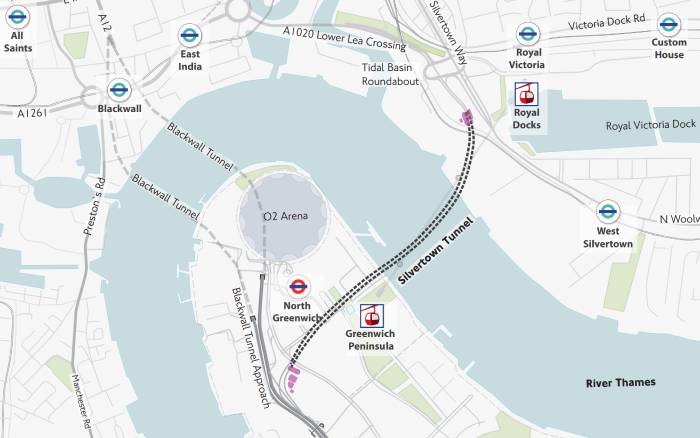
The BBC has an astonishingly poor story about the Silvertown Tunnel a year on, with Transport for London (TfL) claiming that it is reducing congestion elsewhere, based on some very selective data, and with a huge piece of misinformation from the broadcaster,.
I have obtained (via TfL) the statement on which the BBC report was based and it is a pretty accurate version, with one exception.
One year after the Silvertown Tunnel opened, Transport for London (TfL) said the project had reduced “chronic congestion” and improved journey times.
New data suggested that drivers who used the neighbouring Victorian-era Blackwall Tunnel saw journey times reduced by more than 10% during weekday peak periods, TfL said.
So, we only have weekday peak data with a reduction in journey times that doesn’t seem to justify a £2.2bn scheme that will see drivers charged tolls for years to come.
And that is only one river crossing. Has congestion increased near the new tunnel? David Rowe, director of investment planning at TfL, said:
We are continuing to monitor the impact of the Silvertown Tunnel both on congestion and the surrounding areas and environment as we pass this important milestone.
The secret report on West Yorkshire Combined Authority’s plans for a mass transit system has inevitably been leaked and is said to show both that the authority was working to “unrealistic milestones” and that the benefits:cost ratio for a bus system is “significantly better” than for the trams that it wants.
The House magazine has obtained the “peer review” by the National Infrastructure and Service Transformation Authority, which put back the project’s timelines from the early to the late 2030s. PoliticsHome reports:
Tracy Brabin’s attempts to start construction on a Leeds tram network before her next re-election campaign were blocked after a confidential Whitehall review concluded this deadline carried a high risk of wasted taxpayers’ cash.
The Labour mayor of West Yorkshire has repeatedly promised to get “spades in the ground” by 2028.
The report is also said to have warned that the was being driven by a “political agenda rather than a recognised programmatic approach”.
It added that “options appraisal for investment, robust project planning and risk management are critical ingredients for successful delivery and should not be compromised for unrealistic milestones”.
There was a risk of “political embarrassment”, it cautioned, “if there was a large disconnect between a lauded ‘spades in the ground’ date and the start of actual work,” and it said that money could be wasted: “The risk of nugatory spend is high.”
Unsurprisingly, the review also found that not enough work had been done to prove why the scheme needed trams rather than buses, something that I have written about extensively.
The paper’s authors were “concerned” about the West Yorkshire Mayoral Combined Authority’s (WYCA) “lack of unbiased thinking” on this question, adding: “There is a need to build the case for trams which has not been completed.
“This is particularly important because the likely cost of a Bus Rapid Transit (BRT) mode is significantly less than for trams and the BRT benefits:cost ratio is significantly better.”
The WYCA has responded to the revelation by again trying to gaslight the public as to the reality of when genuine, rather than performative, construction work will take place and when the scheme will actually be delivered. A spokesperson said:
Beginning preparatory construction works by 2028 has been an ambition for the combined authority for some time because the people of West Yorkshire have waited long enough for this investment…
Two articles from me in the latest edition of Local Transport Today pick up on pledges that the Department for Transport (DfT) has failed to honour in the new Road Investment Strategy (RIS) – on both smart motorway safety and toxic road runoff.
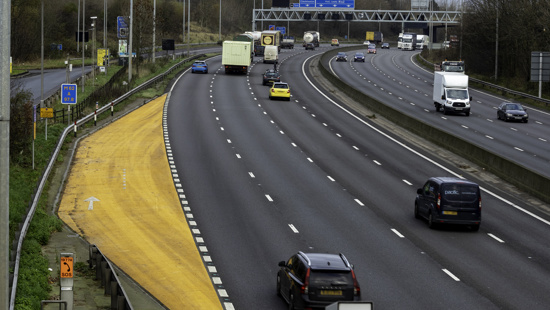
Campaigners have slammed the DfT after it quietly dropped a commitment to consider adding more emergency areas (EAs) on smart motorways under the new RIS, leaving the network short of the spacing standard recommended by MPs in a landmark report.
The story notes that in its November 2021 report on smart motorways, the Commons Transport Committee recommended that the DfT and National Highways should retrofit EAs to existing all lane running (ALR) motorways to make them a maximum of 1,500 metres apart, decreasing to every 1,000 metres (0.75 miles) where physically possible.
In its response, the DfT said it “agrees in principle with this recommendation” and committed £390m over RIS 2 to retrofit over 150 additional EAs to ALRs by 2025.
And, in an implicit recognition that the extra 150 EAs would not bring the whole network into compliance with the standard recommended by MPs, the DfT also said: “A decision on whether to retrofit across the remainder of ALR smart motorways will be considered as part of the formulation of the third Road Investment Strategy, based on evidence of safety benefits.”
The story notes that I had approached the DfT and National Highways for comment, but had not received a response at the time of publication. I still haven’t.
National Highways’ longstanding pledge to mitigate “high priority” water outfalls on its network by 2030 is mired in confusion after its regulator questioned whether it could be achieved following a doubling of costs and the new RIS appeared to backtrack on the pledge.
The story notes that company’s 2030 Water Quality Plan set that year as the target to first confirm and then mitigate sites on the strategic road network where there was a high risk of toxic runoff polluting watercourses and the wider environment.
While this was subject to funding during RIS 3, last September National Highways’ then chief executive Nick Harris told MPs that it that it expected to be “funded to do all 250” of the “high-risk” outflows that were expected to be confirmed and that in October, the company published a document setting out 182 confirmed high-risk locations in tranches representing “when we expect to deliver improvements work at each location, subject to funding and delivery constraints, with all to be delivered “before 2030”.
A month later the Office of Rail and Road’s (ORR) advice on National Highways’ draft strategic business plan noted that estimated costs had more than doubled to between £900,000 and £1.2m per asset, meaning that National Highways expected to deliver 110 and 130 mitigations from the allocated budget, leaving between 75 and 95 assets carried over under RIS 4. The regulator noted that National Highways had “previously proposed and committed” to mitigating 250 assets and said it should work with the DfT “to manage expectations where it has previously committed publicly to deliver a bigger programme and the reasons this is no longer feasible”.
The new RIS includes a commitment to mitigate a total of 190 – 250 high risk water outfalls / soakaways, implicitly by 2031, “reviewing a deliverability plan by the end of 2027/28”. It adds: “This range includes those outfalls and soakaways mitigated during Road Period 2 and 2025/26”.
So it’s entirely unclear whether there is more money or whether the DfT and National Highways are simply misleading the public about what can be done. Either way, the 2030 deadline has slipped by at least a year.
Subscribe
Subscribe to get our the latest stories in your inbox.





 Transport Insights
Leave a comment