Transport Insights

The transport stories you won't see in the industry-friendly media

Author

Chris Ames
  • SWR losing revenue and train carriages

    Fare dodging is the unavoidable story of the day but concerns are also being raised about how South Western Railway – officially state-run – is actually being run and whether its service is getting better or worse.

    The BBC reports that:

    An estimated £45.5m of annual revenue is being lost from passengers not paying for tickets, South Western Railway (SWR) has said.

    The data was released after a campaign group submitted a Freedom of Information request to SWR, which said the overall rate of ticketless travel was about 3.9%.

    On the other hand, Transport for London is proactively publicising its revenue loss from fare dodging:

    It is a huge problem for TfL, costing it £190m a year. Fare evasion has increased since the opening of the Elizabeth line as more passengers use the TfL network, and many stations on the line don’t have staffed barriers.

    The loss equates to 3.5% of all fare income. TfL wants to get that down to 1.5% by 2030 although it admits this will be a significant challenge.

    Image: SWR

    The huge number of open stations on SWR’s network is obviously going to be a major factor.

    But elsewhere in the SWR story are concerns about how the Department for Transport is actually running the company and whether it is doing enough to improved the firm’s performance.

    The data was obtained by SWR Watch, whose spokesperson, Jeremy Varns, said he believed the service had got worse since May, when it became the first to be renationalised by the Labour government.

    He said: “My primary concern is a lack of accountability.

    “There’s still no publicly accessible contract between the operator and government and Department for Transport.”

    SWR said it was in a transitional arrangement and subject to amendments.

    It added that a copy of the final Service Agreement would be published in due course.

    Varns also criticised SWR’s longstanding policy of treating its passengers as an afterthought when disruption occurs:

    (more…)

  • Labour’s plan for no change as leasing fleecing continues

    As a former transport minister and now shadow transport secretary, Richard Holden’s questions to transport ministers are very entertaining and you get the sense that he knows where the bodies are buried.

    He recently asked:

    To ask the Secretary of State for Transport, what estimate her Department has made of the annual cost to the public purse for payments associated with rolling stock leasing agreements following the transfer of train operating companies into state control.

    It’s not clear whether he was implying that the new arrangements will increase these costs.

    But the gist of the reply from very junior minister Keir Mather is that they won’t:

    It is expected that future transfers will see existing rolling stock leasing arrangements novate to the new public sector operator on existing terms as part of the transfer of operations into public ownership. Therefore, we do not expect changes to current cost estimates as a result of the transfer of operations into public ownership.

    So huge amounts of money will continue to leak from the rail industry to the companies that own the trains.

    The phrase about “the transfer of operations into public ownership” is an interesting one. Can you really own operations?

    By way of a recap, before nationalisation, the infrastructure was already in public ownership and the trains will remain in private ownership.

    It’s neither all change, nor a plan for change.

  • Cohen remains in charge of Lower Thames Crossing

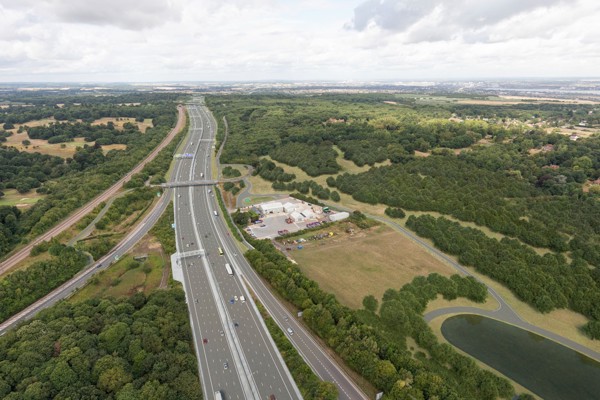
    The Department for Transport’s (DfT) longstanding roads delivery director, Kate Cohen, has taken over the role of senior responsible owner of the Lower Thames Crossing (LTC).

    The news, reported by Highways magazine, follows a report in the Guardian, since denied by the DfT, that the government-owned company had been stripped of responsibility for the £10bn+ project.

    According to the DfT website, Cohen is director of Roads and Projects Infrastructure Delivery, a section that includes responsibility for the LTC.

    Speaking to Highways, National Highways chief executive Nick Harris stressed that the company remains responsible for delivering the LTC, but National Highways’ Sean Pidcock had been its senior responsible owner since 2021.

    Harris said:

    The DfT has recognised the size of the Lower Thames Crossing project means they have to put focus on it and I am really chuffed to see Kate Cohen becoming the SRO. She is going to focus on the LTC and we have worked with Kate on the rest of the portfolio and I think that is a decision that makes a lot of sense.

    (more…)

  • Council takes small risk to “unlock” thousands of homes

    Returning to Gloucestershire County Council’s stalled redevelopment of Junction 10 of the M5, the BBC has some news, of sorts:

    Work has begun on upgrading a motorway junction despite a £70m funding gap.

    Preliminary ecological works for the £363m junction 10 near Cheltenham and Gloucester revamp – which would allow motorists to drive on and off both northbound and southbound – has already begun.

    Councillor Julian Tooke, Gloucestershire County Council’s cabinet member for infrastructure, admitted they were taking a “financial risk” by starting work before having all the funds in place.

    It might not be wise, but it isn’t that unusual for preliminary works to take place before a scheme gets a full green light.

    Just look at the hundreds of millions being sunk into the Lower Thames Crossing, which may never get under the ground.

    In this case, there remains a £70m gap between the funding and the projected cost of the scheme, which the council is hoping to fill with more cash from the Housing Infrastructure Fund.

    The BBC helps out a bit with some wishful thinking:

    The scheme is expected to unlock further development including up to 15,000 homes, 12,000 high-skilled jobs, and support for the £1bn Golden Valley development.

    All those houses, just waiting to be unlocked.

    Leave a comment

  • Bus lane amnesty in Liverpool

    The BBC reports the continuing return of bus lanes in Liverpool, noting that the city council scrapped many of its bus lanes in 2014 but started to reintroduce some in 2023.

    Proposals to create one on Longmoor Lane in Fazakerley and add one on Upper Parliament Street in Toxteth were unveiled by Liverpool City Council earlier this week.

    There’s a typically mixed reaction, with some councillors saying they had been given no advance notice of the plans, one resident saying it was “an absolute joke”, and another welcoming the initiative.

    Or is that just the way the BBC likes to report things?

    The BBC (via the Local Democracy Reporting Service) says the new bus lanes will cost £125,000.

    The council has said no fines will be issued for vehicles straying into the bus lanes, which they describe as “experimental”, until they have been in place for six months.

    The report includes a baffling quote from one (Labour) councillor:

    Declan Henry, a Fazakerley councillor, said: “I agree that bus lanes could really help ease congestion and encourage the use of public transport but we have to have the infrastructure in place so that public transport is a convenient and cost-effective option.”

    Yes, put infrastructure to support public transport in place before spending a hundred and twenty five grand on bus lanes.

  • Harris blames crash victims for road safety failings

    National Highways’ chief executive has sought to dodge responsibility for the company’s poor progress on road safety, claiming “success” for its limited efforts to reduce casualties through engineering.

    With the company expected to miss its key performance indicator (KPI) for reducing killed and seriously injured (KSIs) casualties during the second (2020-25) road investment strategy (RIS), Nick Harris pointed out that the next RIS does not currently have an equivalent target.

    In an interview for the official podcast of the Highways UK trade show, he said:

    Increasingly on safety though the focus is shifting from that headline KPI to the things we are doing. So there’s a little bit of a shift there.

    The comment also reflects the expectation that the next RIS will give National Highways a National Programme on safety, “supporting specific programmes of activity” and measure it against how much it delivers.

    Harris also sought to blame the victims of collisions:

    (more…)
  • National Highways looks to clear funding stream to fund clear streams

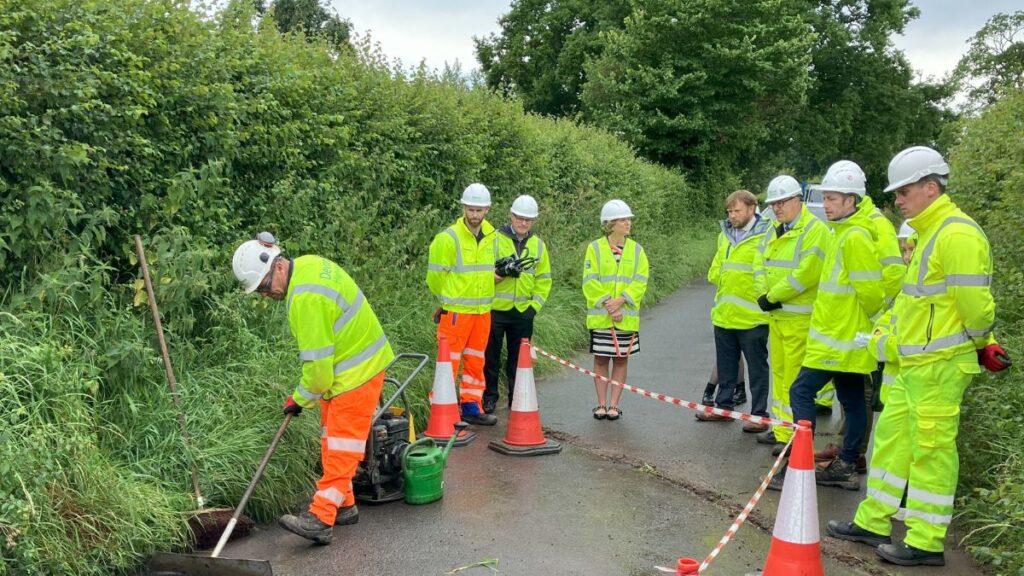
    National Highways is set to be given funding and a clear target to tackle toxic water runoff from its roads under a new-style “National Programme” in the forthcoming road investment strategy (RIS 3).

    The government-owned company is under pressure to tackle the contaminated water that runs off the strategic road network (SRN) into sensitive waterways in particular.

    Last month Parliament’s Environmental Audit Committee (EAC) challenged its chief executive, Nick Harris, on its plans and funding.

    He replied without explanation that it expects to be “funded to do all 250” of the “high-risk” outflows on the strategic road network that it has prioritised for mitigation.

    It has now emerged that water quality will fall under a National Programme for environmental mitigation, as floated in the draft RIS 3 published in August:

    We are considering introducing new National Programmes to deliver defined outputs that support RIS objectives or commitments which are not within other programmes (for example, supporting specific programmes of activity around safety and environmental mitigation).

    The company has since published a Preliminary Design Playbook, produced by consultants and setting out measures to mitigate high-risk outflows.

    In an interview with New Civil Engineer, Stephen Elderkin, director of environmental sustainability at the government-owned company, said:

    Rather than having different design teams coming afresh to each of those locations, given that we’ve now got a national programme, we’ve centralised it.

    He added:

    We take pollution contained in water running off our network incredibly seriously. It can contain heavy metals, hydrocarbons, tyre crumbs and other particulates and without suitable management of that runoff there is a risk of polluting water bodies where it gets discharged into water so this, this matters. It matters for health and it matters for ecosystems; it’s quite an extensive problem.

    (more…)

  • Alexander takes a punt on Waymo trial

    As Waymo announces that it will be bringing its “fully autonomous ride-hailing service across the pond” from next year, it’s worth looking at what the benefits and risks might be.

    The company says that over the coming months, it will “lay the groundwork” for its service in collaboration with fleet operations partner Moove, “and continue to engage with local and national leaders to secure the necessary permissions for our commercial ride-hailing service in London”. 

    Conspicuous from its absence in its press release is any comment from local leaders, such as the London Mayor/TfL and the necessary permissions are clearly not in place yet.

    On the other hand, transport secretary Heidi Alexander, who never misses an opportunity to shoehorn the latest slogan into a quote, is happy to comment:

    I’m delighted that Waymo intends to bring their services to London next year, under our proposed piloting scheme.

    Boosting the AV sector will increase accessible transport options alongside bringing jobs, investment, and opportunities to the UK. Cutting edge investment like this will help us deliver our mission to be world-leaders in new technology and spearhead national renewal that delivers real change in our communities.

    You can’t argue with the idea that autonomous vehicles could increase mobility for people with disabilities but the rest of the list, particularly “bringing jobs” by getting rid of drivers, is a lot of wishful thinking.

    Also quoted in the press release are Robin Spinks, head of inclusive design at the Royal National Institute of Blind People, who is severely sight impaired, and James Gibson, executive director of Road Safety GB. I don’t think I am in a position to argue with either of them.

    What else could go wrong?

    Yesterday, the Independent reported:

    A California prankster has gone viral after sending 50 driverless Waymo vehicles down a dead-end street in San Francisco.

  • Ministers bury Thames tunnel bung as sunk costs hit two-thirds of benefits

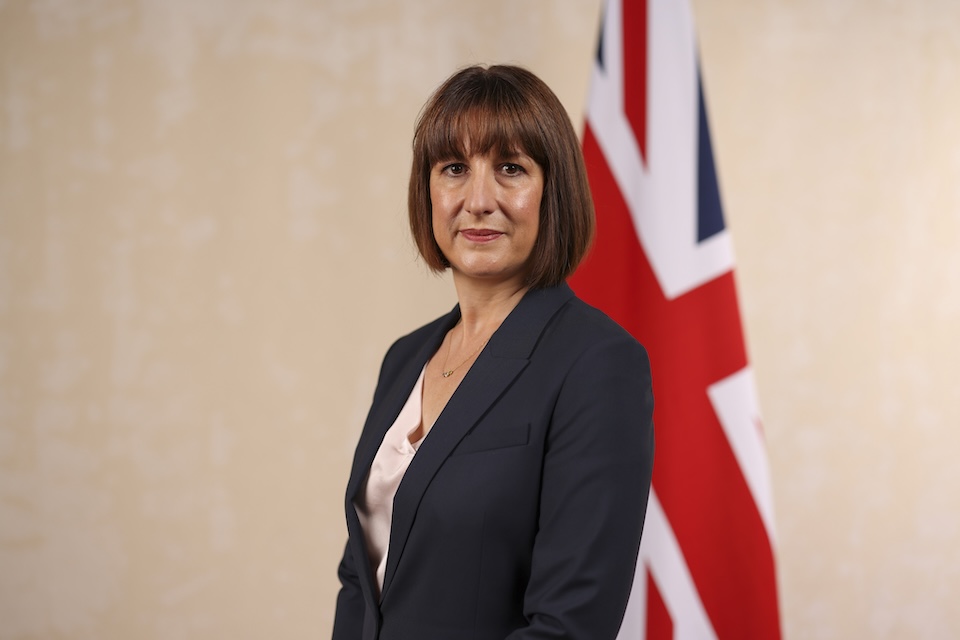
    The Treasury has confirmed that chancellor Rachel Reeves secretly awarded the Lower Thames Crossing a quarter of a billion pounds in last year’s Autumn Budget, as the cost of the scheme are set to hit £2bn, before construction begins.

    The preparation costs for the planned £10bn+ tunnel between Kent and Essex are now likely to reach two-thirds of the scheme’s projected benefits.

    Labour has said it will examine using a form of private finance for the project, which it appears to consider unaffordable and which will be funded outside the usual road investment strategy machinery.

    But public funding includes £250m that was allocated to the project in Labour’s first Budget, last October, but not publicly announced until the National Infrastructure Strategy was published in June.

    This said the government was:

    providing £590 million of capital funding to progress work on the Lower Thames Crossing, in addition to the £250 million which was provided at Phase 1 of the Spending Review.

    The Treasury has acknowledged that the £250m was allocated at the 2024 Autumn Budget on a “provisional” basis as the project’s development consent order (DCO) was pending, with the infrastructure strategy being the first time the funding was revealed publicly.

    The Department for Transport has confirmed that the cash was part of the capital spending total of £21.8bn announced in the Budget.

    Following the Budget, the then transport secretary, Louise Haigh was forced to resign, following a leak about a criminal conviction that appeared to have come from No 10.

    Her successor, Heidi Alexander, then approved the DCO in March of this year, in time for the cash to be included in confirmed spending plans for 2025-26.

    (more…)

  • Crunching no numbers

    Very junior housing minister Keir Mather has replied to a parliamentary question about electric vehicle chargepoints with a promise to continue to monitor something it is not currently monitoring.

    Shadow transport secretary (and former transport minister) Richard Holden asked:

    To ask the Secretary of State for Transport, how many public electric vehicle chargepoints have been installed but are not operational due to grid connection delays or other technical issues.

    Mather replied:

    The Government does not hold a centralised figure on the number of public electric vehicle chargepoints that have been installed but are not yet operational due to grid connection delays or other technical issues.

    However, he added:

    In December 2024, the Government published the outcome of a review aimed at improving the grid connection process for EV charging infrastructure.

    That review stated:

    CPOs [charge point operators] have raised concerns that when infrastructure installations are completed, they can experience long waits before energisation.  

    (more…)

Subscribe

Subscribe to get our the latest stories in your inbox.