
A new report highlights the decades-long failure to build a tram network in Leeds as showing the case for more powers for mayors but also suggests that such powers could be used to progress major road building schemes.
The gist of the report – Licence to build: Delivering urban transport infrastructure through devolution by the Centre for Cities – is:
From Metrolink extensions in Greater Manchester to new Merseyrail stations in Liverpool City Region, England’s mayors have ambitious transport plans.
But progress has been slow. More than 30 years after trams were first approved in Leeds, no track has yet been laid. Over the past decade, England has added just 95 kilometres of tram routes, while France has added four times that, equivalent to a network 20 per cent longer than England’s today.
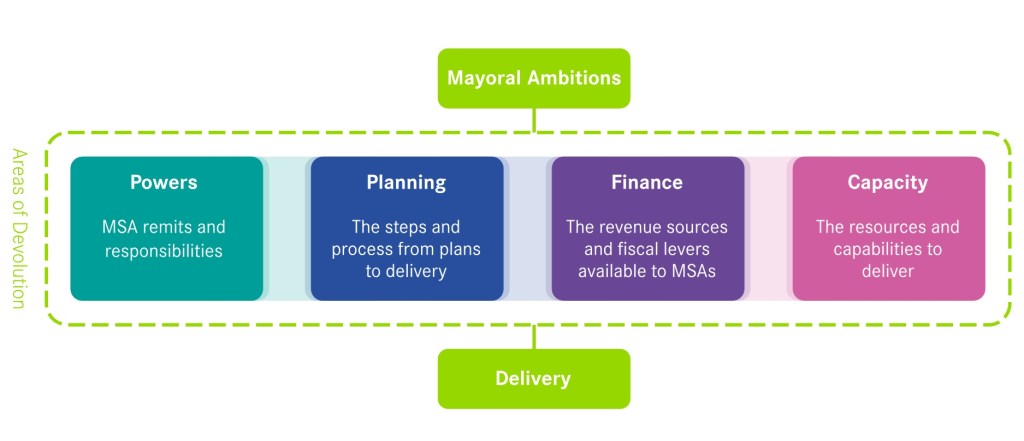
Drawing on case studies across the country, this report sets out the interlocking barriers faced by mayors wanting to deliver local transport upgrades. For maintaining and upgrading local road and rail infrastructure, mayors face limited powers, a lengthy and uncertain planning process, insufficient local finance, and constraints on their capacity to deliver.
The report names the four interlocking barriers to mayors delivering better transport infrastructure as relating to powers, planning, finance and capacity.
But what about that claim that mayors face “limited powers, a lengthy and uncertain planning process, insufficient local finance, and constraints on their capacity to deliver” when it comes to upgrading local road infrastructure?
A blog by one of the authors says the lack of powers that MSAs have “is best demonstrated” two slow-moving schemes on the A19 – which is part of the strategic road network (SRN). By all means argue that mayors should have powers over strategic roads in their area, but calling them “local” is like saying Heathrow is a local airport in Hounslow.
The schemes – the A19 Moor Farm Junction and a possible Tees Crossing – are part of a long list of schemes that are not happening any time soon, not because National Highways is “a national body with a long list of country-wide road priorities”, but because the government chose to scale back on enhancements to the SRN and concentrate on renewals.
If the answer is that mayors should have control over the budget for the SRN in their area, it won’t produce any more money, but allow them to divert money to more road building in a climate emergency where existing infrastructure is crumbling.
It’s not massively impressive either that the report cites lane rental schemes as an example of infrastructure upgrades.
Interestingly, particularly for my research into transport journalism and information, the report was sponsored by Balfour Beatty, described in the report as:
…the UK’s largest UK-headquartered infrastructure contractor, employing around 14,000 people across the country with plans to grow to 16,000 over the next two years, including c.1,000 apprentices, graduates and trainees, reflecting the scale of investment and skills needed to deliver the UK’s long-term infrastructure ambitions. With sites, offices and facilities across the UK, we deliver infrastructure of critical national importance alongside projects at the heart of local communities, including the Lower Thames Crossing and HS2, Sizewell C, Net Zero Teesside Power, North Hykeham Relief Road, Edinburgh Airport and regeneration projects in Bradford and Leeds. Our national scale, regional footprint and extensive local supply chains give us a practical understanding of how infrastructure investment can support local priorities, create jobs and drive economic growth. We spend around £2 billion each year with UK SMEs, helping to sustain businesses, develop supply chain capability and retain economic value within local communities across the country. Through our direct workforce, early careers programmes and supply chain partnerships, we see first-hand how long-term infrastructure pipelines can create opportunities for people and businesses, strengthen regional economies and improve productivity. We work with national, devolved and local government to turn those ambitions into reality.
I wonder whether they may have a vested interest in turning long-term infrastructure pipelines into reality?
One response to “Infrastructure builder wants more infrastructure built – shock”
-
Surely not!
LikeLike


Leave a Reply