
A new report highlights the decades-long failure to build a tram network in Leeds as showing the case for more powers for mayors but also suggests that such powers could be used to progress major road building schemes.
The gist of the report – Licence to build: Delivering urban transport infrastructure through devolution by the Centre for Cities – is:
From Metrolink extensions in Greater Manchester to new Merseyrail stations in Liverpool City Region, England’s mayors have ambitious transport plans.
But progress has been slow. More than 30 years after trams were first approved in Leeds, no track has yet been laid. Over the past decade, England has added just 95 kilometres of tram routes, while France has added four times that, equivalent to a network 20 per cent longer than England’s today.
Drawing on case studies across the country, this report sets out the interlocking barriers faced by mayors wanting to deliver local transport upgrades. For maintaining and upgrading local road and rail infrastructure, mayors face limited powers, a lengthy and uncertain planning process, insufficient local finance, and constraints on their capacity to deliver.
The report names the four interlocking barriers to mayors delivering better transport infrastructure as relating to powers, planning, finance and capacity.
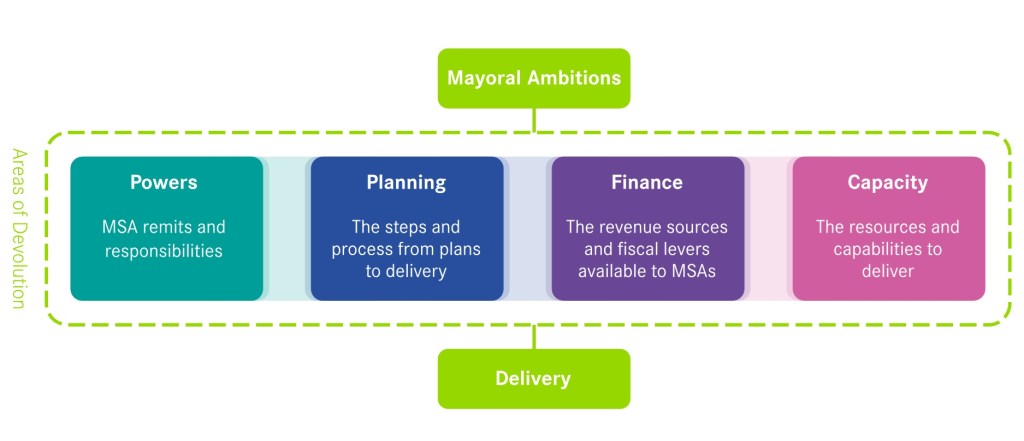
But what about that claim that mayors face “limited powers, a lengthy and uncertain planning process, insufficient local finance, and constraints on their capacity to deliver” when it comes to upgrading local road infrastructure?
A blog by one of the authors says the lack of powers that MSAs have “is best demonstrated” two slow-moving schemes on the A19 – which is part of the strategic road network (SRN). By all means argue that mayors should have powers over strategic roads in their area, but calling them “local” is like saying Heathrow is a local airport in Hounslow.
(more…)


Leave a Reply