
Rail magazine has an interesting story about new rail services that should be able to run on electrified (overhead) lines instead partly running on diesel because the very, very old infrastructure cannot cope with the additional demand for power.
Avanti West Coast has confirmed that it’s running one of its new additional Liverpool services using diesel traction under the wires for a large part of the route because of power supply issues between Weaver junction and Crewe.
Rail explains that the new May timetable includes two additional services to and from Liverpool, for which Avanti is using a bi-mode Class 805 Evero set, which can run on diesel or electric power.
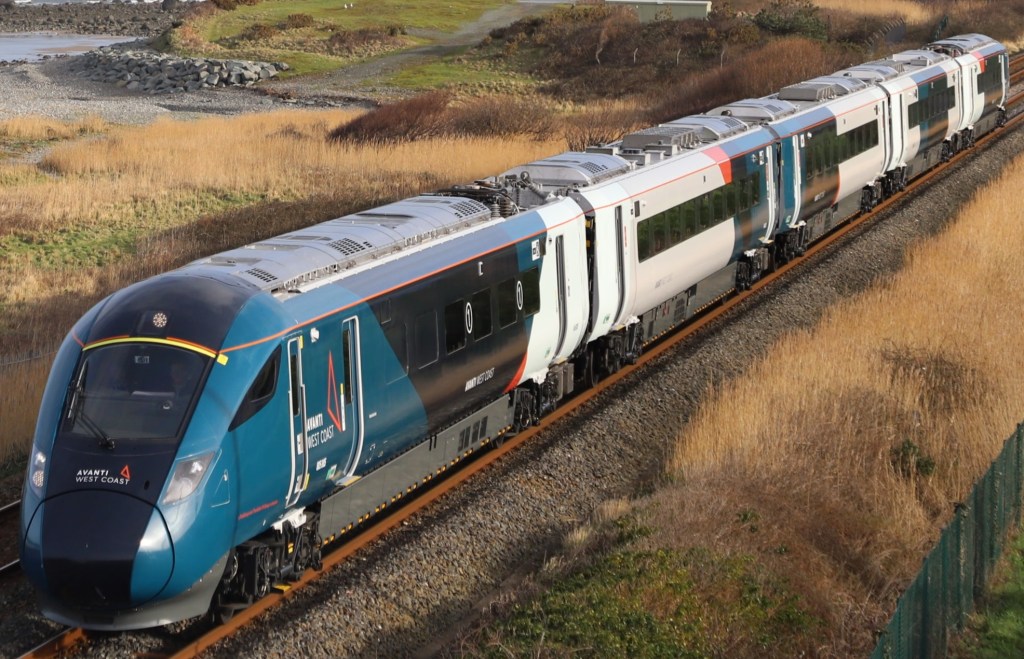
The trains are reported to be running from Runcorn to Lichfield Trent Valley under diesel power, with the trains switching to electric traction from Lichfield to Euston.
The service from London to Liverpool is said to be unaffected and can use electric traction.
Rail explains the problem:
In November last year Network Rail issued a Declaration of Congested Infrastructure related to the Weaver feeding area between Weaver Junction and the Crewe Neutral section on the West Coast Main Line.
The declaration specifically related to limitations in available electrical power capability, rather than any remaining train path capacity for non-electric traction, hence the reason that Avanti is now running diesel under the wires.
In a statement, Network Rail said:
The available electrical power supply in the Weaver–Crewe section is constrained due to ageing infrastructure, including K11 switchgear. As a result, power demand in this area needs to be carefully managed.
According to the Rail Safety and Standards Board, K-11 25kV Rail Switchgear was were installed across the UK (notably the Euston/Liverpool/Manchester electrified lines) between 1959 and 1967.
The kit is regarded as obsolete and it is apparently known to people in the industry that some sections of the network have experienced power supply constraints.
And here we are in 2026, limited our ability to run electric trains, not because of the ongoing failure to electrify the network but because existing infrastructure is not just ageing but obsolete.


Leave a Reply