
We will all have to be careful what we say about the ongoing criminal trial of Barry O’Sullivan, accused of causing the death of Pulvinder Dhillon by careless driving on the M4 in March 2022, but the overriding message that the public will see is that the technology on this stretch of smart motorway had not been working for some time at the time of the crash.
The Daily Mail reports:
A grandmother killed in a crash could still be alive today if safety technology on the smart motorway she broke down on hadn’t been ‘dangerously defective’, a court heard.
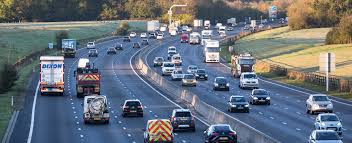
This is the defence case. The prosecution case is that O’Sullivan was nevertheless responsible and the jury will hear the evidence and make up its mind.
The main theme that the papers are focusing on – that the system to detect stopped vehicles in live lanes and warn other drivers about them was not working – has been known for some time.
In fact, in May 2022, National Highways’ executive director for operations, Duncan Smith told me that the crash had occurred after the system had detected a stopped vehicle but an error had prevented an alert being raised.
Pointing out that the vehicle had stopped in lane 4, Mr Smith said: ‘The M4 [incident] was a particular issue with some of our back office systems that were offline at the time – we’ve now corrected the system so that can’t happen. The scheme was still in operational acceptance so, as tragic as it was, this was a shortcoming of a system that [hadn’t yet] been handed into business as usual.’
It was a particularly stupid statement. In January 2023, Dominic Browne and I reported:
National Highways has failed to get stopped vehicle detection (SVD) technology working properly on any section of all lane running (ALR) smart motorway, including schemes that it pledged not to open without the technology, Highways can reveal.
Last month the Office of Rail and Road disclosed that the SVD was not meeting performance requirements for detection rate (80%), speed of detection (within 20 seconds) or false alerts (less than 15%) at either a national or regional level.
It has now told Highways that no retrofit scheme has achieved the performance levels that would allow it to transition to ‘business as usual’ operation and that work is ongoing to achieve this.
National Highways has confirmed this. A spokesperson told Highways: ‘As of mid-January 2023, none of the retrofit and new ALR schemes have fully transitioned to business as usual as they are not yet meeting all of the core performance requirements.’
So that’s all good.
 Transport Insights
Leave a comment