
The Financial Times has picked up on the spiralling costs of the Lower Thames Crossing (LTC), as well as the huge sums that we will all be putting in, before private finance comes riding over the hill.
Taxpayers will contribute more than £3bn to the Lower Thames Crossing despite ministers’ plans to seek private finance for the most expensive new highway in British history.
The cost of the project, the first wholly new crossing across the river Thames to the east of London in 60 years, has risen from an estimate of between £5.3bn and £6.8bn in 2017 to almost £11bn, the Treasury has confirmed.
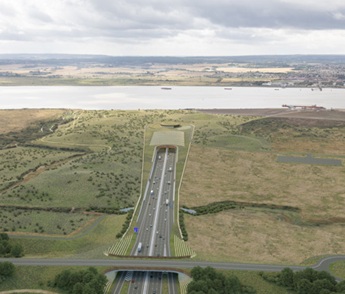
The first figure, the £3bn of public money, may be news to some people but it is simply adding £1.2bn of historic costs to the £1.8bn that the Treasury has allocated across this financial year and the next three, including nearly a billion in last week’s Budget.
But the cost increase to a current price tag of £11bn means a big rise in the part that the government is hoping to get private finance to contribute, to get them into a hole on a project that is otherwise unaffordable.
The government hopes it will secure about £7.5bn of private capital, up from a figure of £6.3bn set out in March by National Highways, the public body responsible for the scheme between Kent and Essex.
Predictably, Transport Action Network (TAN) has condemned the “utterly predictable” news, which it says will lead to significantly higher tolls being charged at the existing Dartford Crossing and the LTC.
TAN has previously calculated that tolls at Dartford could triple to pay for the LTC. Director Chris Todd said:
Those cheering on the Lower Thames Crossing will find themselves short changed, as costs have predictably ballooned. This will result in higher tolls at Dartford and LTC for decades to come, much as we have previously predicted. National Highways’ traffic data shows the LTC will bring just five years relief at Dartford, for seven years of construction chaos. This is bad for growth and bad for the country.
The LTC will drain the economy, diverting critical funds away from better value rail projects such as Ely junctions. These would drive growth across the whole country rather than pouring more money into London to congest the south east
TAN noted that Charlotte Cane MP has secured an Adjournment Debate in the House of Commons this evening on the ‘Potential merits of Government support for the Ely Area Capacity Enhancement Scheme’.
Remember that the government isn’t just throwing money at road building, but
One response to “Thames Tunnel hole gets bigger”
-
As somebody who has been dealing with Thames Crossings since 1985, I did give evidence to the public hearings on this project. Unfortunately most of my evidence appeared not to have been considered by the Inspectors as either the rules of hearings on ‘Schemes of National Importance’ do not allow proper investigations of short cuts and assumptions made by National Highways in the promotion of the scheme or NH made no attempt to address the points I raised.
It is well known that major road schemes near major cities and especially very big cities like London ‘Induce’ or ‘Generate’ vast volumes of new traffic soon after opening. Accordingly there is not the Traffic congestion relief that is expected and understood to be provided by such a new road and the new road causes widespread congestion elsewhere. Anybody wishing to see hard evidence all around London on this can refer to a 1986 Paper (http://www.johnelliottconsultancy.co.uk/world-transport-policy-practice-1999.pdf) or the 1994 Government (SACTRA) funded report on the whole subject (including other cities) (https://bettertransport.org.uk/wp-content/uploads/legacy-files/trunk-roads-traffic-report.pdf )
It is notable that Chris Todd has remarked that tolls would need to be tripled for the private sector to want to take on the project despite the fact that at least one of the options would be that the existing Dartford Crossings would be handed over for free! If the charges were raised by such an amount it is more than possible that the congestion problem at this location would be ‘solved’ without any additional public or private expenditure. It is interesting to note, as a comparitor, that TfL introduced charging for Blackwall Tunnel and the New Silvertown link with the express purpose of limiting induced traffic
LikeLike

 Transport Insights
Leave a comment