
The government is providing “substantial capital funds” for a programme to tackle toxic runoff from its network, a top National Highways official has said.
The comment from Ivan Le Fevre, the company’s head of environment strategy and standards, follows a recent publication that identified “182 confirmed high priority locations where outfalls or soakaways present a high-risk of pollution”, with an expectation that a total of 250 would be mitigated by 2030.
Le Fevre has published on LinkedIn a blog that he wrote in September “primarily for an internal company audience”. He wrote:
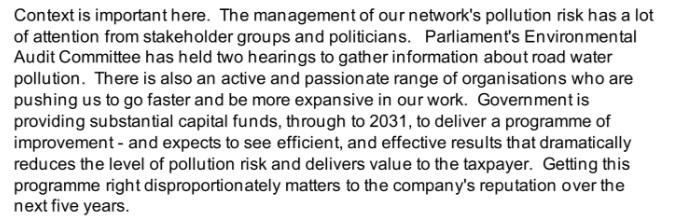
Government is providing substantial capital funds, through to 2031, to deliver a programme of improvement – and expects to see efficient and effective results that dramatically reduces the level of pollution risk and provides value for money for the taxpayer. Getting this programme right disproportionately matters to the company’s reputation over the next five years.

To illustrate the importance of the issue he referenced two hearings held by the Environmental Audit Committee.
At one of these, at the beginning of September, National Highways chief executive Nick Harris said the company was “proceeding on the basis that we will be funded to do all 250” sites.
However, the company has refused to state whether it has confirmed funding to deliver the programme, which would be funded as part of the third Road Investment Strategy (RIS 3), to run from April 2026 to March 2031, with the final RIS document not due until March.
National Highways’ director of environmental sustainability, Stephen Elderkin previously appeared to let slip that the work would fall under a new-style National Programme, which would have dedicated funding and a tighter focus than previous “designated funds”.
But in a subsequent LinkedIn post of his own, Elderkin described the 182/250 sites as representing those sites that need mitigation and said the company had pledged to mitigate high-risk sites without using the word “all”.
Similarly, Le Fevre described the 250 sites as those that the company “will need to improve” under a “big progamme of work”.
It appears therefore that the company has been told that the cash will be there but does not feel quite able to say this in terms until it is confirmed.
Significantly Le Fevre referred to a situation in which “constraints in taxpayers’ money and the need to prioritise safety” (yes, really) had left the government and the company managing a pollution risk
which is potentially bad for the environment but also exposes us to possible regulatory and legal action.
He ended his blog with a statement of determination:
What I can confidently say is that the effective management of water around our network is something that the company has to get right – and the company has the capability and ambition to do just that.
 Transport Insights
Leave a comment